

A visit to Riverina Nut Company at Cudgel.
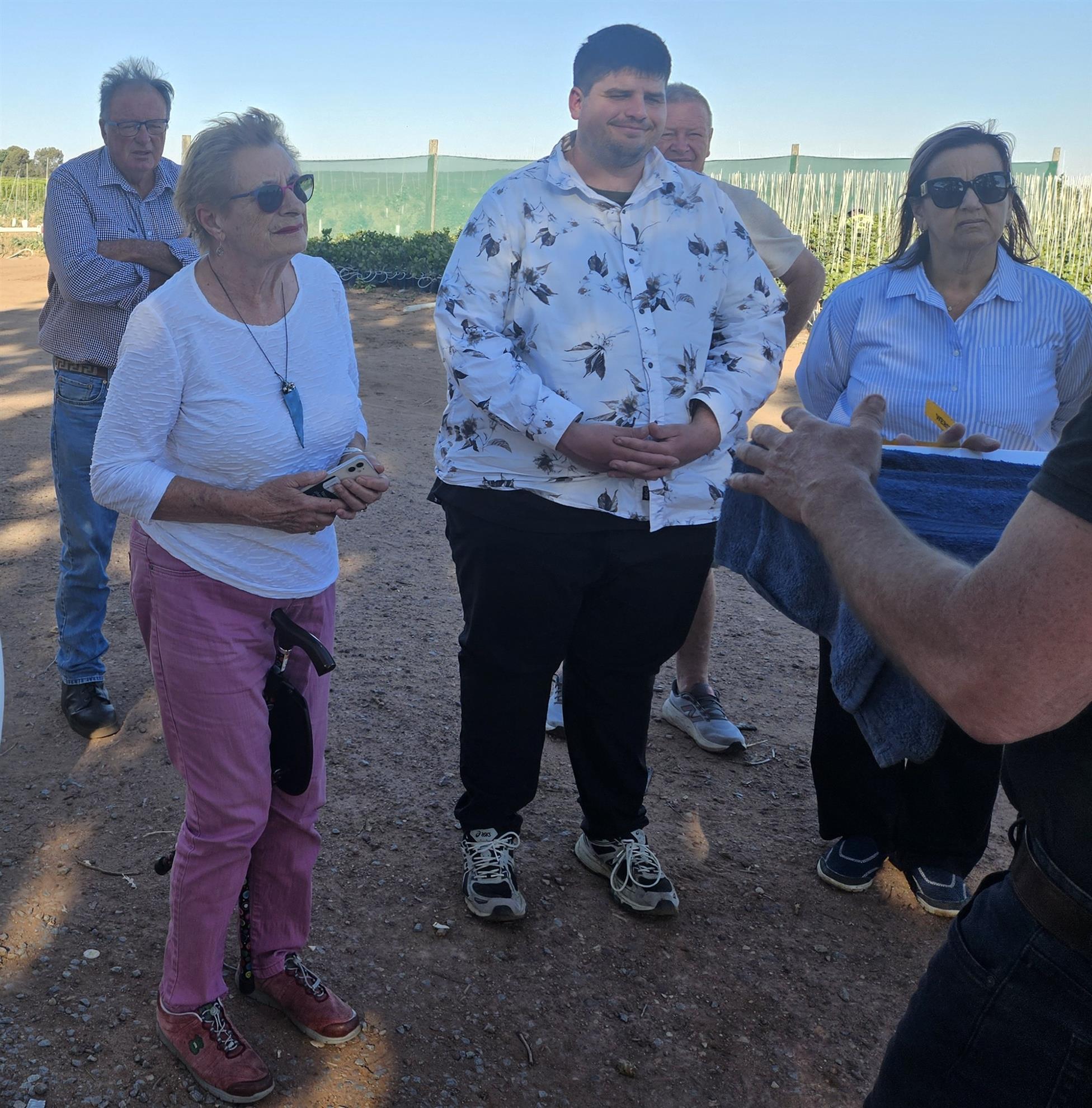
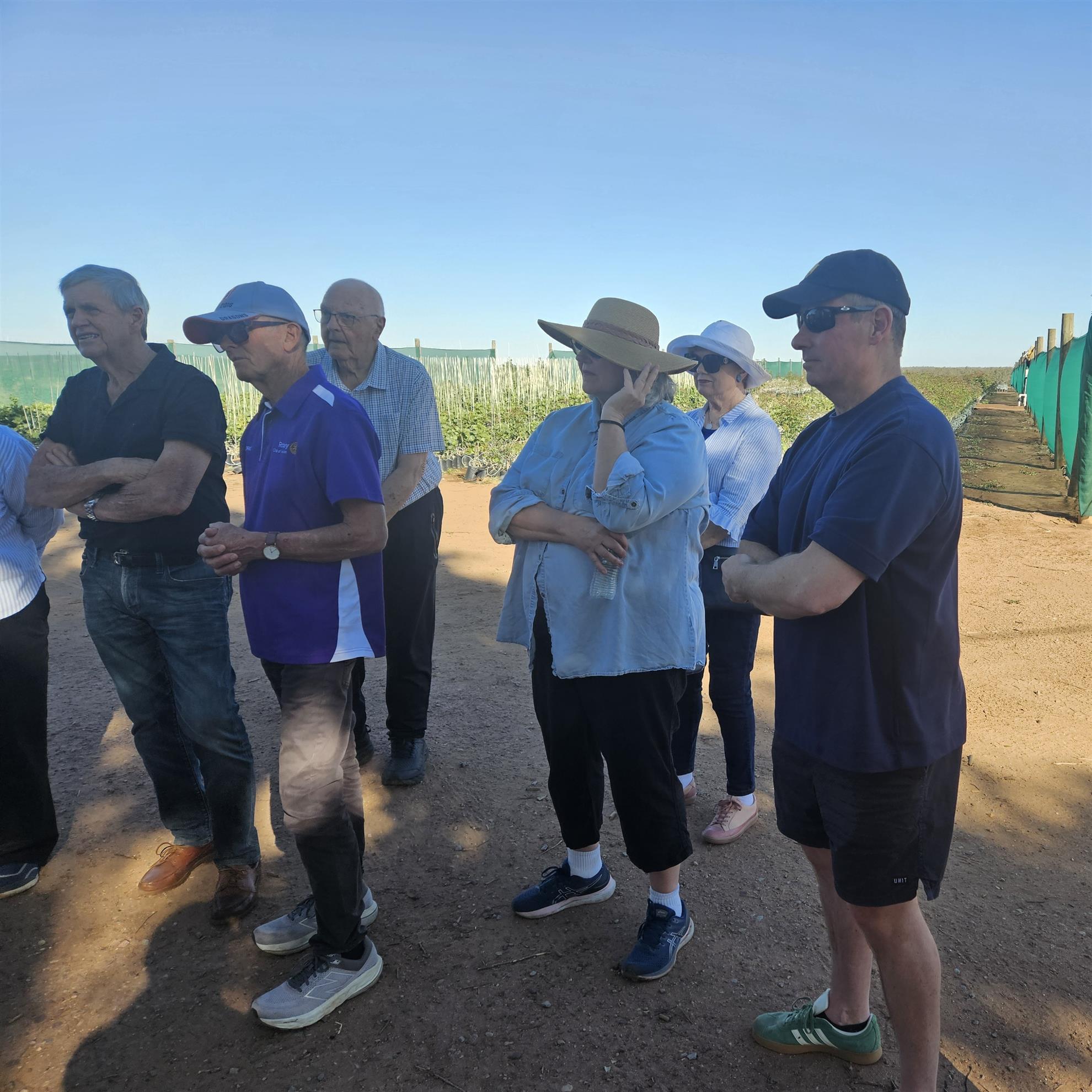
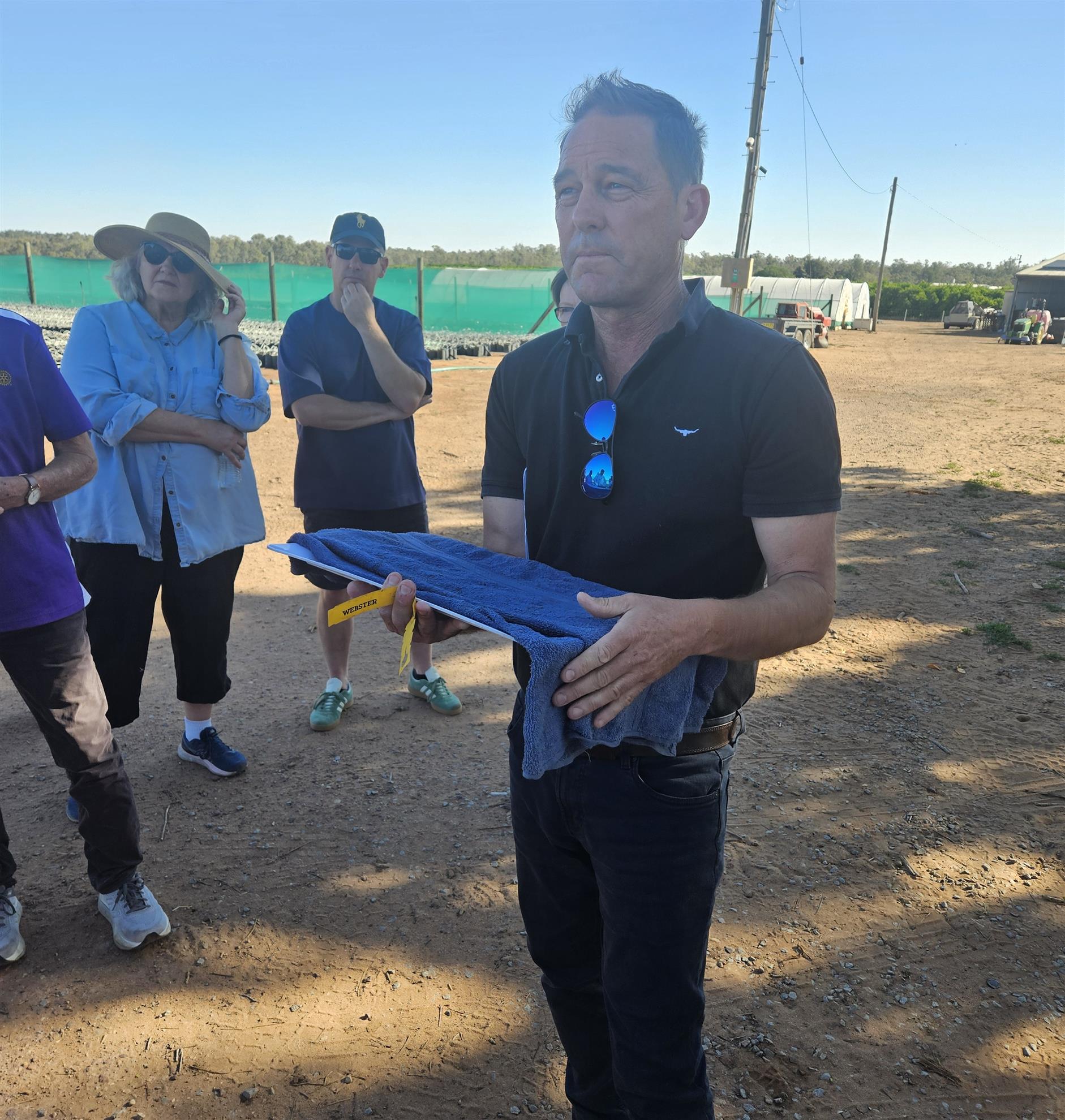
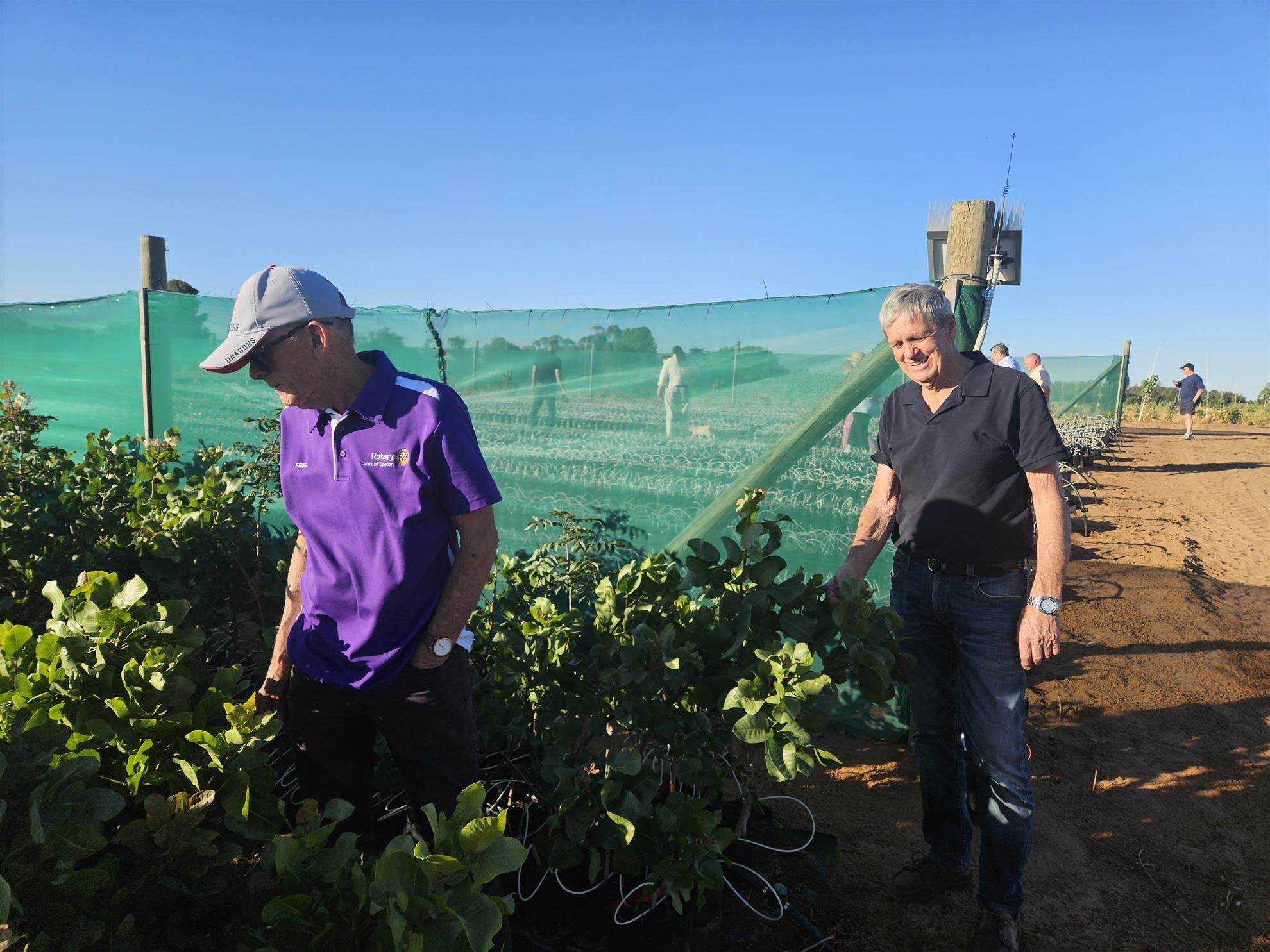
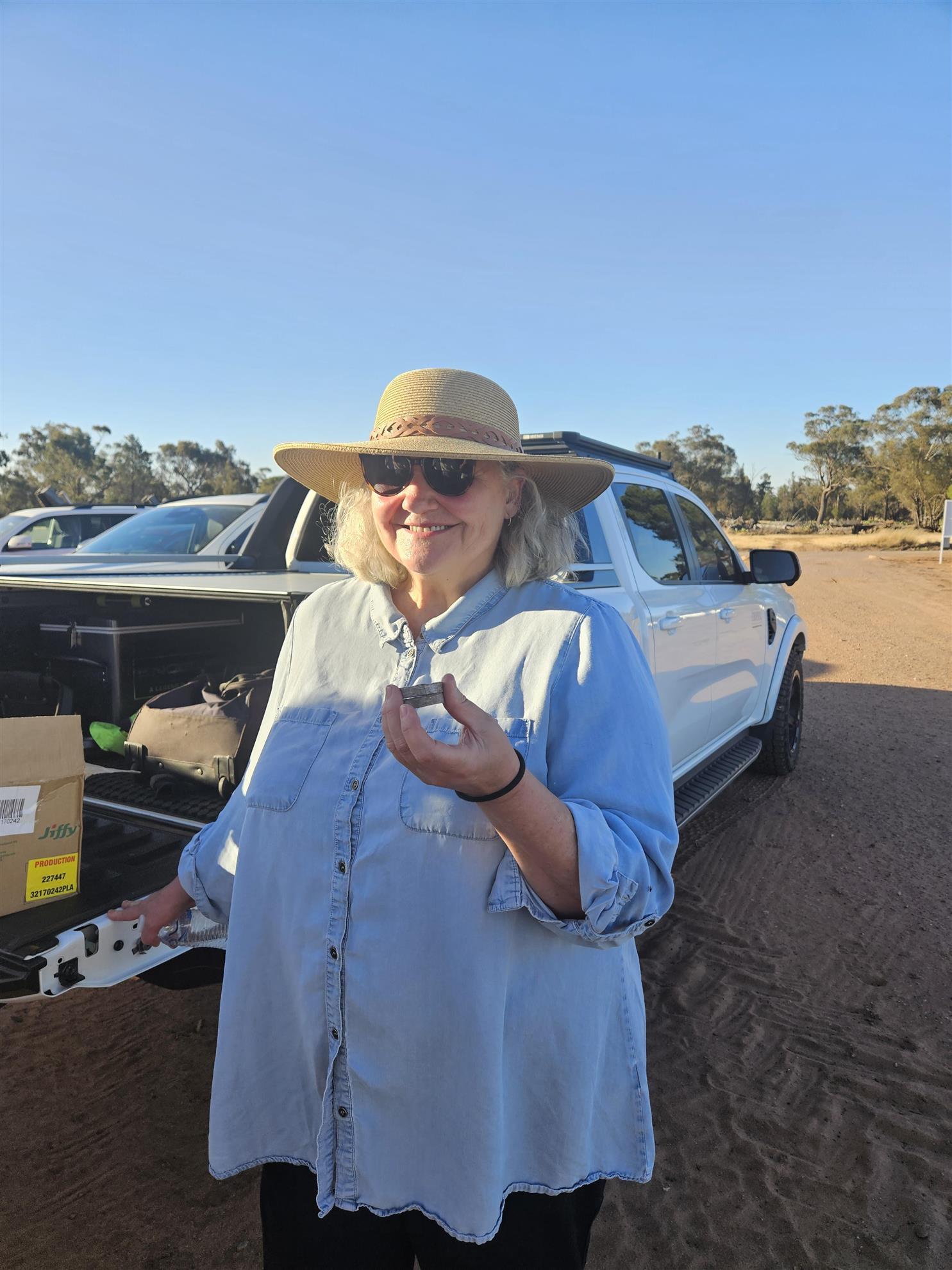
A small band of Rotarians who were available for a vocational visit and 2 guests (Jan Munro and Penny Hudson) met with Eric and Penny's son Paul
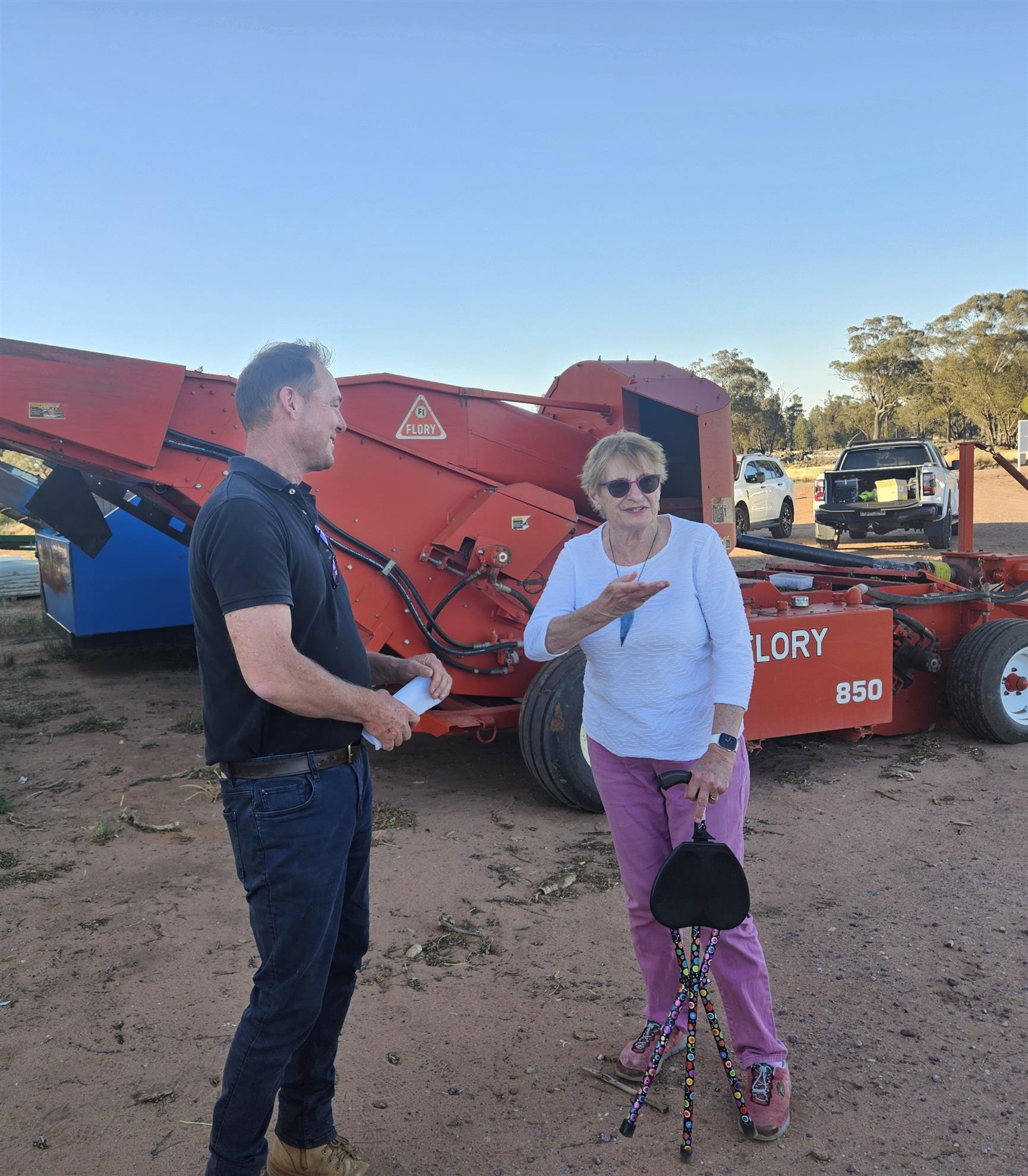
at the Riverina Nut Company farm in the Cudgel sandhills. This farm is one of 3 major pistachio nurseries in Australia. Paul is one of 4 co directors and owners who have seen the opportunity to develop a new nut industry on the tails of the walnut and almond industries.
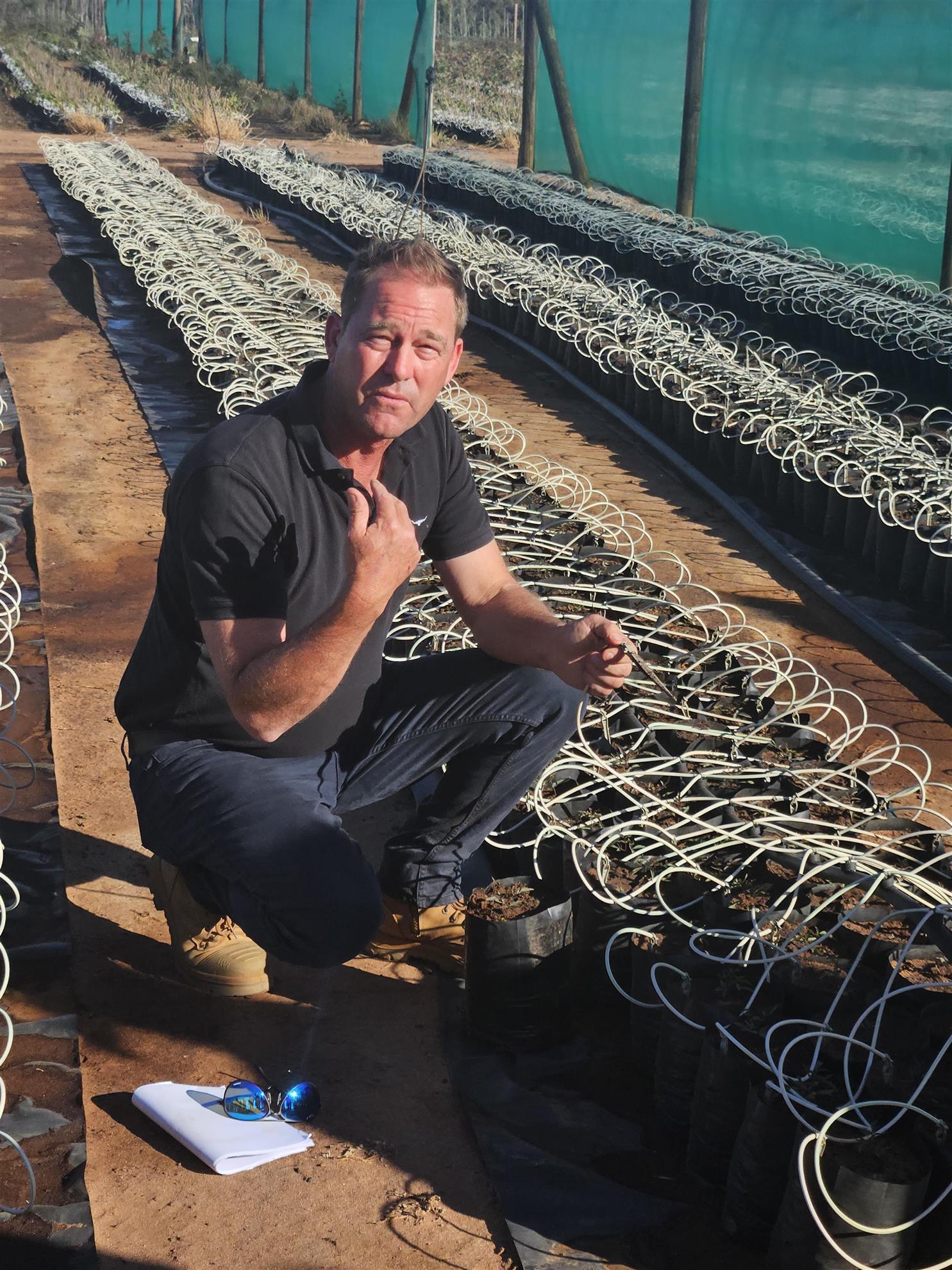
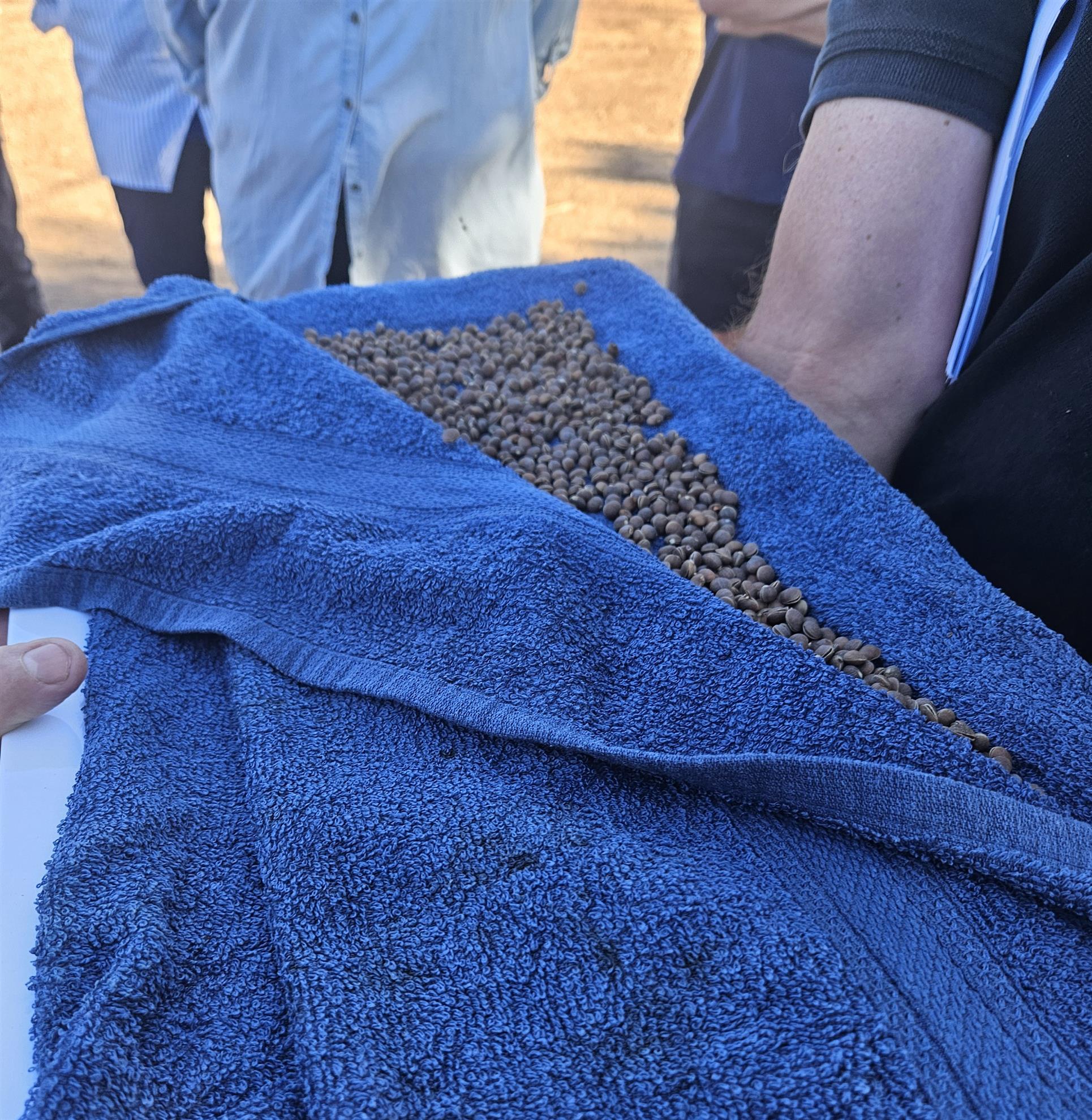
Paul took us through the nursery to show us the process of initially importing the seeds from South America to the final product of a budded rootstock that can be planted out to a production farm. Interestingly the seed has to be imported and in one case 100,000 seed were lost due to improper handling in transit. Now the packages are traced, and the environment is measured so that they know the seeds are viable before they begin the process of germination etc. The germination is now done in an incubator originally designed for incubation of emu eggs. Once a tray of seed is germinated, the individual seeds are picked off (by hand) and placed in a jiffy container and then moved to a covered nursery.
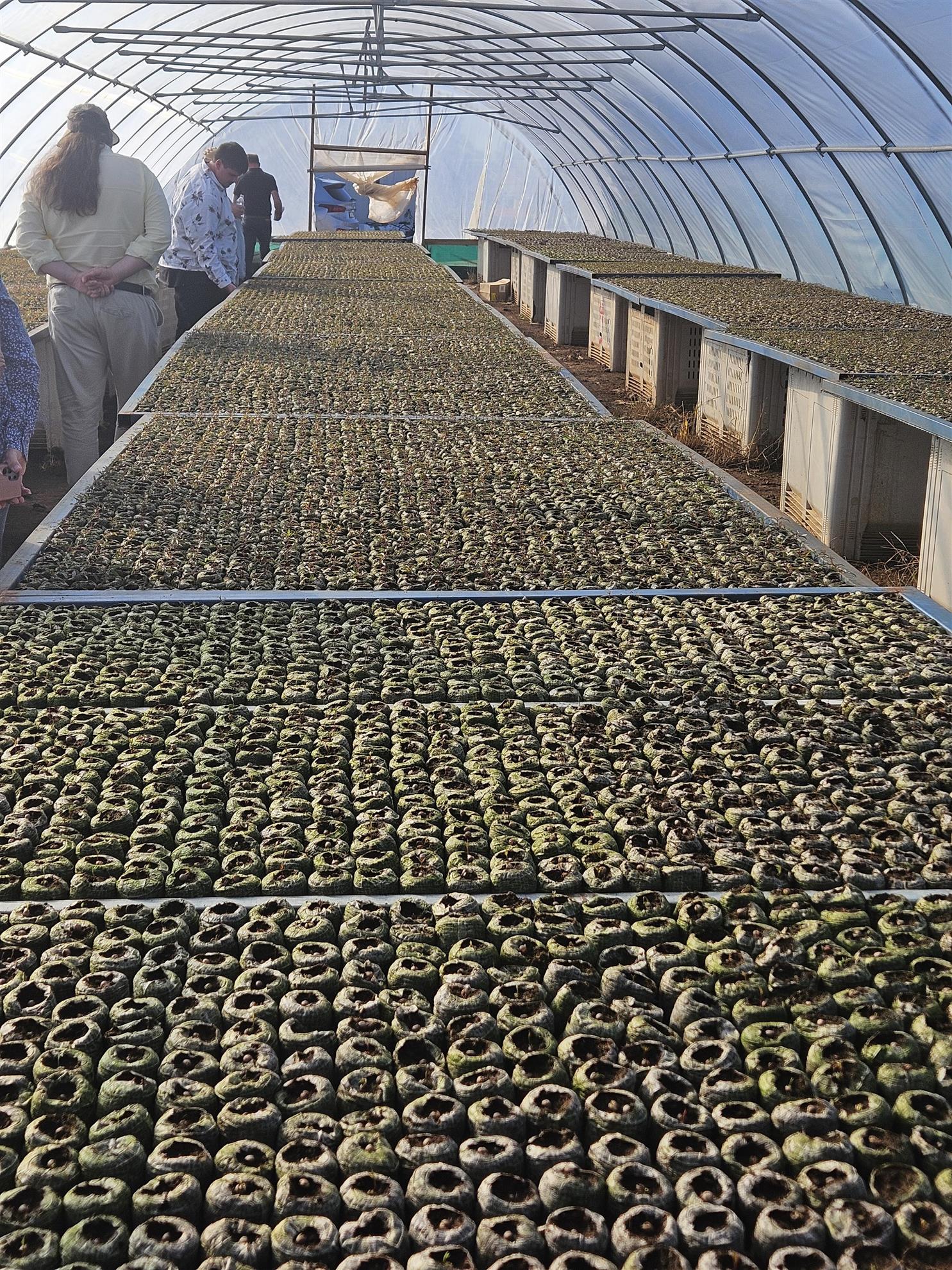
From the covered area the containers are eventually placed in 4L bags containing a mixture of sand and compost to allow the plant to grow out.
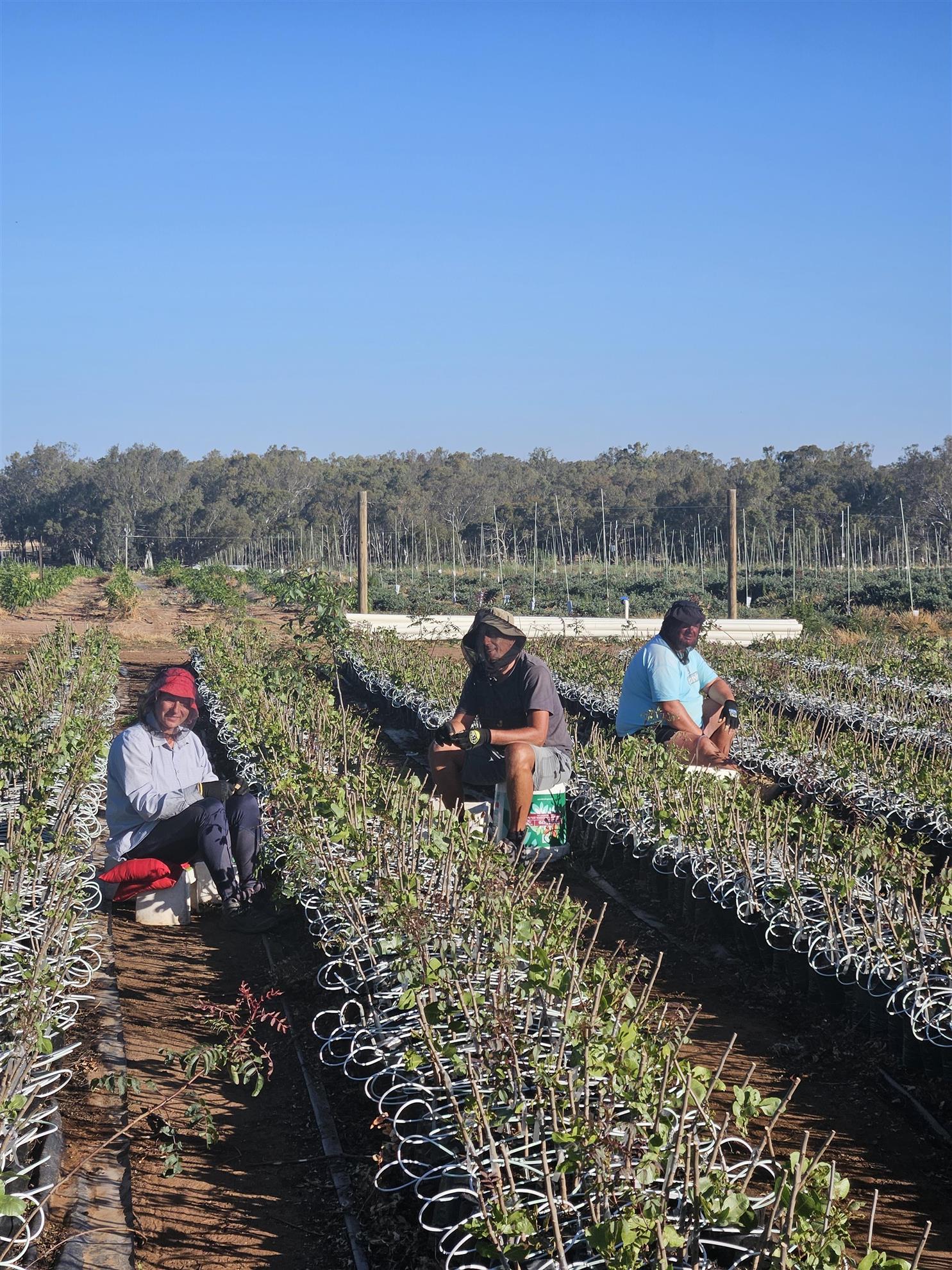
Each plant has its own individual drip line and is fed a mixture and fertiliser. These are all now in the open. Other rival nurseries do keep the plants undercover, however, there is feedback from the growers that the Cudgel plants are more ready to grow and do not suffer a major setback when planted out.
After the rootstock has grown sufficiently a budding team arrives from overseas to painstakingly apply the buds to the root stock. It is apparently a more complex process other nuts and citrus, so the farm manager Michele Valier personally employs teams from countries such as Bosnia. It is especially important in this process to maintain male and female trees separately. To eventually grow nuts the farmer needs one row of male trees for every 11 rows of female trees. With the demise of the bee industry, pistachios are less affected because they do not require a bee for pollination.
Why Pistachios? World production is not meeting demand and Australia is expected to double its production by 2030. The tree is a temperate deciduous tree that is smaller than the walnut and almond and requires less water than the other nut trees. The temperatures in the Riverina are ideal for pistachios and are somewhat salt and drought tolerant. Yields for an orchard will begin with the first harvest in 5 years and maturity at 10 years, however the tree is then capable of a productive life of more than 50 years. Plantings of trees in Australia has increased 10-fold from 2014 when there was only 46 Ha planted. Banks will now allow a significant capital valuation of a crop that will increase by $5K to $10K per year during the first 10 years of crop establishment. Other advantages are minimal capital and development costs using furrow irrigation and also minimal operating cost. A huge benefit is there is now a developing processing plant in Robinvale which means that farmers will not have a need to supply post harvesting equipment.
Paul was thanked by President Jennifer and our team returned to Yanco where we retired to the dining room of the Yanco Club to repast on some excellent Chinese tucker.
******************************
Brain Teaser
Every Friday, Tim visits his favourite coffee shop. Each month, he visits the coffee shop 4 times. But some months have more Fridays than others, and Tim visits the coffee shop more often. What is the maximum amount of months like this in a year?
******************************
Director’s Reports
Secretary Brian
The AGM is on December 4. The Hydro is not available and Jan and Brian have offered their back room for a Pizza and AGM.
Farewell being planned for Matt and Linda Rhodes. Friday 28 November and Circa 21 ( from 6pm). No meeting on 27th.
Christmas party on 11th at the Hydro. $35 per head.
We have been invited to help with the SunRice Christmas Party on Friday 12 December. To help set-up; cook the BBQ, and to pack up. There was considerable discussion about the quote and Brian’s suggestion of $1700 was adopted. This has since been accepted.
******************************
For Peter
Pilots have heard this before...
P = The problem logged by the pilot.
S = The solution logged by the mechanic.
P: Left inside main tire almost needs replacement.
S: Almost replaced left inside main tire.
P: Test flight OK, except auto-land very rough.
S: Auto-land not installed on this aircraft.
P: No. 2 propeller seeping prop fluid.
S: No. 2 propeller seepage normal. Nos. 1, 3 and 4 propellers lack normal seepage.
P: Something loose in cockpit.
S: Something tightened in cockpit.
P: Dead bugs on windshield.
S: Live bugs on backorder.
P: Autopilot in "altitude-hold" mode produces a 200-fpm descent.
S: Cannot reproduce problem on ground.
P: Evidence of leak on right main landing gear.
S: Evidence removed.
P: DME volume unbelievably loud.
S: DME volume set to more believable level.
P: Friction locks cause throttle levers to stick.
S: That's what they're there for!
P: Transponder inoperative.
S: Transponder always inoperative in OFF mode.
P: The T/C ball seemed stuck in the middle during my last turn.
S: Congratulations! You've just made your first coordinated turn.
P: Suspected crack in windscreen.
S: Suspect you're right.
P: Number 3 engine missing.
S: Engine found on right wing after brief search.
******************************
Thank you to Brian for this week's story.
A: 5
*****************************