
Kwinana, a pretty maiden remembered (Click on link above)
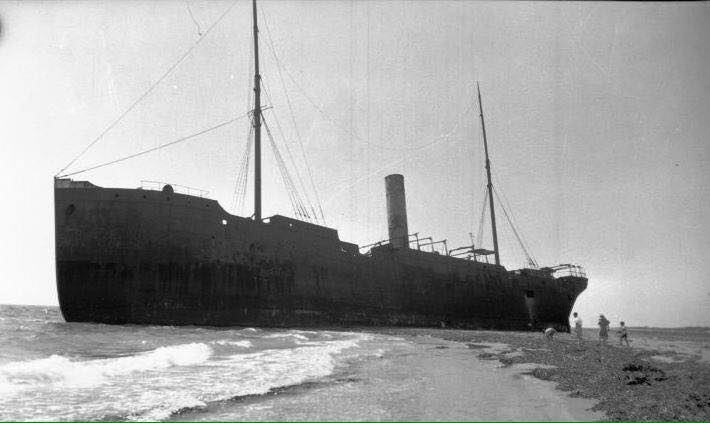
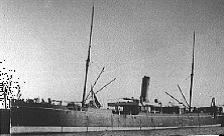
Kwinana first entered service as the SS Darius in 1892. The 2425 tonne vessel was built by W. Doxford and Sons Ltd. of Sunderland, England and was engaged in the Indian horse trade until purchased by the WA Government in 1912.
It was renamed Kwinana, which is an Aboriginal word thought to mean “pretty maiden.” By the end of its first year's service it had made 12 voyages to WA northern ports, carrying 7000 tonnes of general cargo, timber and coal. On the return voyages that year it carried 19,383 tonnes of live Kimberley cattle, with the largest consignment comprising 780 head. The ship also voyaged further afield, making trips to New Zealand and South Africa loaded with hardwood timber, and to China with a cargo of sandalwood.
Kwinana served Western Australia well, and by December 1920 had made 96 voyages from Fremantle, a period of more than eight years. The last voyage commenced on December 23, 1920 when it sailed from Fremantle bound for Wyndham under the command of Captain W.S. Wyles. The following morning the chief engineer reported smoke billowing from the coal bunkers. The hoses were run out, seemingly bringing the fire under control. However, it flared again on Christmas Day between Geraldton and Carnarvon, causing an emergency diversion to Carnarvon. It arrived there in the early morning of Boxing Day with the siren sounding incessantly to draw attention to its plight. The ship was burning fiercely. Its crew quarters were destroyed and the bridge and galley seriously damaged before the blaze was extinguished.
The tug Wyola arrived from Fremantle a few days later to take it in tow but on December 30 a decision was made to let the ship return under its own power. The Kwinana’s crew objected and refused to sail because they felt it was no longer seaworthy. A negotiated compromise was eventually reached with the WA Government. Half of the crew would steam the ship to Fremantle, provided a bonus was paid and they were escorted. After several months and a clean-up at Carnarvon, Kwinana sailed south with the small coastal freighter SS Kurnalpi in company.
They reached Fremantle without incident on March 28, 1921 with the Kwinana carrying its last cargo, 1408 tonnes of Abrolhos-guano fertiliser which it had picked up at Geraldton. After discharging this, it was tied-up at North Wharf for the next nine months awaiting a decision on its future. Surveys revealed that repairs were economically unviable and an announcement was made that the vessel was “of no further use".
Kwinana was towed out of Fremantle Harbour by Albatross on December 9, 1921, to a mooring at Careening Bay on nearby Garden Island, where all salvageable fittings were removed pending the sale of the rust-streaked, burnt-out hull for scrap. It swung on the mooring until May 30, 1922 when it came adrift during a gale and was blown across Cockburn Sound, beaching on the mainland slightly north of Rockingham. In those days the area was a desolate piece of coastline and the potential cost of refloating the ship was not considered worthwhile. The wreck was eventually sold for 25 pounds but little was salvaged.
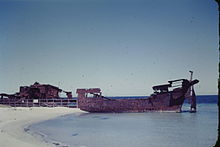
As the weather took its toll, the deterioration was hastened in WWII when the Army used the ship for explosives training. It became increasingly unsafe in the postwar period and eventually a fence was erected for the public’s safety. In the 1960s the ship was cut down to the waterline and the remainder, partly buried in sand, was filled with concrete and rocks by the Fremantle Port Authority. A deteriorating section of the stern is still visible in 1999, and the shape of the vessel is outlined by a concrete breakwater which has been built over the site. It is only a matter of time before the last remains of Kwinana, like the numerous shipwrecks which once littered Cockburn Sound, vanishes forever.
Vic Jeffery, Navy Public
Affairs Officer (WA)