This morning we heard from our guest speaker, Mia, about the traps that we can fall into when dealing with professional scammers. 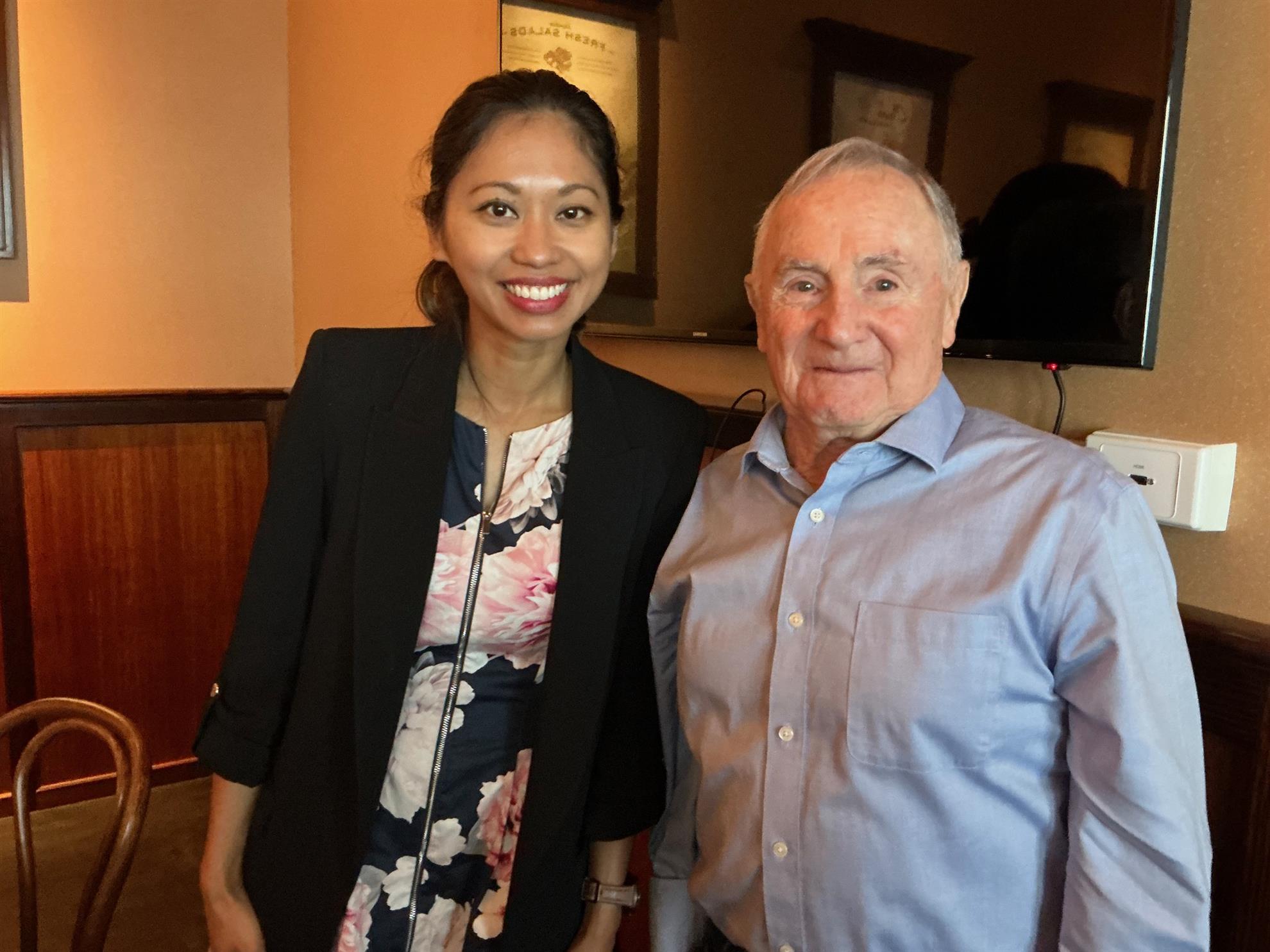
Mia, seen here with our club member, Ron, spoke to us about how easily we can become a victim of scammers. They have come a long way from the amateurs of yesterday. They are a professional lot now with an array of modern technology to enable their practices.
Don't believe for one moment that you are the only person who has been scammed, most of us at the meeting indicated that they knew of someone who had been scammed.
Mia gave us some practical advice about what to do to limit the damage that could be done by these people.
- Be consistent in your reaction to their efforts is the key - don't panic and assume you need to re-act immediately - that is what they want you to do so you don't think about the scenario they have created.
- Don't panic - take a moment to consider what really is going on
- Validate the situation - call your bank, call that agency - but not on the contact details the scammer gave you - research your own contact details independently and ask them the question - but be aware that scammers could pay google to get their notices at the top of the list that you are using to research the correct contact details.
- Talk to a friend before making a decision - they are less emotionally caught up in the event so may be able to think more clearly than you.
- Also don't use numbers and passwords - use a pass phrase instead. Passwords and numbers can easily be uncovered, but a passcode using around 14 characters will take many years for a robot to crack. A passphrase could look something like "trev-4-bet-4eva"
- Wherever possible have different passwords/passphrases for every account you have - that way if one is hacked, the other accounts are still safe
- Use a password manager
- Use multifactor authentication
All these can limit the damage that could be done by these scammers.
Thank you Mia, that was a very timely warning. Great advice for us all.