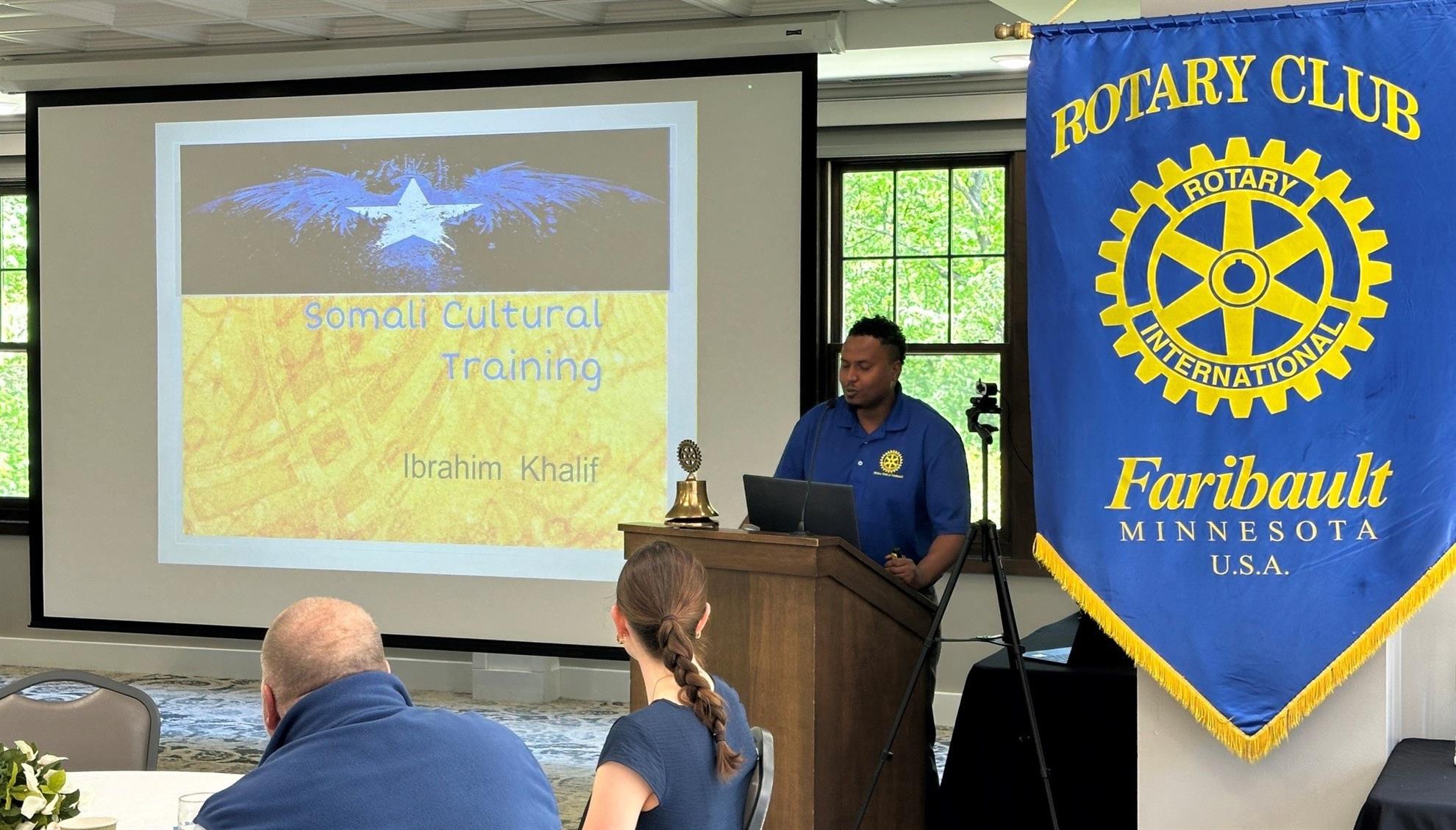
Today’s Guest Speaker: Ibrahim Khalif – Understanding Somali Culture
Ibrahim provided a very informative presentation to Rotarians about
understanding the Somali culture.
He introduced himself and explained how he works with youth and
advocates for families.
He first asked Rotarians to discuss what they know about the Somali culture and then went into his presentation. The Official name of Somalia is the Federal Republic of Somalia.
The capital city is Mogadishu, the government type is Republic, the President is Hassan Sheik Mohamud and the Prime Minister is Hassan Barre.
The population of Somalia is 12 million and the official languages are Somali, Arabic, English, and Italian. Swahili may also be spoken in coastal areas near Kenya. There are 5 different dialects. He described the general attitudes of Somalis as good natured, friendly, hospitable, value friendship based on mutual, place great value on family and tradition, cherish self-reliance and independence, and greatly admire wisdom and bravery.
Somali culture is an oral culture. Somali language was first written in the 1970’s using a Roman alphabet, there is limited school access since the Somali Civil War started in 1991. Few Somali experienced literacies or formal schooling before arriving in the U.S.
Ibrahim described why Somalis come to Minnesota, which isn’t for the cold or snowy winter weather! Many Somalis come to Minnesota having fled from the civil war there. Many left refugee camps to come to the US. The refugee camps and living conditions provided very little access to shelter, school, employment, food, and clean water.
In the beginning, the US federal assigned people where the refugees will live. Lutheran Social Services, Catholic Charities, and World Relief agencies agreed to help refugees get settled. They helped them learn English, find housing, get health care, and begin a new life. Many relatives and friends soon followed. Minnesota provides employment opportunities, accommodating educational system, affordable housing, and community networks. Early arrivals of Somali began in 1993.
Faribault provides a quiet life in a small town as it is difficult to start a life in big cities. Many Somalis want to escape crime and dangers of city life. Faribault also provides the opportunity to get closer to relatives who came before so they can help each other. Somalis were told that there are plentiful jobs in Faribault that don’t require English and education. Many Somalis work at Jennie-O in Faribault and Viracon in Owatonna.
Somalis started arriving in Faribault in the early 2000’s. Many came from refugee camps and difficult living conditions. Ibrahim noted some cultural differences such as some Somali families feel isolated and misunderstood. He noted that Somalis are not punctual, which causes stereotypes that Somalis are ignorant. In Somalia, it’s not necessary to make an appointment at schools, clinics, and other places so that is an adjustment for them.
Lack of language skills makes it difficult for Somali parents to help their children with homework. The language barrier does not mean lack of intelligence. Family is deeply valued in the Somali culture. Somalis usually live together and still practice extended family systems with large families, many children, and helping each other. Somalis who have immigrated to the US will send money back to their families and even close friends. He provided details about Somali weddings and Somali food which is rich in flavor. Ibrahim talked about Somali health including challenges with mental illness, Cancer, autism and many other illnesses.
Somalis believe are western diseases. Before Somalis start using western medication, they use herbs and will read the Quran to the person that is sick. Ibrahim noted that everyone needs to understand that many Somali students are not permitted to interact with music due to religious reasons. This may include listening to or performing music. This leads to the need for alternative assignments in the classroom. Some gender rules in the Somali culture are that the men are usually the head of the household. The stereotype that men control the women is not true.
Women manage the finances and take care of the children because they prefer it that way. Somali women usually have the same or more opportunity to learn, work and travel as the men. Somali boys and girls participate in the same education programs and literacy among women is relatively high. Boys and girls have the same expectations when it comes to home and school. Somalis can be much harder on the boys that the girls and the boys are expected to know good and bad at a very young age.
Some overall expectations of Somalis are to be treated with dignity and respect, to be offered clarification when necessary, and to be able to understand the message being communicated. As an oral society, Somalis give a great deal of attention to oration and spoken words. Good conversation is a lifeline to the majority.
Teachers are a second parent to the children. Teachers help students with their education to succeed. There should be increased communication between the school system and parents by calling or sending simple notes home.
Ibrahim said some of the best ways of approaching the Somali community are to be as polite as you can and to learn key phrases for an icebreaker! Ibrahim showed Rotarians some of those phrases in Somali. He provided some dos and don’ts of visiting a Somali home.
Ibrahim answered questions of several Rotarians before concluding his presentation.
Ibrahim’s presentation today was very informative and appreciated!