Vol. 102 No. 32
Bill Davidson, President
Parisa Adrangi, Secretary
Next meeting: Tuesday February 25, 2020
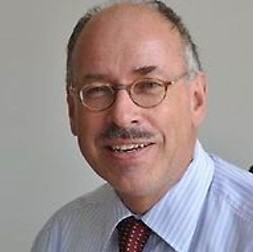
Dr. Klaus-Otto Schmidt, Consul General of Germany Why Vancouver matters: Germany's interest in Western Canada
Dr. Klaus Schmidt, the Consul General of Germany in Vancouver, holds a doctorate in law and began his career at the Federal Foreign Office in 1985. Since then he has held posts in Los Angeles, Tokyo, Buenos Aires, Chengdu and Ottawa before coming to Vancouver in 2018. The consular district covers British Columbia, Alberta, Saskatchewan, as well as Northwest Territories and Yukon.
This year is a special one:
The 250th birthday of the German composer Ludwig van Beethoven.
The 30th anniversary of reunification on this year's German Unity Day.
The end for Berlin's “small” Tegel Airport, opened 60 years ago this year, when the new Berlin-Brandenburg Willy Grandt airport opens this coming fall.
Lots of things to celebrate. "Western Canada has always been a dream destination for Germans", says Dr. Schmidt. It continues to be so.
Did you know Rotary has an extensive list of courses available for members to enrich your Rotary experience and leadership. There is a large variety of courses available, including:
general Rotary topics, e.g., protecting youth program participants, Rotary basics, how to use the Rotary Global Rewards app, etc.
professional development courses, e.g., mentoring basics, understanding conflict
training, e.g., becoming an effective facilitator
membership, e.g., building a diverse club, practicing flexibility and innovation
leadership, e.g., various committee basics
CLICK HERE to view the catalogue of courses; get started now!
Gerry Glazier, President Elect, chaired the meeting and gave the invocation.
Miya Otake & Kaz Kadono accompanied us on the harp & piano respectively for the singing of O Canada.
Milton Kiang, Sergeant-at-Arms Elect, introduced visitors and guests.
President’s Announcements:
Happy to say that Kayo Otake received our cards and seemed very appreciative. Out thought continue to be with her, supporting her in her fight for health.
Parisa Adrangi, provided the Secretary's announcements:
reminders of upcoming events/meetings (see above)
birthdays:Thomas Reppchen Feb 21st, John Wiggins Feb 21st
member anniversaries:Milton Kiang 5 years
wedding anniversaries:none this week
Special announcements and members' moments:
John Hayto:
He is looking for Rotarians who would be willing to share some activities with our exchange student, Mar Gaston. Also looking for a homestay that is closer to her school for the remainder of her stay – Sir Winston Churchill Secondary, around 54th & Heather. A few shorter-term stays would work; not necessarily only one. Doesn’t have to be a Rotarian home.
Thomas Reppchen:
Thanks to John Hayto for being instrumental in the organization of the ski weekend in Whistler. It was a fabulous time! The weekend kicked off with dinner at Barb & Bob’s home. Sarah & Thomas are not skiers so enjoyed the day Saturday touring Whistler town centre; ending the day with an unforgettable experience at the Bearfoot Bistro, thanks to Kaz Kadono. Highly recommend the experience for all, young & older.
Reminder to the men in the group, the Wunday Ranch chez Paul McCrae weekend is also a great, fun time. Keep it in mind for next fall. Wanting to entice some of our younger members to join in.
Joan Posivy:
The joint Rotaractor-Rotary meeting last week was a good one. 50 people attended. A couple of solid outcomes: our club presented Thomas Miller with a Paul Harris Award, and a joint event, with all 4 groups (UBC Rotaractors, Young Professionals Rotaractors, RCV Young Professionals Division, and RCV Rotarians) was decided upon. The organizing committee for the joint event has a person from each of the groups who are working together to bring us a fun event. William Brunke, who is our Club’s representative on the organizing committee even though his formal induction into the Club is next week Feb 25th, let us know that the event chosen by popular vote at the meeting is a bowling tournament. It will be the Rotary Bowlary, at the Grandview Bowling, Friday March 13th, 7:30-8:30 pm, with an optional gathering for dinner at St. Augustine’s beforehand.
Interesting note: Wolfgang Degemann built the Grandview Bowling Alleys!
Jack Zaleski: I am sure you are all aware that we are embarking on a major fund raiser for the new St. Paul’s Hearing and Balance Centre. And I am sure you know that we are planning to hold our 36th Annual Bike-A-Thon this July 12 th in support of the Deaf and Hard of Hearing in BC.
Hey, why work on just one major campaign when you can work on two!
Seriously, you should all have received an email from me regarding these 2 projects telling you that we need your help. We are in the process of identifying potential Donors for the St. Paul’s project and Sponsors for the Bike-A-Thon and we are asking you to assist us.
We would like the names of corporations and/or individuals who you think might be prepared to support one or both of these campaigns. Now this is important. Your participation in contacting any names you suggest is strictly optional. Let’s face it. For some people, contacting potential donors is out of their comfort zone. But don’t let that stop you from suggesting possible donors or sponsors. While we would welcome your involvement, we are prepared to make these contacts on our own.
Now this reminder is in capital letters. DO NOT CONTACT ANYONE ON YOUR OWN! Especially if they are a potential donor to the New Hearing Centre. We are working hand in hand with St. Paul’s and every potential contact is vetted through them to ensure we do not step on each other’s toes.
These are our guidelines. If in your opinion, your contact might be prepared to donate up to $10,000, we would like to approach them as a sponsor for the Bike-A-Thon. However, if your contact might be in a position to donate over $10,000 and might consider an annual donation over a period of 5 to 10 years then we would like to approach them for support of the Hearing Center at St. Paul’s.
Please give this some serious thought. We welcome any and all suggestions. You can call, text, email or send an anonymous tip to any one of us, Wilf, Stu, Nick or myself. And please, the sooner the better.
Thank you for your attention.
Gerry Glazier
We will have a booth at this year’s RibFest in Port Moody supporting the RCV Hearing Foundation. A call out for volunteers will come out closer to the dates.
Program:
John Hayto introduced our speaker, Sarah Reppchen, Financial Services Leader, Western Canada – Risk Advisory at Deloitte, Canada. Her topic was The future of risk for Canadian credit unions; what does this mean for me as a consumer?
Sarah was born here in BC, in Burns Lake. Her family moved to Germany when she was very young. Now life has come full circle with her, and her husband Thomas, moving back to BC.
Her professional experience evolved over the last 10 years, during which time she travelled extensively around the world with KPMG. She has had the opportunity to learn about and hone her skills in the financial regulation world. Though unsure about the move to BC in that context (Toronto is the Canadian financial hub), she soon learned that BC has a lot happening and is happy to be here.
To start, what exactly is a credit union:
They are full-service financial cooperatives. Providing chequing accounts, mortgages, business loans and investment advice.
They are, mostly, provincially regulated. There are two credit unions (Coast Capital and UNI Financial are now federally regulated. It is anticipated that others will follow suit.
They are owned by their members. All members have equal say in how they operate. They have locally elected boards, thus helping to keep decisions based on local realities and needs of members.
Each one is an independent, locally controlled financial institution connected to others by a set of common international co-operative principles.
There are approximately 6 million people in Canada who belong to a credit union, 2 million of them in BC. There are just under 240 institutions in Canada, with 42 of them in BC.
The challenges faced in today’s operating environment for all financial institutions are (1) challenging economic environment, (2) increasing regulatory requirements, (3) changing member needs & expectations, and (4) members have a lot of choice.
Consumers top priorities in choosing a financial institution: (1) convenience to access anytime anywhere, (2) self-serve allowing more control and ownership, (3) personalization of offerings, (4) frictionless across multiple platforms, and (5) advice-based service for complicated services and transaction decisions.
Some of the imminent and emerging risks faced by institutions:
Increased focus on strategic and non-financial risk – IT glitch, Cyber Security, Vendor Risk
Do more with less – More with Data Analytics and Machine Learning, e.g. for Financial Crime and AML detection
Enhance risk management capabilities – Machine Learning Models used for customer adjudication and credit rating assessments
Rethink the Corporate Governance on Risk – Challenge is a proper Governance which meets compliance standards by keeping independence and being efficient with less complexity at the same time
Establish a formal conduct and culture program – aggressive trading activities in 2008, Wells Fargo scandal and recently large banks in Canada caught around aggressive sales techniques
Strategically manage capital and liquidity – classic – but especially where more CU go federal and liquidity and capital frameworks are enhanced by Regulators, a challenge
To deal with the above, financial institutions will need to manage the key non-financial risks:
Increase operational resilience;
Combine effective cyber risk strategies with information risk and data strategies;
Improve risk prevention instead of focusing on risk and fraud detection;
Improve the risk culture and consider reputational risk mitigation;
Find effective and efficient ways in complying with enhanced regulation through fusion, technology and automation.
Operational resilience refers to the ability of firms, financial market infrastructures, and the sector as a whole, to prevent, respond to, recover and learn from operational disruptions. Considering the accelerated innovations and technological disruptions, executive focus is growing towards operational resilience, away from the traditional financial resilience.
What are the implications of all of this for the consumer? The consumer will benefit from the emerging focus on risk culture and conduct risk. This is good news. Financial services organizations are, when it comes to conduct, under judged by the 1% of what goes wrong versus the 99% of what goes right. They are now evolving their cultures to further customer protection and marketplace integrity and incorporating conduct risk into their risk management frameworks.
In closing, as a consumer we can look forward to better protection under the increased regulatory scrutiny and the focus moving to risk prevention. Good news indeed.
Meeting adjourned with a toast to the bravery and work of the health care workers in China dealing with the coronavirus health crisis.

 Dr. Klaus Schmidt, the Consul General of Germany in Vancouver, holds a doctorate in law and began his career at the Federal Foreign Office in 1985. Since then he has held posts in Los Angeles, Tokyo, Buenos Aires, Chengdu and Ottawa before coming to Vancouver in 2018. The consular district covers British Columbia, Alberta, Saskatchewan, as well as Northwest Territories and Yukon.