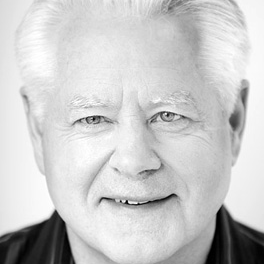
Bud is 94 years old, and has a wealth of military experience. He was extremely personable and engaging in sharing a lot of information from his life.
Bud’s Dad was a WWI pilot. Following in his footsteps, Bud grew up always wanting to be a pilot. He attained his private pilot’s license at 17 years old (1946). He graduated from the Royal Military College (RMC), Kingston in 1952, having gained his fighter wings in 1951. He completed his mechanical engineering degree from University of Toronto in 1953.
He wanted to fly all kinds of different planes, which led he and his wife, Lee to move 7 times in 14 months. He ended up in 427 squadron in Germany, a special combat squadron now.
The next step was to become a test pilot – he was grateful to be selected for the program and completed test pilot training at the Empire Test Pilot School, Farnborough, Hants, UK, in 1959. He flew 15 different types of airplanes. He realized that it is truly amazing how you can build so many types and have them all with many faults.
He flew the Boxcar in the high artic. It was fascinating – that time of the cold war when it was felt the Russians were a meaningful threat. Many younger people do not know just how much of threat Russia was then. The current situation with the Ukraine is not a new one. Bud lived through 60 years of Russia being considered a global threat. This continues.
Bud was loaned to the USAF Space Systems Division, Gemini Launch Directorate, in 1962-1965. NASA was just started up at the time. He was a pilot safety officer for the program. It was a little known fact that the air force provided the booster for the space rockets.
There were three space programs on the go while Bud was there (1) Mercury, (2) Apollo, and (3) Gemini. Mercury had 6 successful launches with solo astronauts aboard. Gemini has 10 missions with crews of two aboard. The Apollo explosion was the first real tragedy in the program.
While performing a launch rehearsal on the ground there was a cabin fire where all 3 astronauts, Bus Grissom, Ed White, and Roger Chaffee, died. They were in 100% atmosphere, a spark lit, destroying the command module.
Anecdotally, Bud was in Dallas when Kennedy was assassinated. Remembering how everyone was emotionally impacted for some time following the news. It was President John F. Kennedy who set the stage for the emerging space program having proclaimed the ambitious program to Congress in 1961 and setting the goal as reaching the moon. Five days after JFK was assassinated the centre was renamed the John F. Kennedy Space Center in his honor.
Bud moved to Ottawa, the Aerospace Engineering Test Establishment (AETE), Ottawa, Uplands 1966-69. He was a Wing Commander Operations and Senior Test Pilot. He remembers the amazing crew he worked with there.
In 1967 the Centennial Team was put together with then secret goal of beating Russia’s altitude record. Members were from the Dept. of Defense, the National Research Council, the Defense Research Board, Transport Canada (air), the Royal Canadian Flying Clubs Association, and from private industry – Lockheed Aircraft Corp., Orenda Engines, Canadair Ltd., and AETA Cold Lake. Back then, records really mattered globally.
The Russian record at the time was set in 1961, 113,892 ft with a MIG-21 with a booster. Bud took 35 flights in 1967 flying at mach 2.45 – the fastest ever in an airplane (that record still holds). Though not able to break the Russian record, Bud did set the Canadian record in December 1967, a record that still holds today, 100,110 ft. Interestingly the F35 is now limited to 1.65 mach.
The Russians, wanting to be sure they would continue to hold the record went on to achieve two more with the MIG-25: 118,898 ft in 1973, and 123,520 ft in 1977.
There were some very interesting facts that Bud shared:
By the end of WWII, Canada had the 3rd largest and the 4th largest air force in the world. During the cold war we had 12 squadrons, each with about 17-18 planes and 8 squadrons of CF-104s with nuclear strike heads. It is interesting to think about what it all means.
Lester B. Pearson was one of the key players who pushed for the creation and formation of NATO. The goal was not a “… a pact for war, but a pledge for peace and progress.” (Lester B. Pearson, 1949)
Over recent decades our military strength was reduced by 1/3. That’s like removing a full army. One government after the other cut the heart and soul out of the armed forces. Back in the day we were one of the principal countries to do condition testing in both cold and hot weather. All of the capacity is gone.
When the wall came down in Berlin and the Soviet Empire broke up. Many of Russia’s weapons were in the Ukraine at the time. They wanted them back and with the world being aware of the risk of a Russian super strike, the condition was that Russia give a guarantee they would never attack in order to get their weapons back. Of course we see they did not hold to their word.
The Avro CF-105 Arrow program was extremely expensive. The plane was just too big and heavy to be a good fighter. The program was cancelled in 1959 for a number of reasons – political and cost. The Arrow Program had 25000 most competent people in the world working on it. When the program was cancelled Canada lost that valuable knowledgeable talent.
Canadair took on production of 104 Starfighter, a supersonic fighter that followed the F-104. It was sold to all the NATO nations. Some said they only wanted it for reconnaissance, hmmm.
At the time, on any given evening in terms of a first strike we could have had 1000 nuclear armed flights attacking Russia before they could attack us. Russians had, and have, wonderful test centers. We were in their backyard. Managed to keep the number of 104s out there a secret.
Bud talked about so much more. A truly fascinating recount of not only his personal history but Canada’s as well.










 : Thursday, Dec 8 at 7PM.
 : BYOB, Potluck, & Pizza
 : 610 Granville St., Buzz# 5302
 : Wear a costume of your favourite Christmas or holiday character