Gerry Glazier introduced today’s speaker, Amrit Sandhu, General Manager of the Marriott Pinnacle Hotel in Downtown Vancouver.
Question: How has the last 6 months or so transformed the hospitality, in particular the hotel industry?
Looking back a bit, 2019 was a banner year for hospitality and hotels in Vancouver. The best year in recent memory! Following that 2020 was off to a great start. Amrit remembers that it was Friday March 13th in the evening, as he was preparing to leave work for the day when the phone started ringing off the hook. An associate that had worked at his hotel had tested positive for COVID-19. As they dealt with the onslaught of interest, it became very apparent that they needed to be decisive and move immediately to implement precautionary steps.
They closed the restaurant immediately, even though the person in question had not worked there for some time. The health and safety of their current staff was paramount. During the next day and next few weeks they received a tsunami of booking cancellations. Given their priority of ensuring everyone’s safety, there was no question… they needed to honour every request to cancel.
When the borders shut down, an occupancy rate of 80-85% dropped to barely a handful of rooms booked. It begged the question: should we stay open? Most hotels in downtown Vancouver, closed. Marriott stayed open primarily at the time to accommodate the airline crew that routinely used them. These working individuals needed accommodation. They kept on very minimal staffing to cover them.
In April there was barely 3% occupancy. It was the most impacted month, when no one really knew what was happening or how to deal with it. To put the trend in perspective – last weekend close to 350 rooms booked (out of a total of 432 rooms and 6 suites).
The important aspect to this whole situations is how to manage the people. They went from a team of 256 to just under 50 actively working. A lot of them with more than 10-20 years working with Marriott.
They made sure to stay in contact with all of their employees to keep all of them informed of changes. As things progressed, the subsidies that government put in place and really made a difference to help employees. Marriott as a corporation also made sure that all health benefits were kept whole for the duration. For those who stayed working, they worked on a shared basis to get as many people as possible working, e.g., a reduced 3 day work week.
As they went through May and June, occupancy increased. Marriott put a lot of resources to ensure sanitization protocols have been met. They closed what they could so they could ensure that the on the whole it was, and is, the safest place possible, e.g., gym, restaurant, etc.
Some safety protocol examples: employees will not go into the room while the client is there to ensure minimal contact, they installed plexiglass shields, use PPE where they can, take temp checks for all staff at the start of every shift, they staggered the schedule, social distancing is being maintained in all areas, and masks are worn in all common areas by everyone.
The hotel’s Showcase Restaurant and Bar is open now with distancing, mask wearing, etc. Its business is picking up as more people are returning to their office locations downtown.
Traditionally a lot of their clients are international, this can’t be the case now. The question now is: how do we drive the business? The focus is primarily local drive traffic. Staycations, staying a weekend away from home, etc. Occupancy is a little north of 20% now, is better than it was and is steadily improving.
All conventions have been cancelled. Cruise ships are not operating. Until some of those long-term events are able to start up again, they have to focus on small meetings, local travellers, etc.
Any groups who have used the Marriott have been very complimentary of the level of safety and precautions in place. Only true way for businesses to come back to build the trust that it’s safe to frequent the locations. It is being shown that they are starting to gain the confidence back from travellers.
The next few months are crucial. Everyone is looking for some good news regarding vaccines, etc. A lot of the government programs will be trailing off, so there is a risk. It’s possible that the economic recovery will be delayed even further; as the regular seasonal flu comes around it will get confused with COVID and cause more unrest and distrust.
Travel is an innate human need. Next year will most likely be better. Though cautious in the short term to be sure that they continue to inspire trust.
Q&A:
- Gordon Esau, took a 3-week holiday in BC this summer. Stayed at Marriotts, was impressed. In an aggregate for Canada this could be a plus – Canada has a significant deficit, more money spent outside Canada. If we use this as an opportunity to encourage travel within Canada may be a boon for our own tourism industry.
- : Canadians are known to be travellers the world over. Economically we’ll see how this plays out. Currently primarily Canadians within Canada. At the hotel level, watch the currency fluctuations. US & Asian travellers spend more per night vs locals. A lot of the smaller towns are already seeing the uptake. E.g., Kelowna will see occupancy of over 90% this month. In bigger cities, American travellers make the big difference to the bottom line. Time will tell if there is enough travel to sustain the businesses. This is true for all surrounding businesses too as they are all linked.
- Milton Kiang, presuming Canadians have disposable income to travel. People are still relying on government handouts, so travel is a challenge financially.
Amrit: Business is not going to go back to where it was for a long time. Are trying to promote to other markets. Absolutely the next few months will be crucial.
- Stu Bird, in Hawaii the business is down 90%. No tourism allowed there. Everyone who is looking for a staycation works for the tourism industry. Anyone coming in is usually Friday, Saturday stays only. Anyone coming into the islands must isolate for 14 days. Is your hotel used for isolation?
Amrit: Not usually, staying in the hotel for 14 days is cost prohibitive. Less expensive options are used. Looking to only break even for now. Other part to stay alive is a zealous control of cost management. A lot of vendors have been flexible to help manage these costs through this difficult time.
- Jim Evans, it has been noted that in southern countries that are already facing seasonal flu, that there has been a significant reduction in the spread. Perhaps because of the training received via COVID, masks, gloves, sanitization. Some good news perhaps.
- Verona Edelstein, congrats on the care given to staff. Looking forward 6-9 months, do you think most employees will be back to work?
Amrit: What has helped is the federal government’s wage subsidy program. The program runs to the end of the year but trails off moving towards the end of the year. As soon as a greater recovery moves into play, more people will be brought back. No way to predict the time line though.
- Michael Woolnough, how much freedom did hotel managers have in setting up the program to deal with COVID?
Amrit: There are a few Marriotts in Vancouver, they have a weekly general manager call to discuss issues and solutions. Marriott headquarters brought in the best of the best to help direct actions. Learning from each other every day.
- William Brunke, did company execs have specific directives or is it left to the managers?
Amrit: Anything that is essential to have in place across all locations, e.g., all the guests are expected to wear masks, sanitization standards, temperature checks of staff, etc. were directives from head office. The application of these standards is up to the hotel manager based on their individual business volumes. In the U.S., particularly in hotspots, services remain closed. Not so much here.

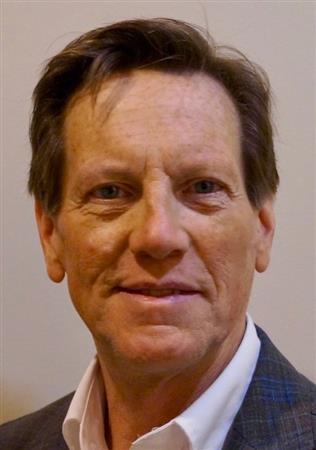 Dave Hamilton, District 5040 Governor for 2020-21 will be providing us with information about the Districts priorities and goals for this very challenging year.


.jpg)