
banner
Vol. 102 No. 17
Bill Davidson, President
Parisa Adrangi, Secretary

Next meeting: Tuesday October 29, 2019
Elizabeth Murphy, Journalist on Urban Planning
Vancouver Housing Supply & Broadway Subway Plans

Elizabeth Murphy is a private-sector project manager and was formerly a property development officer for the City of Vancouver’s Housing & Properties Department and for BC Housing. She is a contributing writer to The Vancouver Sun, The Province, The Georgia Straight, Common Ground Magazine and The Vancouver Courier, focusing on civic issues.


Upcoming meeting: Tuesday November 5, 2019
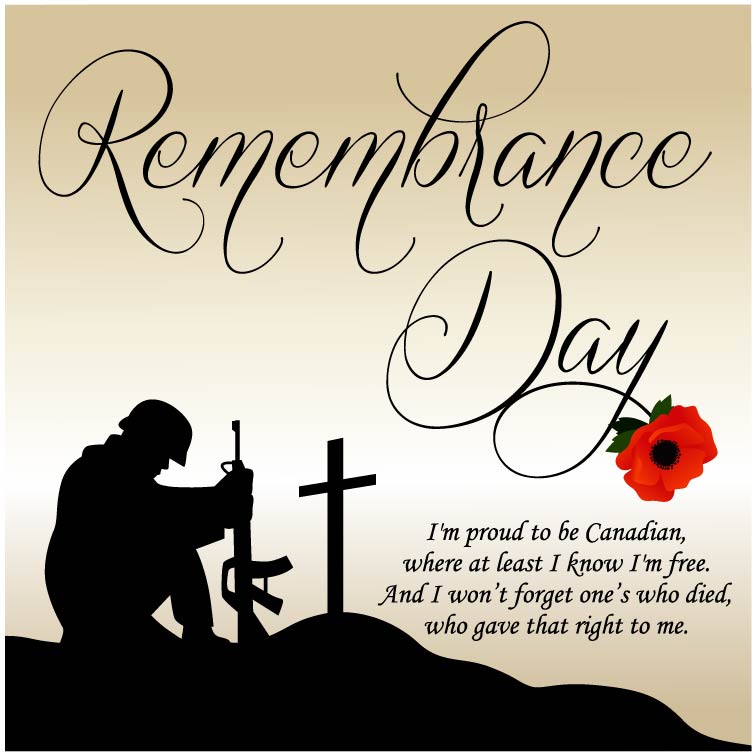
Sgt David Scrivens, CD Seaforth Highlanders 
The Importance of Remembrance Day

Upcoming meeting: Tuesday November 12, 2019
James Richards, Partner, Slater Vecchio LLB 
Injury law and ICBC

James practices in the area of Personal Injury, focusing on cases involving traumatic brain injury (TBI), significant orthopedic, spinal and psychological injuries, resulting from car, motorcycle and bicycle accidents as well as slips and falls and assaults on commercial and residential premises.
________________________________________________________________________
 

QUOTE OF THE WEEK

thanks to John Bathurst

"This above all:  to thine own self be true,
and it must follow, as the night the day,
thou canst not then be false to any man."

- says Polonius in Shakespeare's Hamlet
___________________________________________________________________________

41st ANNUAL CURLING WEEKEND
just a few more curlers needed

Everyone is welcome, beginners and seasoned curlers alike.
It is a fun weekend with friendly people.
Contact Peter Clarke or Myron Kuzych for more information
Accommodation is available
___________________________________________________________________________
 
Rotary Club of Vancouver's
Annual General Meeting
Tuesday December 3rd
___________________________________________________________________________

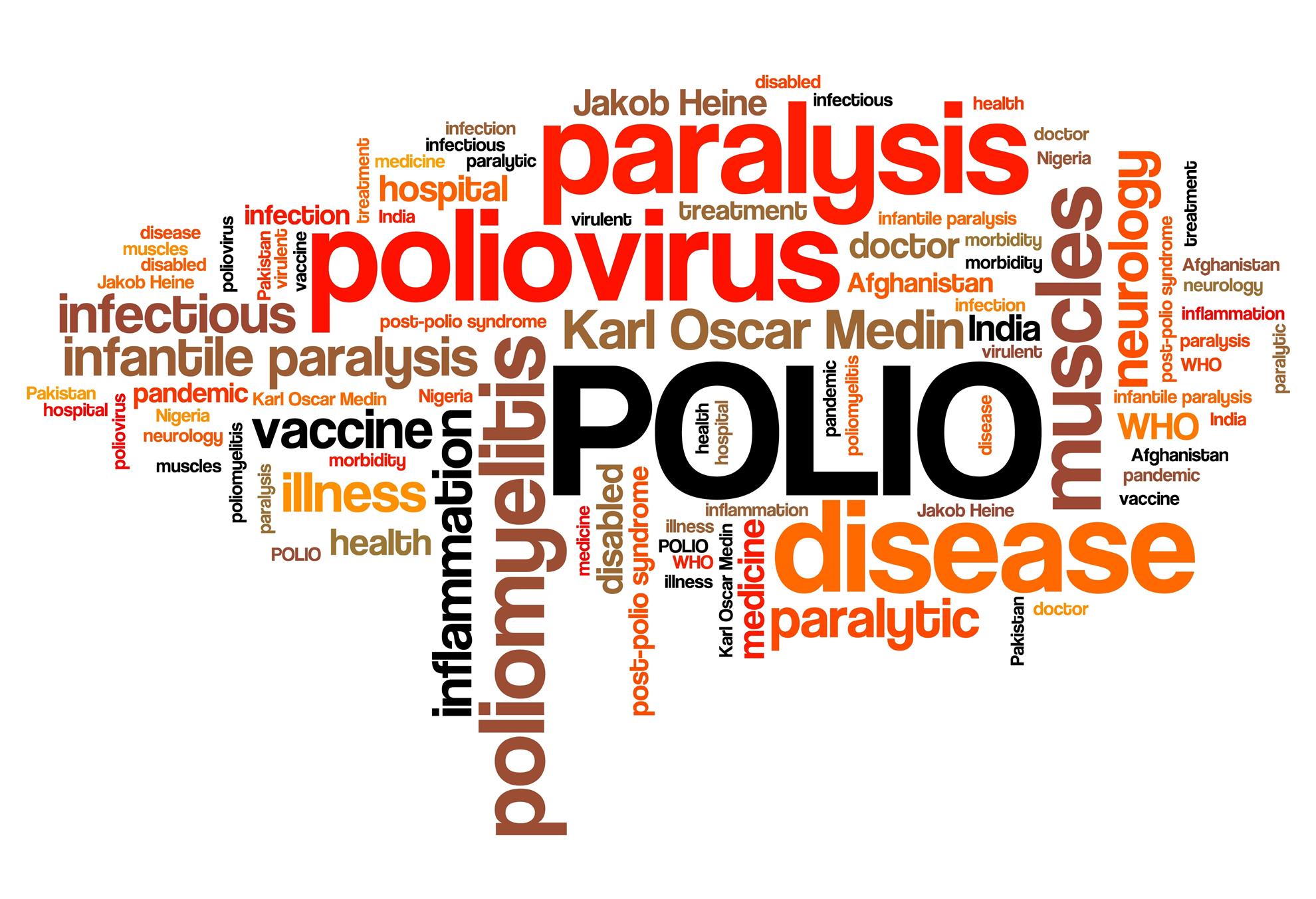
The story of polio

Article thanks to the Canadian Public Health Association (https://www.cpha.ca/story-polio)

Polio crippled tens of thousands of Canadians until the Salk vaccine was introduced in 1955.

Polio (poliomyelitis) is an infectious disease caused by a virus. Polio can strike people at any age but children under age five are most at risk.

Polio used to be called "infantile paralysis" or "the crippler" because the virus can permanently damage the nerve cells that control the muscles.

Although the first polio outbreaks appeared in Europe in the early 1800s, the first known outbreak in Canada occurred in 1910. A little girl was taken to a Hamilton, Ontario hospital with what was thought to be rabies. She died, and it was later discovered to be polio.

At that time, no one knew if the disease was contagious or what could be done to prevent or treat it. Polio epidemics continued, usually in the summer or fall, and became more severe and affected older children and youth.

Provincial public health departments tried to quarantine the sick, closed schools, and restricted children from travelling or going to movie theatres. Over time, it became clear that these measures did not prevent polio's spread.

Most provinces also provided a free "convalescent" serum when people became ill from polio. The serum was made from blood donated by those who had survived a polio attack, although there was never proof of the serum's effectiveness.

In 1930, Canada's first "iron lung" was brought to The Hospital for Sick Children in Toronto from Boston. These huge metal cylinders regulate the breathing of people whose polio attacked their respiratory muscles. There was a rush to assemble more iron lungs to help keep people alive after a severe outbreak in 1937. The Ontario government paid to have 27 of these devices assembled in a six-week period.

Some women gave birth while confined in an iron lung and the Royal Canadian Air Force made emergency deliveries of these devices across the country. Iron lungs are still used in some countries.

A nasal spray designed to block the polio virus from entering the body was used on 5,000 Toronto children in 1937. After two rounds of treatments, the spray was abandoned because it did not prevent polio and actually caused a number of the children to lose their sense of smell.

An estimated 11,000 people in Canada were left paralyzed by polio between 1949 and 1954. The disease peaked in 1953 with nearly 9,000 cases and 500 deaths -- the most serious national epidemic since the 1918 influenza pandemic. The last major polio epidemic in Canada occurred in 1959, with nearly 2,000 paralytic cases.

The widespread application of the Salk vaccine (introduced in 1955) and the Sabin oral vaccine (introduced in 1962) eventually brought polio under control in the early 1970s. Canada was certified "polio free" in 1994.

Sadly, some people who recovered from paralytic polio in the past may later experience post-polio syndrome (PPS). This nervous system disorder can appear 15 to 40 years after the original illness, bringing progressive muscle weakness, severe fatigue, and muscle and joint pain.

There is still no cure for polio but the global eradication of the disease is hoped for in the near future--another great public health achievement.
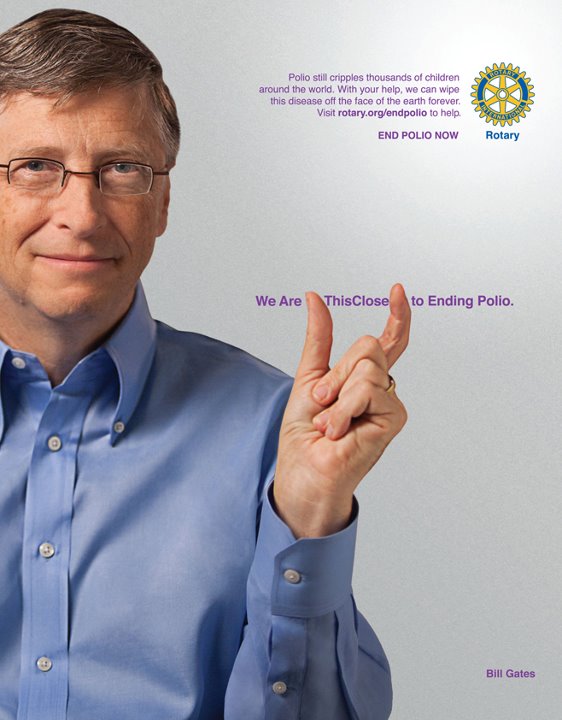

 

From the Economist (October 24, 2019)

A global commission announced today that the type 3 polio virus has been eradicated, leaving only one of the virus’s three species yet to be vanquished. Type 1, the remaining species, survives in only two countries: Afghanistan and Pakistan, where violent conflicts are hampering vaccination. A big problem now is vaccine-derived polio, cases of which have been reported by 12 countries this year, up from seven in 2018. This is caused by mutations of the weakened virus in the oral polio vaccine. In places with low vaccination rates and poor sanitation, the vaccine-derived virus can jump from one unvaccinated person to another for long enough to mutate into a paralysing version. Boosting vaccination is thus the key to wiping out polio in all its forms. Today’s announcement is something to celebrate. But complete eradication remains elusive: back in 1988, governments and the UN had set the goal of a polio-free world by 2000.

___________________________________________________________________________


Good-bye to Craig Beliveau

We have lost a good friend and a great Rotarian with the passing of Craig Beliveau. 
 
Craig was born in Sherbrooke, Quebec on August 31, 1951. He was relative to the famous hockey player Jean Beliveau. Moved to Edmonton and worked in the pulp & paper industry. He lost his right arm in a work accident not long after a co-worker lost his life in a similar incident. Craig subsequently moved to Vancouver and became an insurance broker. He served and advised many happy customers including Franz Gehriger.
 
Craig joined Rotary in January 1997. He became a Director a few years later and then Club President in 2005-06. He is well remembered as a competent, humorous and well-spoken club leader. Craig was always a positive person, full of humour and had jokes ready for any occasion. Craig left our club in 2012 for personal reasons but had always intended to rejoin; he attended many lunches over the years since he left.
 
Two years ago Craig had a life-threatening aneurysm in his stomach with only a 20% chance to survive. Craig, with his positive attitude, did survive and was back at work a few months later. 
 
After several falls, Craig was hospitalized at the end of August 2019. This time it was a malignant brain tumor. The operation to remove the tumor was successful. Craig went home after several weeks, but had to endure many radiation treatments which it is thought might have created internal bleeding.
 
On October 14th Craig had a final fall and did not survive -- his fourth terrible health issue.
 
Craig is survived by his son, Derik, three grandsons and a brother, in Surrey. We do not yet know what the plans are for his celebration of life ceremony. We will advise everyone as soon as we hear.
 
Rest in peace Craig.
___________________________________________________________________________
 
 
Upcoming Events
please click on the titles for more info for specific events
RWHN Container Loading
Riverview Hospital grounds
Nov 23, 2019 9:00 AM
 
Membership & Networking Joint Committee Meeting
Swissreal offices (Franz)
Nov 26, 2019 8:30 AM
 
Investment Club
Royal Vancouver Yacht Club
Nov 28, 2019 6:00 PM
 
Community Service Committee meeting
Terminal City Club
Dec 10, 2019 1:40 PM
 
Food on the Corner
Dec 21, 2019 11:00 AM
 
View entire list

MEMBERSHIP MATTERS

 
Welcome to our newest member:
Deb Sankey (Don Evans' wife) who was inducted as an Honourary Member of our Club
 
Rotary Links
Rotary International
RI President Home
Rotary Global Rewards
Joining Rotary
Rotary History
Rotary Foundation
For New Members

Last Meeting October 22, 2019

Phil Webber, Past President (2017-18), chaired the meeting.
Kayo Otake accompanied us on the piano for the singing of O Canada.
Peter Clarke, Sergeant-at-Arms, introduced visitors and guests.
 
Chair's Announcements:
  • Sad to share that Past President Craig Beliveau passed away on October 14th from a brain tumour. Franz Gehriger gave the eulogy (see above). News of his Celebration of Life will be forthcoming.
  • Deb Sankey was welcomed as an Honourary member. We look forward to seeing her more often at our regular and committee meetings.
  • Darcy Long presented Deb Sankey with a RI Paul Harris Certificate in the name of Donald James Evans in recognition of the in-memorium donations made to the RI Foundation.
  • Reminder to all of the AGM on December 3rd.
  • Member, Rumana Monzur, spoke at the Vancouver Get Inspired Talks on Saturday October 19th. It was a great event; if you missed it, it would be worthwhile to look up the next one. Rumana will be a featured speaker at the District 5040 Convention in April.
  • World Polio Day, Thursday October 24th.
    • Mayor Stewart proclaimed October 24th as World Polio Day in Vancouver with Brian Findley, District Polio Chair, and DG Bala Naidoo, at city hall Oct. 18th.
    • Darcy Long presented Brian Street with a certificate acknowledging the RCoV donations to the RI Foundation for the “EndPolio” campaign.
  • The Big West Rotaract Conference Rotaract & Rotary Networking Event is this Friday October 25th 5:30 – 7:30 p.m. at the Metropolitan Hotel Vancouver on Howe St. The cost is by donation with a suggested minimum of $30 per person. It includes refreshments (cash bar available).
 
Secretary's announcements provided by Parisa Adrangi:
  • birthdays: Bill Schulz Oct 25th   
  • member anniversaries: Alvin Zhao 1 year, Angela Pan, Eliza Pan & Xiang Xia Pan 2 years
  • wedding anniversaries: John & Pamela Sullivan 60 years Oct 24th 
     
Special announcements and members' moments:
  • Sandra Lowe gave in a trading banner she was given at District 7010’s conference.
  • Myron Kuzych invited all to join the 41st annual curling weekend. They need 4-5 more curlers to make the weekend a go. It is more of a social than a competitive event. Don’t be shy – beginners are welcome along with those with curling experience. Contact Myron or Carolyn if interested.
  • Aldo Brussoni was in attendance. He is going to be in Vancouver for a short time but is hoping to be back next February. Great to see you, Aldo.
  • Katherine Copeland (via Peter Clarke) requested help in securing sponsors for the 2020 youth fundraising event. Some of the programs this event will support is the stay-in-school scholarships, the elementary school reading program, the elementary school emergency food pantry, exchange student expense. In addition it will support imagiNATION Collective’s Beneath the Surface program helping to prevent youth suicide. Contact Katherine if you can help.
  • Rene Abi-Rached on behalf of the Community Service Committee presented Door Is Open (DIO) representative Brett Powell with a cheque for $6,000. Brett thanked the Club for the donations over time that helped immensely. The organization has been open for over 40 years, provides over 300 lunches every day, has a free clothing program, available professional counselling, arts & life skills training classes, to name a few of the services provided. Everyone is served with absolutely no discrimination. It is an environment of solidarity.
  • Michael Woolnough let everyone know that there is a National Immunization Day opportunity in India in January. This could be the last one. If you can and want to participate, the experience is really special and will change you immeasurably. Speak to Michael or Stu Bird, they have both had the experience.
 
Program:
Phil Webber introduced guest speaker, Dr. Antje Ellermann.  Dr. Ellermann is the UBC Director of Institute of European Studies, Associate Professor of Political Science, and co-lead of UBC Migration. Her talk was on The Challenge of Populism in Europe.
 
Dr. Ellermann has a personal connection to Rotary: she owes her marriage to Rotary having met her husband in England while he was on a Rotary Exchange.
 
What is populism:
  • “For too long, a small group in our nation’s capital has reaped the rewards of government while the people have borne the cost.” Donald Trump
  • “Brexit was about ordinary people rising up to defeat the establishment and we’ve now seen the same happen in the US.” Nigel Farage
  • “It is time to free the French people from an arrogant elite.” Marine Le Pen
  • “The European elite has failed, and this failure’s symbol is the European Commission.” Victor Orban
  • “Thin ideology” with limited scope and complexity (Mudde, 2004). It is usually paired with “thicker” (full-fledged) ideologies à nationalism (on the right) or socialism (on the left)
  • Basic social antagonism between two homogeneous groups: “the virtuous people” vs. “corrupt elites”
  • Derives legitimacy from representing “the will of the people”. There is only one will – that of neglected “silent majority”
The challenge of populism is:
  • On the one hand: pro-democratic ….
    • Politics should be expression of the “general will”
    • Demand for better representation
    • Reflects some real divisions and power dynamics
  • On the other hand:
    • Anti-pluralist
      • “There is no single political will, let alone a single political opinion, in a modern, complex, pluralist—in short, enormously messy—democracy.” (Oxford Handbook of Populism)
    • Anti-liberal
      • Rejects liberal constraints on popular sovereignty (minority protections, rule of law, and separation of powers) à rejects the liberal in liberal democracy
    • Politicising 
      • Rejects depoliticisation of policy issues: “what once was political can be political again”
The challenge for immigration policy is:
  • The asserted “general will” excludes ethnic minorities/immigrants and Indigenous people
  • Populist attacks against “non-democratic” minority rights = attacks on immigrant rights
  • The them-against-us nature of populism disregards policy complexity and fosters knee-jerk reactions
What drives anti-immigration attitudes? Economic insecurity vs cultural backlash.
  • Takeaways from public opinion research in Europe/US/ Canada:
  • Immigration attitudes show little evidence of being driven by personal economic circumstances (limited role of self interest)
  • Public opinion is primarily shaped by concerns about the cultural impacts of immigration—and to lesser extent economic impacts—on nation as a whole
What explains the rise of radical right populist parties in Europe?
  • Partisan dealignment (1980s-present)
    • Strength of left-of-centre maintream parties eroded by declining mobilization capacity of trade unions and decline of industrial sector
    • Strength of right-of centre mainstream parties (Christian Democrats) weakened by growing secularism
    • Even when voters continue to support these parties, support is less intense and more conditional
What explains the rise of radical right populist parties in Europe?
  • The rise of new, non-economic issues
  • Post-material issues: environmental protection, gender equality and identity politics
  • Immigration, Islam and religiosity 
There are three types of responses to the move of voter concerns from economic issues to non-economic issues (Mequid, 2005):
  • Accommodative strategy: co-opting anti-immigration agendas; is only effective when radical-right party weak and moves mainstream agendas to right
  • Adversarial strategy: taking up a radically different position; results in further politicizing immigration
  • Dismissive strategy: taking no stance; results in further radicalization
-> Neither ignoring populists nor adopting their frames is the solution
 
Growing ethnic minority electoral strength can mitigate the influence of far-right parties
  • European parties to the left have sought to mobilize immigrant voters. However, proportional representation disadvantages geographically concentrated minorities
  • Canada’s electoral system (SMD) + geographic concentration of immigrants à Ethnic minority electoral strength. It accounts for some of Canada’s greater support for multiculturalism (Westlake, 2016)
  • The average ethnic minority electoral strength (Westlake 2018) is greatest by far in New Zealand, Canada, and Australia.
Lessons for Canada:
Populists may have a point:
  • Populism is a consequence, not the cause of political dissatisfaction
  • Canadian immigration policy making traditionally has rarely engaged the public in meaningful ways – vulnerable to popular challenge
  • Canadian parties should not co-opt populist immigration agendas but instead articulate meaningful responses to populist concerns
Articulate meaningful responses to populist concerns
Proportional representation does not help the ethnic minority voting strength. First past the post does. Democracy is messy. It represents the people, people of all varieties. Canada is a breath of fresh air - in Europe centrists have to fight so hard in comparison.
 
 
Meeting adjourned with a toast to democratic freedom and truth in political dialogue.
 

November 19, 2019

ROTARY CONNECTS THE WORLD

Bill Davidson, President
admin@rotaryvancouver.org   Parisa Adrangi, Secretary