Thomas Reppchen introduced Pat Montani, our speaker from the Rotary Club of Pemberton. Pat is an interesting person with a legacy of wonderful projects. Pat was recognized in 2019 by being awarded Whistler Citizen of the Year, and also received a Meritorious Service Medal from the Governor General of Canada for his volunteer work.
Pat says he doesn’t normally speak publicly very much. His topic is one he’s been thinking about for a while, Effective collaboration across Rotary clubs. He has been involved with Rotary for 15 years. Prior to Rotary he spent his career starting up tech companies in the telecom space. A friend wrote a book that affected the way Pat started thinking about the world. Specifically, he started thinking about Rotary as a soccer ball model – very light with a tremendous wealth of members.
Pat met a chap who needed bicycles in Namibia to visit patients. He spoke to his then DG, who was on board, so they worked to collect 500 bikes which were given to health care workers to help them deliver their services. Their first collection was incredible, filling 3-4 containers. This got the attention of Rotary International who sent a letter stating that Pat had violated their rules. He had used the Rotary Wheel without approval resulting in him being asked to leave Rotary. He did leave with a bad taste, since his intention was simple: help people who needed it in the best way possible and then bureaucracy got in the way.
That little bicycle project, now knows as Bicycles for Humanity, started with 20 clubs and just kept growing. They have shipped approximately 325,000 bicycles, about 3500 a year, with 170 Rotary clubs involved now. All of these clubs approached Pat, not the other way around. In S. Africa there are two districts who have taken on the task of handing out the bikes. The project continues, with great results.
The lesson learned was that the project didn’t fit at a club level, but it did at a personal member level.
Pat was not involved with Rotary for 5-6 years. He moved to Whistler where he joined the local club there. It was a great experience, but his love was in Africa and that didn’t fit with the Whistler Club’s objectives. He started asking people in Africa what they wanted and heard the resounding response that they wanted a better education for their kids. Another brainstorm: store books on memory sticks and give away the memory sticks; a minimal cost project. A memory stick holds 5000 hours of video 100,000 books, a fabulous and compact tool easy to disseminate and share. Pat approached his club (and others), but this project didn’t fit with what their priorities were. Disappointingly, he couldn’t get any traction for a 2nd time. He had a number of friends in Pemberton, a very small RC with only 7 members. He joined them, became the 1 member international committee and he moved ahead with the project. Now there are over 300 Rotaractors involved in the book project, along with the bikes.
Once again, Pat had a project that didn’t stick on Rotary club level but certainly did on an individual member level. His experience has led him to believe that there are two Rotaries – one club with relatively rigid organizational structure, following rules as laid out by Rotary International; and two, 1.3 million individuals looking for things to do. In some cases, it seems easier as Rotarians to run global programs without Rotary but within Rotary. Meaning, not using global or district grants but just getting the job done, in some cases with minimal cost. If you believe in the cause or project, just get engaged and you can be involved.
How can two programs grow out of Rotary – could it be that our structure is broken? Rotary is good at one level, as a top down organization but in today’s globally connected world, it’s difficult to maintain.
Pat would like to plant the idea that as Rotarians we are 1,000 more powerful than Rotary as an organization. If we added up all of the programs we actually do, it would be off the charts. Anyone can join Rotary, reach into the network and do good. Pat believes this is the key to the future growth of Rotary – engaging members on a grass roots level.
We now have great technology that allows us to work as a group globally, and it is constantly evolving and getting better. He believes we need to figure out a way to engage our Rotarians in projects that inspire them to make a difference in the world. Something to think about.
Pat spends a lot of time at Rotary clubs in Africa. It seems that it is often the case where a big club, or clubs, here in N.A. works with another big club in Africa that they have an interest in and a history built up. Unfortunately, it is the case that the small clubs can not get traction or attract interest from North American clubs as a result. How do we change this and help the little clubs? Growing the ideas at a grass-roots level; inspire, embolden, and support our members to cross club boundaries and form groups to work together.
Pat works with 500-1,000 Rotarians around the world at any given time. We don’t need money to do good. What’s important is what we do to empower the lives of others. Bicycles for Humanity is not a non-profit, does not fundraise, does not have staff. Use the network of Rotary – join Rotary and hear about the benefits of the Rotary network. Come full of excitement, get into committees find out that their ideas are stymied by club politics.
It is not widely known that Rotarians can do things without committee structure. Let the spark of excitement grow to full flame through person to person connection. Engage people. If we could ever get to the point of believing that’s it’s okay to reach out.
To be clear, this is not to say that Rotary is in any way broken. The individual talent of the people – Rotarians, is extremely valuable. His point: Let’s think wider and broader and not be confined to the constraints of a particular club. Use the resources of Rotary to reach out globally, find projects/work, however small in scope, that excites and motivates our members to live what’s important and what Rotary does best -- empower the lives of others.

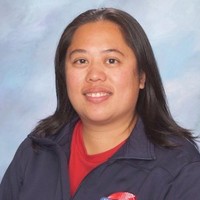 Basketball brought Mitra Tshan to the DTES 20 years ago. Passion for working with inner city youth has kept her there to this day!