A Review of Our Foundations Portfolios: Performance, Positioning, and Outlook
Alison Parry, Senior Investment Counsellor from RBC Phillips, Hager & North Investment Counsel Inc (PH&N), and her colleague Nadjy Nackna, will be joining us to deliver a timely and insightful review of our Rotary Vancouver Club Foundation and Rotary Club of Vancouver Hearing Foundation investment portfolios. This is a valuable opportunity to better understand how these portfolios are performing, how they’re positioned in today’s market, and what it means for our long-term impact.
This session is designed to provide you a clear understanding of where our funds stand and where they’re headed.
In addition, we’ll have the wonderful opportunity to learn more about one of our newer members, Dr. Iqbal Ahmed as he steps into the New Member Spotlight.
We look forward to seeing you Tuesday!
NEW DATES!!!!!
Inclusion Labs are interactive sessions designed to help club members build digital and technology skills—closing the gap in tech literacy across the club.
Organized by Ally Potel, led by our Young Professionals!
Virtual AGM of the District 5040 - May 9, 2026 10am
REGISTRATION IS NECESSARY
Each year the AGM is an important part of the governance of the District. Your input in the process of developing new policy and financial plans for the District is crucial.
Please join DG Jan Gisborne, DGE Dean Hsieh and other district leaders to learn about these important documents for the district and the coming Rotary year.
You are invited to a Zoom meeting.
When: May 09, 2026 @ 10:00 AM Vancouver time
Register in advance is required.
My name is Gabriel Cerecero. I am a member of Coyoacán Rotary Club, in Mexico City (District 4170). I am writing to cordially invite you to the inauguration of the “Casa México Cultural Center,” a space dedicated to promoting the art and history of our country through cultural and educational activities in Vancouver, B.C.
To confirm your attendance, please write to us at casamexicoculturalcenter@gmail.com. It will be an honor to welcome Rotarians who wish to join us next Friday, May 1st, at 5:00 p.m. at the Terminal City Club.
Yours in Rotary,
Gabriel Cerecero
PP 23–24, 24–25
Club Rotario Coyoacán
Distrito 4170, México
The Vancouver Young Professionals Rotaract Club is hosting our next Blood Drive on Saturday, May 9 — and we'd love for you to join us!
Canadian Blood Services, 4750 Oak Street, Vancouver
Appointment slots: 11:00–11:45 AM
We usually meet for coffee nearby about an hour before — come early and join us!
Can't donate? No worries — everyone is welcome to come along and cheer on the team.
Who do you know that is remarkable?Someone whose story or expertise would captivate a room full of experienced business and community leaders?
Do you know anyone from this Top-Speaker List in Vancouver?
Think thought leaders, change makers, or trailblazers in business, sports, innovation, public service, or philanthropy.
Take a quick scroll through this list & your LinkedIn connections. You might spot someone you haven’t thought about in a while who would be perfect.
If someone comes to mind, please connect with Bill Davidson at billd@davidson-co.com
Opening Comments & Updates
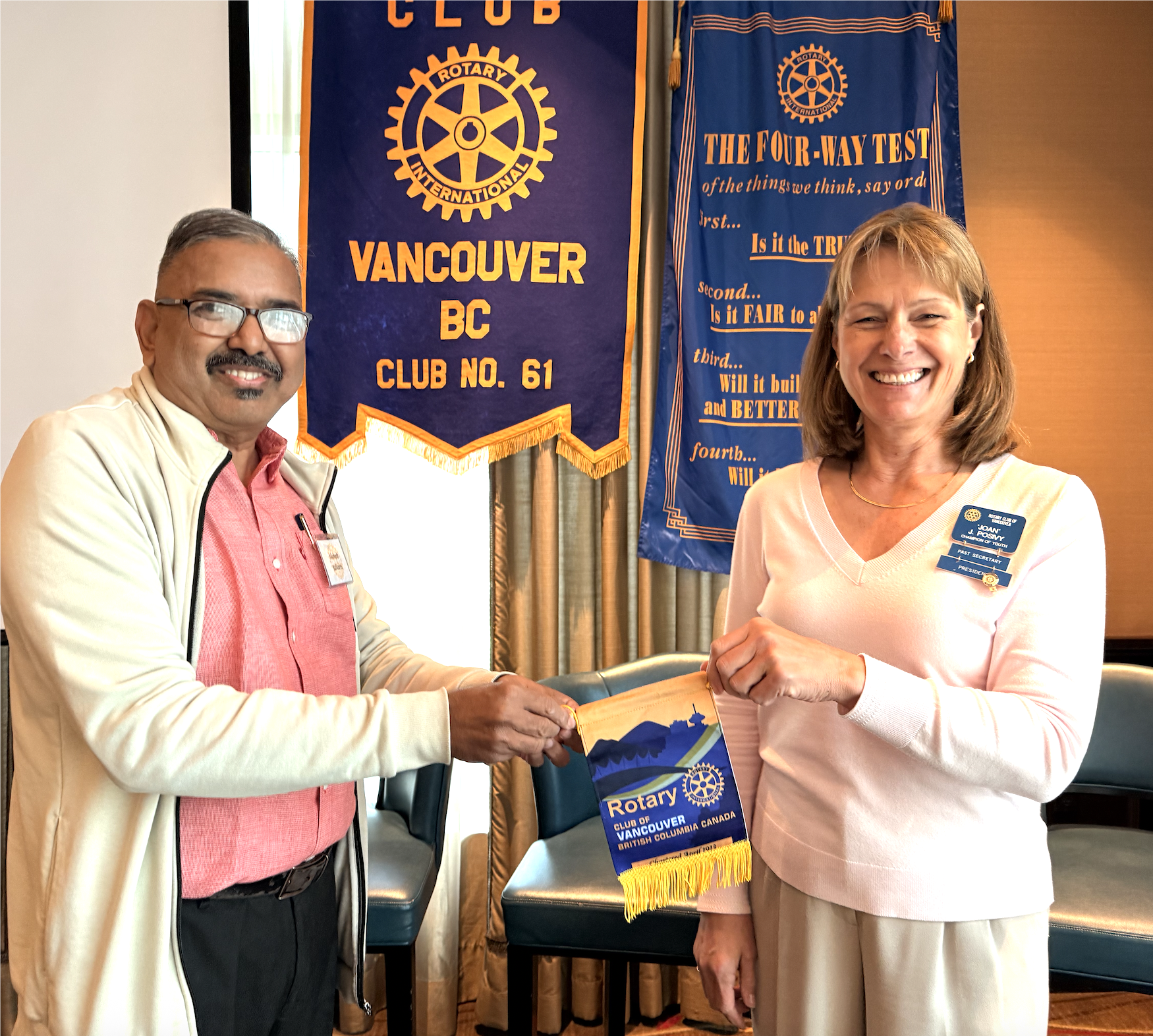
We were pleased to welcome a visiting Rotarian from India, Mahesh Kulkarni - from District 3060 RC Dhulia to our meeting, who brought greetings from their home club and highlighted Rotary’s truly global fellowship and shared service ideals. Their visit was a warm reminder that our projects in Vancouver are part of a worldwide network of Rotarians working toward similar goals in their own communities.
Annual Ride for Hearing – Volunteers Needed for a Bigger Year
The Ride for Hearing on June 14 is gearing up to be larger than last year, with a goal of 102–110 volunteers. Last year’s event was a big success and a lot of fun for participants of all ages. This year will feature volunteer T‑shirts and a celebration event at the end of the ride. Members, families, and friends are all encouraged to sign up via the volunteer link on the Ride for Hearing website.
Hoop-a-THON Smashes the $50K Mark
The annual Hoop‑a‑THON held last Saturday was a major success, raising over $52,000 and pushing the total very close to the $55,000 goal.
Funds from the Hoop‑a‑Thon support local youth basketball programs, including “Girls Who Leap” and “Boys Who Dare,” helping young people develop skills, confidence, and community connection.
The day was entirely volunteer‑run, with great teamwork from shooters William Donnellan and Kevin Hayes, and many club members who helped on and off the court. Organizers described it as a fun, energetic, and deeply satisfying event, and we are already looking forward to building on this success next year.
Main Program
Guest Presenters from St. Paul’s
Jason Boudreau, President of the Rotary Club of Vancouver Hearing Foundation and past club president, introduced our speakers from St. Paul’s Foundation:
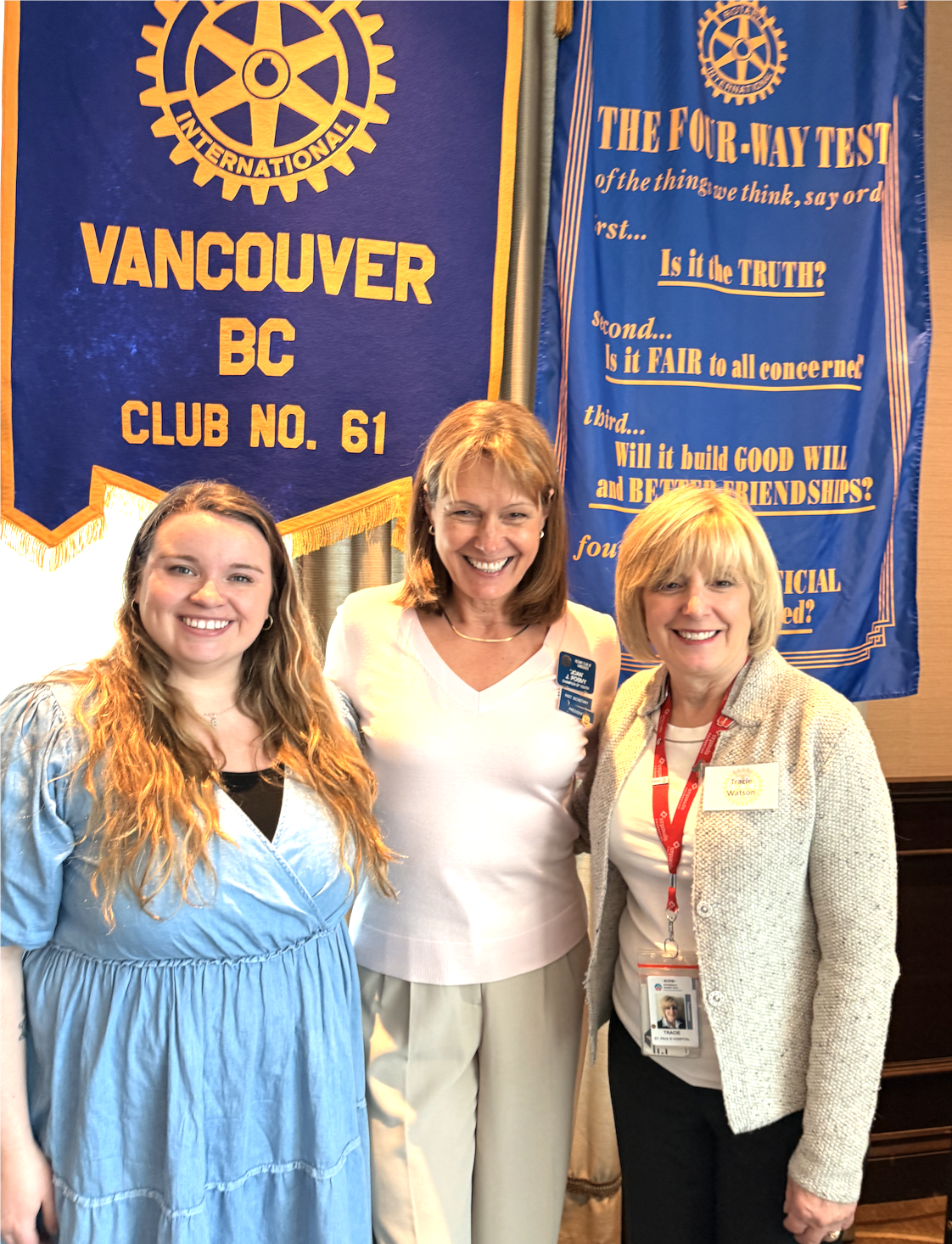
Tracy Watson – Director of Philanthropy, Medical Acute, St. Paul’s Foundation
Joined St. Paul’s in 2018 on the major gifts team.
Now leads a team that builds long-term donor relationships and secures major and transformational gifts for equipment, research, programs, and capital priorities.
Brings extensive experience in sales, marketing, advertising, and philanthropy across Canada and the U.S.
Brittany Thompson – Project Manager, Major Capital Campaigns, St. Paul’s Foundation
Supports the redevelopment campaigns for St. Paul’s Hospital and the Jim Pattison Medical Campus.
Translates complex capital and clinical priorities into clear, compelling narratives that support engagement and campaign success.
Has 15+ years’ experience in the non-profit sector, with a strong focus on community health, dignity, equity, and lasting outcomes.
Jason emphasized that their work has been central to advancing the “behemoth” St. Paul’s redevelopment project, now nearing completion after more than a decade of effort.
A Once‑in‑a‑Generation Project
The new St. Paul’s is described as the most significant project in the hospital’s 130‑year history. Instead of renovating the aging Burrard Street site, Providence is building an entirely new campus in the False Creek Flats, about 3 km from the current hospital and a short walk from Main Street–Science World SkyTrain.
Tracy and Brittany emphasized that we are no longer talking about “years” until opening, but months. The plan is:
Summer (this year): Providence receives the keys from builder PCL.
2026–early 2027: Staff training and orientation in the new building.
Late February 2027: A one‑day move of patients and services from Burrard to the new campus, including opening of the new Emergency Department.
January 2029: Opening of the Clinical Support and Research Centre (CSRC) across the street.
The campus covers 18.4 acres and is designed as a hub where care, research, and industry intersect, with room for future development and a strong focus on innovation.
Indigenous Partnership & Welcoming Design
Part of the land has been given back to the host Nations of the False Creek Flats for a future Indigenous Wellness and Welcoming Centre, reinforcing Providence’s commitment to cultural safety.
From the moment you enter, the hospital is meant to feel calm, inclusive, and non‑institutional. Design elements include:
Indigenous art and design features throughout public spaces
A theme of being “embraced by nature”, with each public floor inspired by local BC landscapes (e.g., Pacific Spirit Park, Lost Lagoon)
Interior colors, shapes, and artwork that echo the surrounding environment
A large, light‑filled atrium (the Lauj Family Atrium) as a gathering, learning, and reflection space
Wayfinding has been a major focus, informed by the difficulties of navigating the current site. The new hospital will use:
Digital wayfinding tools
Clear visual cues in architecture, art, and color to help orient patients and families
Behind the atrium will be a conference centre (two large auditoriums and seven conference rooms) and clinical skills training spaces with simulation rooms, observation areas, and ceiling‑mounted cameras for education and virtual training. As a major teaching hospital, St. Paul’s will be better equipped than ever to train health‑care workers from BC and beyond.
Center for Healthy Aging
A major innovation is the Center for Healthy Aging, reflecting the reality that Canada’s population is rapidly aging—within 20 years, roughly two‑thirds of the population will be over 65.
This purpose‑built area will consolidate services such as:
Geriatric assessment
Mobility and falls prevention
Memory care and dementia support
Nutrition and rehabilitation
Caregiver support
The goal is to keep seniors well, independent, and at home as long as possible, while reducing emergency visits, hospital admissions, and early placement into long‑term care. The Center will offer wraparound, team‑based care in spaces specifically designed for older adults, including an entrance that can be accessed directly from outside the building.
A New Emergency Department
The Emergency Department (ED) is being completely reimagined. Key improvements include:
25% more treatment rooms than today (about 75 rooms)
100% private rooms with solid walls and sliding glass doors (no more curtained bays) to enhance privacy, safety, and infection control
A larger, purpose‑built ambulance garage that can hold six ambulances, with built‑in medical gas “head walls”
The ability to treat up to 10 stretchers in the garage in a mass‑casualty or “Code Orange” scenario
A streamlined single triage/registration intake to reduce duplication and delays
Instead of separating patients strictly by acuity, the ED will be organized into several “mini‑emergency departments” – zones that can treat any level of acuity. This allows staff to move patients more flexibly, reduce bottlenecks, and get people who need beds into those beds faster.
Before construction, Providence rented a warehouse and physically mocked up rooms at full scale, including an emergency exam room with glass partitions, to test design, workflows, and equipment layout in advance.
100% Single-Patient Rooms
One of the most striking changes is that the entire inpatient side will be composed of single‑patient rooms:
548 private rooms, each with:
Its own bathroom
A window with natural light
A ceiling lift to assist with mobility and transfers
A sleeper seat so family can stay overnight
A wardrobe with a locked compartment for personal belongings
Private rooms are expected to improve sleep, healing, infection control, and overall experience, while also helping the hospital run more efficiently and safely.
Maternity & Neonatal Care: Family‑Centered Design
The new Pregnancy, Birthing, and Newborn Centre will bring together:
The Labor & Delivery unit (including high‑risk obstetrics)
The Level II Neonatal Intensive Care Unit (NICU)
Instead of families moving from one area to another, the space is designed so that care is seamless and centered around the family, not the system:
For low‑risk births, parents will labour, deliver, and recover in one room, with options like labouring tubs.
For high‑risk situations, rooms are larger to accommodate more specialized staff and equipment.
Critically, there will be two dedicated operating rooms close to the maternity unit, significantly reducing transport time for emergency Caesarean sections and other urgent procedures.
As Tracy noted, if a baby is in the NICU and the mother also needs ongoing hospital care, she will usually be able to stay nearby, unless she is critically ill and must be in the adult ICU. NICU nurses are being cross‑trained so they can care for both baby and mom in many situations, helping keep families together and addressing staffing challenges at the same time.
Technology & “Robots” Supporting Care
The new campus is designed so that technology supports people, rather than dominating the environment:
A Care Coordination Centre will act as “air‑traffic control” for the hospital, providing real‑time visibility into:
Available beds
Where patients are waiting
Where resources are needed most
This will allow leaders to make quicker, better‑informed decisions and keep patient flow moving smoothly.
A fleet of about 20 Automated Guided Vehicles (AGVs)—described as the hospital’s own “Wall‑E’s”—will work 24/7 moving supplies such as:
Food
Linens
Materials and equipment
This will free clinical staff from time‑consuming transport tasks and reduce hallway congestion and elevator wait times.
Bedside tablets will support communication and education, including video calls with family and up‑to‑date information about care.
A modern nurse call system will make it easier for patients to ask for help and for staff to respond efficiently.
Imaging, Surgery, and Interventional Care
The imaging department—already one of the busiest areas at St. Paul’s—will be fully modernized and consolidated:
All major imaging modalities (CT, MRI, X‑ray, ultrasound, nuclear medicine) will be on one floor, improving coordination and reducing delays.
The hospital will introduce BC’s first acute‑care PET‑CT scanner, supporting advanced cardiac and cancer diagnostics and potential future neurologic applications.
Imaging will be located close to critical care units and have satellite spaces in key clinical areas (e.g., ED, outpatient clinics) to speed up diagnosis and treatment.
The new hospital will also feature:
14 standardized operating rooms (ORs), each designed to handle any type of surgery (a “one size fits all” approach to avoid under‑utilization).
2 hybrid ORs, combining surgery and advanced imaging in the same room for complex, minimally invasive procedures—reducing the need to move patients between rooms.
An expansion from 6 to 9 Interventional Suites (about a 50% increase) for image‑guided cardiac and vascular procedures.
ORs that are about 30% larger than today’s, with equipment “booms” suspended from the ceiling to reduce cords on the floor, improve infection control, and allow more space for staff, trainees, and advanced equipment.
All ORs are designed to be future‑ready for robotic surgery as technology evolves.
Rotary Club of Vancouver Hearing & Balance Center
A highlight for our club is the Rotary Club of Vancouver Hearing and Balance Center, which will be a flagship component of the new hospital’s outpatient care.
Key features include:
Seven purpose‑built audiology booths with state‑of‑the‑art equipment
Larger, fully equipped exam rooms for diagnostic testing, treatment, and follow‑up
Consolidation of testing, diagnostics, patient care, and research in one area, reducing the need for patients to move around the hospital
Brittany emphasized that hearing and balance care is about more than sound; it’s about connection, cognition, and independence. By expanding programs focused on prevention and rehabilitation, the center will:
Help slow cognitive decline related to hearing loss
Support people to remain engaged, socially connected, and independent
Tracy also shared that, thanks to Rotary’s generosity, part of our contribution is funding a Research Chair in regenerative medicine and inner ear therapeutics, who will be based in the CSRC. This means Rotary’s footprint will extend from the clinical Hearing and Balance Center into the research and innovation side of the campus as well.
Clinical Support and Research Centre (CSRC)
Across from the hospital, connected by a two‑level skybridge, will be the Clinical Support and Research Centre, targeted to open in January 2029. It has been described as a potential “Mayo Clinic of the North.”
The CSRC will:
House major research centres and wet labs
Provide data and biobank infrastructure
Include preclinical facilities and the ability to run Phase I–III clinical trials (something BC currently lacks outside of cancer)
Feature a makerspace, simulation labs, and an innovation centre
Include leased medical and research spaces and programs such as a Digestive Health Centre
St. Paul’s already has an impressive research legacy, including pioneering the “Treatment as Prevention” strategy for HIV, which has helped transform HIV from a fatal disease into a manageable condition worldwide. The new CSRC will bring currently scattered research assets under one roof, making it easier to:
Collaborate across disciplines
Partner with industry and life‑sciences companies
Accelerate commercialization, start‑ups, and high‑skilled jobs
Strengthen BC’s growing life‑sciences sector (already a multi‑billion-dollar contributor to provincial GDP)
Providence also operates Providence Ventures, an internal innovation entity that can help generate revenue and move health‑care solutions into practice.
Staffing, Recruitment, and Sustainability
In the Q&A, members raised concerns about how such a large, advanced campus will be staffed, given current shortages across the health‑care system. Tracy acknowledged this is a top priority for planning teams. Efforts include:
Active recruitment, including from the United States
A strong emphasis on retention and working conditions
Innovative models like cross‑training (e.g., NICU nurses also caring for mothers in certain scenarios)
Using robots and automation for non‑clinical tasks so staff can focus their time on patients
A St. Paul’s ENT specialist and new recruit in the audience confirmed that the opportunity to work in this new center was a key factor in his decision to move from Saskatoon, and that having a central, transit‑accessible facility will make research participation much easier for older adults and patients generally.
On the question of long‑term research funding, Tracy noted that research is largely donor‑funded, as the province does not directly fund most of this work. The Foundation is actively raising money for recruitment, endowed positions, and research infrastructure, and some donors specifically direct their gifts to attracting top researchers.
What Happens to the Current Site?
The current Burrard Street property has been sold to Concord Pacific. However:
The hospital will not shut down overnight when the new site opens.
Parts of the current facility will remain open in a smaller, condensed configuration, primarily to provide space for researchers and programs until the CSRC opens in 2029.
The long‑term redevelopment of the Burrard site has not been formally announced, but it is expected to be some mix of residential and commercial use, given the location.
Rotary’s Role & Gratitude
Both Tracy and Brittany repeatedly expressed gratitude to our club and foundation. Our support is:
Helping build the Rotary Club of Vancouver Hearing and Balance Center
Funding a Research Chair in inner ear and regenerative medicine
Contributing to a campus that will influence care, research, and innovation for generations
They emphasized that Rotary’s impact will be visible throughout the new Jim Pattison Medical Campus, and that donor partnerships like ours are a critical reason this ambitious project is becoming a reality.
Closing Remarks
The meeting concluded with a toast by President Joan Posivy:
"To not only the St. Paul’s Hospital but the
Rotary Club of Vancouver Hearing and Balance Center"











 Please follow us on our



 Canadian Blood Services, 4750 Oak Street, Vancouver
 Appointment slots: 11:00–11:45 AM
 We usually meet for coffee nearby about an hour before — come early and join us!

 Hoop-a-THON Smashes the $50K Mark