John Bathurst intro Calvin Fong, business associate over many years. Now Director of Donor Services at Vancouver Foundation. Works with donors to establish their own endowment funds within the Foundation.
The Vancouver Foundation has been supporting donors and the charitable sector in BC for over 75 years. But over the past 20 years the changing sea known as the charitable sector in BC has pushed the Vancouver Foundation to new horizons and challenging it to stay afloat in the vast ocean known as the charitable sector in Canada.
The Vancouver Foundation was established in 1943. It is the third oldest community foundation in Canada behind the Winnipeg Foundation (1921) and the Victoria Foundation (1936). It is one of 191 community foundations across Canada (there are 53 in BC). Community foundations can be found all over the world. The first community foundation was the Cleveland Foundation (1914). There are 1,876 community foundations globally.
The Vancouver Foundation acts as an intermediary between donors and charities to facilitate the movement of financial support.
"Vancouver Foundation is Community Inspired. We connect the generosity of donors with the energy, ideas and time of people in the community. Together, we’ve been making meaningful and lasting impacts in neighborhoods and communities since 1943."
Their vision: “to build healthy, vibrant, and livable communities across British Columbia”.
The process is: (1) money is gifted to the Vancouver Foundation, (2) the capital is invested and income is generated, and (3) income is granted to charitable causes.
When funds are received a fund is established by a donor (Donor Advised Fund for an individual or Agency Fund for a charity) to provide a consistent and sustaining source of income for a charity. Two types of funds:
Permanent:
- Permanently held
- Perpetually invested
- $10,000 minimum initial contribution
Non-permanent:
- Capital encroachment permitted
- Invested while held
- $100,000 minimum initial contribution
How the funds are used:
Capital:
- Consolidated Trust Fund
- Socially Responsible Investment (SRI) Fund
- One Fund / One Switch
Income:
- Annual distribution rate
- Quarterly income distributions
- Grant (or reinvest for charity)
Their consolidated trust fund is a diversified balanced fund of equities, fixed income, real estate and multi-strategy funds. It was established in 1943, has assets totalling $1.23 billion, and has 14 investment managers taking care of it. The asset allocations include:
- 35% global equity
- 20% Canadian equity
- 17% multi-strategy
- 15% fixed income
- 8% real estate
- 5% mortgages
Their socially responsible investment (SRI) fund is a fossil-fuel free balanced fund that screens out companies predominantly involved in fossil fuels, military weapons, nuclear power utilities, and tobacco. It was established in 2002, has assets totalling $24.49 million, and is managed by Jarislowsky Fraser Global Investment Management. The asset allocations include:
- 50% global equity
- 30% fixed income
- 20% Canadian equity
The investment performance of the two funds shows as:
|
Annualized
Rate of Return
|
YTD
2020
|
1
Year
|
3
Years
|
5
Years
|
10
Years
|
|
CTF
|
2.64%
|
5.36%
|
5.96%
|
7.28%
|
8.25%
|
|
SRI
|
6.42%
|
10.26%
|
9.32%
|
8.29%
|
8.00%
|
|
CPI1 + 3.5%
|
2.34%
|
4.16%
|
5.21%
|
5.03%
|
5.18%
|
To September 30, 2020 (Annualized)
*Returns are best gross of fees estimates based on available data
1CPI (ending June 30, 2020)
In 2019, 560 grants were disbursed totalling $15.6 million. The grant programs that the Vancouver Foundation supports:
- Systems Change Grants. Grants for charities and other qualified donees with projects that take action to address the root causes of pressing social, environmental or cultural issues in BC.
- Participatory Action Research Grants. Grants to support research that is co-led by community members and researchers to learn more about the root causes of pressing issues impacting the health of communities.
- LEVEL Youth Granting. Grants for charities and other qualified donees across the province to engage indigenous and racialized immigrant and refugee young people in staff leadership and board governance.
- Neighbourhood Small Grants. Grants of up to $500 for infividuals with ideas to help connect and engage residents in their neighbourhood. Because small is beautiful, and small things can have a big impact.
- DTES Small Arts Grants. Grants of up to $1,000 for artists who live or work in the downtown east side. Show your connections to the downtown east side, and take your art to the next level.
Their Donor Advised Fund Grants provided, in 2019, $50 million with 5,221 grants disbursed through 760 Donor Advised Funds and 313 Designated Funds.
Combined, the Grant Programs and Donor Advised Fund Grants, 1,725 unique organizations were supported, 67% were within BC and 33% without BC. Our Rotary club has been one of the recipients.
Surveys were complete in April & May 2020 by Imagine Canada, and another in August 2020 by Ontario Nonprofit Network (ONN) and Assemblee de la Francophonie do l’Ontario (AFO). The findings were similar, an increase in demand for services, a serious decrease in financial support. Many nonprofits are struggling, having to lay off staff, difficulty securing volunteers due to COVID restrictions, having to use the financial reserves they have to survive. The future looks bleak in that 20 percent (1 in 5) nonprofits believe they will close their doors within the next 6 months. Even so, charities are doing their best to continue operating and delivering their much needed services and programs.
The liberal government when embroiled in the WE charity scandal, pulled back from all funding for the sector. They have not reinstated any funding to any charities.
Anyone involved in charity is urged to give some thought in supporting the sector. Clearly, reflective of going into this pandemic that, many programs have suffered because they cannot be delivered. So, is continuing to provide grant or donation funds towards a specific project the best use of those funds? It may be that it does not address the current needs. The need for more unrestricted funding is paramount now. Organizations are on constant merry go round where they continue to fund on-going projects when they cannot operate, i.e., keep the lights on and keep staff employed. We need to trust charities to be judicious in using funds to carry on their missions in the best way possible.
As charities we are competitive. We compete for members, donors, funding dollars, recognition, awareness in the market, etc.
Applying for grants is a barrier to getting the great work done for many charities. For those adept at filling out the arduous applications do win. For those who don’t have those grant writing skills, don’t get the resources, and as a result their great work does not get funded.
Racial inequity has come to the fore with this pandemic. By the same token, the pandemic has been used to bring up awareness. It is important to listen to those communities and the people we call constituents in those communities as to how to best help them. This versus “we” know best.
In closing, every charity should strive to close shop. Should be working towards not needing charity. Wouldn’t that be a wonderful achievement?
CLICK HERE to go to the Vancouver Foundation website.


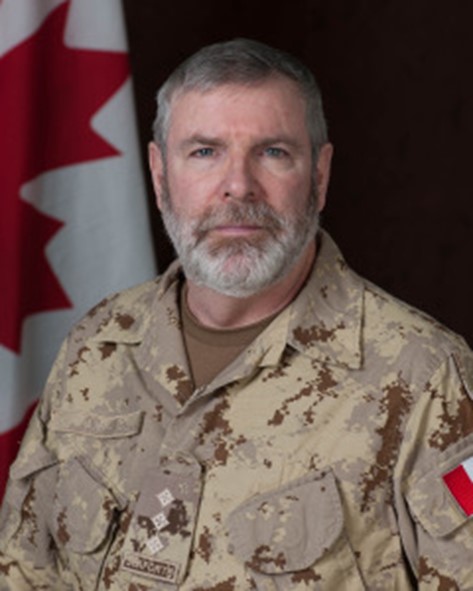 Born in Ontario as the oldest of three children, Captain Annand first acted on his life-long interest in soldiering when he joined the Royal Canadian Army Cadets as a young teenager. He Joined the Canadian Armed Forces on completing high school in 1980.