Vol. 101 No. 39
Brian Street, President
Joan Posivy, Secretary
Next meeting: Tuesday April 16, 2019
Club Day!
Club committees, such as the International Service, Community Service, Youth Service, Networking & Vocational Service, and Tech, have all been busy. We will have a chance to hear exactly what some of them have been working on. That and more...
Upcoming meeting: Tuesday April 23, 2019
Sam Sullivan, MLA, former Mayor of Vancouver Training of Candidates for Political Office
The Public Office Project (POP) encourages people to consider elected office in local government and also community groups. It was started by two opponents, Bradley Shende of the BC Green Party and Sam Sullivan of the BC Liberal Party who came together and agreed that promoting elected office to the general public was not a partisan activity.
The first 10 week Semester has been completed with guest speakers from across the political spectrum. 30 interested, mostly younger citizens and 14 former elected people and community leaders have participated. Sam Sullivan will describe the experience and indicate the future of the Project.
Sam Sullivan was a Vancouver City Councillor from 1993 to 2005, Mayor from 2006 to 2009, MLA from 2013 to present and Cabinet Minister in 2017. He is currently the Opposition Critic for Housing. He was made a Paul Harris Fellow by the Vancouver Rotary Club in 2006.
Upcoming meeting: Tuesday April 30, 2019
R.I. Director, Jeffry Cadorette Training of Candidates for Political Office
Director Jeffry will deliver a keynote address and bring the latest from Rotary International, as well as answer your questions. Let's have a great crowd to welcome him to British Columbia! Seating is limited, CLICK HERE to register. Note there is no additional cost to our members.
You're invited to the Rotaract event of the year: the 2019-2020 Rotaract District 5040 Installation Dinner. Come connect with Rotaractors and Rotarians from all over the district.
This year's theme: masquerade ... and there will be a dance party! So don your favourite mask on the dance floor!
It's also awards night! Both the "Rotaract Club of the Year" and the "Rotaractor of the Year" awards will be presented by the Rotary District Governor team. Incoming Rotaract Presidents will be inducted as will the 2019/20 co-District Rotaract Representatives (DDR's) and new District Committee. You'll also get a glimpse at past, present and future club projects.
You won't want to miss this evening of dinner, dancing and fun!
Need a ride to or from a nearby Skytrain station? Let us know as pick up locations can be arranged.
President, Brian Street chaired the meeting and gave the invocation.
Don Evans accompanied us on the piano for the singing of O Canada.
Joe Lopushinsky, Sergeant-at-Arms, introduced visitors and guests.
President's Announcements:
Rotary Leadership Institute Part 1 has only 5 spots left for this Saturday's training. Don't miss out on this great opportunity in District 5040. Great session for all new Rotarians as well as those wanting to learn more about Rotary, meet Rotarians from other clubs, and share ideas with others. Note: registration fees can be reimbursed by our Club for the 1st 5 to register.
Rotaractor, Thomas Miller, was to be hosting a Facebook webinar on Tuesday April 9th, which President Brian was to attend.
There will be a District 5040 dinner at the International Convention in Hamburg. If attending the convention, be sure to get information about the District dinner.
Parisa Adrangi, provided the Secretary's announcements:
reminders of upcoming events/meetings (see above)
birthdays:Graham Coleman Apr12
member anniversaries:Tugce Irtenk 1 year, Sandra Lowe 1 year, Doug Kellough 32 years
wedding anniversaries:none this week
Special announcements and members' moments:
Mark Busse was interviewed by Justin Emilio of the Networking & Vocation Service Committee. Here is a transcript of the interview:
1. How would you describe yourself in 3 words or a short phrase?
My Twitter profile sort sums it up pretty well: Strategy + Creativity + Design + Conversation = Ideas & Engagement & Community & Impact. Add good food = magic.
2. How did you get started in your field?
After a short intro internship after high school I chickened out of architecture school and went to art school instead. Then I freaked out about trying to make a living as an artist, so I switched my studies to business management. Little did I know that choice would lead to nearly a decade of managing commercial art and design followed by two decades of leading my own strategic brand and design consultancy. Recently I landed right back where I started—as a director in an architecture and design firm.
3. Leaving your own firm after such a long time must have been a big step out of your comfort zone. Can you talk a bit about your feelings during that time and why you made the change?
My design consultancy was approaching its 20th anniversary, so it had become a big part of my identity and I felt a real obligation to my partner, staff, and clients. Leaving felt something like experiencing a sort of death so much so that I had literal panic attacks. But when I was honest with myself, and realized that I wasn’t aligned with my values, taking advantage of my strongest skills, or providing enough meaning anymore. While I may not be the owner or even boss anymore, joining the leadership team at HCMA allowed me to have more positive impact and the reward and confidence that came with taking that leap were a rush.
4. When discussing biggest successes & challenges, you referenced TILT labs in both. Can you go a bit deeper into what the TILT sub brand entails, and how it has contributed to HCMA doubling in size and revenue over the last couple of years, and what other ripple effects it has had in your industry?
TILT Curiosity Labs is an experiment in creativity research, lateral thinking, enhanced empathy, and capacity-building. No offence to any architects, but the partners of our firm are of the belief that the industry and traditions of practice need to be challenged and evolved in order to maximize positive social impact. And embracing that purpose has created alignment and momentum internally, and resonance externally. Part of our transformation has involved investing in building interdisciplinary offerings internally, from engagement to strategy and branding to communication and even product design. One of our goals has been to inspire others in the architecture and design industry to reconsider their approach to running their own practices, which we’ve seen happen across the country and beyond—now THAT is what I call success!
Of course championing what is essentially constructive disruption—creative destruction really—has not been a walk in the park. As the Austrian economist Joseph Schumpeter who coined that phrase pointed out, moments of innovation are uncomfortable and always result in necessary winners and losers. For us the key to this effort has been doing the work to get clarity on purpose and goals, prioritizing the actions that most positively impact those goals, practicing mindfulness in all things, and then walking the talk. In as much as TILT is sort of a creative escape and fresh stimuli for our team of designers, so too have I found that sometimes when complexity and stress hit a fever pitch, the most effective strategy is to step away and do something entirely unrelated as a way of creating the space needed to allow creativity to flow and big ideas to flow.
5. You mention the impact your father had on you in instilling the leadership qualities of Authenticity, Humility and Purpose. How did the lessons you took from him contribute to the ideas and culture at TILT/HCMA?
Gosh, it seems a bit like a common trope to credit your dad for life lessons, but like many, I didn’t really understand the wisdom of my father until I was well into my career. I think as a leader in the creative space, authenticity can mean a lot of things, but for me means doing all I can to be open to new ideas, a commitment to doing all I can to be as transparent and positive as possible, even when it means admitting being wrong. Learning to say “I don’t know” has been a revelation.
Humility is wrapped up in authenticity, and a struggle for me I’ll admit. But it’s interesting to be someone who’s responsibilities include keeping an eye on how we show up, how we ask questions, how we engage in dialogue, and how we can increase our understanding of the lived human experience and increase empathy for those we serve.
Ideas come from many sources, but for me the best tend to come from the space between hustle and silence. As a strategy guy, I sometimes find myself “in my own head” a lot, and the architecture and design industry tends to get insular, siloed, and hindered by its own traditions and best practices. Often the best ideas come from following curiosities, exploring completely unrelated industries and creative pursuits, and collaborating with others. One of my favourite strategies is to ask a couple folks who are from completely different corners of the business to sit down and chew on ideas together. Often their objective perspectives are so fresh and insightful, they trigger awesome new connections that lead to solutions. This is technically why we created TILT Curiosity Labs in the first place! Rotary offers great exposure to a myriad of topics, ideas, and perspectives—that’s a great benefit to finding great ideas.
The thing about culture is that you don’t create it. It happens as a result of consistent behaviour. And as I learned form my father, it’s how you treat folks that results in how you are treated. How you reward things like trust that results in a culture rooted in trust. Of course culture takes intention, clarity, and resources to keep healthy, but I believe our role as leaders is to create the CONDITIONS for culture to thrive—like tilling soil for a garden. One crucial lesson I’ve learned about culture is that it thrives best when it is aligned with clear branding and strategic planning. Brand and culture are the same thing in my opinion. I’d known earlier in my career about the transformational power of having clear purpose, values, and transparent leadership driving all business decisions. It’s a game changer.
6. What is a one core characteristic that you believe every leader should develop/possess?
Self awareness. Without it you lack empathy, which is crucial for effective leadership.
7. What courses or books would you say have had the greatest impact on your professional life?
There are way too many to list, and I continue to be an avid learner. I think I am reading or listening to a half dozen books right now, each offering perspectives and insights that have application in my business. As for a few that come to mind, I will always cherish the retreats I’ve experienced that challenged me to ask deep questions about my work, choices, and creative impact. I took one such retreat called “Frontiers” in Montana a few years ago that helped me immensely as I considered stepping away from my design firm that I managed for 20 years. Recently I enjoyed a three day dive into emotional intelligence called “Examined Life”. I also discovered a new way of engaging in purpose-driven business at Social Venture Institute (SVI) at Hollyhock a few years ago. My view of the role of host changed forever after taking The Art of Hosting followed by reading Priya Parker’s book The Art of Gathering. As someone who is the internal champion among nearly 100 designers in the service of people and society, lessons in how to convene, ask increasingly complex questions, and facilitate engaging dialogue have been valuable business skills. Pro tip: there is an online service called ReadItFor.me that provides articulate 12 minute summaries of business leadership and personal development books—it’s a great way to get the overview of a book and take a position before investing the time to read the whole thing.
8. Looking back now, what could/would you do differently from a business perspective?
I think if I could do things over again, I would have started studying process design, facilitation, leadership, and coaching much earlier—if only to apply in my own business and career. I now realize how powerful and valuable it is to be able to tolerate uncertainty in business, calmly observe and listen deeply to signals, recognizing patterns and opportunities, and then being able to help others find the answers to complex solutions—often much more through the application of soft skills and dialogue than traditional business acumen and management tactics.
Program:
Brian Street introduced Rabbi Rokie Bernstein for her talk Exodus then and now... The journey called life.
Rabbi Rokie loves telling stories. She started by explaining her definition of "exodus" -- it is a crossroads of choice. "Ex" = out of; "odus" = from here to there or rather from here to here. From here to the new here. It is your choice what the new here will be.
Rabbi Rokie, in preparing to present to our group, researched what Rotary was all about. In her young years she was able to experience Rotary events with her uncle who was President at his Rotary club back in the day.
She related a story about Ishkandar, a.k.a. Alexander the Great, in Greece back in 300 b.c. During his journey of self-exploration he challenged the oracles prediction of his early death and had to come to terms with the difference between destiny and fate. Destiny is pre-defined; you have no choice. Fate is what happens to you given the choices you make as you live your life. What you believe in, for yourself, at the time of choice determines fate.
Ishkandar, did die young as was his destiny, however his legacy was the great library of Alexandria. This library became the largest library in the world holding the greatest collection of knowledge to be shared by scholars all over the world.
Rabbi Rokie chose to tell this story because without realizing it, Ishkandar became great by being willing to make choices that ultimately supported whole communities so that they would grow and prosper. You can't get more Rotarian than that! Making the world a better place!


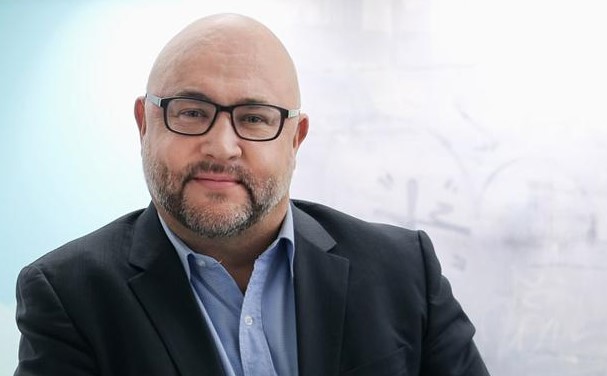 Mark Busse of HCMA willingly participated in a vocational interview at this week's meeting, April 9th.