Hands of Hope: Empowering Amputees Worldwide
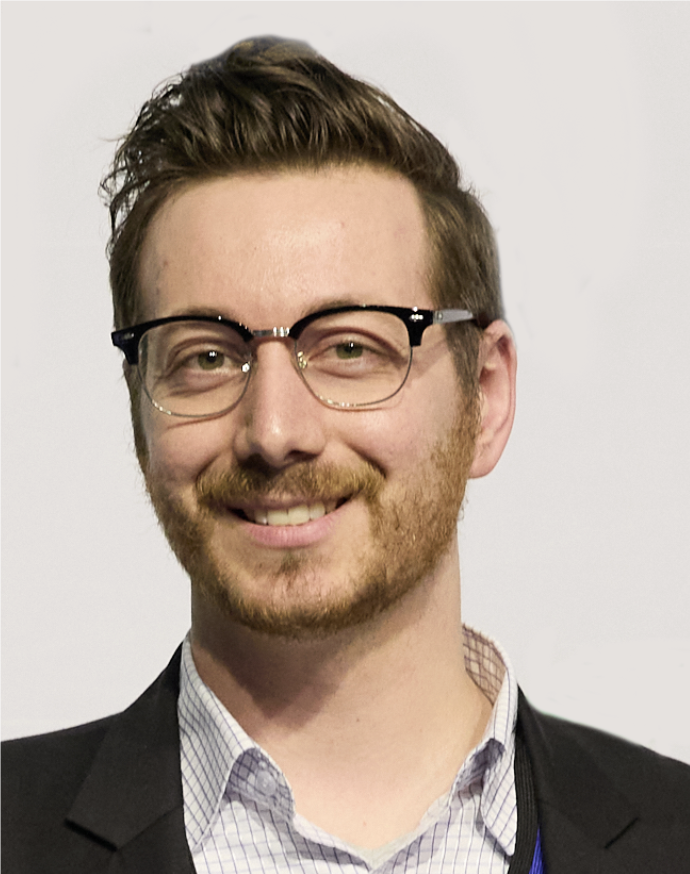
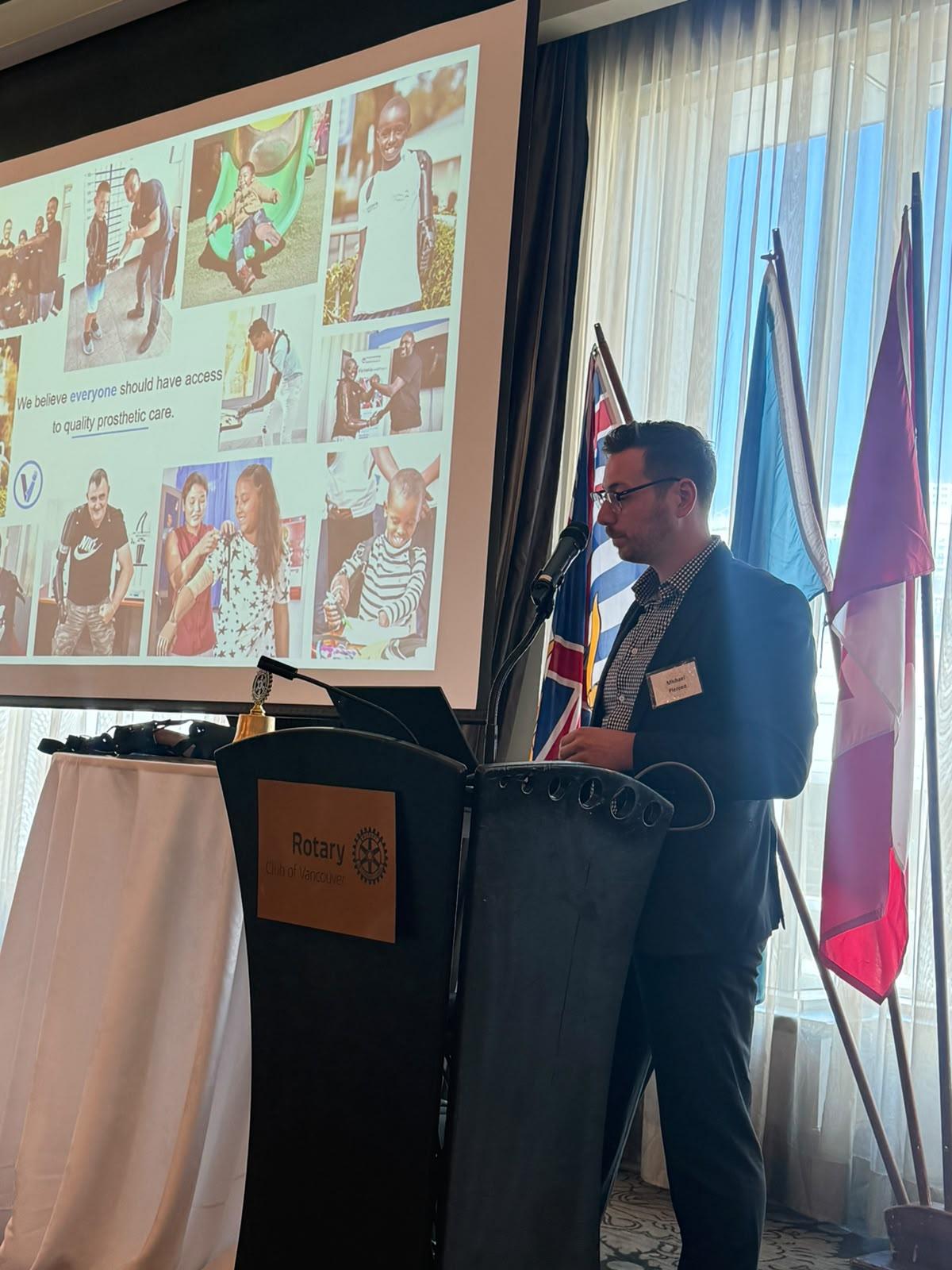
Guest Speaker: Michael Peirone, CEO, Victoria Hand Project (VHP)
Program Focus: Low‑cost 3D‑printed prosthetic arms for amputees in low‑resource countries
Michael introduced the Victoria Hand Project, a Canadian charity that began as a research project at the University of Victoria and now works in 12 countries, helping over 550 amputees access prosthetic arms.
He highlighted the global need: about 80% of amputees live in developing countries, but only 5% have proper access to prosthetic care. Lack of affordable prosthetics limits education, employment, and independence, and can deepen poverty for families.
VHP’s model is to build local capacity rather than ship finished arms from Canada. Their team of engineers has developed 3D‑printed prosthetic hands, sockets, and harnesses, plus software that uses 3D scans and measurements to design custom devices. They travel to partner prosthetics/orthotics clinics, bring 3D printers and scanners, and spend 10–14 days training certified clinicians to print, assemble, and fit the devices and maintain the equipment. This creates sustainable, ongoing care.
Michael described two main devices:
- A functional hand (about $200 in materials) operated by a cable and shoulder harness, enabling two‑handed tasks.
- A passive cosmetic hand, which looks very natural for users who want to feel more comfortable and less conspicuous in public.
He illustrated the impact with stories:
- A boy from Nepal who lost his arm after a fall and long delay in getting care. Once fitted with a child‑sized prosthetic hand, he became happier and more included, as other children stopped teasing him and allowed him to join their games.
- Another girl in Africa was first fitted in 2019 and refitted in October 2025 - with both a new functional and a cosmetic hand; she has since finished school and is now attending business school.
- A film student in Kenya, who lost his arm in an electrical accident; VHP created a camera‑mount attachment for his prosthetic so he can continue filming and doing photography.
A major part of the presentation focused on Nepal, where VHP has partnered with Limb Care Nepal since 2016, bringing some of the country’s first 3D printers. Supported by seven Rotary clubs in the Victoria area, the team returned in October 2025 to upgrade printers and scanners, update workflows, and deliver new training. Michael outlined the next phase, supported further by Rotary (including a newly approved district grant): a “hub‑and‑spoke” system where clinics outside Kathmandu will scan and assess patients locally, send data digitally to Kathmandu, and receive completed devices back for fitting—improving access for rural amputees who cannot easily travel.
He also noted expansion of similar models in Kenya, Egypt (including work with Palestinian patients), and Ukraine, where the need is very high due to the war.
In the Q&A, he addressed how VHP supplies 3D printing materials from Canada, their safeguards through trusted clinical and Rotary partners to prevent misuse of printers, and the way local clinicians adjust or re‑form thermoplastic sockets as children grow.
The program closed with a video featuring partners in Nepal and expressions of gratitude for Rotary’s support.