The meeting opened with Joan welcoming everyone and inviting those able to stand for the singing of two national anthems, starting with the Japanese national anthem and then the Canadian anthem.
Joan then welcomed and acknowledged honored guests, including Consul General Takahashi Yoshiaki (Consul General of Japan in Vancouver), District Governor Elect Dean, and a visiting a Rotarian District Governor from Southern Spain.
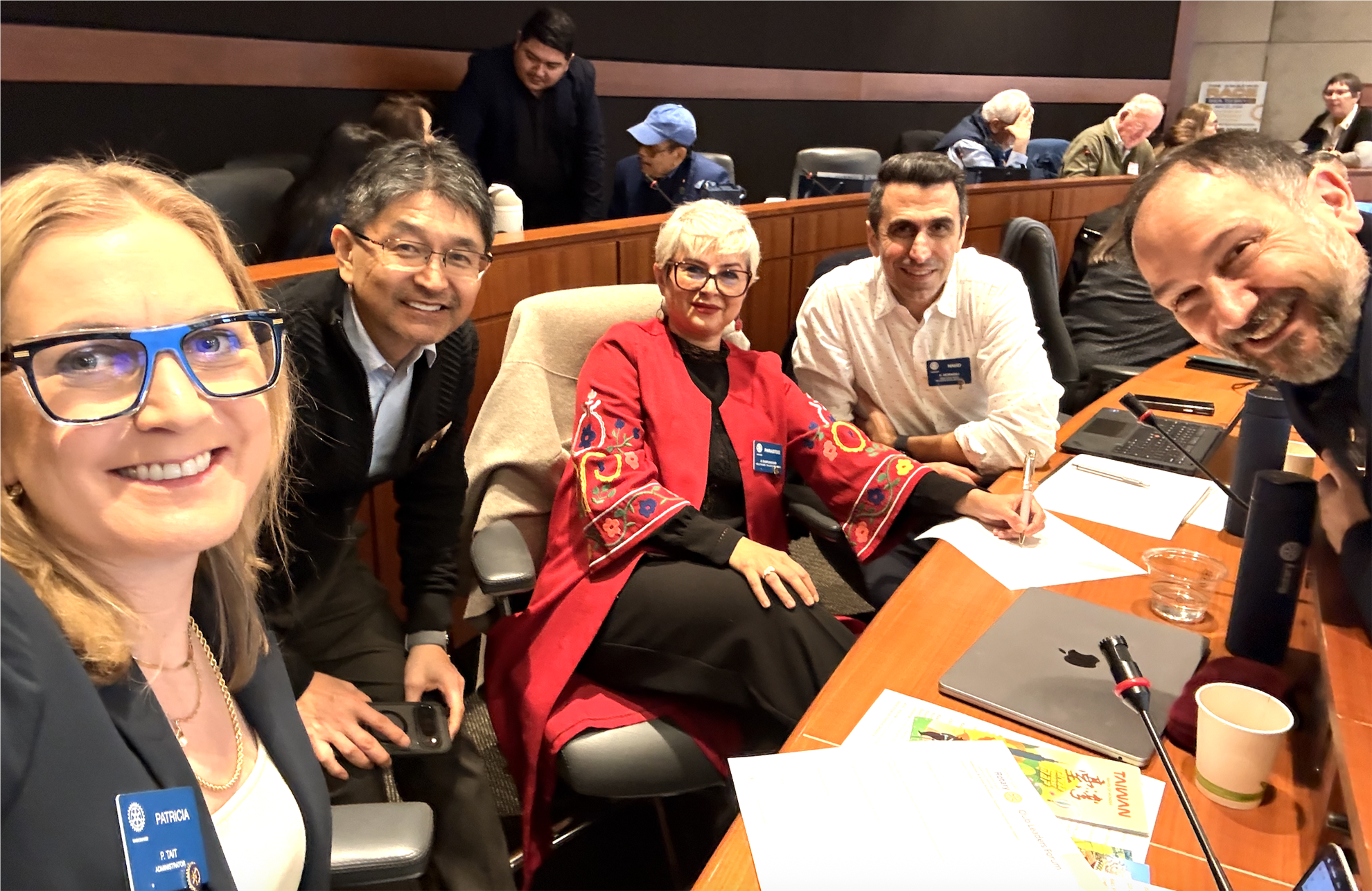 Several members of the incoming Executive—Navid (incoming President), Kaz (Treasurer and District Treasurer), Parastoo (incoming Secretary), Wayne (District Governor) and Patricia (Club Administrator)—had just returned from the Leaders Forum held at the Morris J. Wosk Centre in Vancouver.
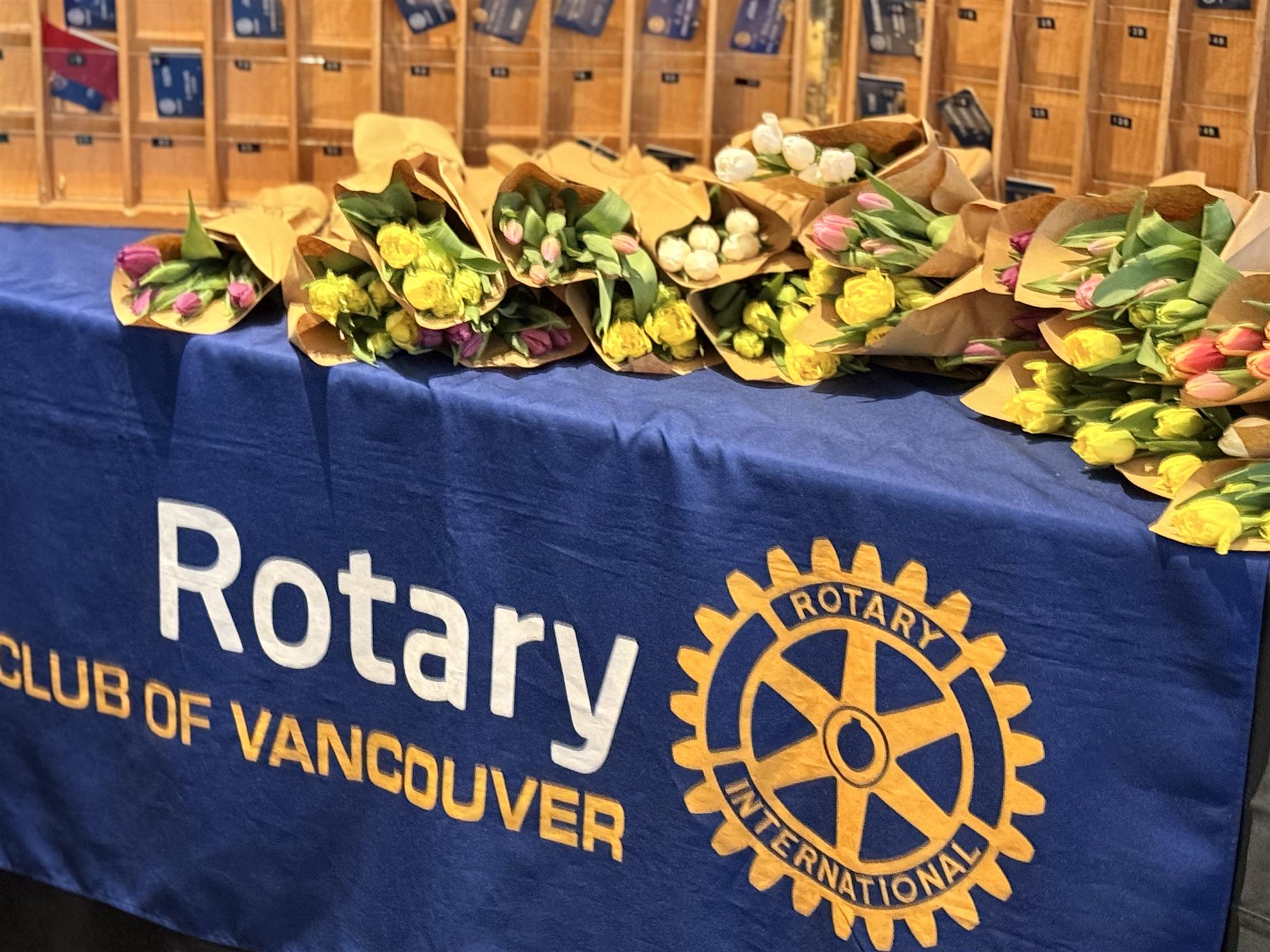
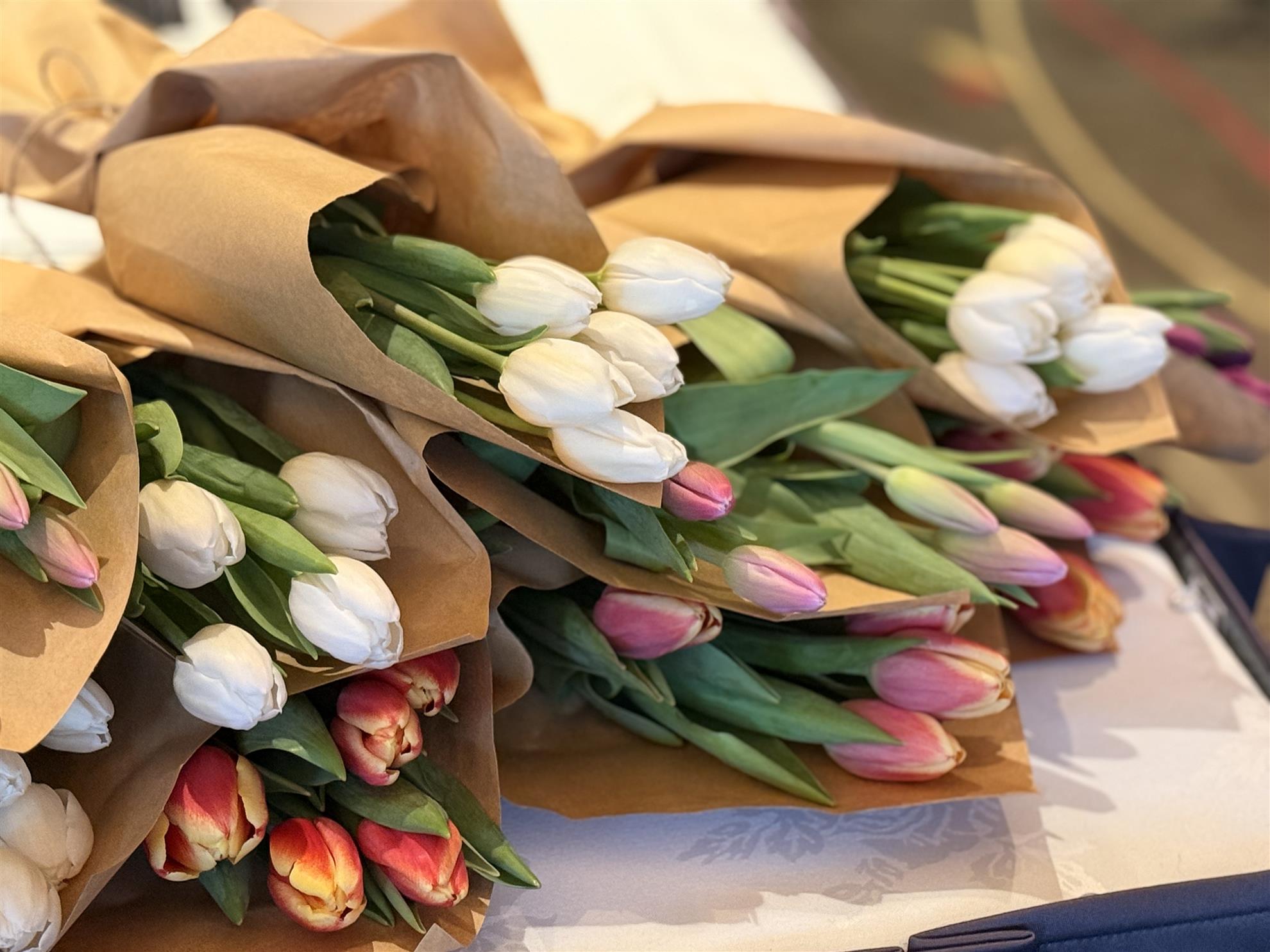 Navid reported that the weekend had been a rich opportunity for learning and networking, and that it underscored how strong and forward‑thinking the Rotary Club of Vancouver is, often setting the pace for other clubs. He emphasized the importance of celebrating the club’s achievements, one another, and the community they are building together, and, in recognition of International Women’s Day, wished a happy International Women’s Day to all the women present. To honor all the fabulous women and leaders from around the globe, a bouquet of flowers had been arranged for each of them.
Other members echoed his sentiments, affirming that conversations with Rotarians from other clubs confirmed that Vancouver is “doing things right” and that members can be genuinely proud of what they are accomplishing together in our Club!
THANK YOU NAVID FOR THE THOUGHTFUL GESTURE!
WEEKLY PROGRAM
Consul General Takahashi Yoshiaki
Japan–Canada Relations: “Stability, Change and a Moment of Reflection”
Consul General Takahashi Yoshiaki, Japan’s Consul General in Vancouver, shared his reflections on the evolving relationship between Japan and Canada, drawing on over three decades in diplomatic service and his one year and four months posted in Vancouver.
He framed international relations through the lens of everyday human relationships—neighbors, friends, and colleagues. Neighboring countries often experience friction due to proximity, whereas “friends” choose each other based on shared interests and values. He suggested that Japan and Canada are “neighbors at a comfortable distance and friends”: geographically far enough to avoid conflict, yet close in shared interests, values, and cooperation.
Historical and People-to-People Ties
- Japanese immigration to Canada’s West Coast from the late 19th century helped lay the social foundation of today’s relationship.
- The Consulate of Japan in Vancouver, established in 1889, was Japan’s first overseas diplomatic mission in Canada.
- Formal diplomatic relations were established in 1928, with the 100th anniversary approaching in two years.
- The Consul highlighted the importance of the Japanese Canadian community and grassroots exchanges, including Rotary, in deepening mutual understanding.
Economic Complementarity
The Consul General described Japan and Canada as economically complementary rather than competitive:
- Japan: An industrial nation with advanced manufacturing (automobiles, electronics, precision machinery).
- Canada: A resource-rich country with critical minerals such as nickel, cobalt, and lithium, essential for EVs, batteries, and semiconductors.
He noted deepening cooperation on:
- Energy and resources (including major projects on Canada’s West Coast)
- Nuclear technology (small modular reactors in Ontario)
- Critical minerals supply chains
- Advanced technologies, including artificial intelligence and quantum technologies
Shared Values and Strategic Partnership
Both countries are committed to:
- Democracy and the rule of law
- A rules-based international order
- Cooperation through multilateral frameworks
He explained that a recent leaders’ summit upgraded the relationship from a “strategic partnership” to a “comprehensive strategic partnership.”
Key priority areas include:
- Security and defense cooperation
- Economic security and resilient supply chains
- Trade and investment
- Energy and food security
- Arctic, environment, and climate cooperation
- Education, cultural, and people-to-people exchanges
The Consul General concluded that the Japan–Canada relationship is a model of stability, combining geographic distance, shared values, and complementary economies. He emphasized that this partnership must continue to adapt to a changing international environment, and affirmed that the Consulate in Vancouver will remain active in strengthening these ties—particularly through connections such as Rotary.
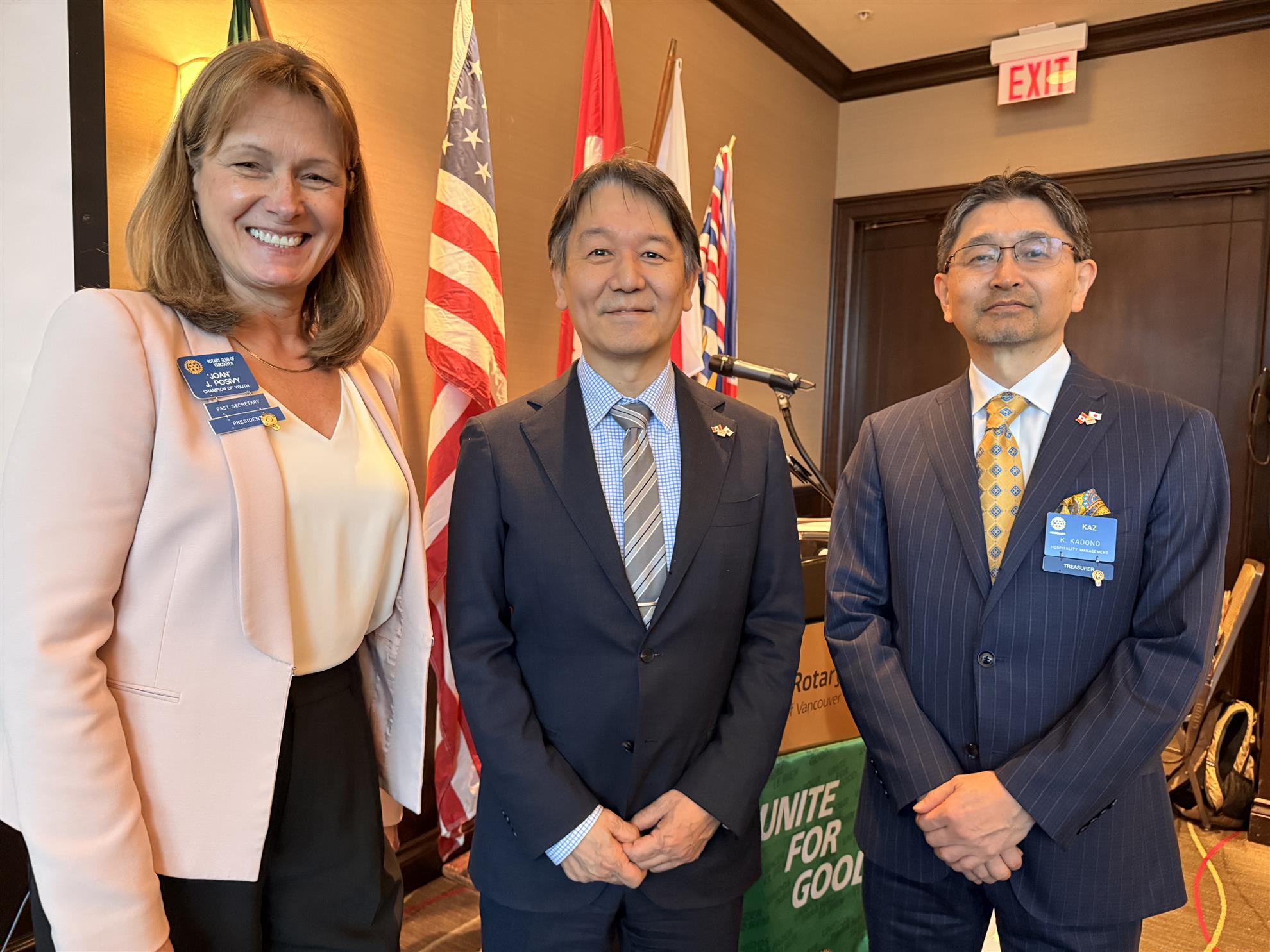
President Joan, Consul General Takahashi Yoshiaki & Club Treasurer Kaz