It was only recently with the horrific discovery of the burial sites at the locations of the residential schools did most people become truly aware of the truths that the indigenous peoples endure for so many decades. We all need to remember the injustices to the young people forced to be in the residential schools. One cannot imagine the pain.
What is reconciliation and how do we fit in the story? Some people feel guilty, and some don’t believe it at all.
It is true that Canada was built on a colonial system where the indigenous people paid the price. Sir John A MacDonald implemented the residential school system to assimilate the indigenous people in Canada. Even though he himself voted against the mandatory attendance of these schools it became law in 1886. Why? It was the land that was what they wanted so clearing it of the peoples made it easier to take.
Hector Langevin, who served with Macdonald, said: “The fact is if you wish to educate these children you must separate them from their parents during the time that they are being educated. If you leave them in the family they may know how to read and write, but they still remain savages, whereas by separating them in the way proposed, they acquire the habits and tastes — it is to be hoped only the good tastes — of civilized people.”
There were approximately 130 residential schools across Canada. They were run by the United, Anglican, and Catholic churches. An estimated 150,000 children of Aboriginal, Metis, and Inuit descent attended residential schools. It was only in 1996 that the last school closed. Not long ago. Given what has been found so far on the school sites, it’s important to scan all residential school sites to search for bodies, to search for truth.
When children arrived at school the boys ang girls were separated, they were bathed, hair was cut, new clothes and told they were only allowed to speak English. Cecelia’s dad was number 126. The average day at school: woken in the morning, brush their teeth, dress, eat breakfast (western food), then study for about 4 hours – read write & speak English. No courses such as math or science were taught. There was no hope to become a professional of any sort.
After studies the boys would go outside and do chores, assigned jobs. They were being trained to work on farms. The girls were inside learning to cook, sew, look after younger children. They were being trained to become housewives and house keepers.
After dinner everyone would have prayers, learning the religion of the church running the school. The buildings were not warm and welcoming, there were no teddy bears, no pictures. It was very much an institutional environment.
Cecelia’s grandmother had 11 children. Ten of them went to residential school. Imagine having children but not being able to raise them, to have them taken away from you by force. The one remaining child did not go to residential school because he had TB, so he went to a TB hospital instead.
The only picture Cecelia has of her Dad at his 1st residential school was from one in Kitimat. He remembers being there, not understanding why and just wanting to go home. Her Grampa went against the law and did not return him to the school after a home visit. They hid, lived off the land for four years during which time he lived and learned his traditional ways with his Dad. Once he was found at 10 years old, he was taken again and sent to the Alberni Residential School run by the United church, about 1,000 km away from home. He calls this his journey to hell. He stayed there for 5 years.
Cecelia showed a short video, shown with permission, of her dad talking about his 2nd day at residential school at 10 years old. He left at age of 14 with a grade 5 education. Subsequently, being broken, he lived on the downtown eastside as an alcoholic. What else could he be after experiencing what he did through all of his younger years.
The experience of the residential schools did not succeed in anything other that teaching the people to hate, not trust. It certainly did not provide a solid education.
Survivors began to share their stories. Eventually they reached a place where the Canadian government, Stephen Harper, apologized to the indigenous peoples. After that the churches apologized. All except the Catholic pope who to this day has refused to apologize.
Apologizing is not about accepting the blame as an individual. None of us here are directly responsible for the atrocities experienced. What apologizing does is say that we need to learn the history, which will lead to more questions. Now no one can say they don’t know. They cannot turn your back on the issues. Go online and learn the truth. Read the Truth and Reconciliation Commission of Canada documents.
We are now at a place of reconciliation. It will look different for everyone. Reconciliation is not a list of check boxes. Rather it’s a need to understand the cost of the colonial system in the country and have a truthful conversation about it. It is important that we all work together to effect change and foster understanding and empathy.
Cecelia is very thankful her Dad found AA. He and her adoptive father were able to reconcile and call each other brothers. If they, a United Church minister, and a residential school survivor, can reconcile, so can we all. Sadly Cecelia’s Dad passed away last year. He wanted his story to continue to help and teach. Cecelia continues to honour him by sharing her story and having a discourse about the truth.
Her birth father and her adoptive father became friends and were able to work through the pain. They considered each other brothers. Reconciliation for them was not easy but they did it. If they can do it, so can we all.
Links of interest:
- View Good River – Wa’xaid, a short video with Cecelia’s Dad on YouTube, CLICK HERE
- View the Truth and Reconciliation website, CLICK HERE
- Watch Cecelia Reekie’s TEDx talk, A Journey of Discovery, Truth and Reconciliation, CLICK HERE

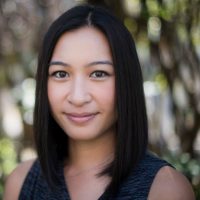 Dr. Ti will be speaking to us via Zoom about the issue of prescription opioid misuse and dependence that has become an increasing problem and is linked to an array of negative consequences including addiction, overdose, and mortality. Although most chronic opioids are prescribed in the community, use in hospital and on discharge significantly increases the risk of chronic use and is often the first point of use for previously opioid naïve patients. Finding the balance of managing pain while using opioids as safely as possible remains an ongoing struggle. The Opioid Stewardship Program at St. Paul’s Hospital is a systems-level intervention developed to address this ongoing gap in care.