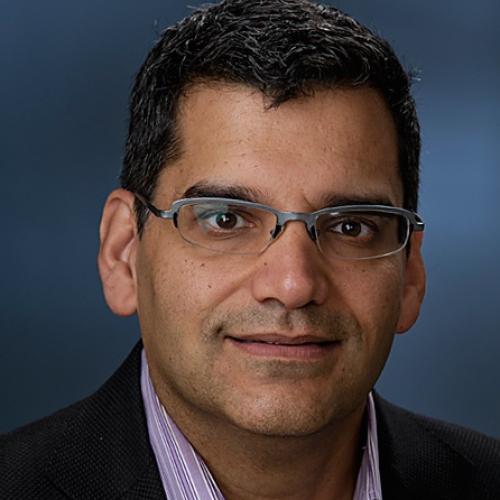
Jim Evans introduced speaker Rabbi Dr. Laura Duhan-Kaplan. Rabbi Laura’s CV includes 15 years as a philosophy professor, 10 years as a congregational rabbi, and 8 years as director of inter-religious students at the Vancouver School of Theology. She spoke about Interfaith Cooperation.
The Vancouver School of Theology (VST) is an ecumenical Christian seminary that also offers spiritual care programs to train multi-faith spiritual care practitioners, a MA program in indigenous and inter-religious studies. Each year in May they host a 3-day interfaith conference where they address themes that are of current public concern, e.g., violence, activism, MAiD, pluralism, and environment.
VST together with the Canadian Race Relations Foundation, in 2020, produced a free guidebook, written by a team of 10 authors, about how different religious communities can engage with Indigenous Reconciliation.
What are the current religious practices of Canadians? Angus Reid polled in 2017 showing 4 very generalized mindsets:
- Non-believers 19%
- Spiritually uncertain 30%
- Privately faithful 21%
- Religiously committed 30%
This indicates that about ½ of Canadians are religious.
What are the religious affiliations in Canada? Based on the 2011 Canadian census, Canadian Atheist produced the following (in order of group size):
- Christians (include Catholic, Protestant, Orthodox) is by far the largest group
- Other, the 2nd largest
- Muslim
- Hindu
- Sikh
- Jewish
- Buddhist
Interestingly, each Christian group at different times sees themselves as a minority.
Should religion have a role in public life? Angus Reid polled in 2017:
- Public faith opponents 32%
- Uncertain 32%
- Public faith proponents 37%
These groups do no correlate with age, gender, political affiliation, or religious practice. They do correlate with views of the past contribution of faith groups to the country.
For those who are in favour of public role of religion in society they believe that it provides the following strengths:
- Community
- Addresses existential questions
- Ethical & moral teaching
- Social cervices
- Art, music, architecture
- Skill development
- Cultural & historical preservation
Why should we cooperate? To protect the freedom of religion. To guard youth and others from hate crimes. To care for vulnerable people. To share best practices. To encourage curiosity and friendship. And to address issues of common concern.
Freedom of Religion. This includes navigating the boundaries of separation of church and state. It is necessary to protect pluralism – where the people are free to believe all kinds of different things and tolerate each other's beliefs even when they don't match their own. It is a moving target with different issues; laws have different ramifications at different times. One example, setting up meetings in every large centre in Canada to encourage discussions. The Metropolis Conference, that has been held for a number of years, works to network with politicians etc. around religious freedoms.
Protect Youth from hate crimes. Unfortunately the statistics show that in 2018 there were 1,798 police-reported hate crimes in Canada. 25% of the victims and accused perpetrators were youth aged 12-17. Working with schools on their curricula to foster cooperation, teach world religions, and work on anti-bullying is important. Temples, churches, mosques, and synagogues alike have interfaith youth programs.
Care for the vulnerable. There is a great need for chaplains and spiritual care providers in hospitals and prisons as well as a need for food security and adequate shelter for those most vulnerable in our society. In hospitals and prisons, it is necessary to have multi-faith chaplaincy/spiritual care. Each involved chaplain will be trained in interfaith cultures.
Canadian Multi-faith Federation has produced a number of publications on the subject.
A grass-roots example is Surrey’s interfaith feed the hungry program, and the Muslim-Jewish Feed the Hungry in the downtown eastside.
Share best practices. A continual discussion as we strive to improve and address current issues. For example, most recently, how do spiritual communities continue their support during COVID without meeting in-person and during times of isolation. How do they respond spiritually to the related congregational and personal stress? Some solutions found: podcasts, telephone town halls, Facebook groups.
Encouraging curiosity and friendship. There is a desire to know our neighbours and to build a foundation for future action. Many options: writing letter of support during difficult times, have interfaith exchange visits, have interfaith musical events, use a multi-faith calendar.
Addressing issues of common concern. Environmental issues a big rallying point for all religions. There have been a number of groups who have come together to address the concern such as Faiths 4 Climate Justice. There have been multi-faith earth day events. At the upcoming conference at VST next May, the topic inter-religious responses to climate change will be on the agenda.
There are always challenges when dealing with interfaith gatherings, views. It is difficult to find common available time, energy, and money. There are absolutely political differences, and there needs to be a willingness to agree to disagree in order to move forward. With the history of trauma between communities there needs to be an outlook whereby the community can put the past behind them in order to find a positive path forward. Additionally, there is whole set of manners and protocols that are very important to observe in order to make a difference in these kinds of relationships and exchanges.
There are many resources available to help support those interested in interfaith cooperation. A quick look on Amazon will provide many of them.
In closing we are stronger when we work together regardless of our personal faiths. Open arms and inclusion is the way forward.
Books of interest:
- Encountering the Other, a collection of essays from VST’s first inter-religious studies conference on how religious traditions create friends and enemies. (2020)
- Mouth of the Donkey, author Laura Duhan-Kaplan, about biblical animals and contemporary ecological issues (2021)
- The Infinity Inside, author Laura Duhan-Kaplan, about spiritual practice for the spiritual-but-not-religious as well as for the spiritual-and-religious (2018)