
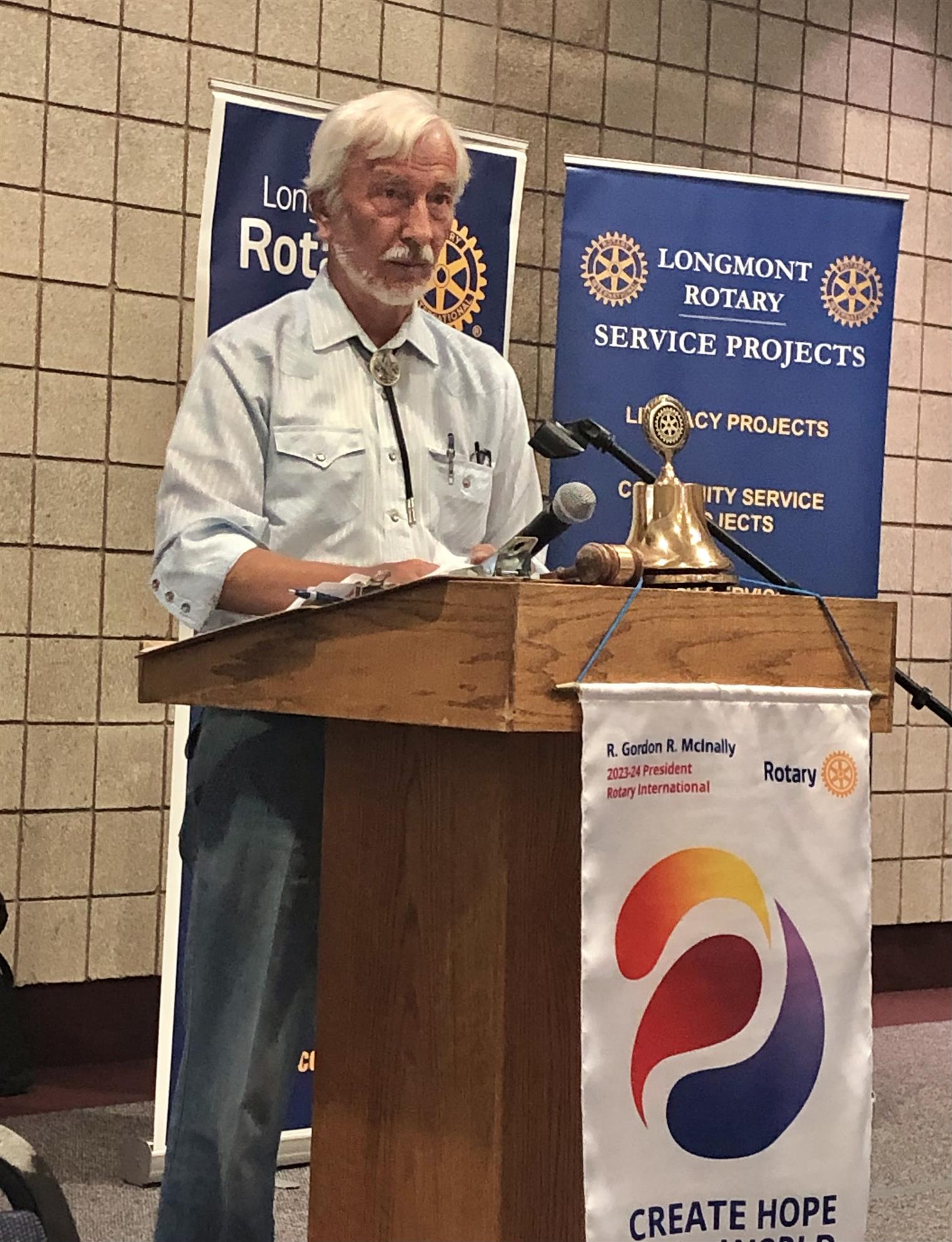
Wolfram Kasemir, CU Electrical Engineering graduate, shared with the club the purpose of cloud seeding used to stimulate a potential rain cloud to grow and produce more rain in a specific area. It can be used to enhance winter snowfall in the mountains; used for fire abatement or to supplement the water supply for rivers and farm land.
 The history of cloud seeding stems from Vincent Schaefer, an American chemist and meteorologist who developed cloud seeding in 1946. He figured out that rain drops form around tiny particles called condensation nuclei. Silver iodide is used to stimulate this process by attracting moisture and tiny smoke particles. The chemical reaction when water changes from gas to liquid produces heat. When this happens inside the cloud, it creates an updraft, causing the cloud to grow. The concentration of iodine in precipitation from seeded clouds if far below the concentration found in iodized table salt.
Wolfram has had the opportunity to make rain in the Libyan desert. Wolfram recalled the rain came down like “cats and dogs”. On the second day of constant rain, Gaddafi told the science team, “we have plenty of rain, now make it stop!”. The rain continued for another day and left a flooded city behind. After Libya, Wolfram traveled to Bettles, Alaska, a remote Eskimo village above the arctic circle, to help with their fire abatement needs.
Wolfram interweaved some sweet tales of how he met his wife while in Libya. Thank you Wolfram for sharing your scientific mind and your thoughtful romantic heart!