| |
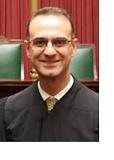 January 24, 2023 - Kuyomars Golparvar currently serves as an Immigration Judge at the York Immigration Court in York, PA for the U.S. Department of Justice, Executive Office for Immigration Review. He received his J.D. from the University of Pittsburgh School of Law and his B.A. from The George Washington University. After graduation from law school, Judge Golparvar worked as an associate at Deasy & Whitehill, P.C., where he focused on immigration law issues. He has also served at the U.S. Department of Homeland Security’s Immigration and Customs Enforcement (ICE) as a division chief, section chief, senior advisor, deputy chief counsel, and assistant chief counsel. Since 2013, he has taught Immigration Law and Immigration Criminal Enforcement at The George Washington University Law School as a visiting associate professor of law and an adjunct professor. Judge Golparvar explained how the immigration court hearings are civil administrative proceedings that involve foreign-born individuals (called respondents) whom the Department of Homeland Security (DHS) has charged with violating immigration law. In these hearings, immigration judges determine whether respondents should be ordered removed from the United States or granted relief or protection from removal (such as adjustment of status, asylum, cancellation of removal, or other remedies provided by immigration law) and permitted to remain in the country. There are approximately 700 immigration judges located in 68 immigration courts with over 2 million cases pending before the courts. Judge Golparvar described how the hearings are now held virtually using WebEx and he works from his home most of the time. Technology has allowed the process to work better as respondents do not need to be transported, attorneys can be from anywhere in the country and judges can hear more cases. |