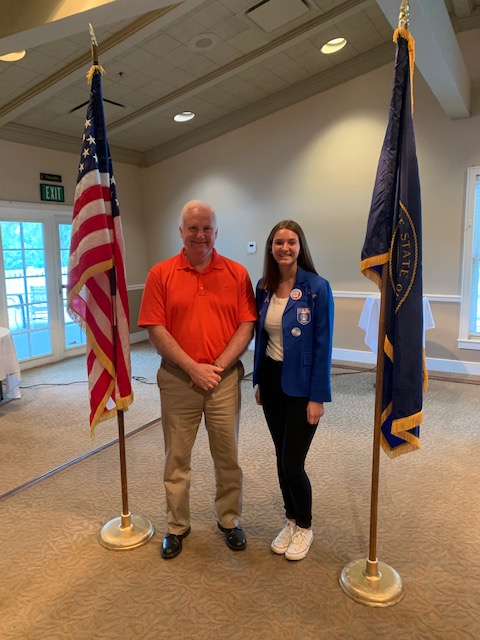
Once again we had a great meeting this week. One highlight was having our alternate secretary, Aileen Warren, step in for Deb Skinner and also Kathy Estes giving us an update on how she is shaking up Business Networking to make it more accessible and fun for everyone.
The other highlight was our speaker, Dr. Jesse Bell, from the Department of Environmental, Agricultural and Occupational Health at UNMC. He discussed the impact of climate variability, climate change and extreme weather events. He explained to us the difference between climate and weather. Weather is the current condition of the atmosphere outside right now. Climate is the accumulation of that information of what the atmosphere is doing. The comparison of what it looks like from one year to the next is also climate. Climate change is the long-term continuous change in the average. Code: Science fries my brain. The data is collected over 30 years or longer and that is called climate normal. Climate variability is the fluctuation from one year to the next.
El Nino and La Nina is the shift in the ocean temperature on the equatorial region of the Pacific. The shift in that ocean temperature changes the temperature for the entire world. El Nino gives warmer temperature and La Nina gives cooler, but overtime there has been an increase in the warmer temperatures. With an increase in C02 came an increase in the temperatures. Green gases are from the radiation coming in from the sun hitting the earth’s surface and some bouncing back into the atmosphere and getting trapped by the gases. These are water, Vapor, ozone, carbon dioxide, nitrous oxide and methane. Every year the concentrations of C02 have increased and this is due to fossil fuels.
Overall, the issues that come from this affect the health of our population. Increased wildfires, smog, pollen, mold, asthma, allergies, heart and respiratory issues are the result of climate change. Hot days will be hotter, wet days wetter, dry period will be longer in between. In Nebraska there have been 14 flood driven disasters in the last 10 years. Insects carrying disease are impacting humans because the winters are not killing them off. Destruction of food supplies and disruption of our well-being are the results of uncontrolled climate change.
The costs are growing yearly because of these disasters. Heat waves are the biggest weather related killer of human population. Climate change is s significant health threat, all people are vulnerable with some more than others. Dr. Bell did give us some hope with the assurance if we can start combining expertise we can gain multiple opportunities to address the issue and give people the resources to survive.
Thanks to Dr. Bell for a very informative meeting.
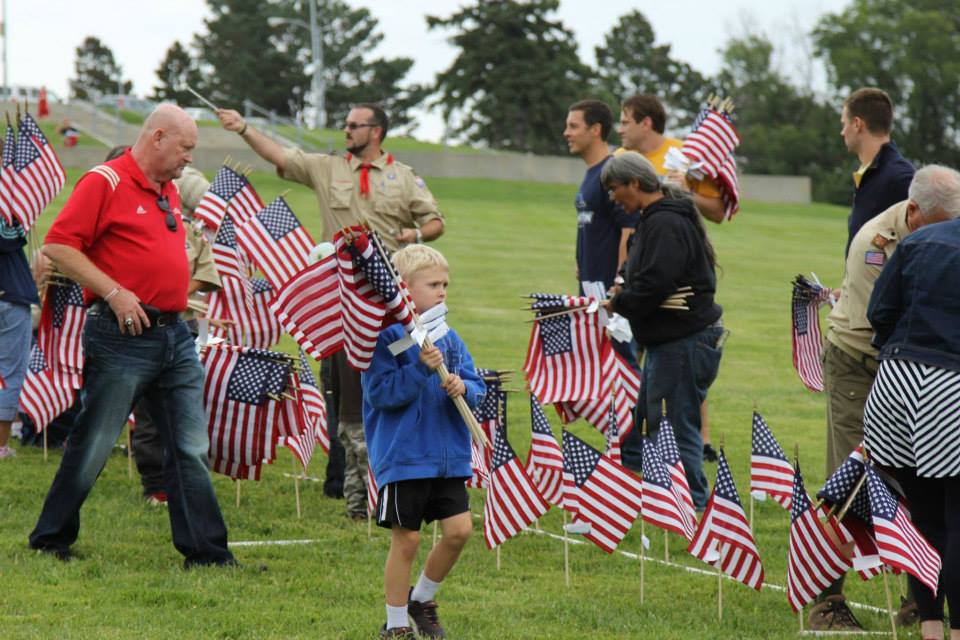
As one of our Club Service Projects, our club helps plant the flags and remove the flags that each year has commemorated the people who perished in the 9/11 bombings at Memorial Park on Dodge Street.
We can use your help to TAKE DOWN the flags Sept. 15th at 1:00pm. SIGN UP HERE
If you are a new member, this counts as a Community Service Project. It is also worth attendance credit.