My uncle grew up tremendously poor and motivated to make a difference in this world. As a student, he desegregated the fraternity system of UNH and went on to chair the board, working tirelessly for human rights and local rights. He died in the early days of the AIDs crisis. His wife continued his legacy of giving and the actions he took throughout his life provided lasting effects for New Hampshire students and more. When he was dying, one of the last things that my uncle asked me to do was to pick up the gauntlet, to keep fighting for people who couldn’t fight for themselves, to make things better.
I constantly realize that I’m not doing enough.
Another one of my uncles was part of the crew that created the measles vaccine. When they needed to test it on a human subject, he stabbed himself with the brand-new vaccine before anyone else could object. He was so confident in the vaccine, but also so protective of others that he could not stand the thought of anyone else taking the risk. Later, as an avid supporter of vaccines and chairman of pediatrics at Duke, he received death threats and was called a baby killer. His wife started a pediatric AIDS organization and supported families throughout our country.
When I think of these men and the differences that they made, quietly, humbly, but on purpose, I think of Rotary and how each of us leaves that same sort of lasting legacy by our participation.
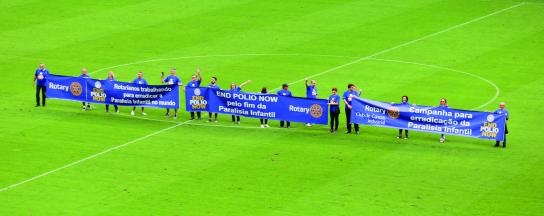
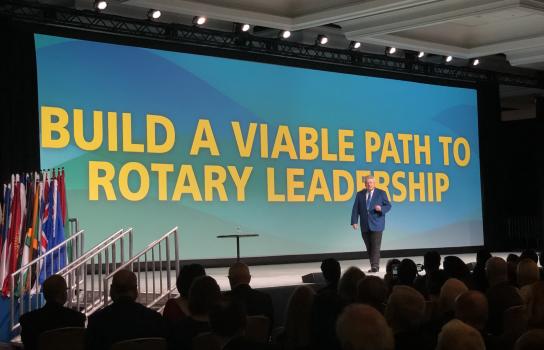
This past week I headed to Rotary Headquarters in Evanston, Illinois for a training for regional leaders. That’s because I’m currently the public image coordinator for our region, which expands through to Toronto and reaches down into New York. One of the speakers was Eric Schmelling, general manager and chief philanthropy officer for Rotary International. “I can’t think of another organization that has been so devoted to another cause like this,” “For 30-plus years and we’re 99 % of the way there.” We still have to immunize hundreds of thousands of children each year. “It’s a real legacy that Rotary is leaving them in this world,” Schmelling said.
Last year, Rotarians worked an estimated 111.1 million volunteer hours. We raised $414.7 million dollars for the Rotary Foundation and supported 1,406 global grants, which were funded with $87 million. 80% of clubs contributed to the Rotary Foundation. There are over 1,700 people in Rotary Zones 24 (ours) and 32 who are associated with the Paul Harris Society.
That’s a simple paragraphs of statistics that doesn’t supply the details of the story. It doesn’t include the club grants, scholarships and supports. It doesn’t delve into the stories and connections that are made by Rotarians, when they participate in local and international projects.
We spend a lot of our meetings listening to speakers and conducting club business, which is important, but Rotary is about more than outside speakers. Rotary is about leaders connecting to solve problems, to make their communities better by using their skill sets and brilliance to make a lasting difference in the communities they live in and the world.
Sometimes our work is so simple that it seems almost forgettable. We support programs for literacy and fought hunger. We built a playground. We have given thousands of dollars (thanks to the Seafood Festival and Pancake Breakfast) and supported so many local nonprofits. We have funded and fitted wheelchairs to people over and over again.
That’s a big deal. Whether you’re a new member or a founding member, you’re a part of something bigger than yourself. You have made a difference in this community, but also in the world. But more than that, the money you give, the hours you donate, the ideas you have create legacies that last beyond us and into the future. Thank you.
ZONE WEBSITE:
Have you visited our
Zone website?
Rotary International’s? They are great resources to see the bigger picture of Rotary, which is 1.2 million of us doing pretty awesome things. Don’t forget we have a District Conference coming up and a super cool
Zone conference this fall.
MEMBER NEWS:
If you are on social media, please like, share and support not only our Facebook page, but the posts of member businesses and nonprofit organizations. Sharing good news feels good and helps all of it.
ROTARY DIRECT:
An easy way to give to the Rotary Foundation and support (financially) the good that we do is to sign up to Rotary Direct.
Here’s the link.
SHARON BROOM:
Sharon recently had surgery. Martha sent a card from the club, and there will be one circulating at our meeting. You can also send cards directly to Sharon. To find her mailing address, sign in to our club website and click MEMBERS and click on her name.