Paula Simons
Posted by Tamisan Bencz-Knight
on Feb 19, 2015
Philanthropy & Charity
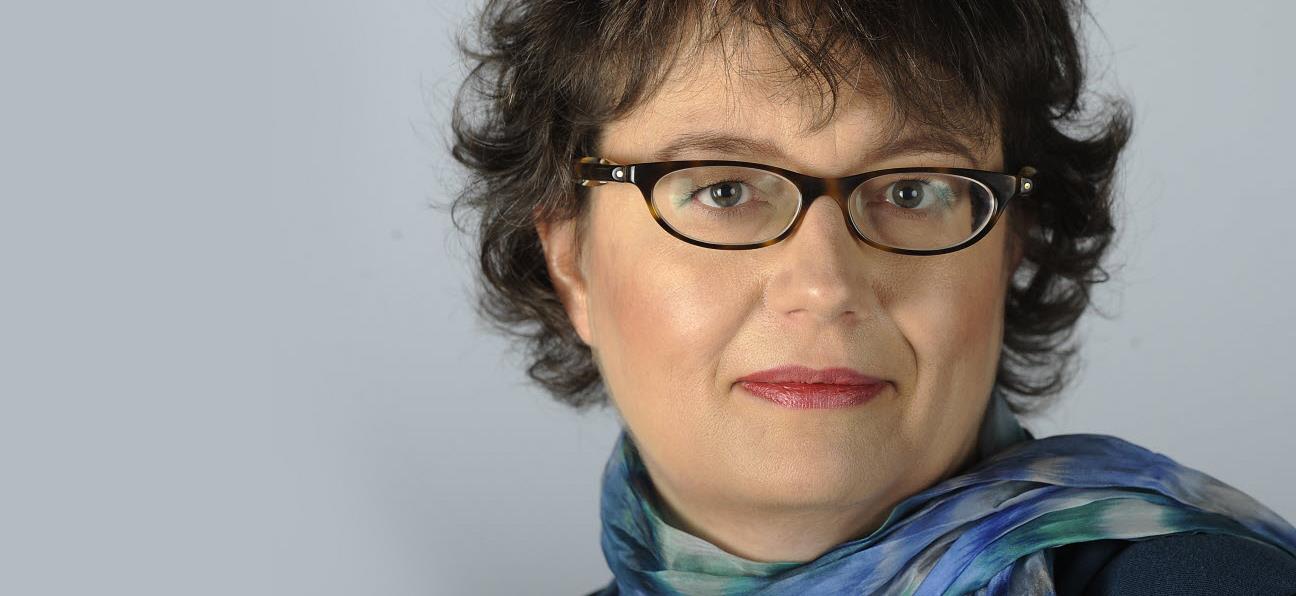
Paula Simons, Edmonton Journal's columnist, was able to join us at our breakfast meeting to share some of her insights on philanthropy. A born-and-bred Edmontonian, Simons is a graduate of the University of Alberta (BA Hon.) and Stanford University (MA), as well as a former fellow at the Poynter Institute for Media Studies. Over her years with the Edmonton Journal, she has served as provincial affairs columnist, culture columnist and as a member of paper's editorial board.
Whenever I speak to a group of Rotarians, I think about my Uncle Alfie, a blessed memory. My Uncle Alfie was what they call in Yiddish, a mensch. He was a simple man. He grew up in the village of Round Hill, Alberta. He served as a radio operator in World War II. But he never got much of an education. His younger brothers went on to become teachers and lawyers. But he was eldest – 13 years older than his youngest twin brothers, in fact. He went to work in his father’s store to help support the family.
He worked his whole life. Raised his kids. Doted on his grandchildren and great grandchildren. He didn’t have a lot of money to donate to charity. What he donated instead was time. He volunteered for Goodwill, for the Jewish seniors drop-in centre. He had good friends who were members of the United Church – which was how he ended up volunteering in the soup kitchen at Robertson-Wesley United Church.
And he was a passionate, committed Rotarian – very dedicated about attending his meetings, wherever he traveled.
(Once when I was about 19 or 20, we all took a family vacation together to a small Hawaiian island. Somehow, my Uncle Alfie tracked down the local Rotary Club meeting, so that he wouldn’t miss attending, even on holidays. He came out and said he’d met a very nice couple who had a son just my age. I’ll admit, I sort of rolled my eyes – but the son turned out to be really cute – and quite a good kisser.)
So yes, when Rotarians call on me – no matter how early in the morning – I come in honour of my Uncle Alfie.
Needless to say, this was a heartwarming start to our morning. Paula shared with us her thoughts on charity and how we define it these days. Of course, Paula joined us just after her “least favourite days of the year – Bell Let’s Talk Day.” Paula and I differ on some of what was shared, unfortunately I would definitely loose this battle – Paula is far more articulate than I am. However, I will interject that fingers were pointed towards Bell, while none were directed towards the Edmonton Journal and their lack of philanthropy in the community in the form of free advertisement for charity.
Although Paula and I might differ, she is very good at creating an opportunity for dialogue, the opportunity to question and a way for us all to grow. I was ever so grateful to her when she shared how the 12th century Talmudic scholar, Maimonides, defined eight different levels of charitable giving. (I love learning new things!)
8. When donations are given grudgingly. For example, Girl Guide cookies.
7. When one gives less than one should, but does so cheerfully. For example, giving your Canadian Tire money in the donation bin.
6. When one gives directly to the poor upon being asked. For example, giving to persistent panhandlers.
5. When one gives directly to the poor without being asked.
4. Donations when the recipient is aware of the donor’s identity, but the donor still doesn’t know the specific identity of the recipient.
3. Donations when the donor is aware to whom the charity is being given, but the recipient is unaware of the source.
2. Giving assistance in such a way that the giver and the recipient are unknown to each other. Communal funds, administered by responsible people are also in this category.
1. The highest form of charity is to help sustain a person before they become impoverished by offering a substantial gift in a dignified manner, or by extending a suitable loan, or by helping them find employment or establish themselves in business making it unnecessary for them to become dependent on others.
For Maimonides, charity wasn’t about self-promotion. It wasn’t even about charity – which necessarily suggests some kind of patronizing attitude. It was about justice. It was about fairness. It was about helping to build a more equitable and healthy community. Of course, we’re only human. Of course, it’s nice to feel that warm glow inside when we make a donation, be it of time and money. It’s nice when people in the community look up to us for our virtual actions.
And there’s no sin, I think, in getting personal satisfaction and pleasure out of volunteering your time. My Uncle Alfie loved cooking. He loved being with people. Volunteering got him out of the house, doing something he truly relished. But I think Maimonides was onto something some 900 years ago. Impersonal charity, though it may seem impersonal, can often do far more good than grand gestures – especially when those gestures are poorly thought out.
Paula shared some more faux fundraising and stories to highlight her points. The best part of the entire morning was when she took the four-way test and modified it to charitable giving:
- Does it benefit the recipient more than it benefits me?
- Does it answer a practical need or create more work for the beneficiary?
- Does it respect the dignity for all?
- Will it make people less dependent and better able to help themselves?
Please note that I cannot take any credit for this lovely article. Only a couple of lines I actually wrote and the remaining 99.9% was from Paula’s notes. Thank you Paula for your view and insight. I appreciate you sharing the morning with us and I look forward to other opportunities in the future.