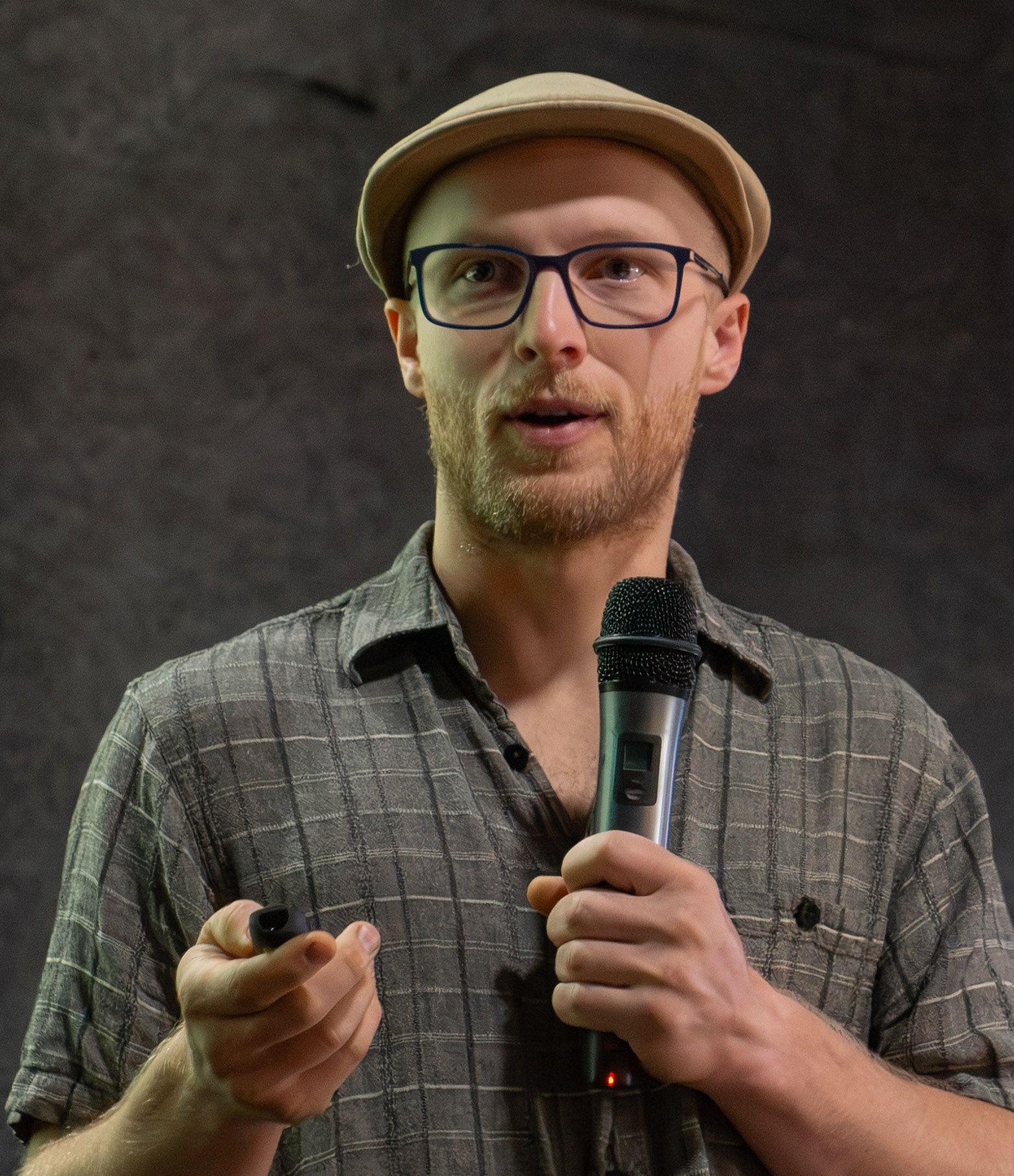
Our speaker for November 5, 2026 was Miles Horobin, the Garden Manager for the Occidental Arts and Ecology Center (OAEC), a 501(c)3 nonprofit organization on an 82-acre property in Western Sonoma County. Miles joined OAEC in 2020. The land is collectively owned by seven individuals under an LLC, which leases the property to the nonprofit. OAEC employs approximately 25 salaried staff, 25 community members, and 20–25 hourly staff for retreat cooking and operations.
OAEC's mission centers on ecological literacy, environmental justice, sustainable land stewardship, and community resilience. For 32 years, OAEC has offered Permaculture Design Courses under its Resilient Community Design (RCD) program, educating the public on ecological literacy and sustainable living. A major and widely recognized initiative is the Bring Back the Beaver campaign, which advocates for the conservation of Castor canadensis — a keystone species native to California and the West Coast that was largely extirpated due to the historical fur trade. OAEC also serves as a fiscal agent for 9 external organizations. These fiscally sponsored projects (FSPs) span multiple states, including organizations working on oil refinery community safety, plastics advocacy, and agricultural housing. Examples of some of the FSPs’ work include fence line community safety near oil refineries (e.g., Fence Line Watch), plastics and recycling advocacy, and agricultural housing (e.g., Casa Agraria in Yolo County).
OAEC's on-site operations encompass a retreat center, two production gardens, an orchard, a retail nursery, and wildlands management across the property. The retreat center hosts social and environmental justice organizations approximately one-third to one-half of the year. The gardens produce food and flowers for retreat guests. The gardens are approximately one acre in size with an additional acre of orchard and have been certified organic since the late 1970s through CCOF and remain under an organic easement with the Sonoma Land Trust — likely the first such easement in California and possibly the nation. A recently installed solar microgrid system, featuring a rooftop solar array and a shipping container of lithium-ion batteries, provides energy independence for the site. The system generates enough power for the entire property, offers battery backup during outages, and feeds surplus energy back into the regional grid. A six-and-a-half acre-foot pond supplies all irrigation water for the gardens and landscaping. OAEC hosts annual seed swaps to promote food sovereignty, cultural heritage, and community seed sharing. Community members can engage through Wednesday volunteer days (10:00–5:00, including a communal lunch), nursery visits, and public site tours beginning in April. OAEC's Wildlands program manages the natural areas of the 82-acre property, conducting ecological trainings in partnership with institutions such as Sonoma State University. OAEC received the North Bay Forest Improvement Program (NBFIP) grant to carry out fuel reduction work — including limbing and thinning — while maintaining ecological integrity and demonstrating responsible land stewardship practices for other organizations. OAEC also hosts an annual theatrical variety show called the Chautauqua Review every September. The Mother Garden Nursery, open Wednesday through Saturday from 11:00 to 5:00, offers annual vegetables, perennial plants from around the world, and California natives.
Thank you, Miles, for presenting the terrific information to us about OAEC. And, thank you for helping the cause of ecological literacy, environmental justice, land stewardship, and community resilience!