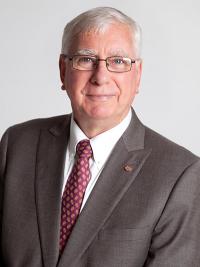
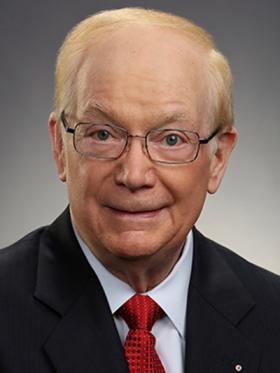
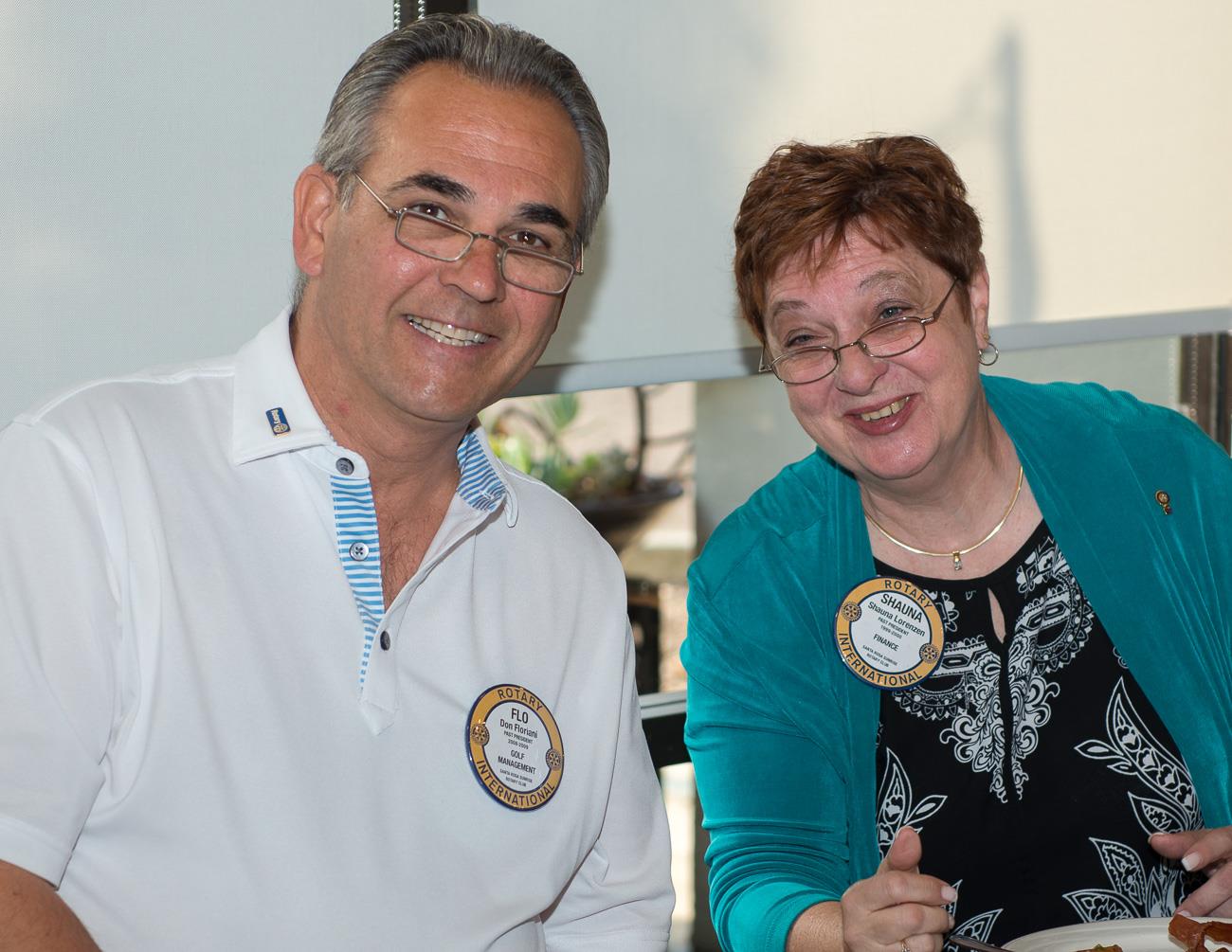
Above, Sgt @ Arms Don Floriani and Shauna Lorenzen exude the excitement (and energy) needed to fulfill their demanding roles. Last week Shauna had to solo, on her first day!
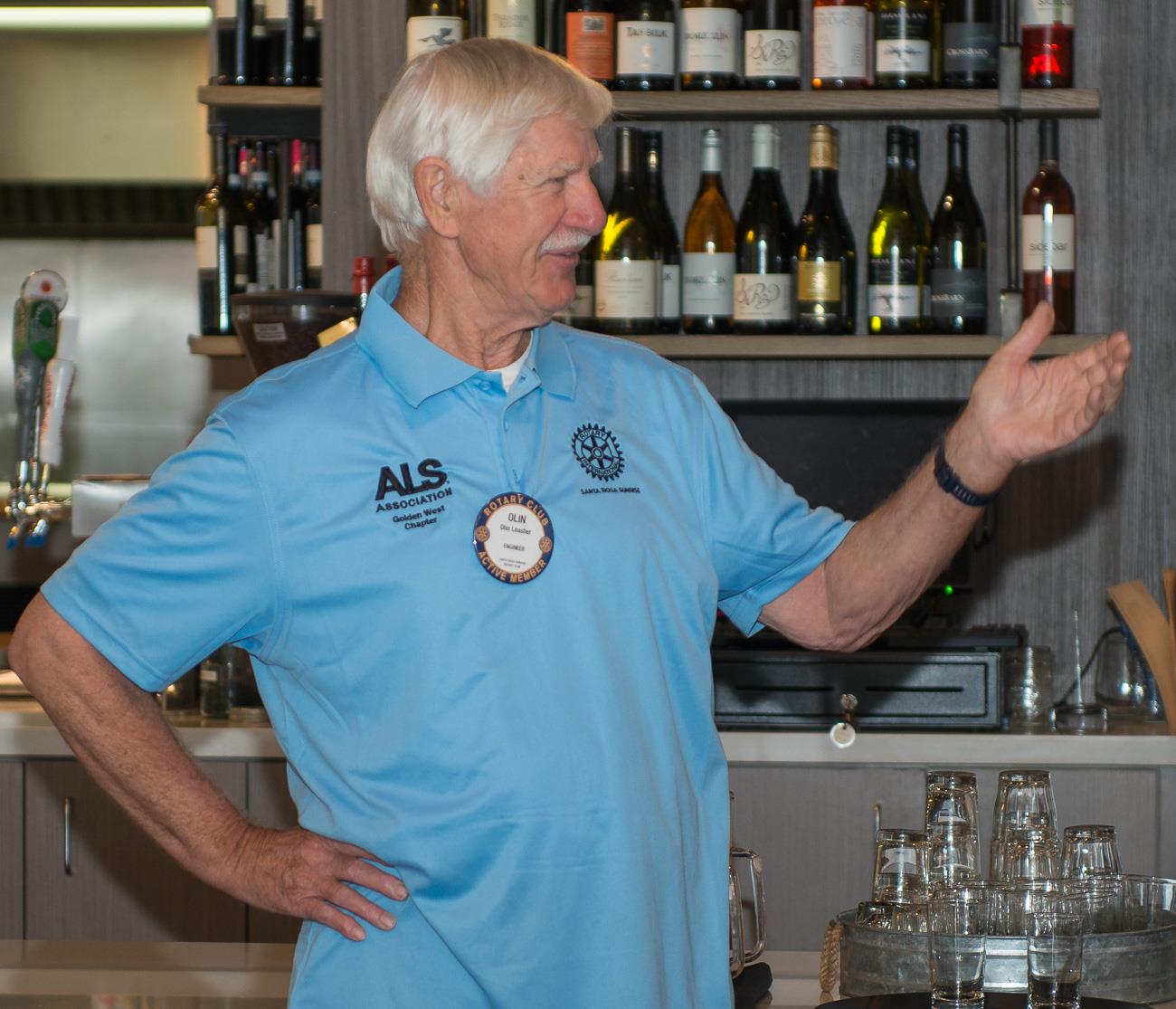
Yes, that is Olin Leasher, not Ralph Lauren. Olin is promoting sales of the club's azure polo. All sizes, including a feminine fit are available. A special ALS edition is available as modelled, or a Club only design.
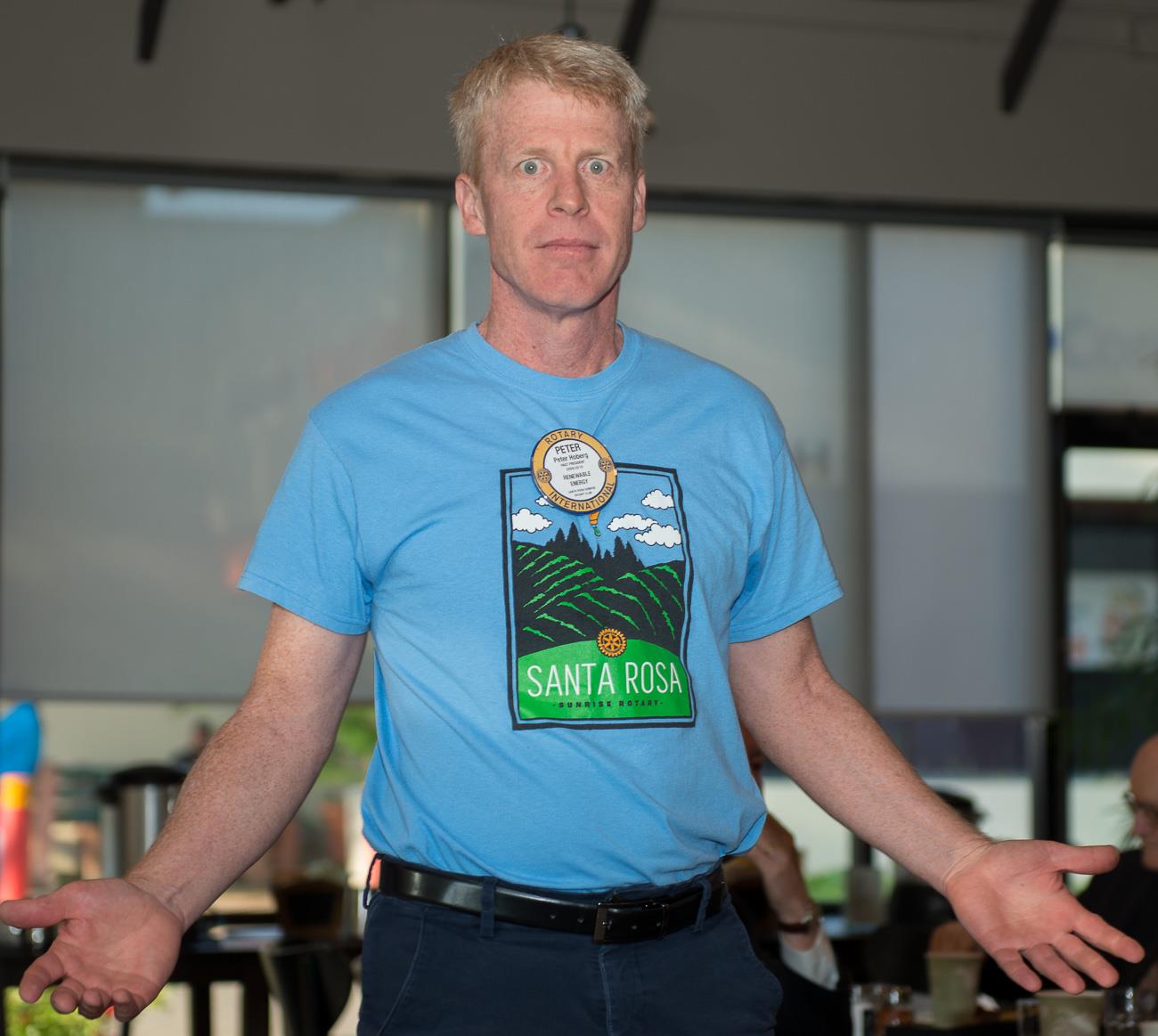
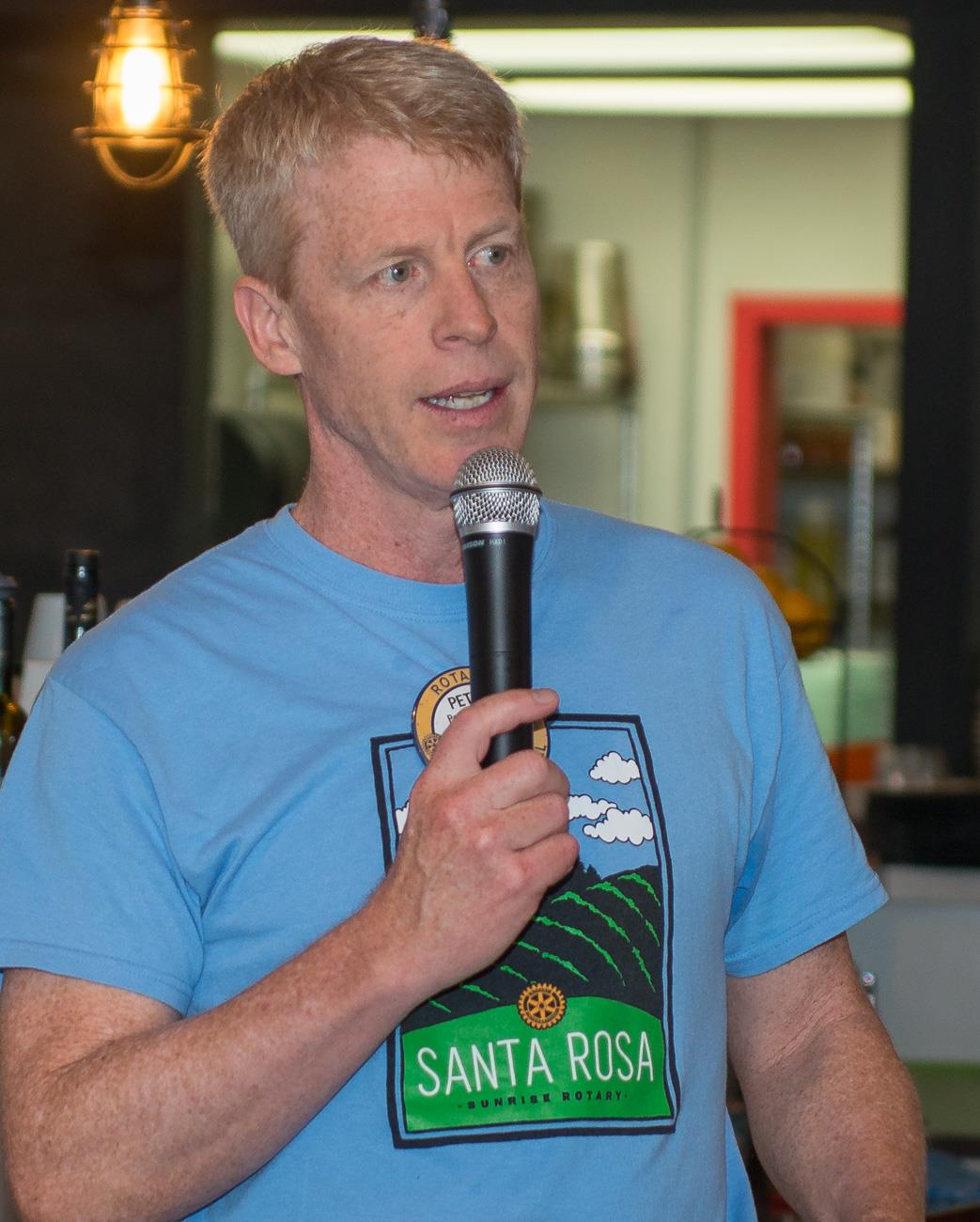
Clothes make the man ~ in this case Peter Hoberg needs a bit of expressive alteration: Lets look from another angle.
That's better! A T for more casual occasions.
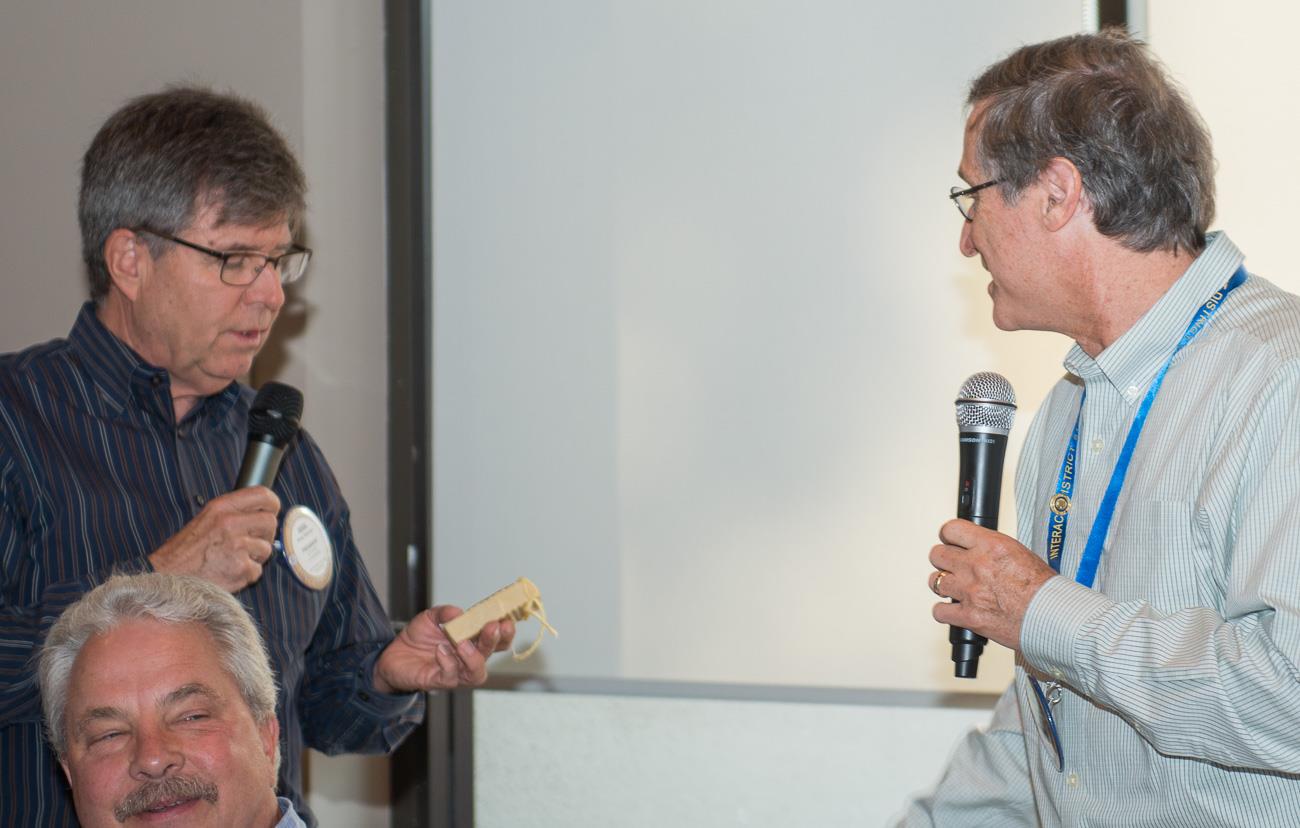
Ross Jones, fresh back from Jasper Alabama presents Doug with a bar (both are lawyers) of Alabama made soap. Doug is, speechless and Rob Sanville amused. Ask Ross about the Rotary entry in the donkey race!
Peter Banks advertises his upcoming led hike to Taylor Mtn.
John Jones introduced his guest Donn Johnson, Pharmacy Tech with AlixaRx Pharmacy Services, visiting for a second time!
Marty looks serious. He is justifiably proud of his granddaughter whose high school graduation in Austin TX received honors as a National Merit Scholar and a jumbotron moment during her vocal solo.
Guest speakers Dr Samuel Kimbles and wife Sara Phillips Spaulding presented a harrowing personal account of their night trapped in their car, surrounded by the wildfires of October last. Samuel, a Clinical Psychologist, and Sara a retired therapist turned artist witnessed their and neighbors homes burn while awaiting hopeful rescue. Only after cell phone calls to their 4 children, as if it was their last conversation, did California Highway Patrol Officers directed by two "Angel" 911 Dispatchers locate Sam and Sara.
Sara had recently had hip surgery and was unable to climb over a fallen tree. Officers Jonathan Sloat and Ken Enger were dispatched by the 911 women. News of Sam and Sara's plight reached her cousin in Oregon. A trained Physician Assistant and helicopter medic, he instructed the couple to drive to "black spots" where combustible fuel had been consumed. That strategy worked, and not only are Sam and Sara with us today, so too is their Subaru which Officers Sloat and Enger arranged for repair and detailing.
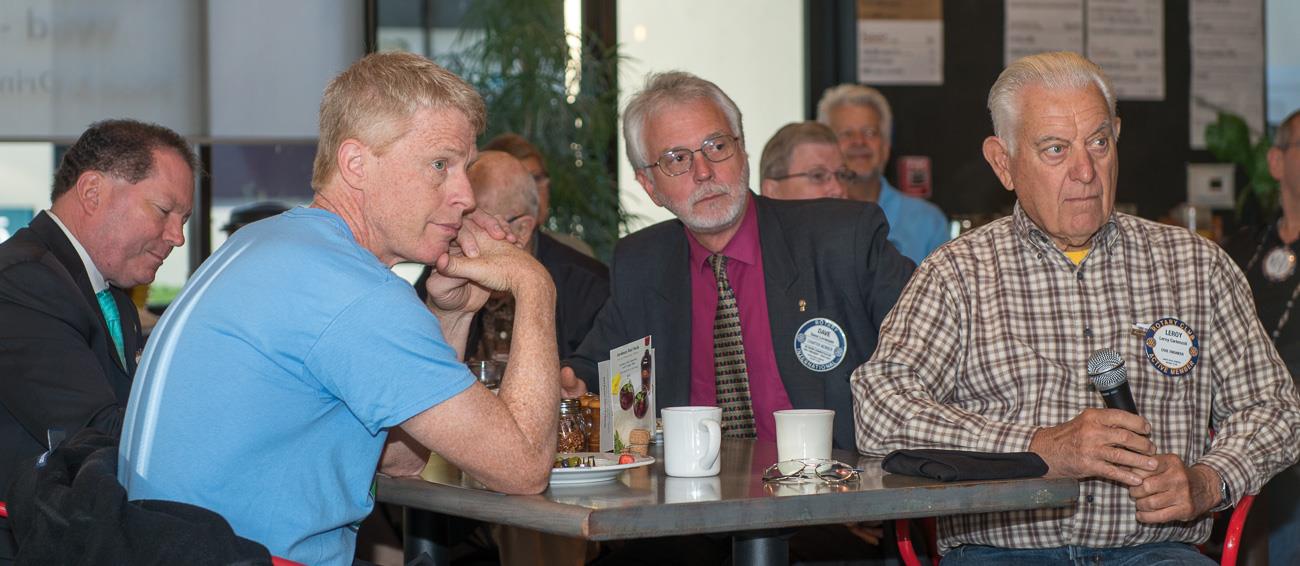
Peter Hoberg, Scott Holder, Dave Lorenzen and Leroy Carlenzoli listen attentively to Sam and Sara's sage. Leroy also lost his home, not far from Sam and Sara.
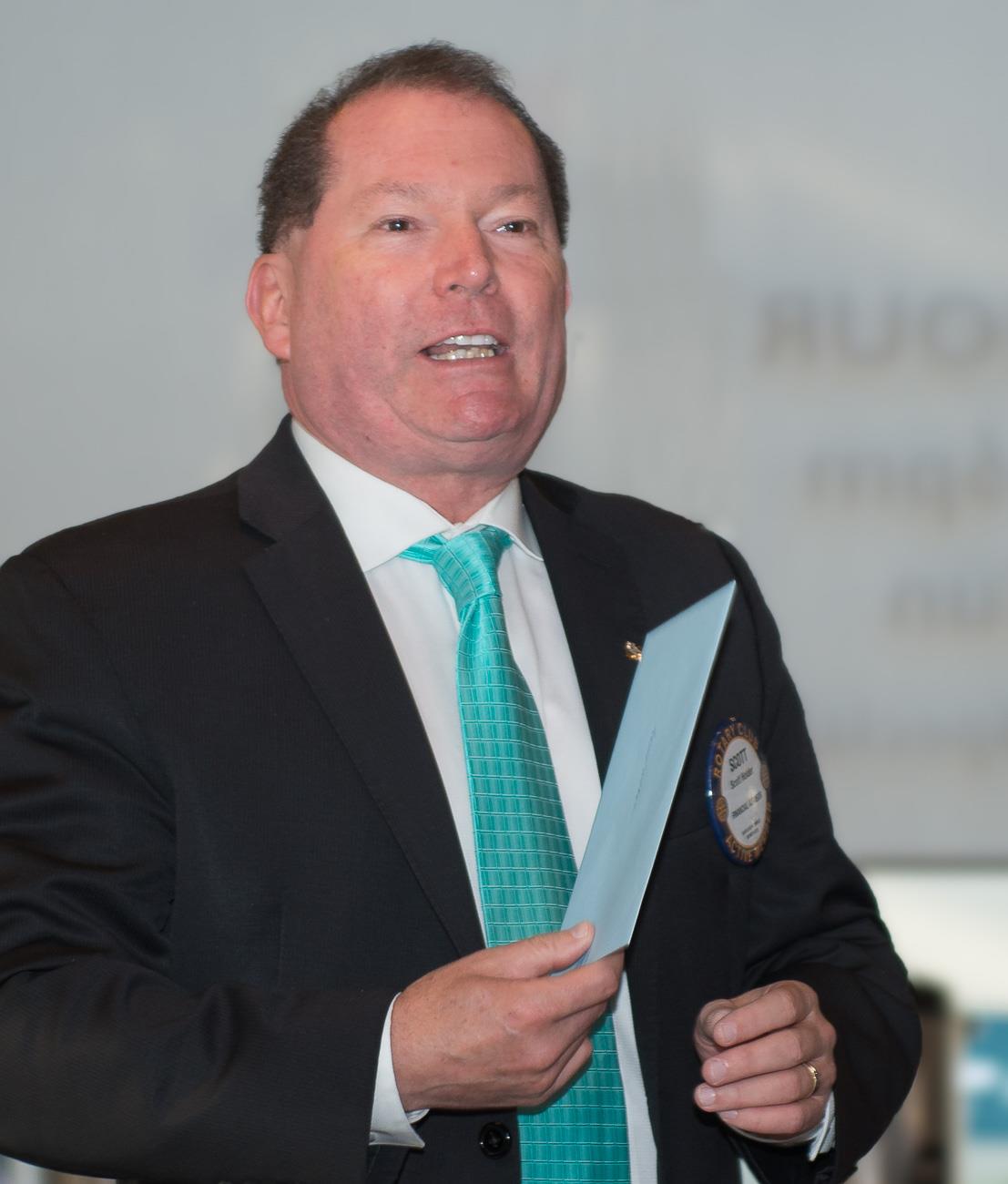
Scott Holder accepts birthday greetings from President Doug. While another member spoke of celebrating in a Model T Ford, Scott soared off in his high octane airplane.
On a regular basis, our resident photo pros Warren Smith and Jack Strange submit pictures of what is going on at the weekly meetings. You can always find the most recent pictures at the websites photo journal called "Meeting Sighting" Please note that all the meeting photos for the entire Rotary year are at this location with the most recent on the last page.
Thanks for all the great pictures Warren and Ross!Link to Meeting Sightings. The most recent are on the last page!
Garden Party Experience from this Year’s “Puttin On The Ritz”
This last Saturday, purchasers of this year’s “Italian Affair Garden Dinner”, hosted by Jim and Melinda Moir and Dave and Shauna Lorenzen, enjoyed an evening in the gardens of Dave and Shauna, playing Bocce, and a multi coursed fresh Garden dinner. Scallop Shooters, Prosciutto and Mellon, Capresse and Rose; then sitting down to a Trio of cold soups (Sweet Pea, White Gazpacho and Fresh Gazpacho); Followed with Fresh Caesar Salad and Focaccia; Ratatouille,Marinated Flank Steak and Sautéed Prawn with Garden Orzo; Lots and lots of wines, and finished with ‘Tanta Betty’s Lemon Fluff Roll with Raspberry Essence and Limoncello;
Pictured above are Peter Hoberg, Penny Millar, Paul O’Rear, Catherine Anderson, Randy Seelye, Jennifer Hembd, Steve Rogers and Molly Hoberg.
Thanks so much to all for supporting the fundraising efforts of Santa Rosa Sunrise!
Editor's note: We’ll be visiting clubs around the world to highlight the diversity of the Rotary experience. This is the first in a monthly series.
It’s noon on Tuesday, and a waiter at Chicago’s Union League Club is wondering if Cheryl McIntyre plans to eat lunch. “When I was president, I’d get so nervous about speaking in front of everyone that I’d barely touch my food,” she says.
McIntyre was president of the Rotary Club of Chicago, also known as Rotary One, in 2015-16. That year, she changed the format of the meetings to allow more time for members to talk with visitors. She wanted people to feel welcome, she says, as though they were guests in someone’s home. The club gets its fair share of visitors – as the first Rotary club, established in 1905 and home to founder Paul Harris, it’s a must-stop for Rotarians from out of town.
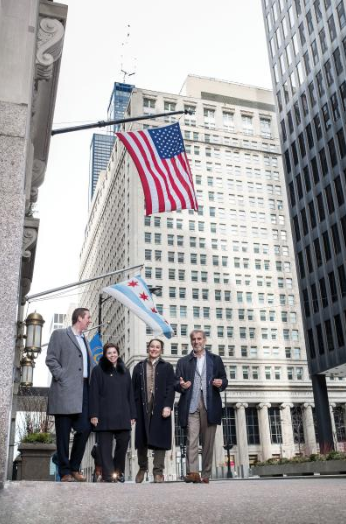
Rotary Club of Chicago President Conor Gee, left, with 2015-16 President Cheryl McIntyre, club Secretary Marga Hewko, and President-Elect Khaled Akkawi outside the Union League Club.
As a hearty lunch of turkey, mashed potatoes, and roasted vegetables is served – it’s Thanksgiving week – Khaled Akkawi steps up to the podium. “This is my first time leading a meeting, so things will go as planned, right?” he jokes, a slight accent giving away his Jordanian roots. The club’s president-elect, he’s filling in for Conor Gee, who is in Geneva this week to attend Rotary Day at the United Nations. (At 32, Gee is one of the youngest people ever to serve as this club’s president.)
Akkawi introduces the guests: two prospective members and five visiting Rotarians. One visitor, Alice Atemo, says she hopes to partner with the club on a water project in her home country of Kenya, where she runs a school for 900 orphaned children.
Rajendran Sabanayagam and his daughter Priya are in town for a steel conference. He’s a member of the Rotary Club of Madras, India, and his daughter is part of a spinoff club created for younger professionals called Madras Next Generation. A couple from La Jolla, California, round out the visiting Rotarians.
Akkawi then shares a quote he heard on the radio: “It’s so much easier to build a child than to rebuild an adult.” It made him think, he says, about the club’s signature project, Job1, a partnership with Chicago Public Schools that provides training and summer internships to high school students. As part of the program, the club sponsors job readiness training programs, puts together a job fair, and awards scholarships to graduating seniors. Rotarians also mentor the students in the program.
The club established its own foundation in 1938; it manages more than $3 million in assets and disburses between $200,000 and $250,000 every year, Gee says. Through the foundation, the club has funded rehabilitation services for disabled children, a clean-water project in Haiti, scholarships, and polio eradication.
Situated in Chicago’s Loop, the historic Union League Club is a social, civic, and community hub for the city. It is sometimes referred to as the city’s “other Art Institute” for its large collection of paintings and other works. Although the focus is primarily on American artists – the nearly 800 pieces include works by Grant Wood and John James Audubon – one of the highlights is an 1872 painting by Claude Monet called Apple Trees in Blossom.
Club members gather for lunch every Tuesday in a ballroom lit by gilded chandeliers. Today, attendance is a bit lighter than usual because many of the 136 members went to an event over the weekend – a send-off for a fire truck and an ambulance for emergency responders in Jalisco, Mexico. Rotary One sponsored the donation together with the Rotary Club of Chicago Little Village; new member George Rabiela, a retired fire captain, helped organize the donation.
At the president’s table, nearly everyone is a guest. Akkawi splits his time chatting with a lawyer considering joining the club and today’s speaker, Jonny Imerman, a cancer survivor who established a support network that connects cancer patients with survivors.
Imerman started Imerman Angels after being diagnosed with advanced testicular cancer when he was 26. He survived grueling eight-hour chemotherapy sessions with the support of his family but wished he had someone to talk to who had been through a similar experience – someone who had beaten the odds and could give him hope that he would too. Once in remission, he created an organization to provide others with what he wished he had had; today, Imerman Angels operates in 90 countries.
Imerman’s talk makes member John McKevitt tear up. His wife died of melanoma a few days after her 40th birthday, leaving two young children. J. Francisco Núñez, a retired physician, challenges the men in the room to not be embarrassed to talk about testicular cancer and to ask their doctor for a yearly exam. It’s the No. 1 cancer in men ages 15 to 34, he notes.
After Imerman speaks, Akkawi and others brief members on upcoming events – labeling dictionaries and distributing them to local elementary schools, a social event at a cigar lounge – before the visitors get a chance to say a few words. Atemo, the Rotarian visiting from Kenya, stands up and says it’s an inspiration to be at Rotary One: “This club reminds me of Paul Harris.”
For 60 years, choosing a theme has been the privilege, and sometimes the challenge, of each incoming president. Looking back on those past themes opens a small window into the thinking and the vision of each leader – how they saw Rotary, the place they saw for Rotary in the world, and what they hoped Rotary would achieve.
When my turn came to choose a theme, I did not hesitate. I knew immediately that our theme in 2017-18 would be Rotary: Making a Difference. For me, that small phrase describes not only what we do now, but what we aspire to do. We want to make a difference. We strive to help, to have an impact, to make the world a bit better.
Over the past two years, I have seen so many ways that Rotary is doing just that. In California, after the devastating wildfires last year, I saw Rotarians Making a Difference to those who had lost everything. In Guatemala, I saw the difference that simple wood stoves are making in the lives of women who had been cooking on open fires: They no longer breathe smoke when they cook, they spend less time gathering firewood, and they are using their stoves to start small businesses. In Israel, I visited a Rotary-supported hyperbaric center that is helping brain injury and stroke patients return to healthy, productive lives. In communities around the world, Rotarians are Making a Difference by resettling refugees, immunizing children, ensuring a safe blood supply, and helping young people learn and thrive.
All over the world, I have been a part of Rotarians’ commitment to planting trees. As this issue of The Rotarian goes to press, we are still awaiting the final count of trees planted, but I am delighted to announce that we have already far surpassed our original goal of 1.2 million trees, one new tree per Rotarian. And, all over the world, Rotary is continuing its advocacy, fundraising, and support for polio eradication. Last year, wild poliovirus caused only 22 cases of paralysis in only two countries. I am confident that soon that number will be zero, and we will begin a new phase in the timeline of eradication: counting down at least three years from the last sign of wild virus to the certification of a polio-free world.
As Juliet and I return home to Australia, we will bring warm memories of the places we have visited, the friends we have made, and the service we have seen. Thank you, all of you, for the tremendous work you are doing, through Rotary: Making a Difference.
It’s hard to believe that the first year of Our Foundation’s second century of service – and my term as chair of The Rotary Foundation – is coming to a close.
It has been an amazing experience to see Rotary and Our Foundation in action as I’ve traveled the world. It has been inspiring to see the passion and dedication of Rotarians, the energy and creativity of Rotaractors, and the diversity of projects and forms of service. I’ve seen Rotary: Making a Difference in the lives of countless people in need, because Rotarians are People of Action!
These experiences have reaffirmed my belief in Rotary’s future and the vital role Our Foundation can and must continue to play – especially as we approach our post-polio era.
As Rotarians, we have big challenges and bold opportunities ahead:
•We must achieve our goal of eradicating polio! Please contribute to the polio campaign – whether through a direct donation, by fundraising, or by telling the polio story using your preferred media platform.
•We must expand the conversation and determine what corporate project or projects we will undertake next. Think bold!
•We must work to engage the 50 percent of the world’s population that is under the age of 30. Surveys consistently show that these young people want to make a difference and to volunteer. We need to continue developing proactive strategies to engage millennials and Gen Z-ers.
•Women account for 50 percent of the world’s population. They are proving to be the backbone of many clubs. We need to expand their reach and welcome their leadership at every level of our organization.
•More Rotarians and clubs need to connect more closely to the Foundation to understand how it can help achieve our goals.
This Rotary year, I invited you to share your ideas with me. Many did – about how to raise more funds, to simplify the grant process, to better engage youth, to build peace, to enhance our membership experience through The Rotary Foundation. You expressed your passion for a future in which Our Foundation will have a greater impact than ever in its second century. This is because you are our greatest strength.
Thank you for the honor of sharing this journey with you.
Rotary Club of Santa Rosa Sunrise - Founded June 30, 1986


.JPG)
.png)
.jpg)
.jpg)
.jpg)



.jpg)
.jpg)