Habitat for Humanity is partnering with SPARC, Inc. for a Neighborhood Yard Beautification Day at Leisure Mobile Home Park and invite community members to join as volunteers on Friday, August 7 and Saturday, August 8.
Event: Neighborhood Yard Beautification Day
Hosted By: Habitat for Humanity of Sonoma County & SPARC, Inc.
Dates & Schedule:
Friday, August 7 and Saturday, August 8
7:30 AM – Volunteer Check-In (coffee and light breakfast provided)
7:45 AM – Volunteer Huddle
8:00 AM – Yard beautification begins
9:45 AM – 10-minute break
12:00 PM – Volunteer shift concludes
Location:
Leisure Mobile Home Park
2185 Occidental Road
Santa Rosa, CA 95401
What to Bring:
Garden tools and work gloves. If you do not have your own gloves or gardening tools, we will have a limited amount available.
If you would like to volunteer, please contact Leroy and also email volunteer@habitatsoco.org and let us know if you can join us on Friday, August 7 or Saturday, August 8.
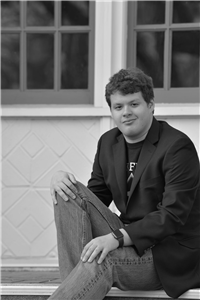
William Ference is a 25‑year‑old who speaks openly and thoughtfully about his lived experience with autism.
A graduate of Sonoma State University, he earned his degree in English Literature Magna Cum Laude and has continued to build a life shaped by curiosity, resilience, and determination.
Throughout his journey, William has consistently challenged early expectations and demonstrated what is possible through support, perseverance, and self‑belief.
His story highlights neurodiversity, overcoming barriers, and finding one’s voice, and he brings a thoughtful, authentic perspective to every audience he meets.
Those who know him also appreciate his keen sense of humor, which adds warmth and relatability to his message.
Today, William shares his experiences to help others better understand autism, encourage acceptance, and inspire families and individuals navigating similar paths.
Outside of speaking, he enjoys reading, writing, and staying current with world issues, all of which continue to shape his creativity and outlook.
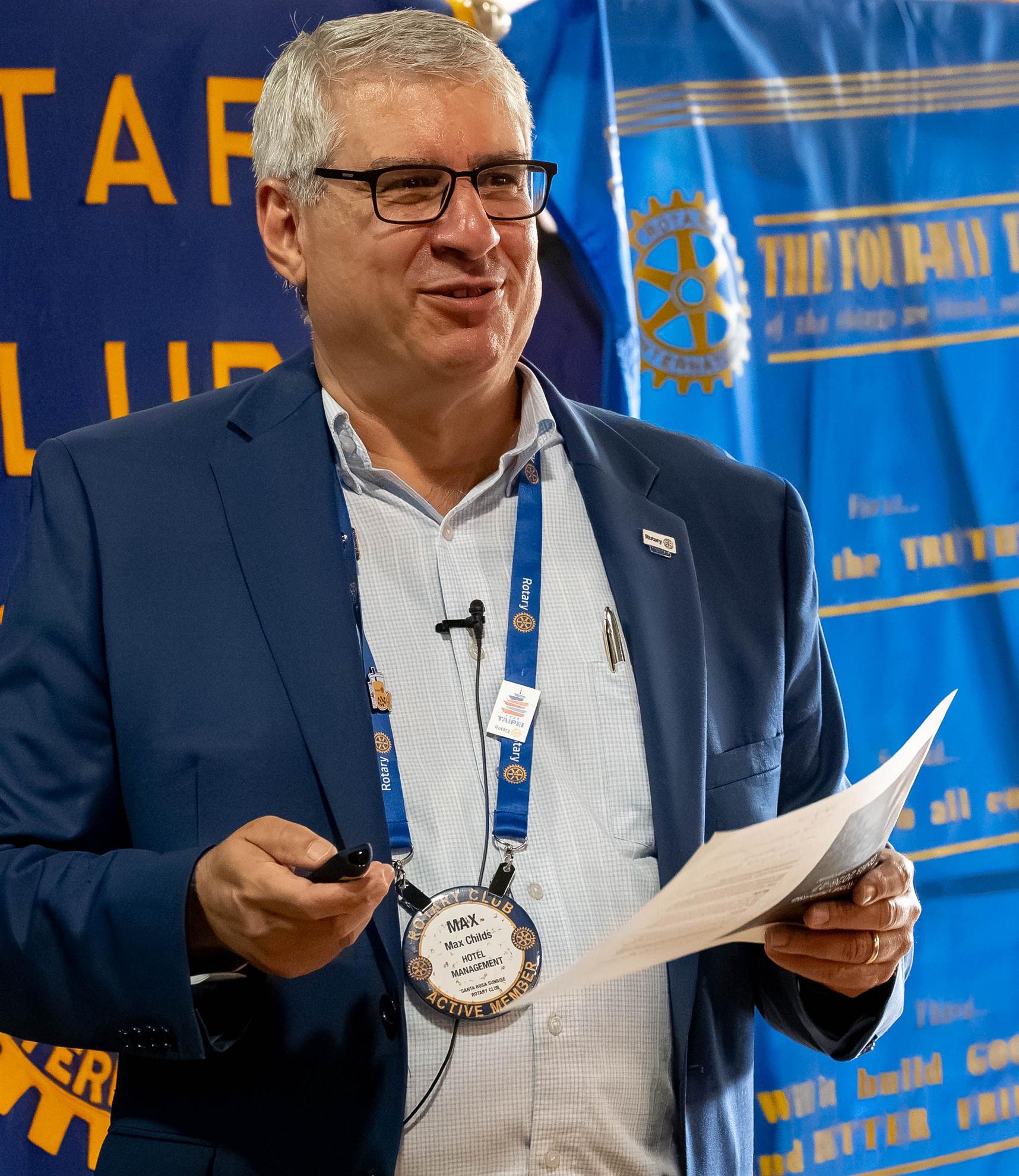
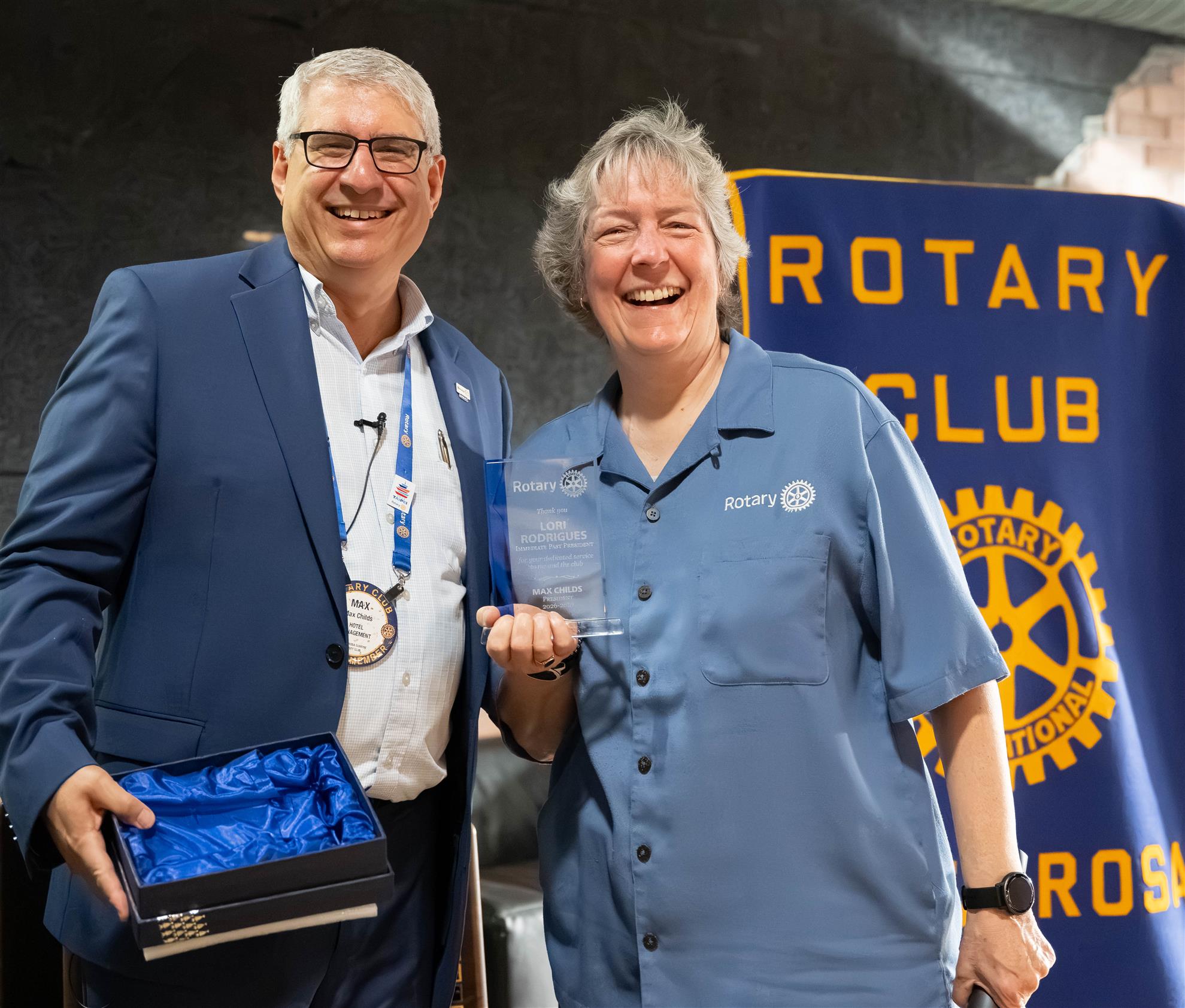
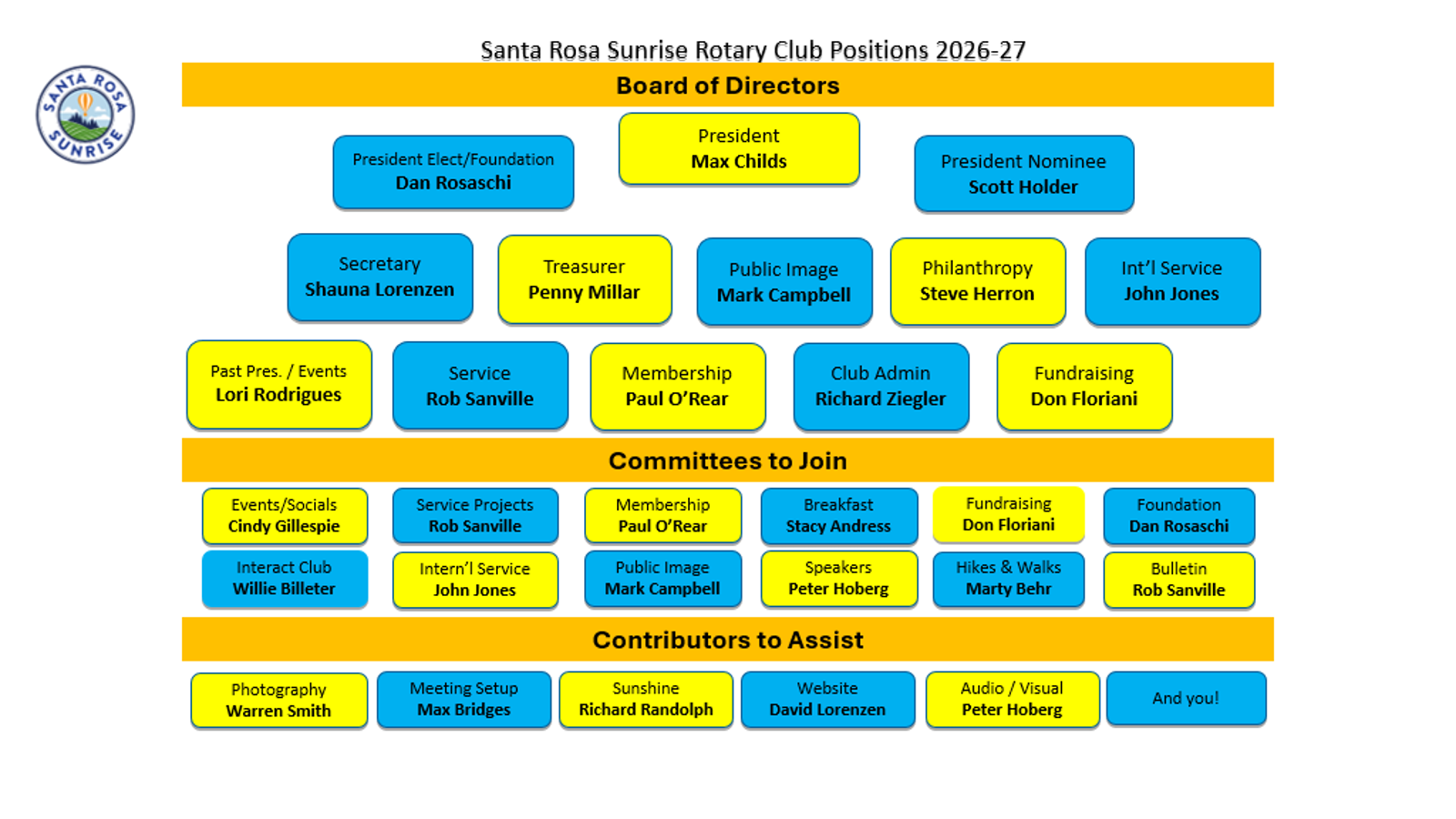
Club Assembly Rotary Year 2026-2027, Produced and Directed by President Max Childs
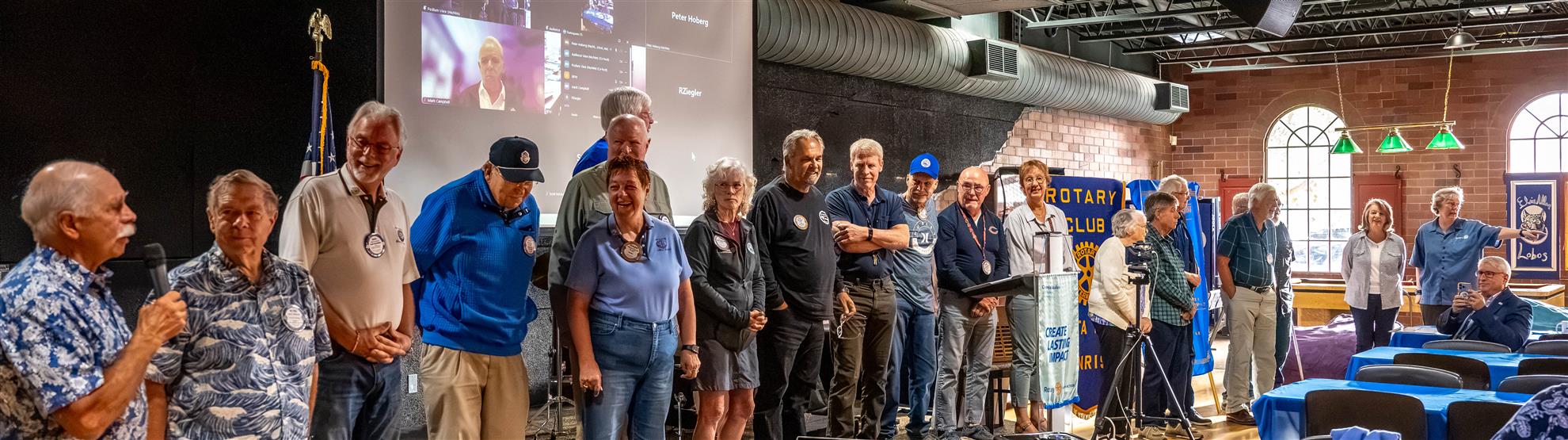
The meeting for July 9, 2026 was our beginning-of-the-Rotary-year Club Assembly, chaired by our newly minted president, Max Childs! President Max introduced our leadership team, identified our key committees, asked for additional committee volunteers, and discussed the goals of our new Rotary International President, District Governor, and his own club goals. He also introduced additional speakers, including Treasurer, Penny Millar, and Fundraising Chair Don (“FLO”) Floriani.
Penny Millar provided a succinct summary of the budget for the new year. Our total income is $69,200 and is comprised of dues, assessments, recognition fees, bulletin sponsor fees, and interest income. Our major income source, assessments, will increase from $200 per quarter to $210 per quarter. Our most significant expense is for breakfasts. Other expense items include district and international dues, events, district conferences and conventions, Rotary supplies, and SCARC, among others. Penny, our uber competent treasurer, has found a way to make our total income and total expenses to be the same! Skill, magic, or coincidence? A couple of key points: Each member pays $75 per year for recognition, which includes many of the costs formerly called “fines”, such as birthdays, anniversaries, etc. On the expense level, we each pay an equal share for the cost of club breakfasts, so you don’t save any money by not coming to our weekly breakfast (and you don't get to hang out with your fellow members and guests!).
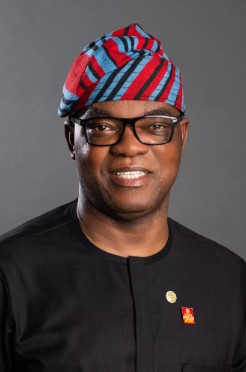
We also saw a short video from our new Rotary Int’l President, Olayinka Babalola, who explained his 2026-2027 goal; “Create Lasting Impact.” President Olayinka says that as Rotarians we share a vision of a better world; free of polio, at peace, and where everyone has access to education and opportunity. He suggests that outcome isn’t the most important goal; enduring impact is what matters most. If we commit ourselves to growth, fellowship, and service, we can create lasting impact.
Pres. Max also discussed the goals of our new District 5130 Governor, Jeff Kolin. These include increasing membership, adding 2 new clubs, increasing Rotarian involvement in District activities and leadership, and increasing the number of clubs submitting for awards. President Max also outlined his own club goals for the year, including adding 4 new members (we are currently at 56), increasing the number of members who participate in at least 1 club activity to 42, raising $9,000 for the RI Annual Fund and $5,500 for Polio Plus, having at least 2 published media stories, increasing collaboration with other clubs, finalizing creation of a Roseland Satellite Club, and having a new fundraiser. Don Floriani also spoke about planning for a new fundraiser to replace or supplement the lottery fundraisers that we’ve had for the past few years (which were quite successful in raising money).
Many thanks to Max for the well-planned and organized Annual Assembly. This is going to be a great year!
On a regular basis, our resident photo pro Warren Smith, submits pictures of what is going on at the weekly meetings. You can always find the most recent pictures at the websites photo journal called "Meeting Sighting" Please note that all the meeting photos for the entire Rotary year are at this location with the most recent on the last page.
Thanks for all the great pictures Warren!Link to Meeting Sightings. The most recent are on the last page!
It surprises you when a stranger across the table becomes a lifelong friend. It surprises you when a small project in one neighborhood ripples outward in ways you never imagined. And it may surprise you when you realize that the person Rotary has changed most … is you.
That is why this year, we are called to harness the change within ourselves, to look to the future, and to Create Lasting Impact.
Now, I want to be clear about what those words mean. Change is only the beginning. Impact is what endures. We must think of the long-term impact of every project. How can a new water system contribute to the long-term health of a community? Can residents help other communities build their own? How can a new classroom be part of a wider strategy to improve education in the area? That is the sort of thinking we need.
As we prioritize impact, we must also consider how our actions can contribute to peacebuilding. Peace does not happen by accident. It must be built deliberately and strategically. As you plan your next project, ask yourself: “How does this create the conditions for peace?” Consult the Pillars of Positive Peace to learn how we can bring the world one step closer to peace in everything we do.
The more you change your community and the world, the more you will change. Don’t just tell people about the projects you have run or the funds you have raised. Tell them how Rotary has shaped who you are. Those personal stories open doors, inspire new members, and remind all of us why we are here.
Storytelling is also an excellent way to recruit new members and raise funds. We need more people standing with us and more resources if we are to end polio, spread peace, and have a lasting impact on the world. We have set a goal of increasing membership to 1.25 million Rotarians and more than 125,000 Rotaractors by 2030, just in time for Rotary’s 125th anniversary.
Sit down with your club and look back over your accomplishments in the last few years. Find your best year. Maybe it was a record year for new members. Maybe you reached a fundraising milestone. Maybe you completed a project that the whole community is still talking about. Once you find that year, I challenge you to do better than your best.
In these ways and more, we will Create Lasting Impact across the globe, in our communities, and in ourselves.
Thank you, my dear friends. Now let’s get to work.
You can find all prior "RI President's Messages" at this LINK
I love the idea of a gratitude journal. The practice is simple: Write down three things each day that you are grateful for, and watch how it shifts your mindset, your energy, and even the way you move through the world.
To me, gratitude is more than a feeling; it is a force.
And in Rotary, gratitude is a reflection of who we are. When we thank our donors, we are acknowledging their contribution and honoring their belief in a better world.
I write in my gratitude journal often — not every day but enough to keep me grounded. I want to share with you an entry from January, written during the International Assembly. The assembly is more than our annual learning event for district governors-elect; it’s a gathering filled with inspiration and moments that stay with you long after the lights dim.
My first entry was in gratitude to Debbie and Russell Doby.
In 2022, Debbie, then a district governor-elect, missed out on that inspiring assembly experience because of the pandemic. Then, a year later, just a few days before the district conference she was excited to host, Debbie and her husband were in a head-on collision. The other driver was killed; Debbie and Russell survived, miraculously.
Out of tragedy, they found grace. They created an endowment fund for their district at the Arch Klumph Society level, choosing to transform pain into purpose.
My second entry reflected on Ravishankar and Paola Dakoju from the Rotary Club of Bangalore, India. At the assembly, the couple pledged $50 million to The Rotary Foundation, an extraordinary gift representing 85 percent of their wealth. Ravishankar said, “When you give more than you think you can, life returns to you more than you can ever imagine.” That single sentence captures the heart of Rotary.
My final entry was in gratitude to Moh Eid and Chuck and Carol Stocking. After Moh’s brother, Ibrahim, a humanitarian aid worker, was killed while helping victims of war, Chuck was moved to create the Ibrahim Eid Fund to support Rotary Peace Fellows. Their leverage gift was $100,000 toward a million-dollar goal. That is what it looks like when grief becomes hope.
And today, my gratitude entry is for you. For longtime members and brand new faces, for those who give year after year and those preparing to make their first gift. Thank you.
Let gratitude be our compass this year.
You can find all prior "Messages from the Foundation Trustee Chair" at this LINK
A year after the LA fires, Rotary members focus on rebuilding community and optimism
by Laura Randall
01 Jul 2026
A few weeks after last year’s Los Angeles wildfires, Claire Robinson got to work, not rebuilding her home but cleaning up scorched landscaping around the sheriff’s station in the hard-hit community of Altadena. Straightforward labor was Robinson’s way of coping and looking to the future. “I wanted to start making us feel better as a community as soon as possible, by cleaning up this civic area,” she recalls. “Volunteering was the only thing I felt like doing.”
More than a year later, the frames of hundreds of new homes are going up over the ashes, but that physical rebuilding is frustratingly slow and likely to take years. In the meantime, volunteers like Robinson are focused on an emotional rebuilding and holding on to a sense of community, tradition, and optimism.
She’s found plenty of like-minded neighbors, including Rotary members. For several years, the Rotary Club of Altadena has supported the nonprofit that Robinson manages, an urban conservation group called Amigos de los Rios. As the community began to recover last spring, club members presented her with a check for $2,000 to help the group continue its work, including adding green spaces to schools and watering mature trees that survived the fire.
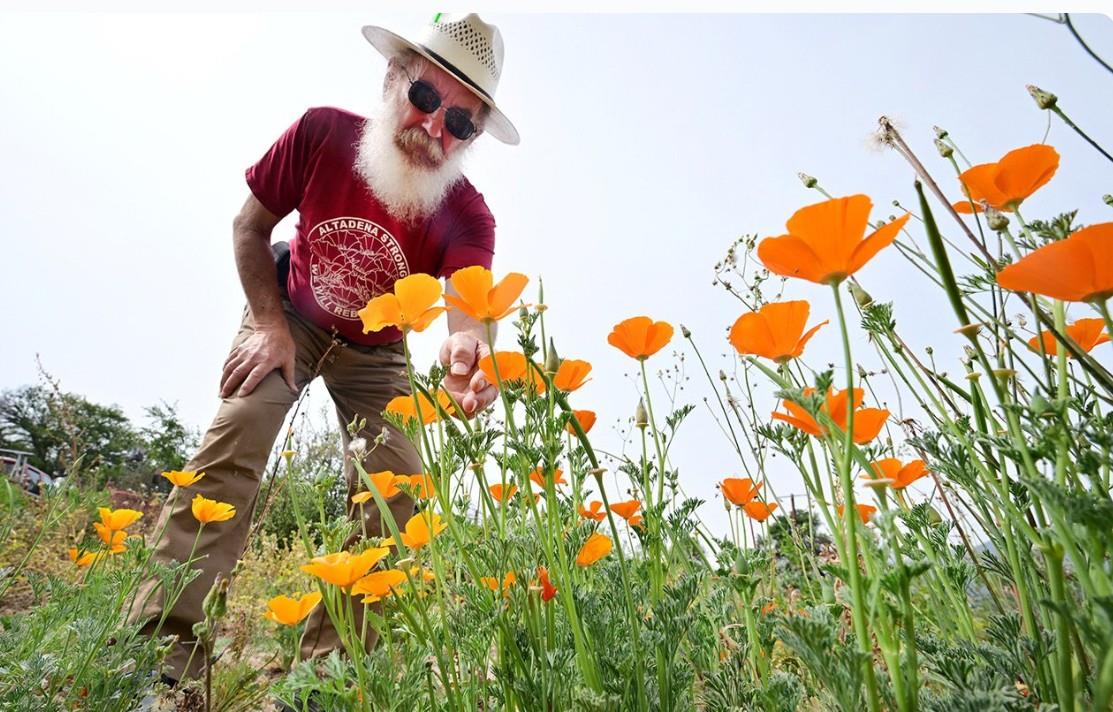
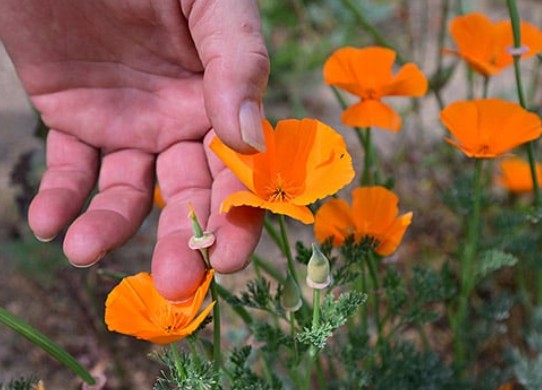
Altadena resident and Rotarian René Amy inspects the California poppies growing on the site of his former home in March, more than a year after it was destroyed in the Eaton Fire. Image credit: Frederic J. Brown/AFP via Getty Images
The club’s executive secretary, Mark Mariscal, who had also lost his home, told her, “Let’s get this in your hands right now. This is your community; this is our community,” Robinson recalls. “That meant a lot.” Now, Robinson is seeking corporate membership in the Altadena club for her employees.
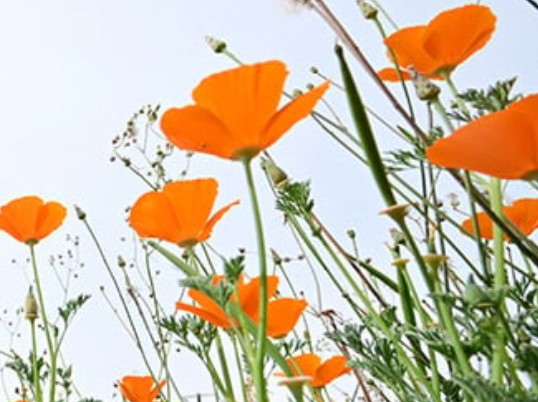
Greening the burn-scarred hills is part of the real and symbolic healing here. Robinson is in the early stages of rebuilding her home, which was once filled with books and art. But the ash and debris that had covered her property have been replaced by patches of bright orange poppies and other native flowers, part of a massive seed-planting effort aimed at bringing hope and beauty to survivors. That effort, too, was led by a Rotarian who has turned personal loss into tireless service.
‘We will rebuild’
The Santa Ana winds tore through opposite ends of Los Angeles on 7 January 2025, reaching up to 100 mph and fueling two of the worst fires in California history. The toll is staggering: 31 dead, more than 16,000 homes and businesses destroyed, evacuation orders for at least 180,000 people, and billions of dollars in economic losses.
The worst-hit places were the Pacific Palisades and Altadena, outlying areas of LA on the edges of mountainous wilderness prone to fire. About a dozen Altadena Rotary members lost their homes, as did nearly all 13 members of the Palisades club.
Yet, members say they carry a cautious, at times joyful, optimism as they enter the next chapter of recovery. Priorities have shifted from finding shelter and distributing emergency goods to supporting small businesses and schools and organizing events to reunite dispersed residents.
The community is noticing. The Altadena club had 17 members join in the last year, bringing its total to 53, while Palisades membership has increased from 13 to 23. Not surprisingly, members cite connection and friendship as key forces. “That is one of the most beautiful things birthed out of this tragedy,” notes Jeff Lemen, a Palisades Rotary member who lost his childhood home to the fires.
By the numbers
$2.7 million
Relief funds raised in districts 5280 and 5300
250 million
Poppy wildflower seeds scattered across Altadena
3,000
Attendees of anniversary vigil hosted by members
A few weeks after last year’s Los Angeles wildfires, Claire Robinson got to work, not rebuilding her home but cleaning up scorched landscaping around the sheriff’s station in the hard-hit community of Altadena. Straightforward labor was Robinson’s way of coping and looking to the future. “I wanted to start making us feel better as a community as soon as possible, by cleaning up this civic area,” she recalls. “Volunteering was the only thing I felt like doing.”
More than a year later, the frames of hundreds of new homes are going up over the ashes, but that physical rebuilding is frustratingly slow and likely to take years. In the meantime, volunteers like Robinson are focused on an emotional rebuilding and holding on to a sense of community, tradition, and optimism.
She’s found plenty of like-minded neighbors, including Rotary members. For several years, the Rotary Club of Altadena has supported the nonprofit that Robinson manages, an urban conservation group called Amigos de los Rios. As the community began to recover last spring, club members presented her with a check for $2,000 to help the group continue its work, including adding green spaces to schools and watering mature trees that survived the fire.
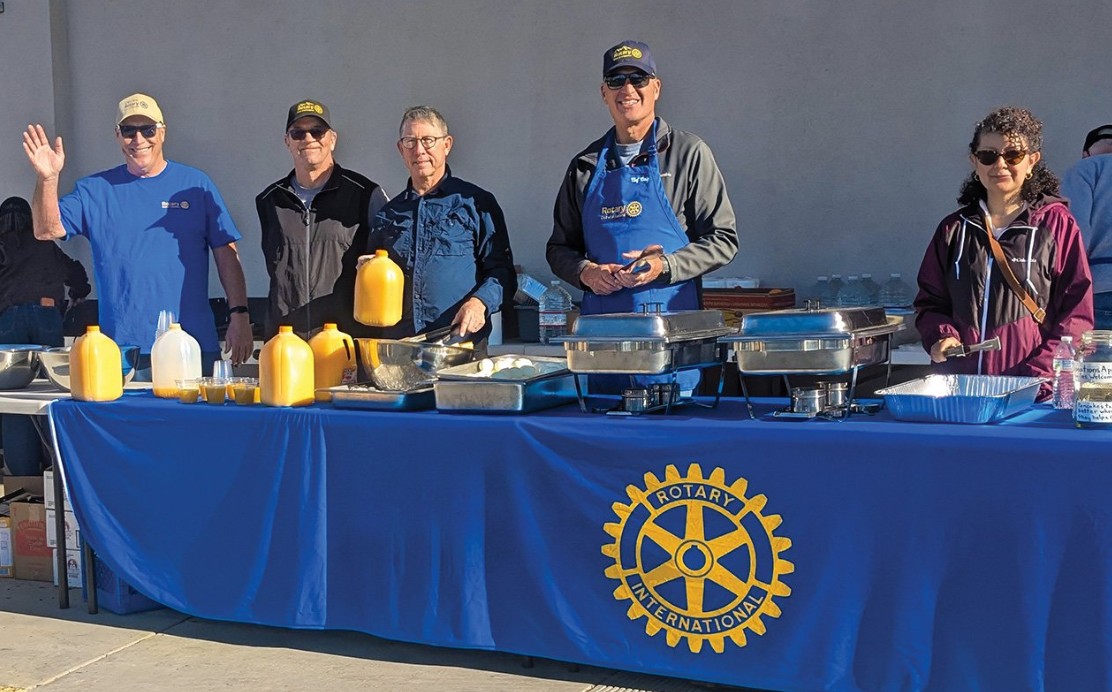
Through events like this breakfast, Rotary is seeking to reunite dispersed residents. Image credit: Laura Randall
In the Palisades, the Rotary club has prioritized support for rebuilding commercial infrastructure and schools, says Lemen. The club has committed funds to install an outdoor classroom at an elementary school and replace lunch tables and benches at a high school that had to hold classes in a former Sears building for almost a year.
In Altadena, there is a focus on returning to normalcy, says Club President Brad Roeber. When the historic outdoor amphitheater that hosted a popular series of Rotary club-led concerts burned, members made sure the shows went on last summer in another park. Rotarians from clubs all over Los Angeles showed up to help, and turnout was high and ebullient. “We made sure that the community didn’t miss out on any of this,” Roeber says.
It was that sense of community and trust that led Deb Halberstadt to join Rotary in Altadena after the fires. When she and her husband, Jon Hainer, lost their home, family and friends stepped up with generous donations, and they found themselves with more than they felt appropriate to accept given their insurance benefits. Halberstadt realized Rotary knew how to work with other groups to identify needs and get supplies like air purifiers, blankets, and mobile hot-spot devices into the right hands fast. She also found an outlet in the weekly meetings, with their exchanges of happy news and information on insurance and other relevant topics. “The group is far more powerful than any individual trying to help in a disaster situation like this,” she says. “That was a huge factor for me.”
Though the majority of Altadena and Palisades residents remained displaced, many returned for vigils on the anniversary of the fires. The Altadena event took place in the parking lot of a grocery store owned by Rotarian husband and wife Jose and Sandra Valenzuela. The store’s lot had become a distribution hub for relief supplies after the fires. Under a banner reading “Altadena Strong — We Will Rebuild,” thousands gathered to hug, sing, and share a moment of silence. “We were expecting 600. In the end, just shy of 3,000 people showed up,” Sandra Valenzuela recalls. “It was a sight to see. Nothing mattered at that moment. We were all one. We’re here for each other.”
The poppy project
Rotarian René Amy has sown 250 million poppy seeds to bring color to this somber landscape and boost spirits. Image credit: Frederic J. Brown/AFP via Getty Images
And then came the poppies. Seeking to lift spirits and beautify the scarred landscape, Altadena club member René Amy launched an ambitious poppy-planting project last fall. A century ago, the orange state flower covered the hills of Altadena every spring. The bloom was so vast, according to Veronica Jones, a Rotarian and president of the Altadena Historical Society, that the area was known as “the Altar Cloth of San Pasqual,” the Spanish friar known for kneeling in prayer in fields of wildflowers.
Amy got the word out, and 750 individuals and businesses signed up to have their lots “poppified.” He spent a couple of months scattering 250 million seeds across Altadena in his faded red pickup truck, one of his few treasures to survive the fires. Scouts and conservation groups pitched in, while the Altadena Rotary club, businesses, and Amy himself provided funds and supplies.
On a drive through his neighborhood in early spring, Amy was thrilled to see clusters of poppies emerging in yards and on sidewalk dividers and scattered across hillsides. “As someone who lost property, I understand what all this means,” he says. “Even the slightest act of kindness makes a difference.”
A few blocks away, Halberstadt and Hainer have begun settling into their new home. Instead of undertaking a complete rebuild on their property, they opted to sell it and buy a standing home nearby. It hasn’t been easy, but they’re drawing comfort from small things like hanging art in their new home.
Gazing from the backyard at sweeping views amid sounds of hammering and construction, Hainer amends a suggestion that there is cautious optimism. “I feel outrageously optimistic,” he says.
This story originally appeared in the June 2026 issue of Rotary magazine.
Rotary Club of Santa Rosa Sunrise - Founded June 30, 1986

.png)






 Occidental