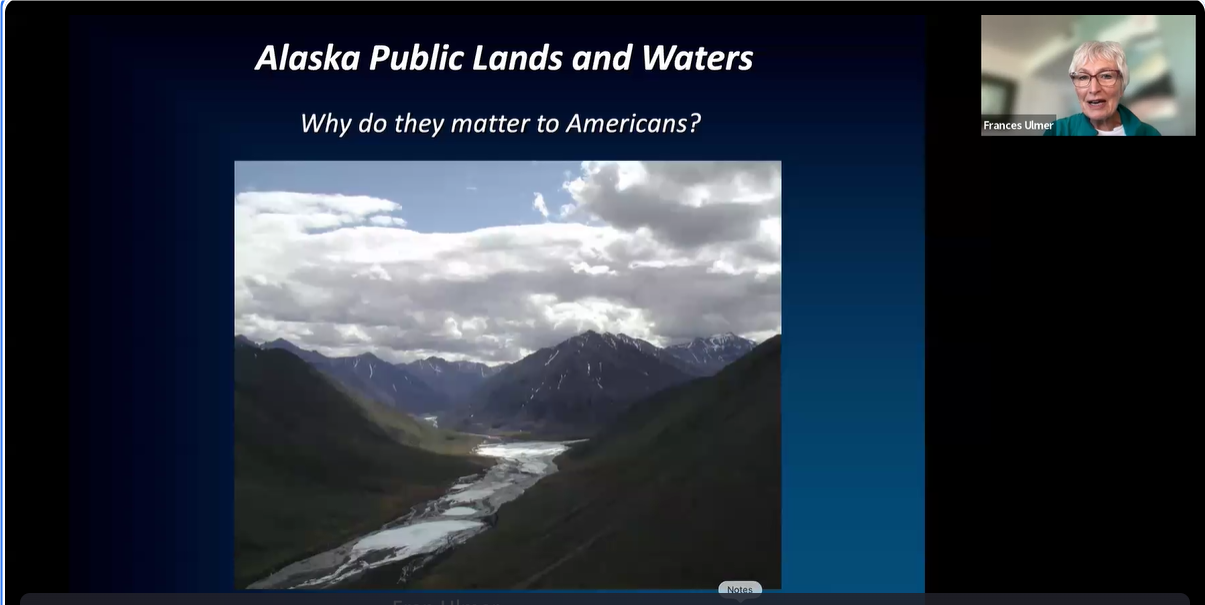
Our special guest speaker for February 19, 2026 was Fran Ulmer. Fran is a former Lt. Governor of Alaska, Chair of the Nature Conservancy, Chancellor of the University of Alaska/Anchorage, and visiting professor at Sanford and Harvard. She now serves on the board of the National Parks Conservation Association.
Fran gave us a brief summary of some unique Alaskan features. It is huge; 3 times the size of California and 20% of the land in the U.S. The population is less than 1 million; 25% of those live in the Anchorage area. 65% of Alaska is owned by the U.S. government. Alaska has the largest percentage of Native Americans in the U.S. and is home to 200 native villages, most of which are not accessible by road. The Alaska Native Land Claims Settlement Act of 1971 resolved native land claims by providing Alaskan natives with 44 million acres of land. It also established regional and village corporations to manage the land and its resources. Alaska is also home to 8 national parks comprising 65% of all U.S. national parks by acreage.
Oil is Alaska’s no. 1 economic driver. The Prudhoe Bay on Alaska’s North Shore has been a prodigious provider of oil for years but is starting to become depleted. Mining is also big business, as are fishing and tourism. Fran outlined 5 threats to Alaska: (1) The Arctic National Wildlife Refuge is at risk from Big Oil, which seeks development that will result in severe environmental damage, including damage to populations of caribou, seals, and polar bears, among others; (2) The Ambler Mine Road is a proposed 210 mile highway to an as-yet not built mine that will also substantially endanger wildlife and other natural resources; (3) The Bristol Bay fishery faces the construction of an open pit mine that could also significantly damage the largest wild salmon fishery in the world and diminish Alaska’s brown bear population; (4) The Tongass National Forest contains mountains, old growth forests, and vital carbon storage areas that are all at risk from timber clear cutting operations; (5) Finally, Executive Order No. 14153, signed by the president on the day of his inauguration, seeks to “unleash Alaska’s extraordinary resource potential” by, among other things, directing all U.S. executive departments and agencies to expedite resource development in Alaska, including expediting state and local construction permits to allow these environmental hazards.
Beyond Alaska, staff reductions at U.S. Forest Service and Fish & Wildlife Service threaten to close or significantly diminish the public’s right to use and enjoy our national parks. The federal government has also taken down historical information from our National Parks. These budget cuts also threaten California directly, since California is showing increased visitation and the loss of supervision threatens the infrastructure of the parks and limit our ability to visit them. Why should we want to protect our National Parks and other environmentally sensitive areas? These threats threaten our democratic values because public use is so important for health, recreation, climate stabilization, and intergenerational equity. Fran closed her presentation with this thought: It’s not about using public land just for money. It’s all about using public lands for all of these other purposes that give joy, that provide for health, biodiversity, climate mitigation, recreation,… in a way that allows people [including future generations] to enjoy these special lands.
Thank you, Fran, for the terrific presentation and for all of your work fighting for our national parks and other sensitive environmental areas!



.png)









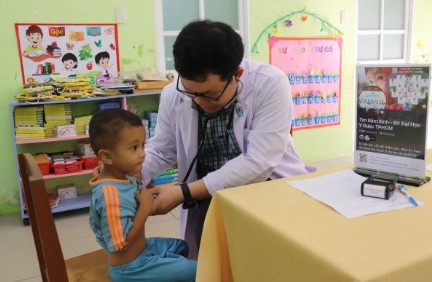 The Rotary Club of Saigon International participated in two global grant projects with District 3740 in Korea that have corrected congenital heart disease for 100 Vietnamese children since 2023. The $125,000 Heart-to-Heart project helps low-income families bridge the gap between what the government covers and what they’re able to pay out of pocket. “We chose pediatric heart surgery because, with a relatively small contribution of $1,500 from us, we can quite literally save a child’s life,” says Hoa Nguyen, president-elect of the club. Rotary contributions are matched by the