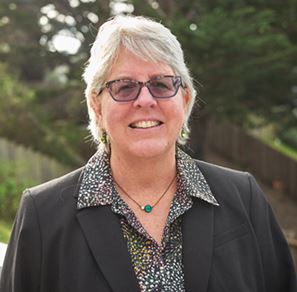
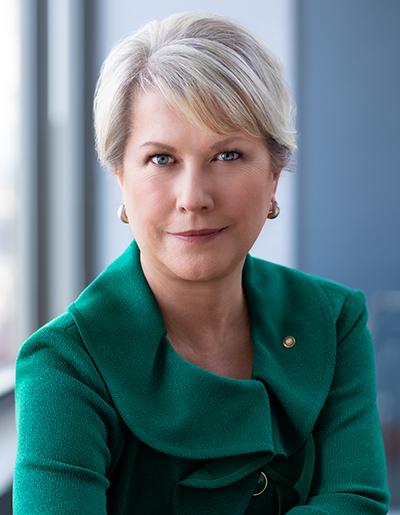
Executive Director of Laguna de Santa Rosa Foundation
Anne has worked in wildlife conservation for more than three decades, including 24 years as a wildlife biologist and refuge manager with the U.S. Fish and Wildlife Service’s National Wildlife Refuge System in Colorado, Alaska, Florida, and California, and six years as a wildlife biologist with the Bureau of Land Management in Alaska. She was most recently the manager of the San Francisco Bay National Wildlife Refuge Complex which includes seven National Wildlife Refuges in the San Francisco and Monterey Bay areas and the Farallon Islands. Originally from Miami, Florida, Anne received a B.S. in Wildlife Biology from Colorado State University and a M.S. in Zoology from the University of Wyoming. Anne is passionate about restoring native habitats and conserving imperiled wildlife through promoting science-based climate adaption, fostering collaborative partnerships, and connecting people to nature. Anne lives in Sebastopol with her partner Harry and canine-friend Daisy, and they enjoy sailing, bicycling, traveling, and exploring the diverse natural, historical, and culinary venues that abound in northern California.
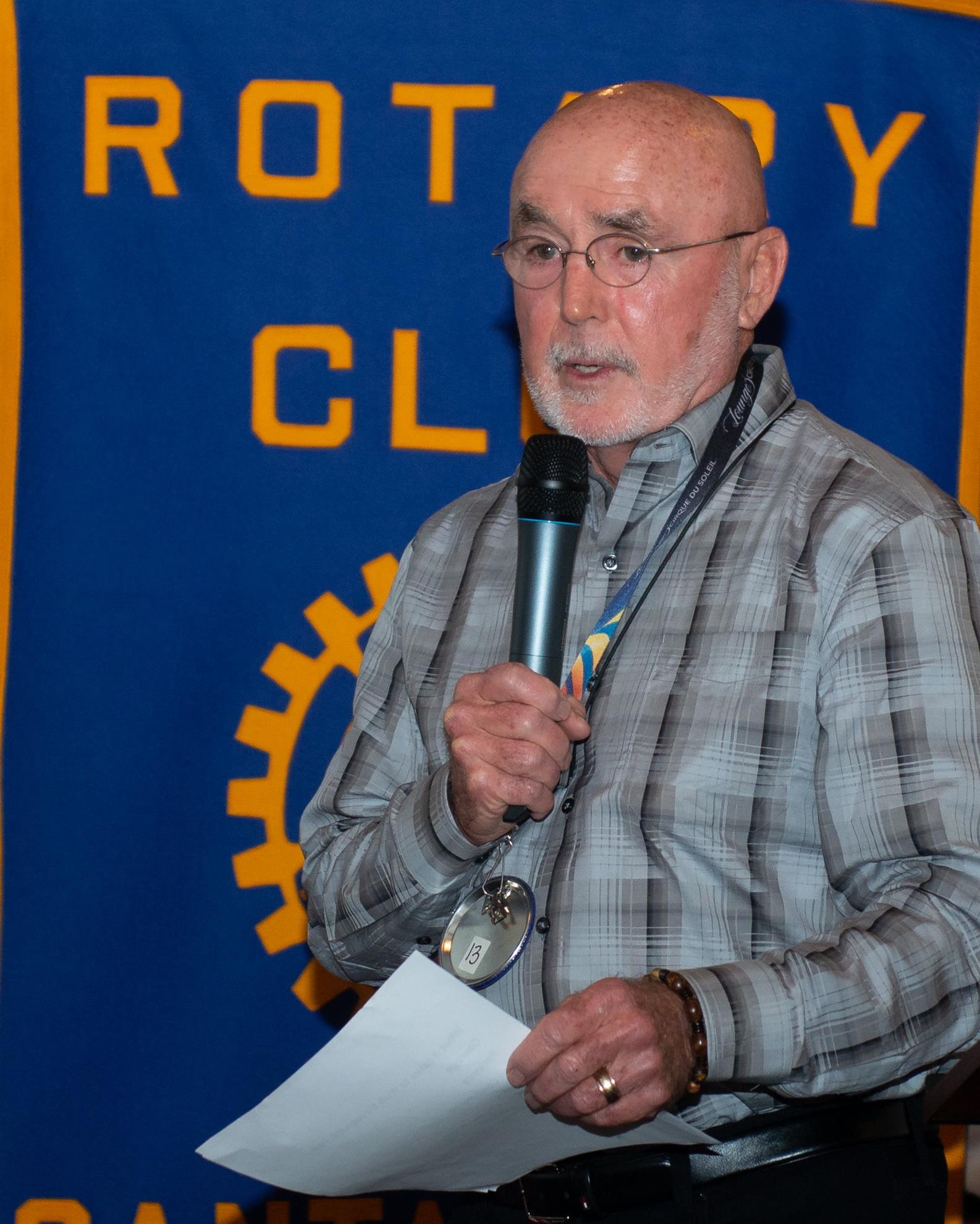
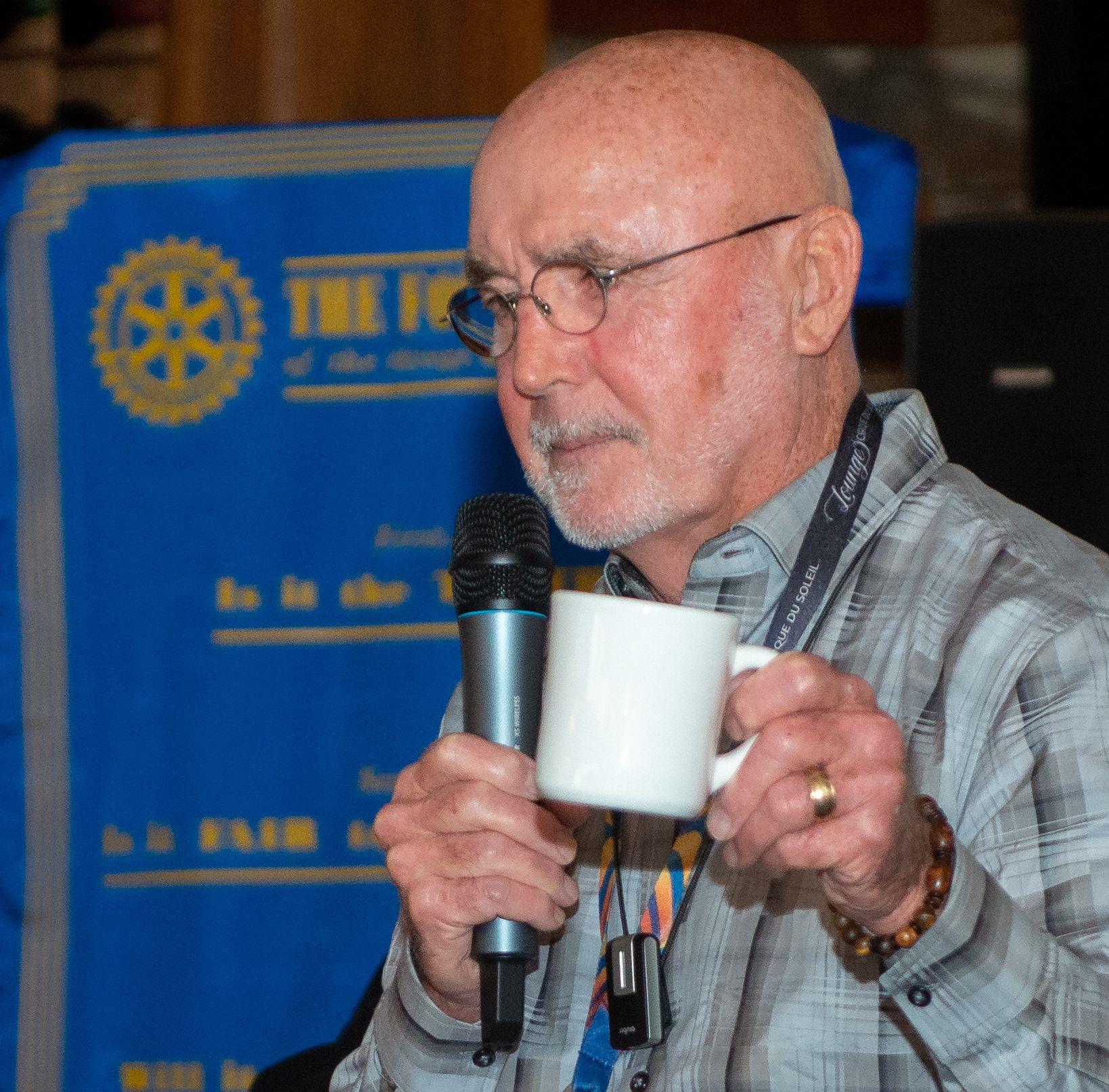
Our program from March 2nd, was our own Harry Coffey speaking on the topic of grief.
Harry touched off an engaging group conversation on the topic of grief by walking us through the various stages many of us go though when dealing with grief in our lives. They include; Shock, Denial, Anger, Bargaining, Depression, Acceptance and Hope. What can help us cope is; Courage, Patience, Self Compassion, kindness, and what Harry refers to as "Move Your Feet "Action.
Harry shared a video called Scattering CJ. It was about a mother coping with the loss of her son, a Veteran from Maine, that committed suicide in his mother's driveway after they had an argument. Prior, he had joined the Air Force so he could see the world. His mother moved her feet to action with a special asking. she would send 750 packets of his ashes to people making journeys to all points of the world to scatter CJ's ashes. Harry read about this in the Press Democrat and wanted to participate. when Harry and his wife, Judy, traveled to the Rotary International Conference, he scattered CJ's ashes at Northern Queensland's Great Barrier Reef. A moment caught on film and included in the video.
At the conclusion of the video, Harry shared his own stories of loosing his daughter, Taylor, at 17 days old and his daughter, Alexa at 17 years old. He likened Alexa's being a donor for sixty other people to their own version scattering CJ. Harry then shared Rotary Magazine stories about people coping with grief in various ways. Harry wants everyone to know there is help available for those who are grieving. Some ways are listed here in Harry's hand out.
Now it was our turn. Harry, Stacy and Marty lead table discussions by sharing their own stories and guiding the conversations. Eloise lead a breakout on Zoom with Mark and Randy which can be seen in the recording by clicking the link below. I truly believe some degree of healing took place in all of these groups that morning. Harry concluded the program with his analogy of life is like a bowl of golf balls. You need to prioritize the important things like golf balls, because if you don't put them first, they will not fit if you fill the bowl with sand and coffee first. But there is always room for a cup of coffee with a friend!
Click HERE to view a limited time recording of Coping with Loss and Grief with Harry Coffey.
On a regular basis, our resident photo pro Warren Smith, submits pictures of what is going on at the weekly meetings. You can always find the most recent pictures at the websites photo journal called "Meeting Sighting" Please note that all the meeting photos for the entire Rotary year are at this location with the most recent on the last page.
Thanks for all the great pictures Warren!Link to Meeting Sightings. The most recent are on the last page!
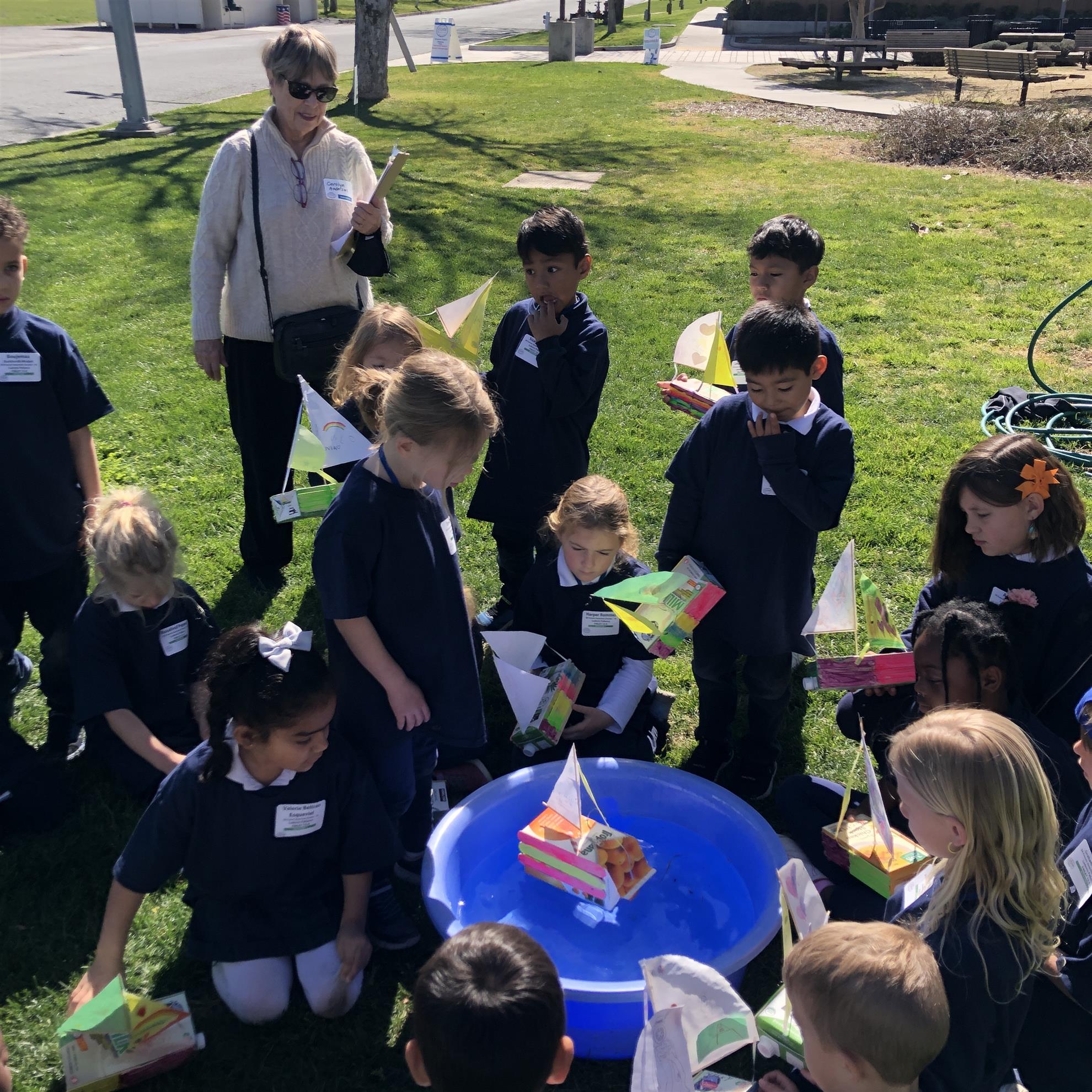
Sunriser, Carolyn Anderson watches attentively as 24 Kindergarten students demonstrate their understanding of oceanic navigation ~ on a relevant scale.
They were among the 400 participants in the County Office of Education's STEAM Showcase last Thursday at the Fairgrounds.
Applying imagination and collaboration, the cohorts ranging in age from 4 to 17, and in groups to individuals. Everyone was challenged to complete the phrase "The Story of..."
Rather than a competition, the event was designed to develop integration of the STEAM elements and create a better understanding of process.
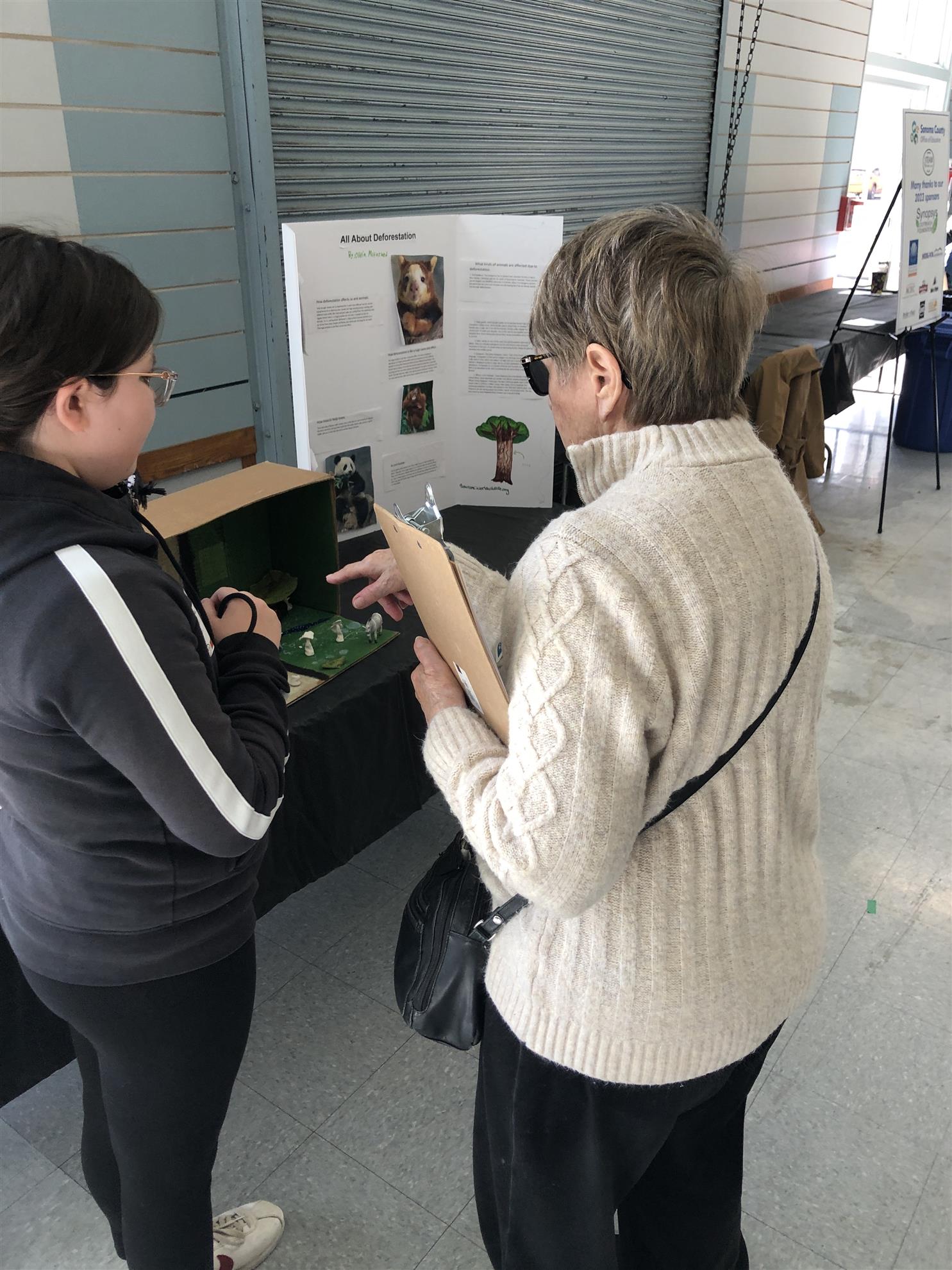
Participants projects were evaluated on their degree of applying STEAM and the effectiveness of their exhibit/demonstration. Evaluators from Sunrise, Carolyn Anderson and Rich Randolph interviewed participants then discussed each others assessment. Each criteria had a one-too-four place rating: Emerging, Approaching, Proficient or Distinguished.
Here a Windsor Junior High coed explains the process and consequences of Deforestation to Carolyn.
Other Evaluators included a retired Science Teacher and a a Medtronic Engineer. All were volunteers.
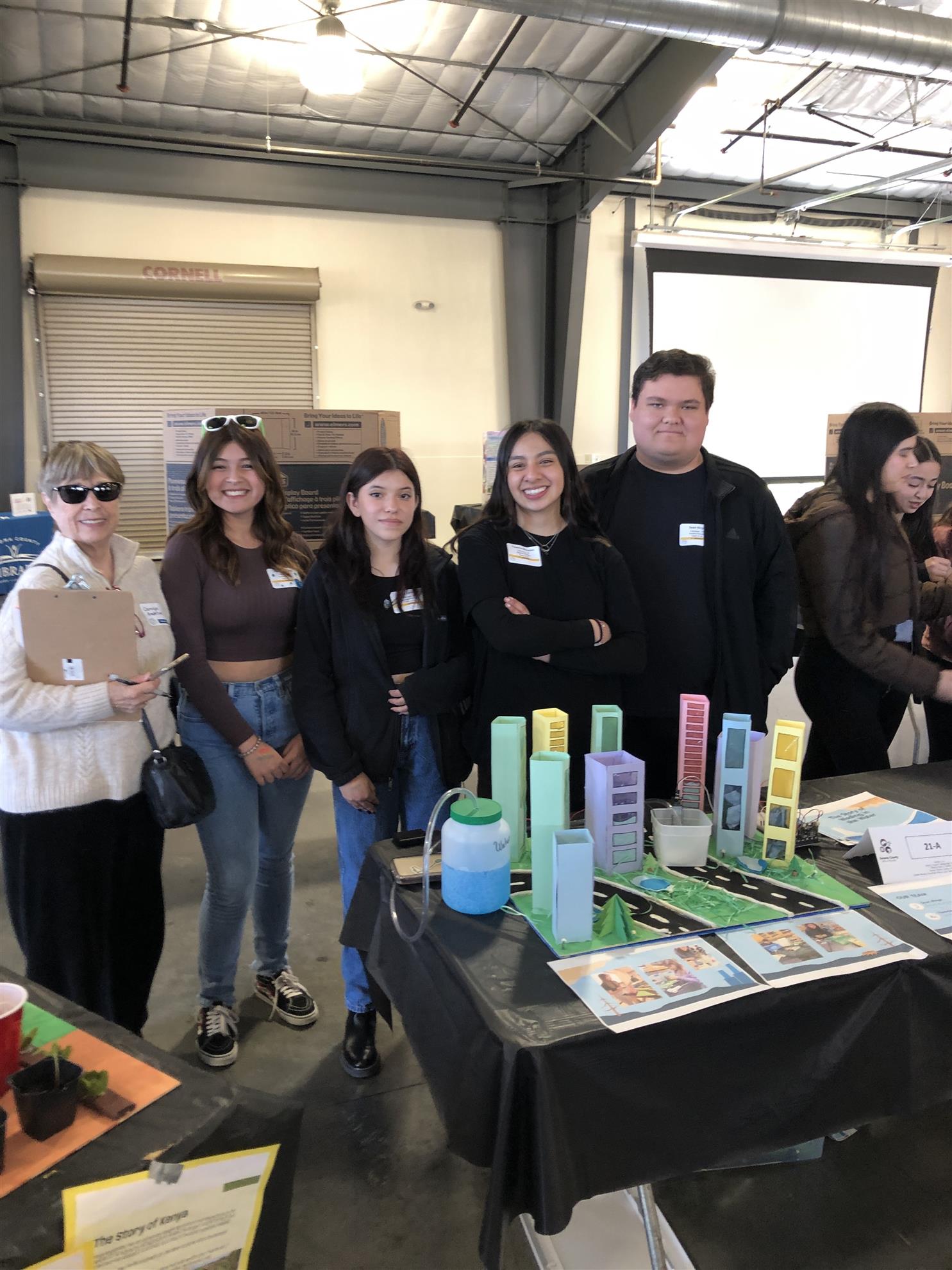
The finale group was a foursome from Calistoga High. Their story dealt with handling excess rain water runoff. They integrated all 5 STEAM elements to demonstrate via pumps and sensors how water could be moved to mitigate flooding and recover water for later use.
Every project possessed it's unique story and reflected the value of creativity, cooperation, and collaboration.
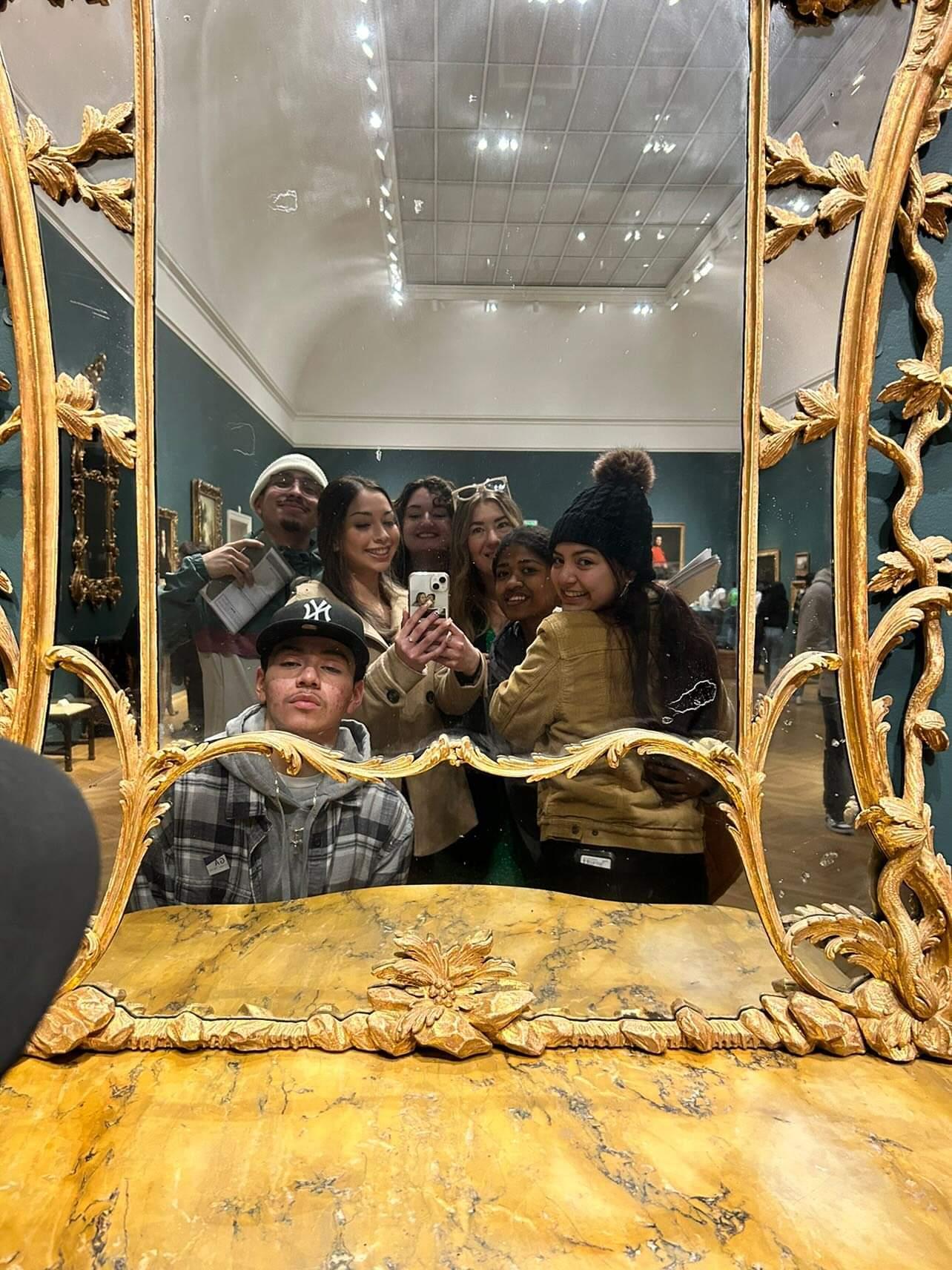
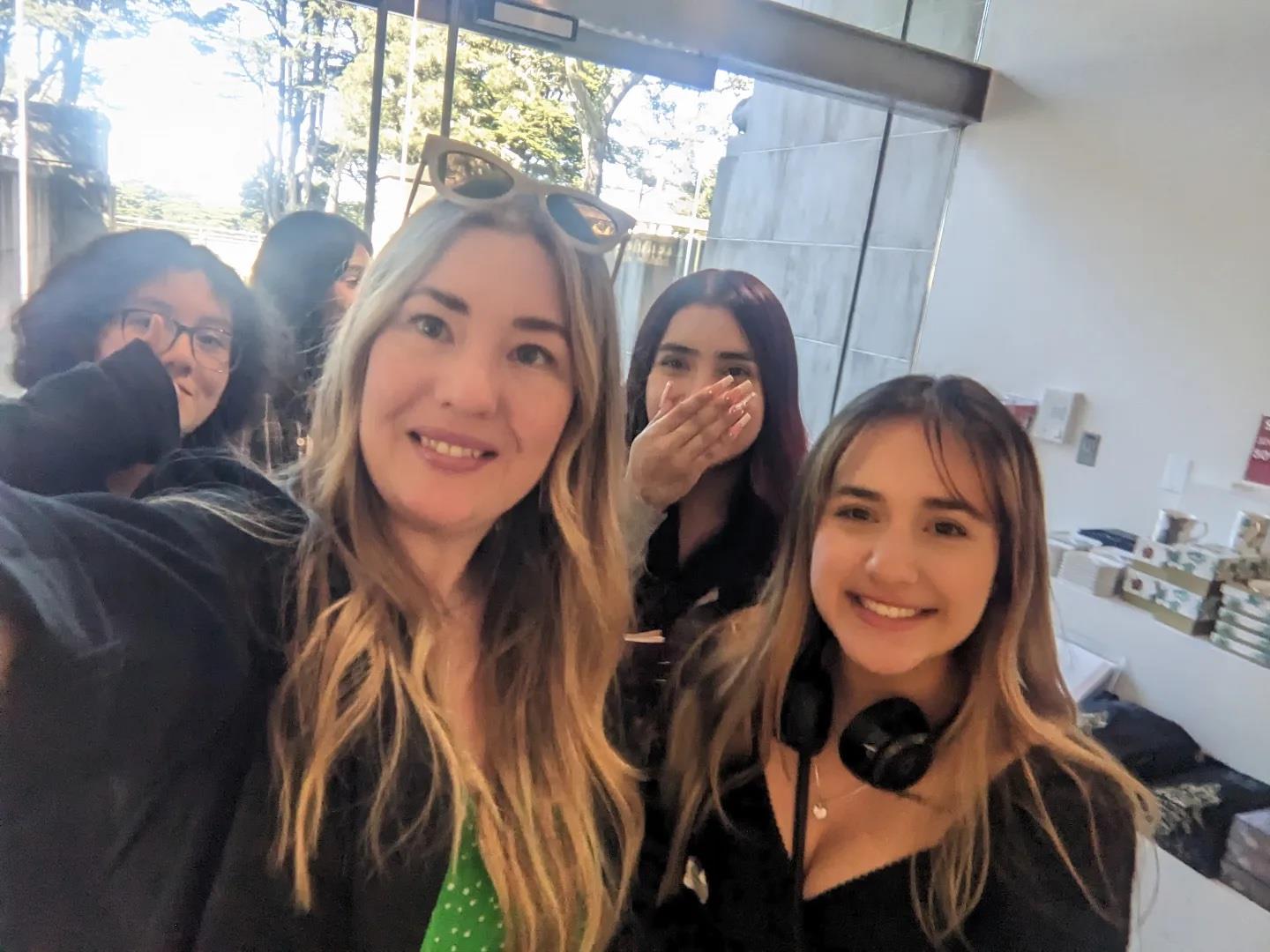
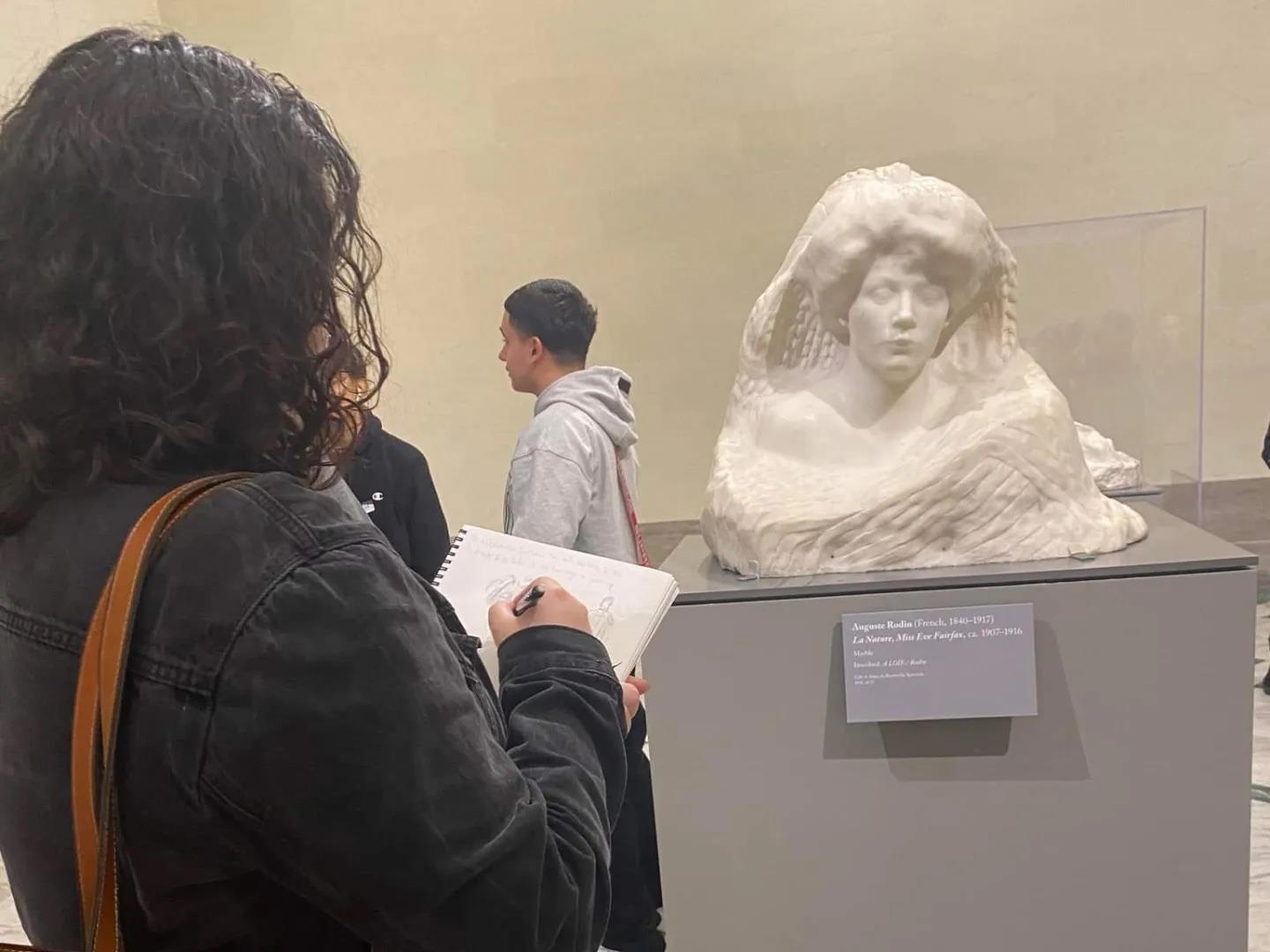
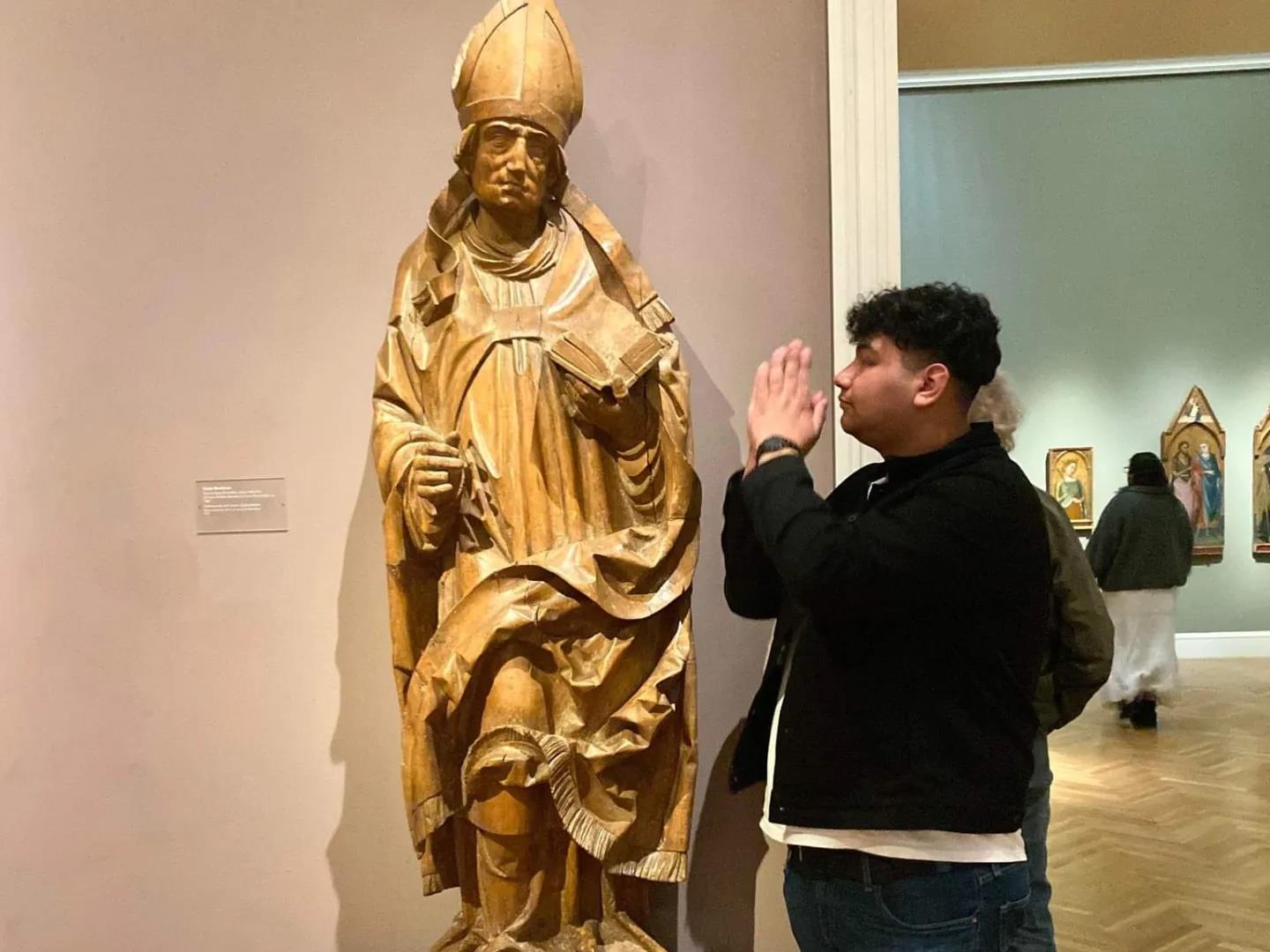
Lauren Martin, Elsie Allen High School Ceramics Teacher, led her class to San Francisco to observe and experience among other works, sculpture of Auguste Rodin. Here are Lauren's own words expressing gratitude and insights gained by the students;
As part of their study of sculpture, Ceramics 2 and 3 students were given the opportunity to take a field trip to the Legion of Honor museum in San Francisco yesterday, thanks to a generous grant awarded to my program by EAHS Foundation.
The Legion of Honor has a significant Auguste Rodin collection and students were tasked with an interactive assignment and 'close looking' study of Rodin's The Thinker and The Burghers of Calais. Through observations, drawings and physical recreations of the gestural poses, Ceramics 2 students were able to interact and engage with art in a meaningful way that will no doubt inspire their own artmaking for the remainder of the semester and beyond. They also enjoyed time in the beautiful Golden Gate Park and de Young Museum, visiting the local sites with some riding the Skystar Wheel. Due to a fire just prior to our arrival, we could not enter the de Young museum unfortunately. We pivoted and explored the grounds, students had a great time and did not let that interfere with their fun day in the city.
In no way could I have made this possible without the EAHS Foundation. Special thanks to Anna-Lee Walters and Katie Chesbro for chaperoning and inspiring the students with your fun spirit and history knowledge. Also, to substitute teacher Margaret Sands for generously volunteering her time to accompany us to the museum and going above and beyond. Thank you to our amazing cafeteria for supplying 40 breakfasts and lunches to go, and keeping our students full for a big day at the museum.
I would like to add that Katie, Anna-Lee and myself were all incredibly proud of how well our students behaved on this trip. All students, including lower classmen, were respectful, responsible and exemplary representations of EAHS. I was left feeling like a very proud lobo teacher on the way home from a successful field trip and they ought to be congratulated. Given that the majority of students in Ceramics 2 are seniors, I believe this field trip was not only a meaningful educational experience, it was a time for strengthening connections and celebrating a high school career that has been challenging given the interruptions to all aspects of education and socialization caused by Covid-19. Like a phoenix, our Elsie Allen students are strong and they are indeed rising from those ashes and rebuilding. They have a bright and exciting future. Go Lobos!!
"Elsie Allen High School is an inclusive community that challenges and supports students to achieve their personal, academic and career potential."
Every Student •Every Possibility•No Matter What
Sunrise Rotary provided generous support toward Teacher Grants.
First it was "Fines". And when that was thought to be "negative" it became "recognitions" and after that "High Five". But Jack has announced a new twist for these moments, designed to fit every celebration as well as sorrowful news. And it does not have to be a "High Five". "Happy Dollars" and "Sad Dollars" can be whatever you want them to be. Or whatever you feel is appropriate.
Happy Dollars
Steve Zwick reported the Jon Stark had a successful aortic valve replacement and is on the mend.
Max Bridges was elated to share the after a 5 1/2 year wait, they received a settlement check from PGE!
ken Petro announced the coming of a second great grandson!
Debra Robertson showed great pride in her grand daughter, Haylee. she was accepted into four colleges and chose to go to Missoula College University of Montana!
Rich Randolph gave his words of wisdom to never deny your wife's offer to help. Betsy helped him find his cell phone while he was grieving the loss.
Sad Dollars
Lots of grief was shared in the room this day with Harry's program.
1. A red house is made from red bricks. A blue house is made from blue bricks. A yellow house is made from yellow bricks. What is a greenhouse made from?
2. There is a word in the English language in which the first two letters signify a male, the first three letters signify a female, the first four signify a great man, and the whole word, a great woman. What is the word?
Send your answers to the editor. Brownie points and answers will appear in next week's bulletin.
Answers to last week's brain teasers:
1. A woman shoots her husband. Then she holds him underwater for over 5 minutes. Finally, she hangs him. But 5 minutes later they both go out together and enjoy a wonderful dinner together. How can this be?
A) The woman was a photographer. She shot a picture of her husband, developed it, and hung it up to dry.
2. What has cities, but no houses; forests, but no trees; and water, but no fish?
As we planned for this Rotary year, I could have never "imagined" the breadth of stories we would encounter nor the scope of the people we would meet.
I find oxygen in sharing time with our members — hearing their truths and learning about their personal journeys and their deepest desires for goodness.
And so it was that I encountered two very different men with very similar stories.
One-hundred-year-old Genshitsu Sen is a remarkable human being and a joyful soul. We greeted each other in Kyoto, during my trip to Japan in November, with a hug and an instant connection.
Not only is Sen a former grand master of the Urasenke tea tradition but he is also an active member of the Rotary Club of Kyoto, where he has served as club president. He assisted in the charter of the Rotary Club of Kyoto-South. And he has also served as governor of District 2650 and held leadership roles in Rotary International and The Rotary Foundation.
During that same week, I had the great pleasure to record a birthday video for a 100-year-old World War II naval hero who is an exemplary leader and who served two terms as governor of District 5810 in Texas.
Both men are decorated World War II heroes in their respective countries and share unthinkable history. And although they served on opposing sides of the war, their stories are remarkably similar — and they are both honorable men who chose Rotary to carry on lives of peacemaking.
I have been reflecting so much lately that we are all on this planet simply trying to do our best, and we are much more similar than we are different.
I feel incredibly fortunate to share in these stories and to meet such incredible people.
Living in Australia, you think a lot about water. When you travel to the nation’s vast interior, the Outback, you can’t help but wonder how such an arid climate has supported life for millennia. There, each sip of water feels precious.
Each sip seems to get more precious by the day as climate change continues to impact water supply everywhere. Where Juliet and I live, on the temperate coast not far from Melbourne, I remember times not long ago when water supplies were so low that severe usage restrictions were put into place. We now live on rainwater that falls onto our roof and is collected in a tank. In many parts of the world, people don’t have that luxury.
Water is essential for life no matter where we live. Yet many of us take it for granted. Think of all the times today you turned on the tap. About 1 in 4 people in the world have quite a different experience when they do — if they have a tap at all. Today, 2 billion people lack access to safely managed drinking water, according to the United Nations. It is heartbreaking that each year, about 300,000 children under age 5 die from diarrheal diseases caused by poor sanitation, poor hygiene, or unsafe drinking water — all preventable circumstances.
This is where Rotary comes in. Through your support, The Rotary Foundation provides water and sanitation for countless communities around the globe. Foundation global grants have ranged from providing toilets and hygiene education for villages in the Philippines to building infrastructure for year-round access to safe, affordable drinking water in Brazil.
The water and sanitation problems that we face are too great for any of us to solve alone. But whether we work with global grant partner districts across the world or with large agencies such as USAID, we are making a difference.
When thinking of teaming up to provide safe drinking water, sanitation, and hygiene, remember that one of our greatest partners is right here within the family of Rotary: Rotaract.
Effective this Rotary year, Rotaract clubs may apply for global grants. I encourage Rotary and Rotaract clubs to work together on existing grants and for Rotary clubs to support grants sponsored by Rotaract clubs. Together, Rotary and Rotaract clubs are going to take the power of the Foundation to a new level.
The Rotary Foundation has more potential than ever to make a difference in the water and sanitation challenges we all face, thanks to your generous support.
This month the Rotary Club of Chincha is scheduled to unveil a new addition to a shelter that houses vulnerable girls ages 5 to 17 in the Ica region. The girls, some of whom have been abandoned by their families or are victims of abuse, “need a lot of psychological help,” says Mónica Avilés Calderón, a past club president. The club completed the first building, with a capacity of 30 residents, in 2000. Soon the number of girls living in the shelter more than doubled. Starting in 2018, the club expanded capacity with additional buildings, costing about $35,000 each. The three new structures were funded primarily by donations from the Rotary Club of Flawil, Switzerland, and District 2000 (Liechtenstein and Switzerland). The Chincha club raised the remaining funds.
United States
Southern Michigan lore tells of a wanderer who handed melon seeds to a greenhouse owner. The resulting Howell melon has been celebrated by townsfolk with an annual festival now in its 63rd year. The Rotary Club of Howell has gotten in on the festivities by selling a Howell melon–flavored ice cream. In August the 40-member club sold 7,000 cups of the ice cream and 1,500 half-gallon containers over the weekend fair. More than 100 people, including Rotarians, members of the Interact Club of Howell High School, and school athletes, pitched in to help. The endeavor scooped up $30,000 for scholarships, local youth programs, and other community projects. “It’s so popular that no matter what time we say we’re going to start selling there’s going to be a line,” says Sandie Cortez, a past president of the Howell club. “People go crazy over this.”
This story originally appeared in the March 2023 issue of Rotary magazine.


.png)






.png)








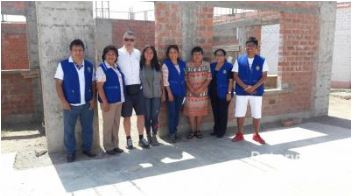 This month the Rotary Club of Chincha is scheduled to unveil a new addition to a shelter that houses vulnerable girls ages 5 to 17 in the Ica region. The girls, some of whom have been abandoned by their families or are victims of abuse, “need a lot of psychological help,” says Mónica Avilés Calderón, a past club president. The club completed the first building, with a capacity of 30 residents, in 2000. Soon the number of girls living in the shelter more than doubled. Starting in 2018, the club expanded capacity with additional buildings, costing about $35,000 each. The three new structures were funded primarily by donations from the Rotary Club of Flawil, Switzerland, and District 2000 (Liechtenstein and Switzerland). The Chincha club raised the remaining funds.
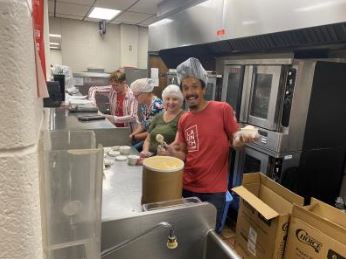 Southern Michigan lore tells of a wanderer who handed melon seeds to a greenhouse owner. The resulting Howell melon has been celebrated by townsfolk with an annual festival now in its 63rd year. The Rotary Club of Howell has gotten in on the festivities by selling a Howell melon–flavored ice cream. In August the 40-member club sold 7,000 cups of the ice cream and 1,500 half-gallon containers over the weekend fair. More than 100 people, including Rotarians, members of the Interact Club of Howell High School, and school athletes, pitched in to help. The endeavor scooped up $30,000 for scholarships, local youth programs, and other community projects. “It’s so popular that no matter what time we say we’re going to start selling there’s going to be a line,” says Sandie Cortez, a past president of the Howell club. “People go crazy over this.”