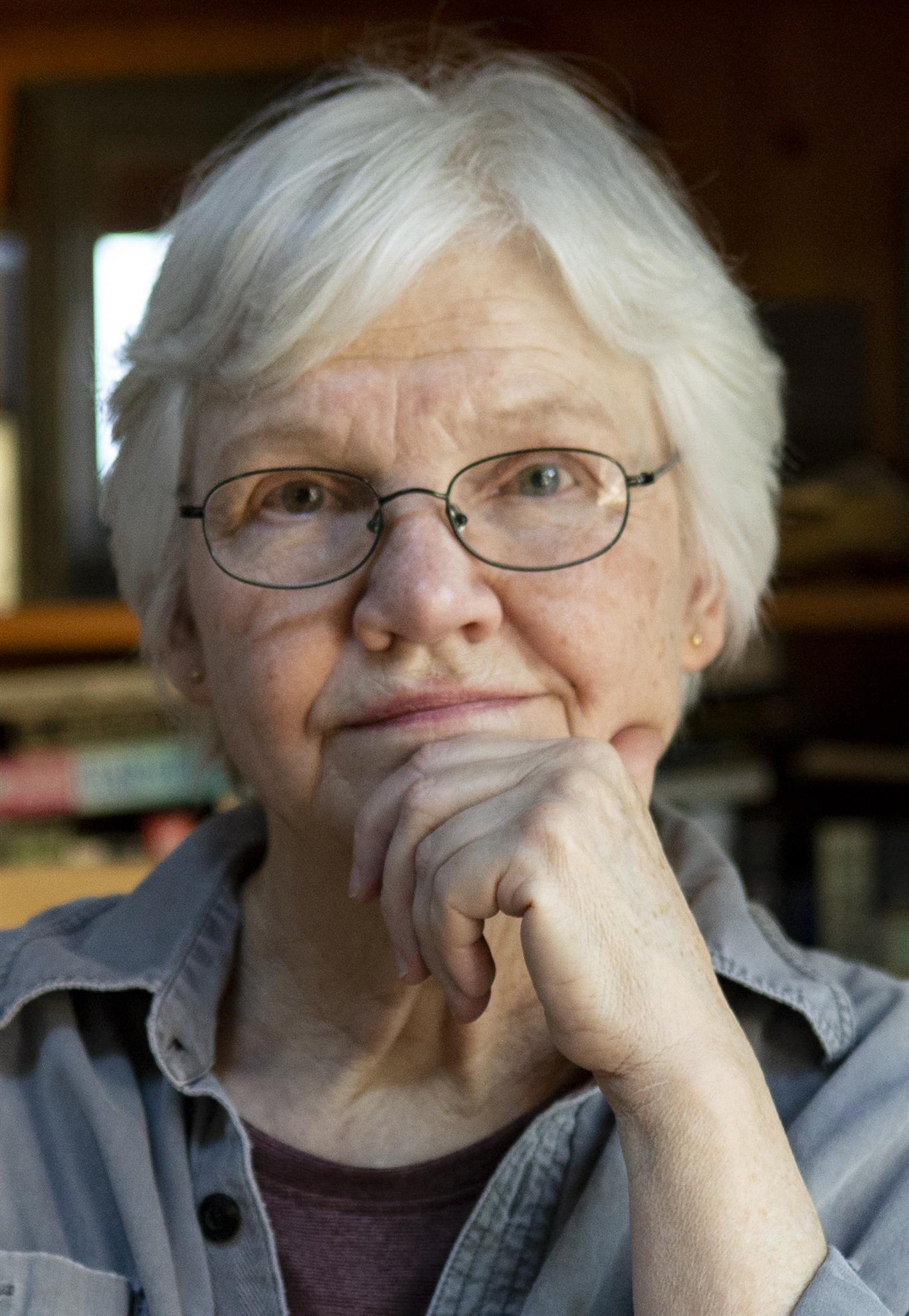
To answer her burning question “How can genetic genealogy help identify John and Jane Does?” Margaret Press co-founded the DNA Doe Project in 2017 with Forensic Genealogist Dr. Colleen Fitzpatrick. After months of work hunting down labs, experts, bones and donations, they tackled their first case in September 2017 and incorporated as a non-profit the following month. The subsequent success stories have provided the answer: persistence, patience, and a team of skilled and spirited volunteers. That’s how it’s done.
Margaret grew up in Los Angeles, California where at age 15 she inherited a passion for genealogy from her grandmother. She graduated from UC Berkeley with a degree in Linguistics and subsequently earned her doctorate at UCLA, specializing in Native American languages and child language development. From her extensive field work she published a descriptive grammar of Chemehuevi, a nearly extinct dialect of the Uto-Aztecan family.
While working most of her life in software development, Margaret also fell into mystery writing. Two published novels set in Salem, Massachusetts were followed by essays and short stories, and a true crime based on a 1991 murder in her own neighborhood. The book inspired several documentaries, including an Unsolved Mysteries segment in 1996 and a 1998 episode in the A&E series City Confidential. She has also taught numerous courses in mystery and crime writing.
When DNA testing redefined the genealogy landscape, Margaret joined the impassioned group of citizen scientists who would propel this new field to where it is today. She began with setting up several Y-DNA surname projects. Once autosomal testing reached critical mass and its potential became apparent for helping in unknown parentage searches, she – like many others – became hooked on the unique challenges of building family trees forward in time, rather than backward. The satisfaction that comes from helping an adoptee is profound and addicting. But extending this methodology to her current mission – returning a name to an unidentified victim – brings a whole new level of reward.
Margaret is a proud parent and grandparent, with descendants of her own to carry her mitochondrial haplogroup C1d and passion for genealogy down her family tree.
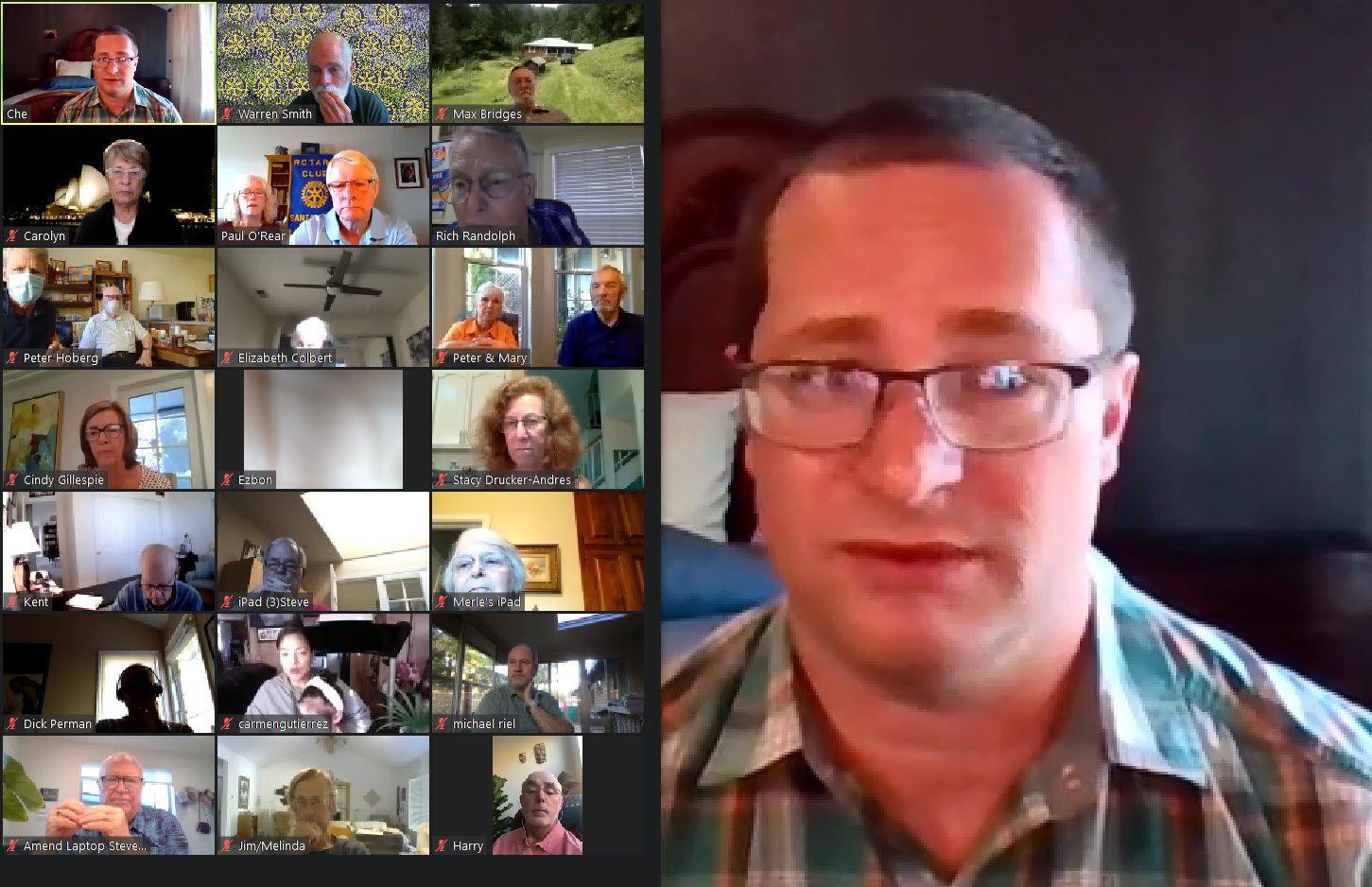
Che Casul, CEO of the Center for Social and Environmental Stewardship
Our speaker for September 24th was Che Casul, CEO of the Center for Social and Environmental Stewardship in Windsor, CA. Che is a 7th generation rancher in Bodega with a master’s degree in Public Administration. While not working on the ranch, Che has managed rehabilitation housing for troubled youth and vocational programs for mentally ill. He also worked on the Sonoma County Municipal Advisory Council.
The Center for Social and Environmental Stewardship was founded in 1973 as “Circuit Rider Productions.” In 1995 the organization had 198 employees. In the last 14 years it has changed its name and drawn back on its programs. It had 9 employees when he started and focused on social programs, juvenile justice and at-risk kids, some with criminal convictions and violent histories. Che has reinstated a focus on vocational education for at-risk kids in addition to general education and counseling.
The Center has two main programs, Vocational and Counseling. In the Vocational program the Center works with kids having barriers to employment. The idea is to get them working on projects that pay them to do something positive. Che’s experience is that most kids quickly learn the value of hard work when they start to receive a paycheck for working on projects that help teach them a skill. One of the specific skills the Center teaches is firefighting and wildland management. The Center offers a program that allows the students to obtain a Wildland Firefighter II certification. After they graduate from that program, they can get a job with Cal Fire or some similar organization. The Center’s ongoing projects working on fire fuel mitigation, in which they work on contracts with large landowners to manage fuel loads, has been remarkably successful. In fact, one project on Sweetwater Springs Road helped save the property from the ravages of the Walbridge Fire! Programs such as these help at-risky young adults to learn valuable trades that will get them into the workforce and in charge of their lives.
The Vocational Program includes training in planning, permitting, remodeling, wildfire home hardening, and demolition. Che believes that the Center’s programs can teach at-risk youth valuable building and construction trades that are overlooked by educational institutions and very much in demand these days. The Center’s students work towards obtaining contractor’s licenses and using them to start small construction-oriented businesses. The Center’s programs include partnerships with the CTE foundation in which kids work on building “tiny homes.”
Che’s “big dream” is to develop the Center’s 1.1-acre Windsor property into a facility with 17 units and 32 beds for the program’s participants. They will need at least $5.5 million to build it and have already raised $1.1. The Windsor property includes an extensive garden that can produce lots of food and a large, unused greenhouse that Che is trying to find someone to put to good use!
Thank you, Che, for the great presentation and update on the Center. You are doing great work and we applaud you and your team for your dedication to these young adults.
To view the recording of Che's presentation, click here.
On a regular basis, our resident photo pro Warren Smith, submits pictures of what is going on at the weekly meetings. You can always find the most recent pictures at the websites photo journal called "Meeting Sighting" Please note that all the meeting photos for the entire Rotary year are at this location with the most recent on the last page.
Thanks for all the great pictures Warren!Link to Meeting Sightings. The most recent are on the last page!
While the amazing Veteran's Day Lunch will not be happening this year, a special program will! However, we need to hear from our veterans ASAP. If you are a veteran in our club, please contact Peter Treleaven. His email is, peter.treleaven@ms.com.
A child asked his father, "How were people born?" So his father said, "Adam and Eve made babies, then their babies became adults and made babies, and so on." The child then went to his mother, asked her the same question and she told him, "We were monkeys then we evolved to become like we are now." The child ran back to his father and said, "You lied to me!" His father replied, "No, your mom was talking about her side of the family."
In May, amid the COVID-19 shutdown, the Rotary Satellite Club of London, Ontario, posted an invitation to its next online meeting. It read: “Are you missing human interaction? Do you want to meet new people who do good in the community? Not interested in putting on pants to do all this? Join us at 6:30 p.m.”
The pants-optional post was typical for the Canadian club, which attracts new members with a cheeky attitude combined with technological savvy. It was chartered in 2016 as an offshoot of the Rotary Club of London that was meant to be more accessible to younger people. A satellite club, which allows for groups as small as eight people to start a club by tapping into an existing club’s infrastructure, was an ideal way for the Rotary Club of London to plant the seeds for a new, independent club.
“The London club is an older and quite traditional club,” says Kirk Langford, a charter member of the satellite club. He means no disrespect. “The satellite model worked well because it provided us with the support and infrastructure of the Rotary Club of London, so we weren’t left to figure everything out on our own. Now we’re getting to the point where we’re ready to become our own club, which is exciting.”
The club, which previously met in a local pub, has used events such as dance parties and trivia nights — which moved online during the pandemic — to raise money for projects. A recent raffle provided the winner a year’s supply of beer from a local craft brewer.
“We have a wonderful time together, it doesn’t cost us much, and we’re making the world a better place.”
“We certainly do have a lot of fun together,” says Langford. “After all, if people aren’t having fun and enjoying themselves, they aren’t going to stick around. It’s turned us from a club of strangers who want to do good in the community into a club of friends — people you enjoy spending time with and want to know better.”
The club keeps things informal and economical. Heather Macdonald, the daughter of Rotarians and a recent college graduate, joined because it offered a low-cost avenue to lend a hand in her community. Now, she says, “I’m an active Rotarian and likely will be for life. I love my Rotary club and the people in it. We have a wonderful time together, it doesn’t cost us much, and we’re making the world a better place.”
With an eye toward the future, the Rotary Satellite Club of London now partners on events with the University of Western Ontario and Fanshawe College Rotaract clubs. “It provides a good opportunity to talk to those members about joining our club after they’re done with school,” says Langford.
Now who’s the old-timer?
• Interested in starting a new club or learning more about ways to connect through Rotary? Visit rotary.org/start-club.
• Illustration by Sjoerd Van Leeuwen
• This story originally appeared in the August 2020 issue of The Rotarian magazine.
Rotary Club of Santa Rosa Sunrise - Founded June 30, 1986

.png)

.jpg)