The story of PEP Housing began when a group of clergy and civic leaders in Petaluma came together to trouble-shoot a situation that was considered unacceptable. These citizens were appalled to discover that many elderly in our community were living out their senior years in converted garages, storage units, and tents without heat or running water. Our founders began to meet regularly as volunteers, believing that other community volunteers could and would join them in an effort to sponsor and manage housing for seniors with limited income living on fixed incomes. In 1978 Petaluma Ecumenical Properties was established. As a result of their efforts way back then, the organization now known as PEP Housing has developed and manages 19 affordable housing properties with 671 apartments accommodating over 700 seniors with limited income, with several more properties in development.
When the need is as great as a 5-year waitlist for housing would indicate, our work is never done; PEP Housing development staff is constantly on the lookout for opportunities to develop new affordable housing projects. Our goal is to bring quality affordable housing to other communities that can benefit from our successful affordable housing model and maintaining the lowest rental rates in the North Bay. To achieve these goals, PEP Housing has expanded our development projects into other parts of the Northern California as project opportunities have come forward due to our growing reputation as an industry leader in development of service-enriched housing for seniors.
Restorative Justice by Judge Arnold Rosenfeld (ret.)
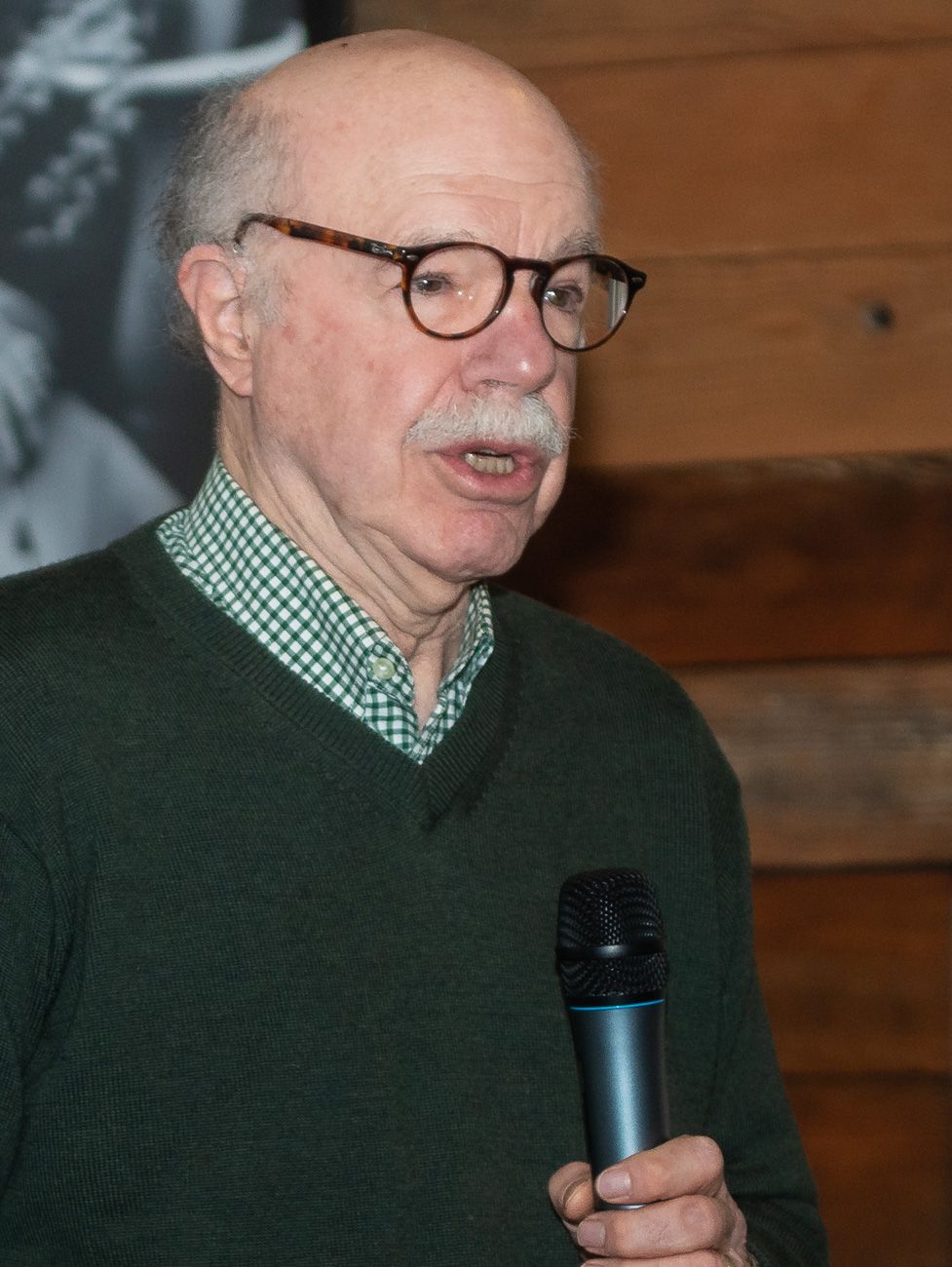
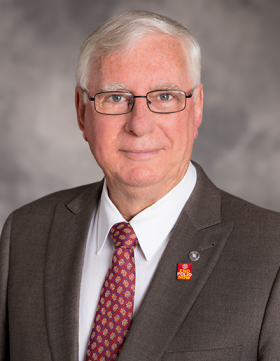
Our speaker for February 2, 2023, was Judge Arnie Rosenfeld (ret). Judge Rosenfeld’s topic was “Restorative Justice.” Judge Rosenfeld was elected a Superior Court judge in Sonoma County in 1984 and served until his retirement on December 31, 2009. He spent a majority of his time as judge in the juvenile court and became an advocate for children at risk for emotional trauma. He initiated the Court Appointed Special Advocates for Youth (CASA), and has long been a supporter for SAY, the Valley of the Moon Foundation, and other important community groups. He has received numerous awards for his service, including Juvenile Judge of the Year by the California Judges Association. He currently serves on the Sonoma County Grand Jury.
Judge Rosenfeld has taught Restorative Justice at Sonoma State U. and at Empire College School of Law, typically presenting 3 ½ week courses, and to boil it down to 20 minutes is difficult. He told us that Restorative Justice is an effort to understand that victims of violence have needs. He mentioned that once an offender is identified, everyone’s focus seems to be on the offender, not the victim. He cited the juvenile judicial system of New Zealand, which is entirely restorative, and probably developed from Mauri culture. The key philosophy behind Restorative Justice is that society is an interconnected fabric. Crime puts a tear in that fabric. If enough tears take place, society fails. Restorative Justice seeks to repair the fabric by addressing the harms and needs of everyone involved in the harm, using techniques of inclusion and collaboration. They typically use a facilitated mediation between the offender and the victim. The idea is to hear everyone’s stories (even offenders have a story) and to reach consensus about how an offender can ‘right the harm’ caused to the victim.
Judge Rosenfeld told us that they started using Restorative Justice in Sonoma County but don’t use it much anymore. He gave us a couple of good examples of how Restorative Justice was used when he was a judge. In one example, a teenage girl hit her mother and knocked her down. During the process they learned that the daughter, who was overweight, had been urging her mother to cook more responsible meals. The daughter had been the subject of derision from classmates due to her weight. The mother agreed to change the family diets. In another example, two youths vandalized the Japanese section of the cemetery. The mediation involved the boys’ families, the cemetery caretaker, and representatives of the Japanese community. They showed the boys the cultural importance of headstones. The boys ultimately agreed to study what went into headstones in Japanese culture and actually created headstones with wood carvings and installed them in the cemetery.
Thank you, Judge Rosenthal, for the wonderful presentation and for your many years of keeping the fabric of Sonoma County together! We appreciate all of your efforts.
Click HERE to see a recording of Judge Rosenthal's presentation (plus more)!
On a regular basis, our resident photo pro Warren Smith, submits pictures of what is going on at the weekly meetings. You can always find the most recent pictures at the websites photo journal called "Meeting Sighting" Please note that all the meeting photos for the entire Rotary year are at this location with the most recent on the last page.
Thanks for all the great pictures Warren!Link to Meeting Sightings. The most recent are on the last page!
Do you know how valuable you are to who and what Sunrise Rotary supports?
Forget Me Not Farms animals, plants and Out-buildings
The Living Room
Women's Recovery Center
Canine Companions International
We can amplify your talent, your voice, your Leadership, build partnerships beyond your usual contacts:
Elsie Allen High School Scholarship Foundation
Underserved rural dental needs
Family mental health service advocacy
Volunteer now and use your talents for others.
Become a veggie bagger extraordinaire at Redwood Empire Food Bank
Santa Rosa Sunrise Rotary offers YOU:
Diverse Friendships
Community Engagement!
Fulfilling Service
And wait, there is more!!
We hike, learn beyond our day-to-day enterprises, travel abroad on humanitarian projects, dance and a several of us sing and rock n roll.
Each week we meet for lively breakfast, including guest speakers on topics ranging from fine chocolate, global economics, fine wine, energy policy and mental health ~ to name just a few of our 40 plus per year.
Let us meet you!!
Thursday morning at 7 AM to 8:30 AM in Franchetti's 1229 N. Dutton Santa Rosa
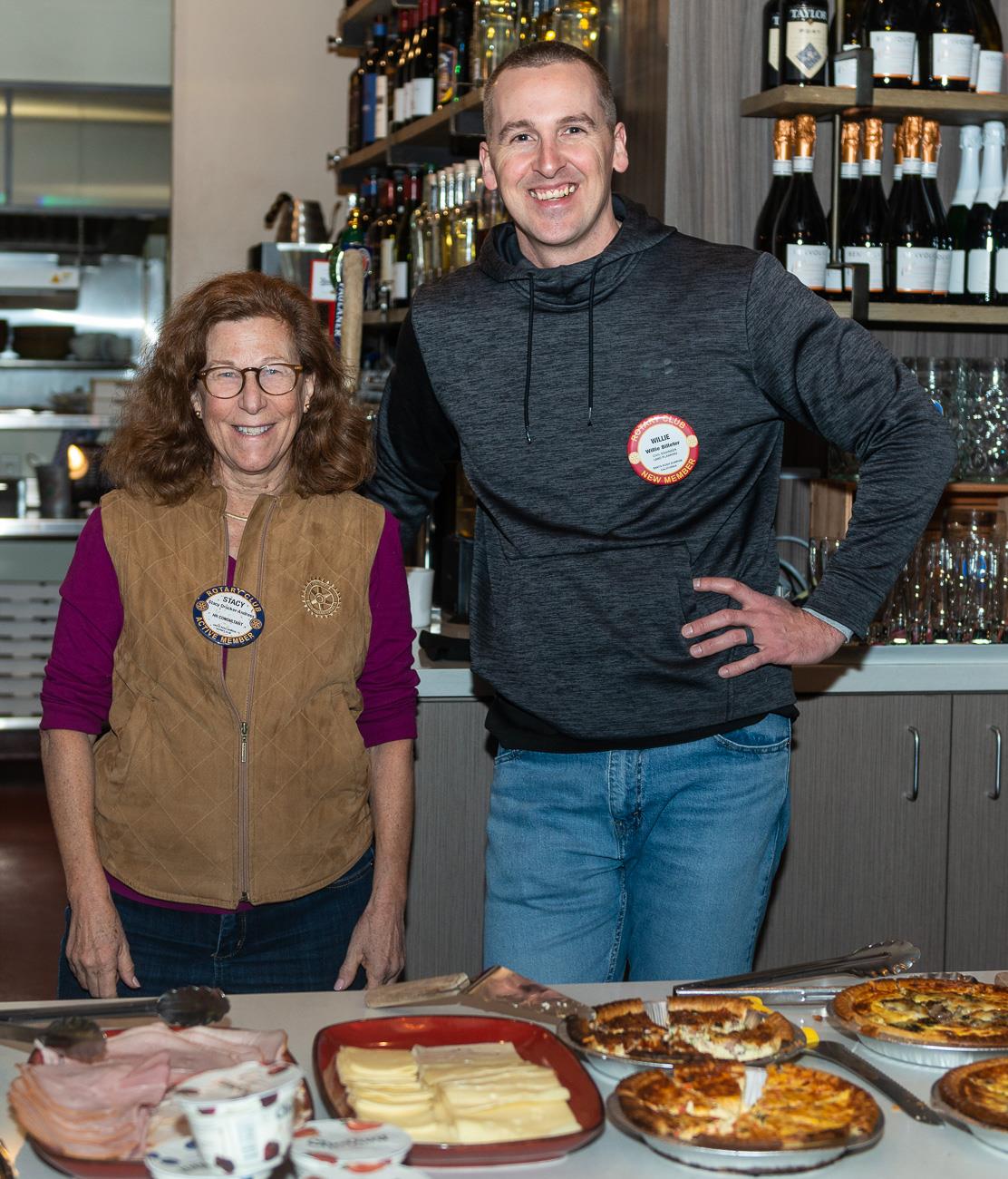
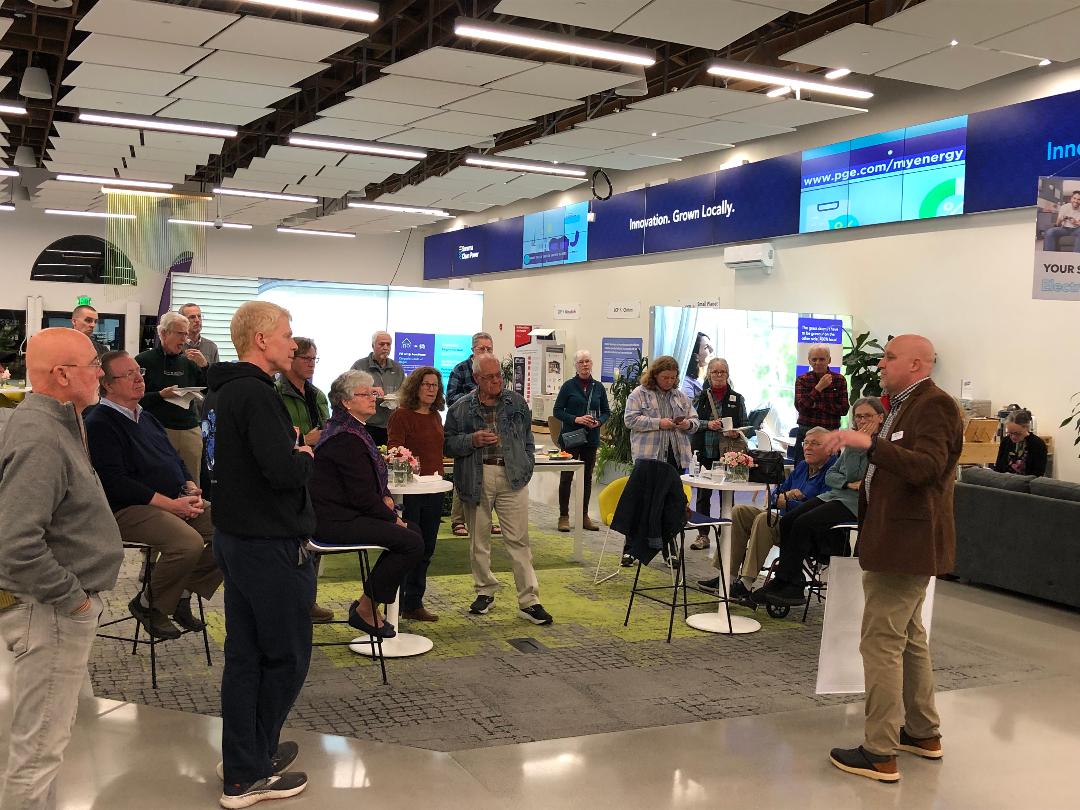
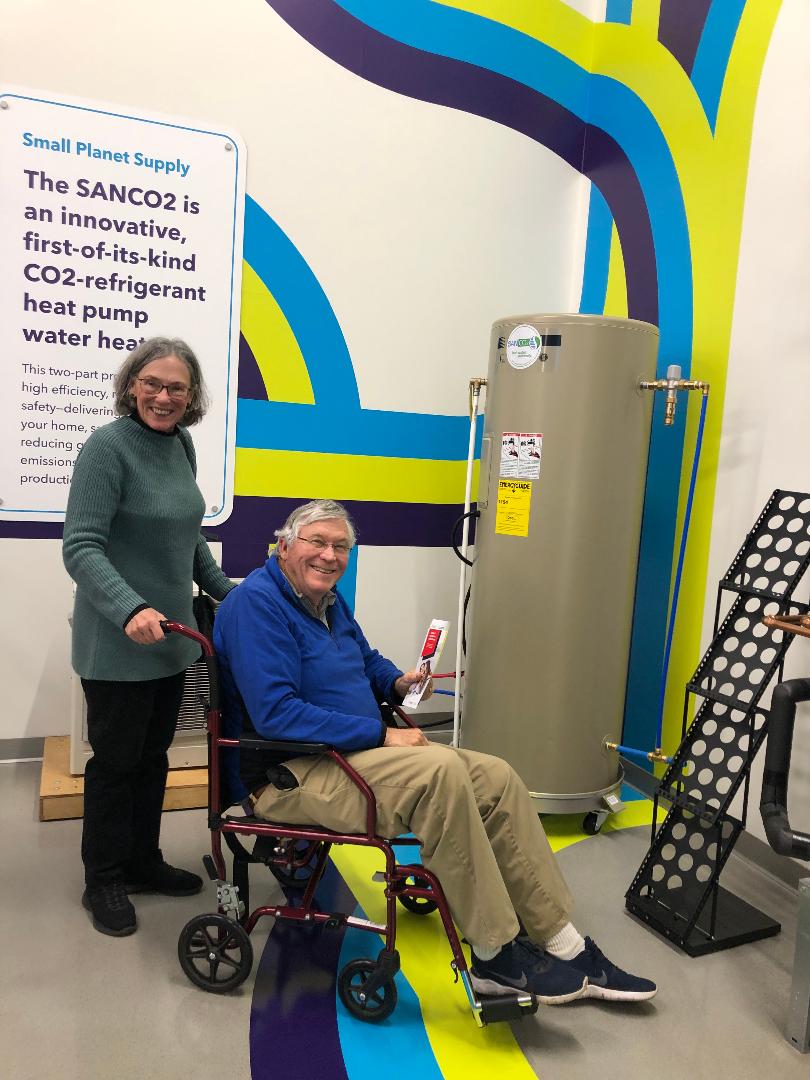
Last Thursday evening, Sunrise Rotary’s Environment Committee hosted a very successful social and education event at Sonoma Clean Power’s Alternative Energy Center in Santa Rosa. 25 people from Sunrise Rotary, the Windsor Rotary Club and Citizens Climate Lobby heard a very informative talk from SCP Director Chad Asay on energy use (and waste) in residential buildings, the latest technological innovations in converting homes from gas to electricity, where the U.S. stands in use of alternative energy sources compared to other countries in Europe and Asia and government tax credits and utility rebates that are available to defray the costs of converting from gas. On display at the Center were heat pump-driven hot water heaters, residential heating and cooling systems, battery backup systems for solar energy systems, induction stovetop cooking facilities, electrical outlets for EV autos and more. Thanks to Penny and Peter and Mollie Hoberg the crowd enjoyed a spread of fruit, cheeses and desserts along with beer, wine and soft drinks during 30-40 minutes of social time.
Representing Sunrise Rotary were Peter Hoberg, Paul O’Rear, Penny Millar and family guests, Harry and Judy Coffey, Stacy Drucker-Andress and George, Jim Moir, Doug Shureen, Marty Behr, Randy Seelye and Katharine Anderson, Rich Randolph, Mark and Julie Campbell and Warren Smith.
First it was "Fines". And when that was thought to be "negative" it became "recognitions" and after that "High Five". But Jack has announced a new twist for these moments, designed to fit every celebration as well as sorrowful news. And it does not have to be a "High Five". "Happy Dollars" and "Sad Dollars" can be whatever you want them to be. Or whatever you feel is appropriate.
Happy Dollars
Max Childs was happy to brag about his twin daughters, Cassidy and Bridget, on their birthday. 23 was a year of accomplishments - Master degrees and career jobs in DC and Sacramento. What will 24 bring?
Friday was President Jack's Birthday! While he was out celebrating, we sang anyway...
Doug Shureen struck "black" in the Marble Game's $250 draw! Congratulations!
Sad Dollars
Rich wanted the club to know that Jon Stark is home recovering from a reaction to medication and is eager and happy to hear from his fellow club members.
Do you have Happy or Sad Dollars to share? There is no need to wait until the meeting. Send them to the editor.
1. What comes once in a minute, twice in a moment, but never in a thousand years?
2. I have keys, but no locks. I have space, but no room. You can enter, but you can’t go outside. What am I?
Send your answers to the editor. Brownie points and answers will appear in next week's bulletin.
Answers from last week:
1. You’re standing in a hallway with three light switches on the wall, each of which turns on a different lamp inside a closed room. You can’t see inside the room, and you can’t open the door except to enter the room. You can enter the room only once, and when you do, all the lamps must be turned off. How can you tell which switch turns on which lamp?
A) Turn on the right switch and leave it on for two minutes. After two minutes, turn on the middle switch and leave it on for one minute. When that minute is up, turn off both switches and enter the room. One light bulb will be hot (1st switch) and one will be warm (2nd switch). The cold bulb will correspond to the switch you didn’t turn on.
Here is Paul's answer: It says, “when (you enter the room), all the lamps must be turned off”. You enter the room, see what lamps are on and turn them off. It doesn’t say when you have to turn them off, either before or after you enter, just that “they must be turned off.” You then know which switch turns which lamp on or off as you’re standing in the doorway. Brilliant, Paul!
Recently, I spent time in the Nakivale refugee settlement in Uganda. As the "settlement" in its name suggests, the people living there are free to move around and integrate as best they can — one thing that makes the place unique.
I had a chance to play soccer with boys and girls from about a dozen nations and talk with women who had fled areas of conflict. It was a tapestry of human experience shared through both laughter and tears.
As I walked across a school campus at the settlement with a teacher, she shared with me the dire statistics on girls' education. Most don't get through grade school. Many are sold into child marriage to pay for food for their families. As I looked around at these young girls, I was gutted.
Our work with empowering girls and women is much more than creating equity — sometimes, it's about health or education. Other times it's about providing safety. Regardless of the path, it's always about basic human rights.
We can do more to empower girls and women, and we can expand how we share the progress Rotary members and our partners have made toward this goal.
There is no shortage of inspiring examples of our work, from interest-free microcredit loans for women in Nigeria, to projects in India that provide girls menstrual hygiene products. Hundreds of projects are taking place across all Rotary areas of focus and are making a meaningful and often lifesaving difference.
Together, we can address the needs and inequities that girls throughout the world face daily. But we must also monitor the impact of these projects and create awareness of Rotary resources and subject matter experts, including Rotary Action Groups, The Rotary Foundation Cadre of Technical Advisers, Rotary Peace Fellows, and others.
It is especially important that we tell the stories of our initiatives that have a positive impact on the lives of women and girls. This last point is near and dear to my heart. This means sharing our stories on social media, through local news outlets, in this magazine, and wherever we can inspire others.
As you do so, it's important to provide information that helps our Rotary family connect with others who are implementing activities in their regions, as well as across the world. Let's share our successes and learn from one another — then proudly tell our stories to a larger audience.
These are exciting times in Rotary, and the world is taking notice. As we work to empower women and girls to step into their full potential, we create new pathways for membership growth and greater collaboration with partners to create positive, lasting change. Thank you for your continued action in this vital effort.
One of the fascinating things about Rotary is that we are many things at once. We are a service organization based on action. We are also a professional and community networking group, not to mention a place to find friendship and fun.
And, when you stop to think about it, you and I are also part of a peace organization. I saw this in 2013 when I represented Rotary at an international symposium on advancing a peaceful democratic transition for Myanmar. Despite recent setbacks, the fact that Rotary was at the table demonstrates that the world sees us as peacebuilders who are not deterred by the most difficult issues.
How did we earn this reputation? Through literacy projects that help people expand their minds and viewpoints. And through water, sanitation, and hygiene projects that create common ground for communities in conflict. The Rotary Action Group for Peace promotes hands-on service projects, and our annual international conventions unite thousands in a celebration of global harmony.
Perhaps the most visible face of this cause is the Rotary Peace Centers program, now in its 21st year. Today, more than 1,600 Rotary Peace Fellows are advancing the cause of peace in more than 140 countries. On 1 February, we open applications for the next generation of peace fellows. Encourage your local peacebuilders to learn about Rotary and apply for this unique fellowship.
And soon, we'll be recruiting fellows for a new peace center in the Middle East and North Africa region as we begin working this year with a recently selected partner university. Made possible by a generous gift of $15.5 million to The Rotary Foundation from the Otto and Fran Walter Foundation, the addition of this center furthers Rotary's vision of peacemaking in action.
As we celebrate Rotary's 118th anniversary and Peacebuilding and Conflict Prevention Month, we can be proud of the many ways Rotary promotes peace. Without The Rotary Foundation, and your support of it, none of that would be possible.
You can directly support this work through the Foundation by visiting rotary.org/donate and selecting the peacebuilding and conflict prevention area of focus. I also encourage you to contribute to the Ian and Juliet Riseley Endowed Fund in The Rotary Foundation to support peace projects.
If Paul Harris could see us now, he would be amazed by the astonishing growth of the little club he founded in 1905 and the global force for good — and peace — that Rotary is today.
Members of the Rotary Club of Twin Cities (Centralia-Chehalis), Washington, took to the stage to perform an interactive play, Game of Murder: A Sword and Sorcery Murder Mystery Lunch. A tradition over the past decade, every year’s show features a different production with a different cast. The latest show in April sold out and raised $3,400 for charitable causes, including ramps for disabled access, scholarships for Centralia College, and Dolly Parton’s Imagination Library. “We’ve generally had between 100 and 140 people attend each year,” says Catherine Cleveland, who co-wrote the script and was one of six Rotarian thespians who starred in the performance.
Bolivia
Since 2016, the Rotaract Club of Chuquiago Marka has sponsored community events to fund its signature project, providing ocular prosthetics for young eye cancer patients. In November, the club organized a food festival that drew some 4,000 people to Plaza Abaroa in La Paz, the capital. The star attraction was a traditional type of empanada called the salteña. “It is delicious, and people love it,” says Pamela Tapia Salazar, the club’s president. The event raised $700 for the vision program and gave a boost to the salteñas companies, still recovering after the COVID-19 pandemic lockdowns.
This story originally appeared in the February 2023 issue of Rotary magazine.


.png)





.png)







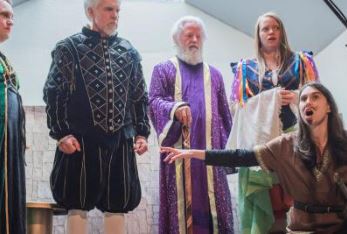 Members of the Rotary Club of Twin Cities (Centralia-Chehalis), Washington, took to the stage to perform an interactive play, Game of Murder: A Sword and Sorcery Murder Mystery Lunch. A tradition over the past decade, every year’s show features a different production with a different cast. The latest show in April sold out and raised $3,400 for charitable causes, including ramps for disabled access, scholarships for Centralia College, and Dolly Parton’s Imagination Library. “We’ve generally had between 100 and 140 people attend each year,” says Catherine Cleveland, who co-wrote the script and was one of six Rotarian thespians who starred in the performance.
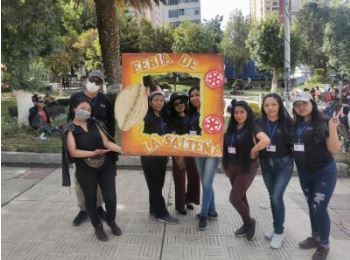 Since 2016, the Rotaract Club of Chuquiago Marka has sponsored community events to fund its signature project, providing ocular prosthetics for young eye cancer patients. In November, the club organized a food festival that drew some 4,000 people to Plaza Abaroa in La Paz, the capital. The star attraction was a traditional type of empanada called the salteña. “It is delicious, and people love it,” says Pamela Tapia Salazar, the club’s president. The event raised $700 for the vision program and gave a boost to the salteñas companies, still recovering after the COVID-19 pandemic lockdowns.