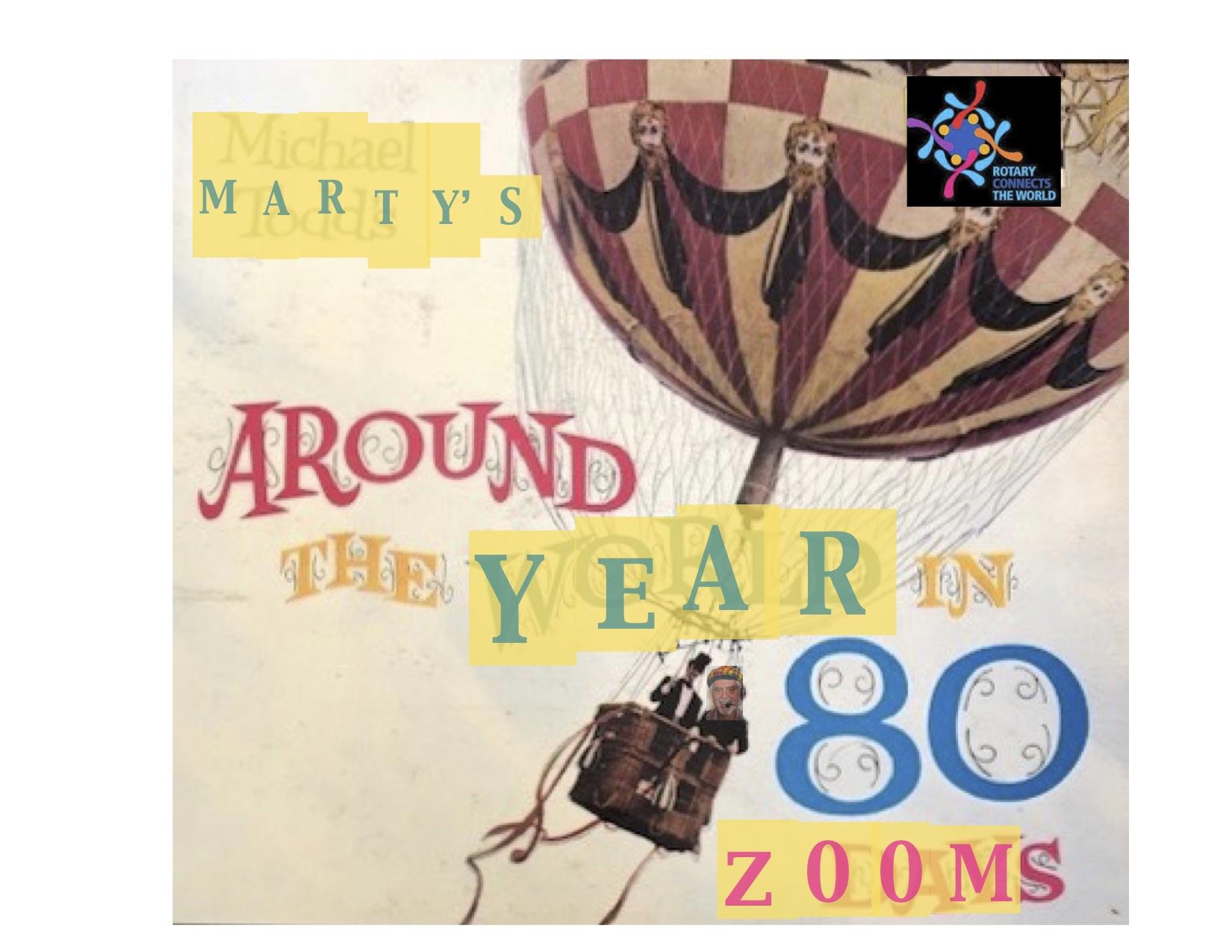
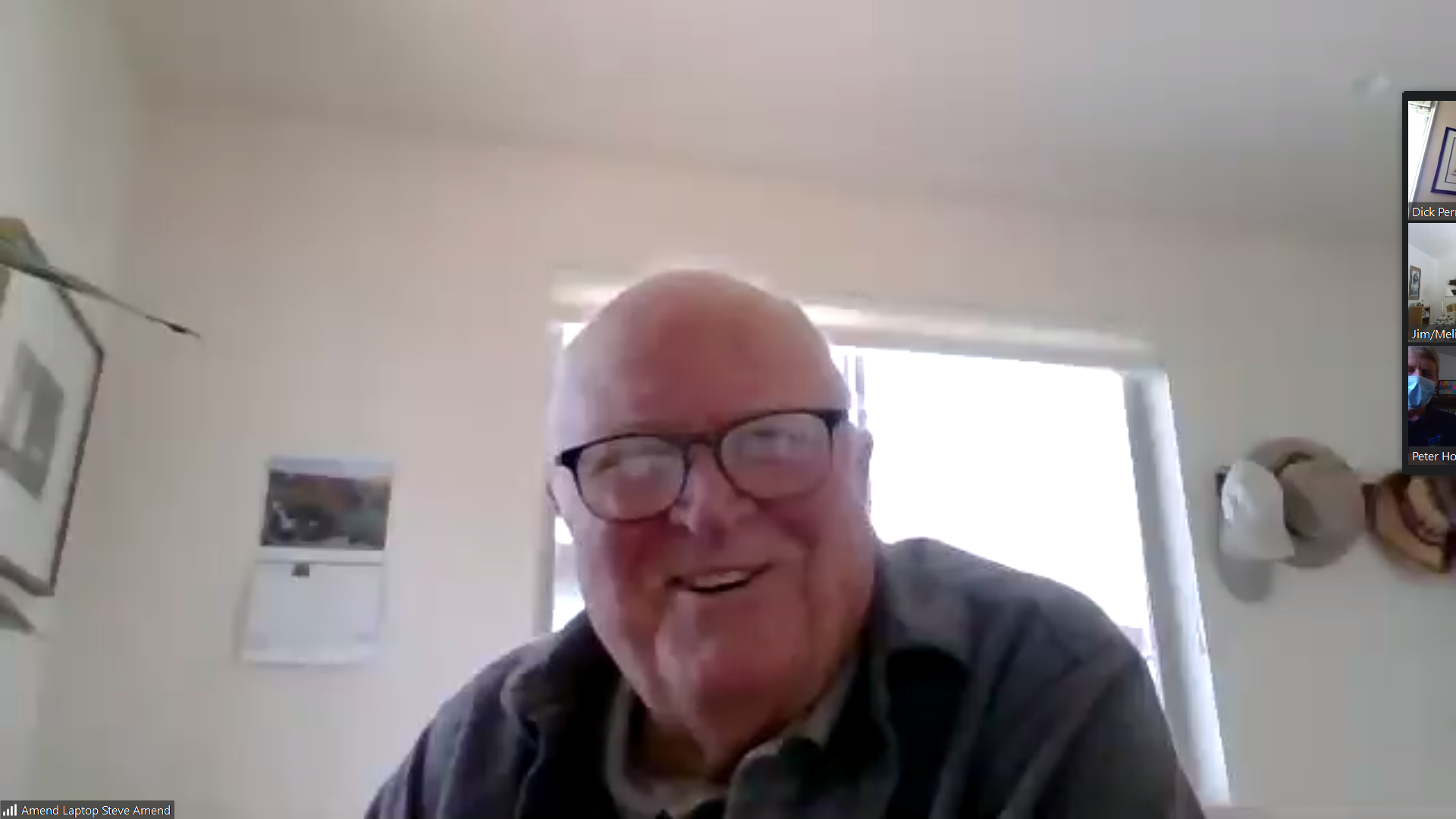
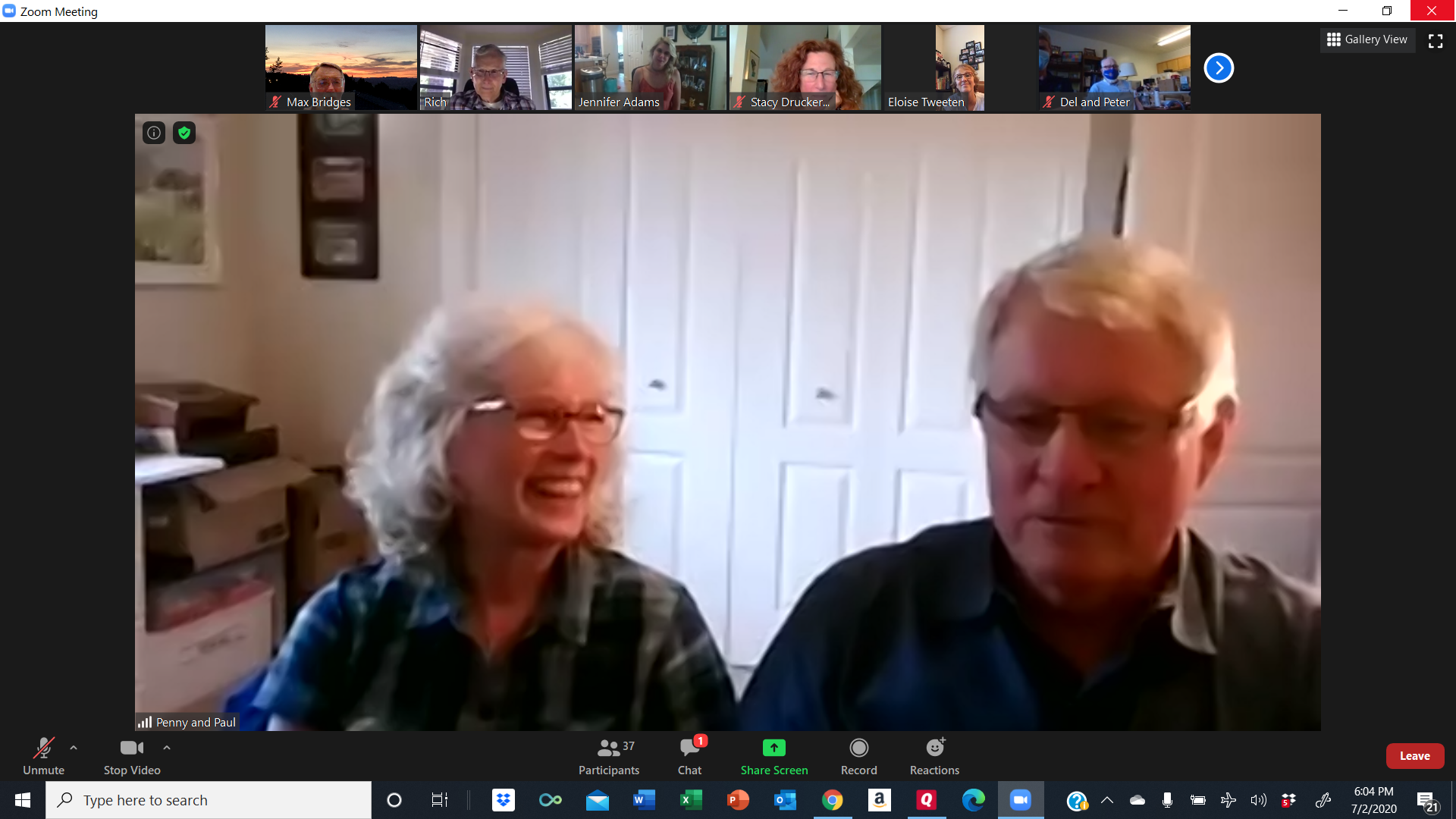
Our July 2nd special meeting was the annual presidential debunking formatted for Zoom! Immediate Past President Rich Randolph presided over our farewell to President Marty at a themed zoom event labeled “Around the Year in 80 Zooms!” Rich highlighted the year with slides depicting Marty’s masterful control over club meetings, both in-person and during Zoom events. Rich relied on Jim K. and Dicksie T. for the archival search for photos and for the slides. Rich also provided us with live music from the Santa Rosa Symphony Youth Quartet. As you all know, President Marty is a huge backer of the Symphony, and Rich’s use of the Youth Quartet was a tribute to him and a great way to enjoy these talented kids.
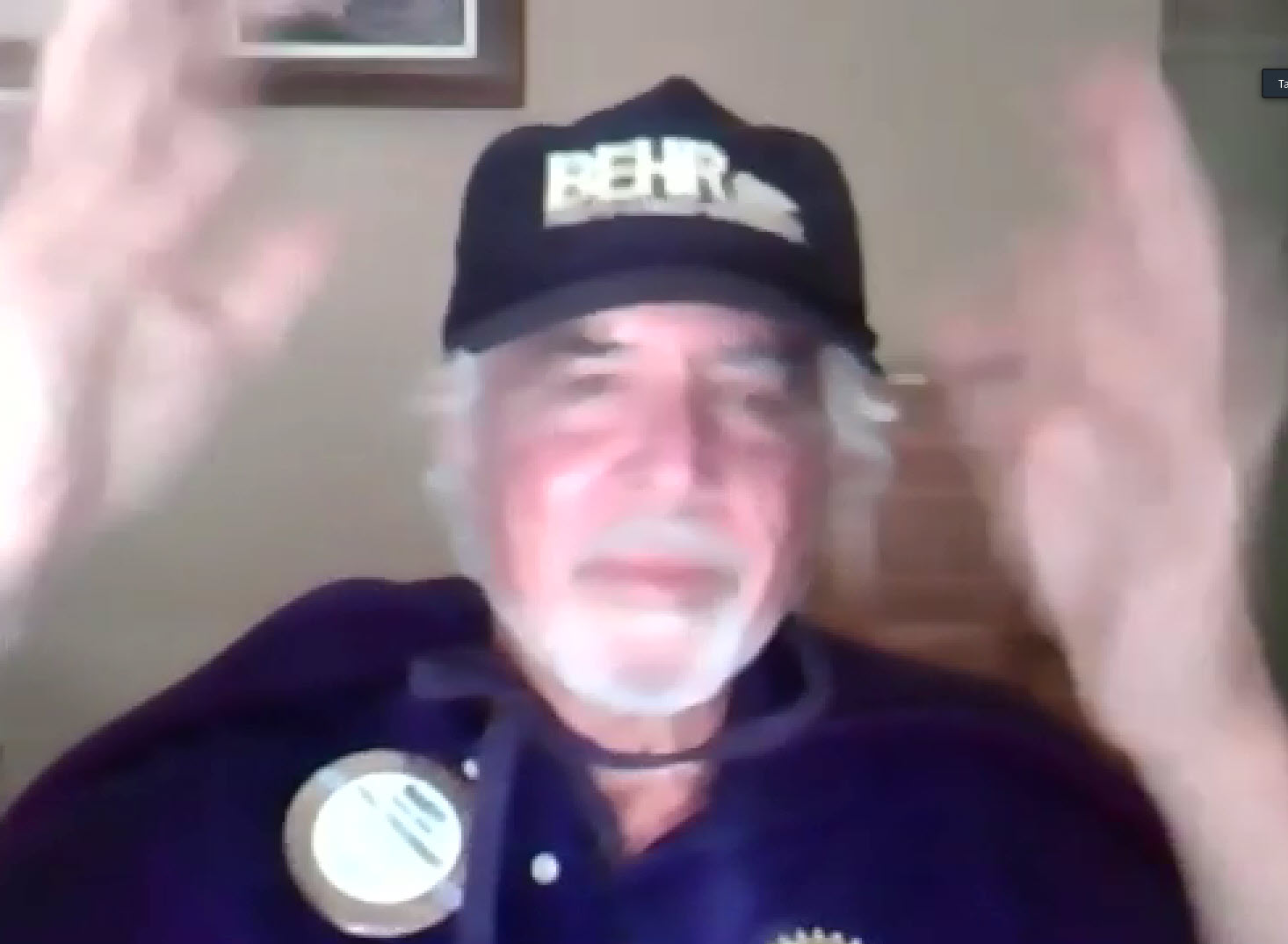
Rich gave us the opportunity to make comments about President Marty’s tenure. Surprisingly, no one unloaded on Marty. The only adverse criticism of Marty’s year was by Past President Harry Coffey, who mysteriously complained that Marty never pulled his ticket (presumably from the “hat” used for picking the raffle – but who knows)?! Rich commented that Marty was always prepared and always had great agendas. Marty got off without any real roasting, but maybe we’ll think of something when we get back to live meetings.
The meeting also included announcements of the members with perfect attendance and President Marty’s awards, both of which are summarized elsewhere in this Bulletin. One brief journalistic addition to what has been said elsewhere in this Bulletin: I asked President Paul for comments about the Rotarian of the Year award to Past President Penny Millar, knowing that Paul would give us the most unbiased commentary on Penny’s award. Paul said, and I mostly quote: “Rotary is a second family for Penny. The club has been there for her when she needed support and she always strives to return the favor…” Marty mentioned that Penny is the unsung hero of the club. Marty – the choice of Penny (her second Rotarian of the Year Award, at least) was magnificent and insightful; no one contributes more to our club than Ms. Miller. And our congratulations to Del Raby and Peter Hoberg for their equally deserved awards!
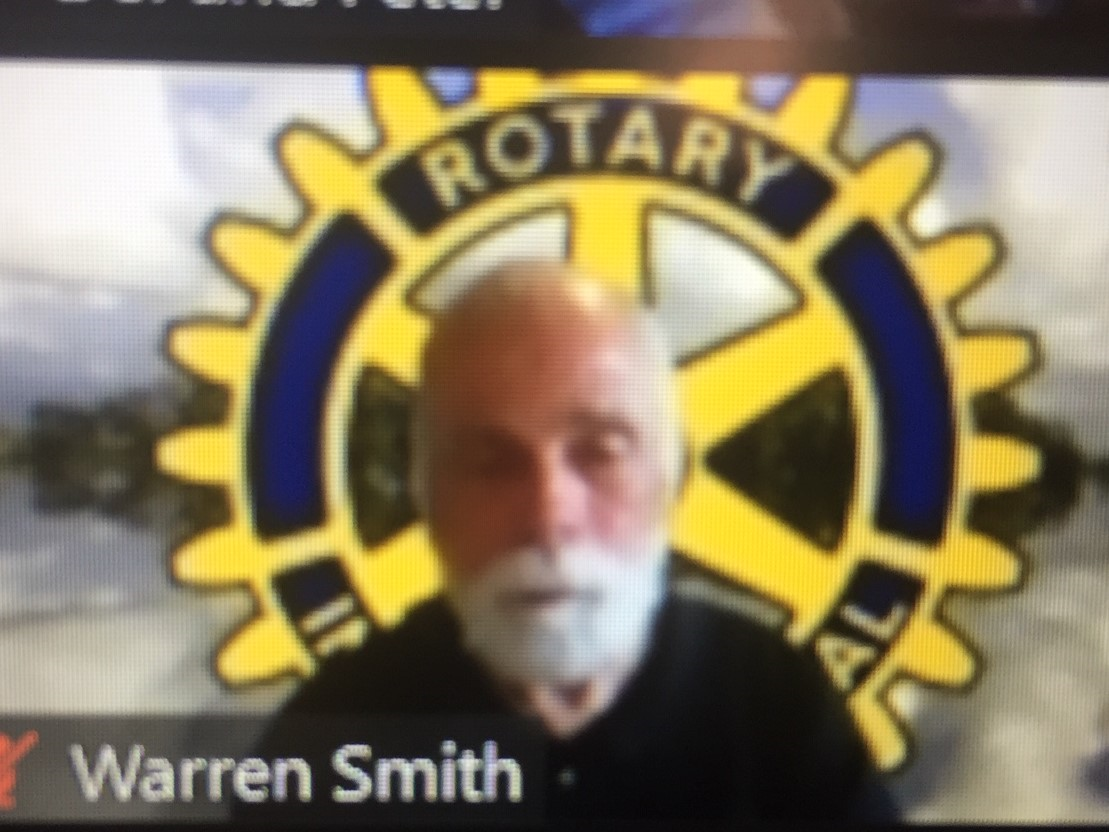
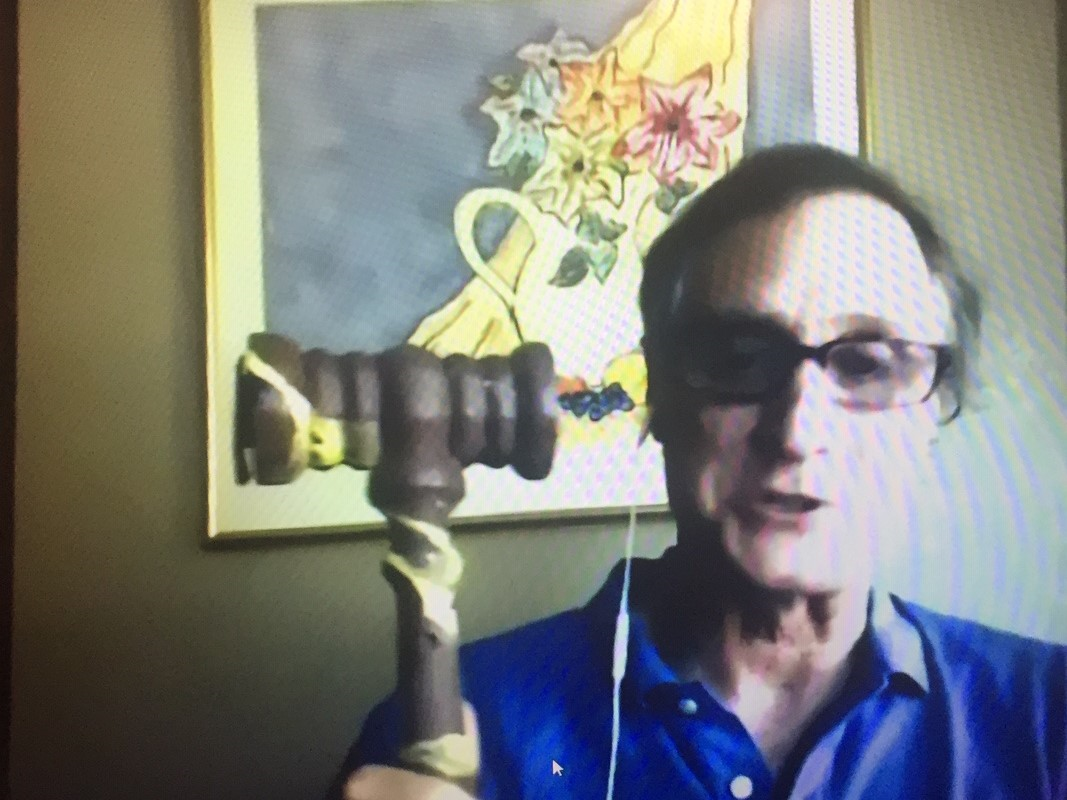
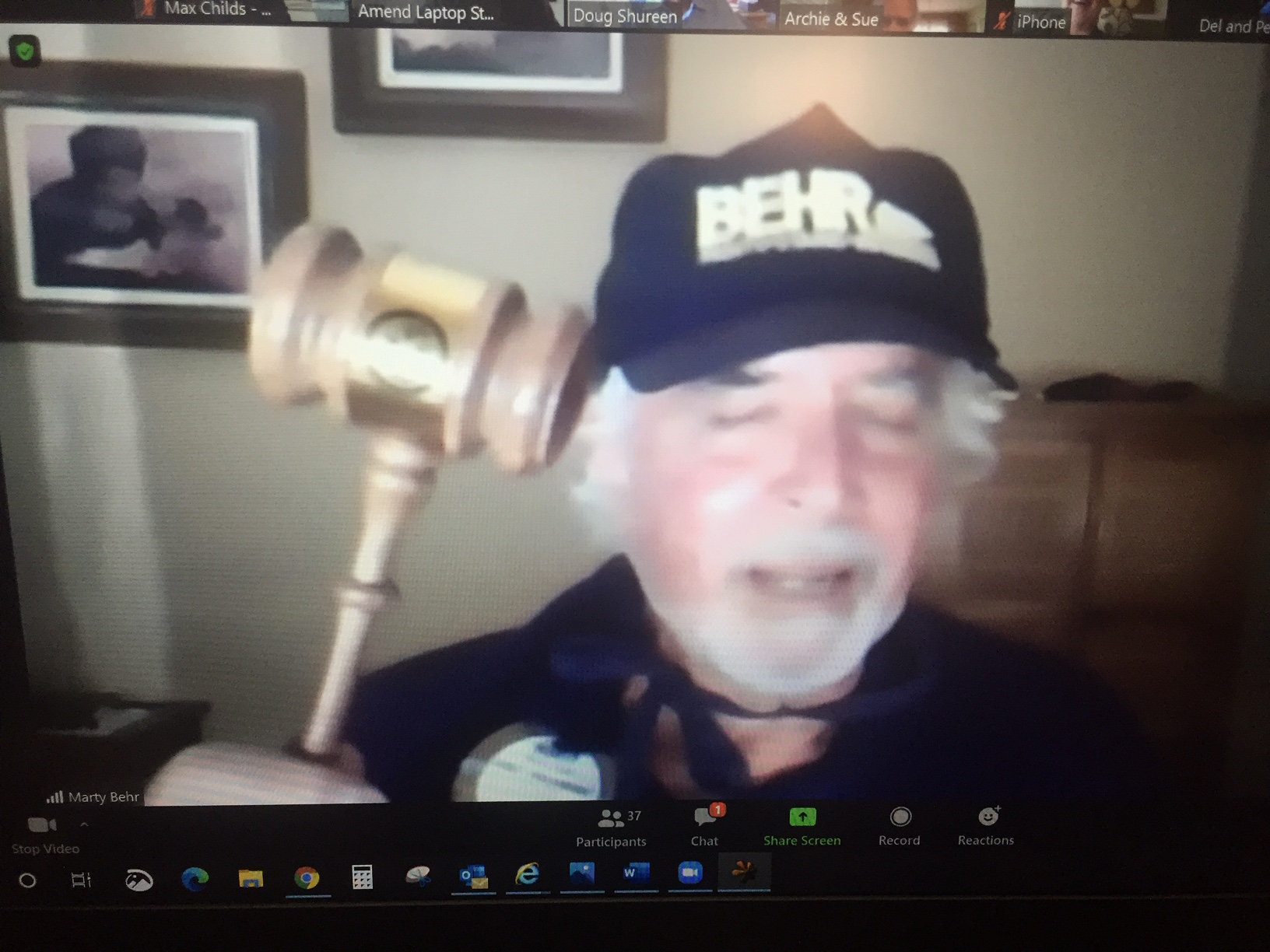
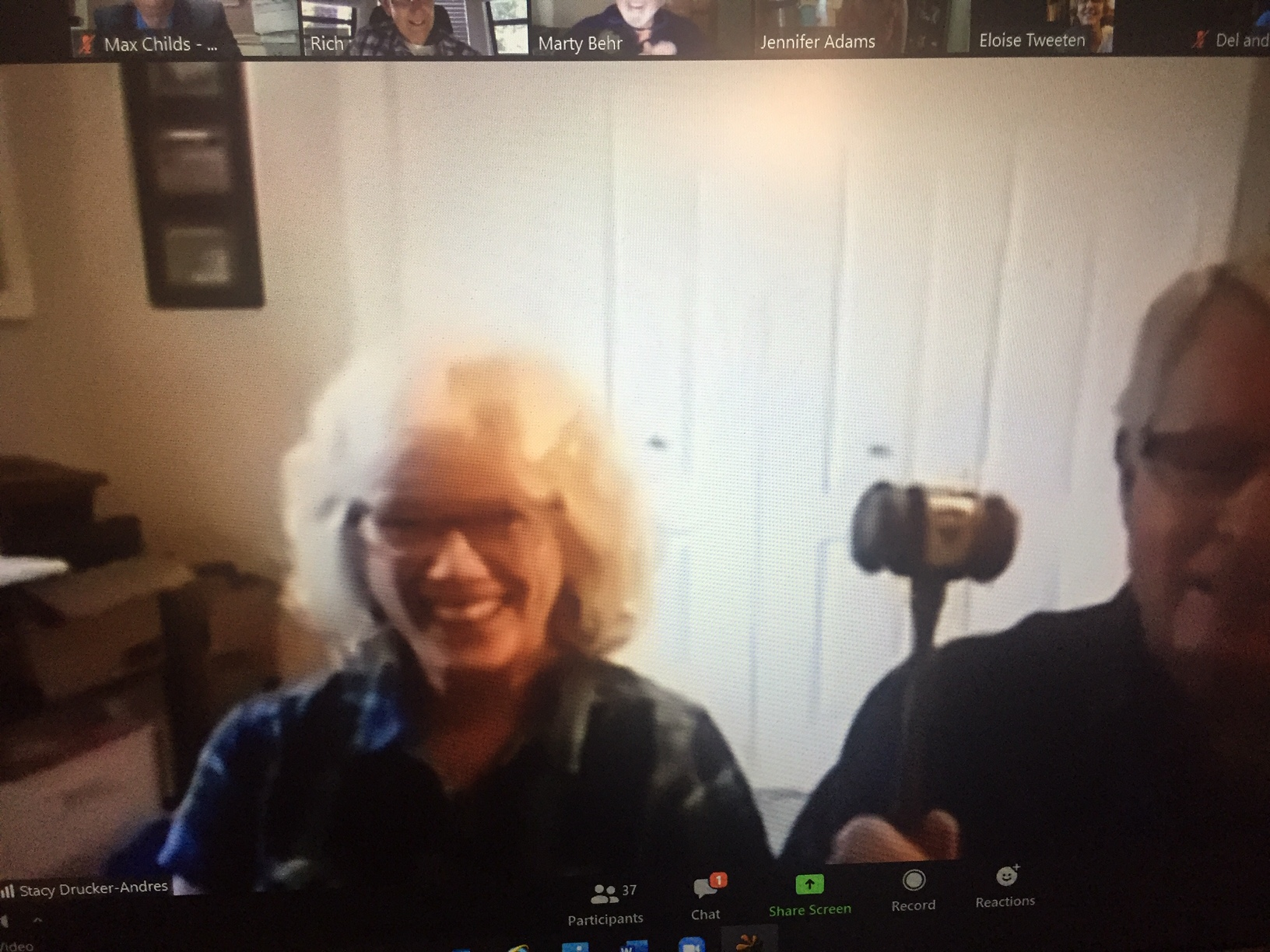
The finale was the legendary “gavel pass” during which each past president passed their gavels on to each successive president, starting with our founding president, Warren Smith, and ending with the pass from Marty to Paul O’Rear, our new president. We have complete confidence in President Paul’s ability and dedication to lead us towards even higher attainment in the coming year. Marty, thank you for being such a great president; Paul, good luck – you may need it.
On a regular basis, our resident photo pro Warren Smith, submits pictures of what is going on at the weekly meetings. You can always find the most recent pictures at the websites photo journal called "Meeting Sighting" Please note that all the meeting photos for the entire Rotary year are at this location with the most recent on the last page.
Thanks for all the great pictures Warren!Link to Meeting Sightings. The most recent are on the last page!
Marty Behr heard classic melodies from four members of the Santa Rosa Youth Symphony as his formal Debunking commenced.
Beginning with a special arrangement of the movie theme from "Around the World in 80 Days" , the quartet continued with three pieces illustrating their versatility and amplifying Marty's creative robust leadership.
One of Marty's strongest advocacy is his support of local youth. The four young musicians, under the direction of Jane Shelly, a Santa Rosa Symphony adult musician, the quartet's performance may be seen and heard again on their Youtube channel at: https://youtu.be/yvZc8Z13A2s
This year's first virtual debunking inspired several innovative measures in club celebration and communication. It marked the first fee free rout, and totally BYO menu!
You are welcome to redirect your event savings to the club's community philanthropy fund, c/o Penny Millar.
Past President Marty presented the following awards ~ Congratulations to all!
SEVEN members Perfect Attendance: Paul O'Rear --------- 4 years
Penny Milllar ------ 16 years
Steve Amend ------ 23 years
Randy Seelye ------ 26 years
Shauna Lorenzen -- 28 years
Dave Lorenzen ---- 34 years
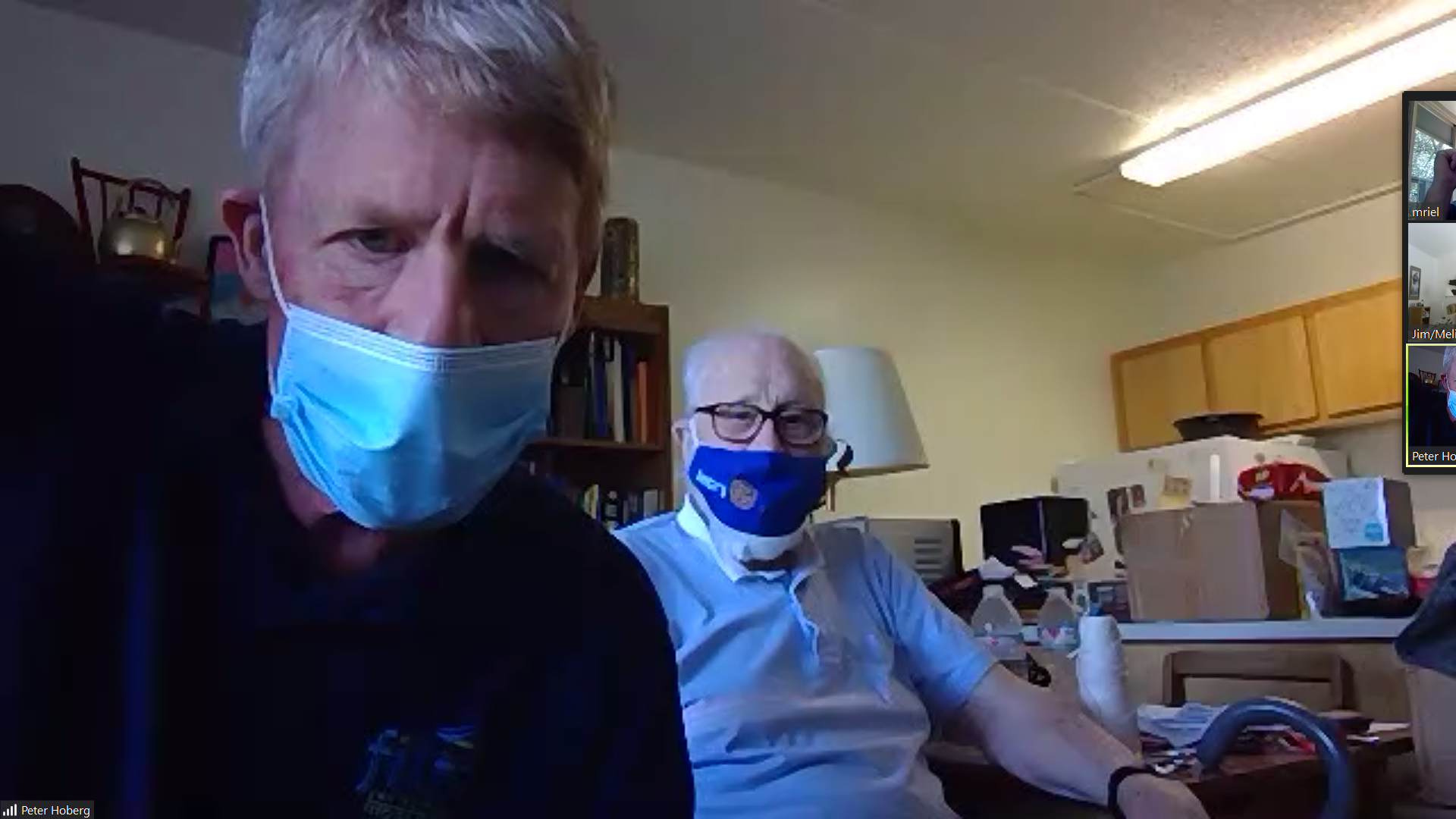
Del Raby ----------- 59 years! Humanitarian of the Year Award: Peter Hoberg for his dedication to assist everyone to use Zoom, going to Del's each week to be sure he is able to Zoom, and for assisting Del on our Club hikes.
Extraordinary Participation Award: Del Raby for assigning Pledge/Thought/Sgt.-at-Arms for each meeting, for arriving early to setup each meeting, for attending almost every service project at Redwood Empire Food Bank, Vicki's Garden, West County Homeless Shelter and more, for attending our Easy Hikes, and for organizing the Progressive Dinner. He's everywhere!
Rotarian of the Year: Penny Millar for working hours and hours behind the scenes as Treasurer of both the Club and Club Foundation, with kindness and skill. Keeps us on-track and current financially. The only person who works more hours for our Club than the President. Also, working on financial systems that will simplify the Treasurer's job now that we are meeting virtually and allow someone else to take over as Treasurer after Paul's year. Well-deserved.
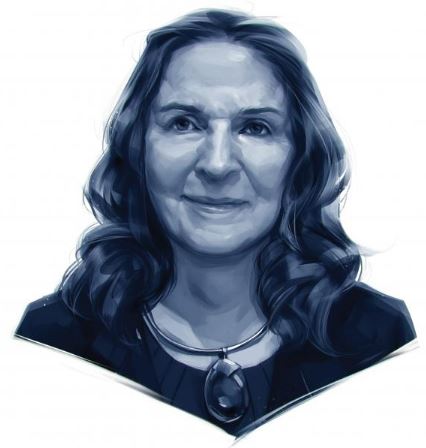
Your mother may have admonished you for talking with your mouth full or putting your elbows on the table, but there’s so much more to manners than that. Etiquette is really “being thoughtful about yourself and others,” says Sheila Armstrong. She learned about manners from her grandmother Cookie Mae, a University of Wisconsin graduate who taught elocution in Superior, Wisconsin. “For her, it was important to be precise in everything from dining etiquette to basic thoughtfulness toward others,” says Armstrong, a member of the Rotary Club of Houston. Armstrong has appeared on numerous TV shows, and her Little Book of Etiquette: Tips on Socially Correct Dining was first published in 1993.
THE ROTARIAN: Why did you write The Little Book of Etiquette?
ARMSTRONG: I ran an executive search firm. In the early 1990s, I had two candidates within three months of each other who were each on the verge of being offered a position with an incredible salary and benefits, but neither of them got the offer — because they were dining slobs. The first candidate ordered spaghetti and slurped up the noodles, allowing tomato sauce to splash on both sides of his face — and then he forgot to wipe away the sauce. And when the second candidate was taken to dinner, he drank three glasses of wine. It made me so mad that I interviewed 500 people and wrote a book.
TR: How did the rules of etiquette first arise?
ARMSTRONG: The first notes we have on etiquette come from 2400 B.C. in Egypt. One piece of advice could be translated as something like “when your boss laughs, laugh with him.” The use of the word “etiquette” with its contemporary meaning comes from France and is often traced to the time of Louis XIV.
"Bad manners can have real consequences."
Sheila Armstrong
TR: What tips do you have for Rotarians?
ARMSTRONG: If you want to ask someone to volunteer for a project, do it away from your Rotary meeting. Ask the person to coffee or dinner — and tell them in advance why you would like to talk with them.
At Rotary meetings, I’ve been at tables where nobody talked or where I was ignored because I was a visitor. When you have someone you don’t know at your club, ask them what projects they’re involved in. That starts a conversation.
If you’re traveling for a Rotary project or event, research the etiquette in your destination. Start practicing how people dine there, for instance, and how you should offer and accept a business card. But remember that if someone is visiting your club and they goof up your local customs, it’s gracious not to point it out.
TR: The world is so casual today. Does etiquette still matter?
ARMSTRONG: Bad manners can have real consequences. One day, my father called to tell me that my mother was not feeling well. I lived in Austin, Texas, 100 miles away. I wanted to drive safely but quickly. On a narrow two-lane road, a driver with road rage refused to let me pass for 30 minutes. When I finally reached my parents’ door, Daddy opened it up and said, “Sheila, darling, I am sorry, your mother died five minutes ago.”
It felt like part of my life had ended, and all because of that driver. So I decided to write a book on driving: Buckle Up, Stay Alert: Driving Tips for Adults and Teens. It will include information about the rules of the road and tips on how patience can help you be a better driver.
— DIANA SCHOBERG
• Illustration by Viktor Miller Gausa
• This story originally appeared in the June 2020 issue of The Rotarian magazine.
This does not seem like a time for great optimism, but it has to be. Long before Rotary was founded, the world dealt with great crises that tested humankind's ability to progress and endure. In the age of Rotary, the world has faced many more catastrophes; however, we have survived, and every step of the way, Rotary has helped the world heal.
Every great challenge is an opportunity for renewal and growth. I revealed the theme of Rotary Opens Opportunities at the International Assembly in San Diego just as the COVID-19 crisis was beginning, but these are words that I have believed for many years.
Rotary is not just a club that you join; it is an invitation to endless opportunities. We believe in creating opportunities for others and for ourselves. We believe that our acts of service, large and small, generate opportunities for people who need our help, and that Rotary opens opportunities for us to live a richer, more meaningful life, with friends around the world, based on our core values.
Governments and institutions are gaining a greater appreciation for the types of public health partnerships that are critical to our work. People stuck at home, eager for greater connections and hungry to help their communities, are now embracing the values we have promoted since our beginning.
All of this is positive news, but just because there are greater opportunities than ever for Rotary to thrive does not guarantee that we will succeed. The world is changing rapidly — and was doing so even before this crisis. People were starting to move away from regular lunch meetings and toward online gatherings. Friendships were being cultivated and revived in social media relationships even before most of our meetings moved to Zoom and Skype. Younger generations have a strong desire to serve — but have questioned whether they could play a meaningful role in organizations like Rotary or whether they might make a bigger impact forming different types of connections. Now is the time to put everything on the table, test new approaches, and prepare Rotary for the future.
The COVID-19 crisis has forced all of us to adapt. This is good, and our new Action Plan specifically calls on us to improve our ability to adapt. But adaptation is not enough. We need to change, and change dramatically, if we are to face the challenges of this new age and provide the Rotary the world so desperately needs.
This is our great challenge, not just in the next year but into the foreseeable future. It is up to us to remake Rotary for these new times — to wholeheartedly embrace the ideas, energy, and commitment of young people eager to find an outlet for idealism. We must become an organization fully enmeshed in the digital age, not one that simply looks for online ways to keep doing what we have always done.
The world needs Rotary now more than ever. It is up to us to make sure that Rotary Opens Opportunities for generations to come.
I believe that RI President Holger Knaack's theme, Rotary Opens Opportunities, fits the times so well. You might ask how that can be, given all of the turmoil happening around us today. The following story, paraphrased from British author Alan Watts' telling of a Taoist parable, helps explain why.
Once there was a farmer whose horse ran away. That evening, all of his neighbors came around to commiserate. They said, "We are so sorry to hear your horse has run away. This is most unfortunate." The farmer said, "Maybe."
The next day, the horse came back, bringing seven wild horses. In the evening, everybody said, "Isn't that lucky. What a great turn of events. You now have eight horses!" The farmer again said, "Maybe."
The following day, his son tried to break one of the horses, and while riding it, he was thrown and broke his leg. The neighbors said, "Oh dear, that's too bad." The farmer responded, "Maybe."
The next day, officers came around to conscript people into the army, and they rejected his son because he had a broken leg. Again all the neighbors said, "Isn't that great!" Again, the farmer said, "Maybe."
What we learn from this is that nature is immensely complex. It's impossible to tell whether anything that happens is good or bad, because you never know what the consequences will be. All we can know is that with every action and reaction, there is an opportunity — a chance to live our values, express our desires, and take action to make the world a bit closer to the way we want it to be.
The Rotary Foundation is our conduit to make those meaningful changes. Through the Foundation, we do our part to help rid the world of polio. In addition, we can help support important COVID-19 projects and prepare the world for the massive vaccination effort that will be needed soon. And we can help keep some continuity in service to people in need when so many regular services are being disrupted.
Will this be Rotary's great moment to become an even stronger organization in the 21st century? Maybe. Is this your great opportunity to live your values? Maybe! It's up to you and me.
Rotary Club of Santa Rosa Sunrise - Founded June 30, 1986


.png)

.jpg)