SOS Community Counseling (Support Our Students) was established in 1993 by Sonoma State University Professor Emeritus Dr. Mark Doolittle in response to community and school mental health needs. SOS Community Counseling has been a model program of partnership between community organizations, foundations, school districts, and graduate school training programs to provide counseling services to school-age youth at no cost to individuals or families. In recent years, SOS has expanded its services through a community-based clinic program to provide marginalized families and individuals in our region access to high-quality counseling services at the lowest possible cost. As we have expanded to provide additional off-campus services through our community clinics, our mission remains: SOS Community Counseling is dedicated to providing vulnerable families, children, and individuals the highest quality, compassionate, and skilled mental health counseling services at minimal or no cost.
Our Perspective
The counseling relationship and process can be a powerful tool for enabling positive psychological, emotional, and behavioral growth for individuals and their relationships. The bonds of empathy, awareness and insight that characterize healthy relationships are a cornerstone of individual, family, community, and societal health. They serve to directly and powerfully counteract self-destructiveness, narrow-mindedness, intolerance, and violence. Financial limitations should not interfere with the opportunity for individuals, children, and families to have access to high quality mental health services.
Our Commitment
We will work to ensure that no individual, family or child in our community will be prohibited from having access to counseling services due to a lack of financial resources.
We will collaborate with relevant community partners to most effectively supplement existing local programs and services for these populations.
We will advocate for both the immediate welfare and the social progress of our clients and all those who have limited access to mental health services.
We will endeavor to provide the highest quality, solution oriented, ethical and compassionate counseling services to each of our clients.
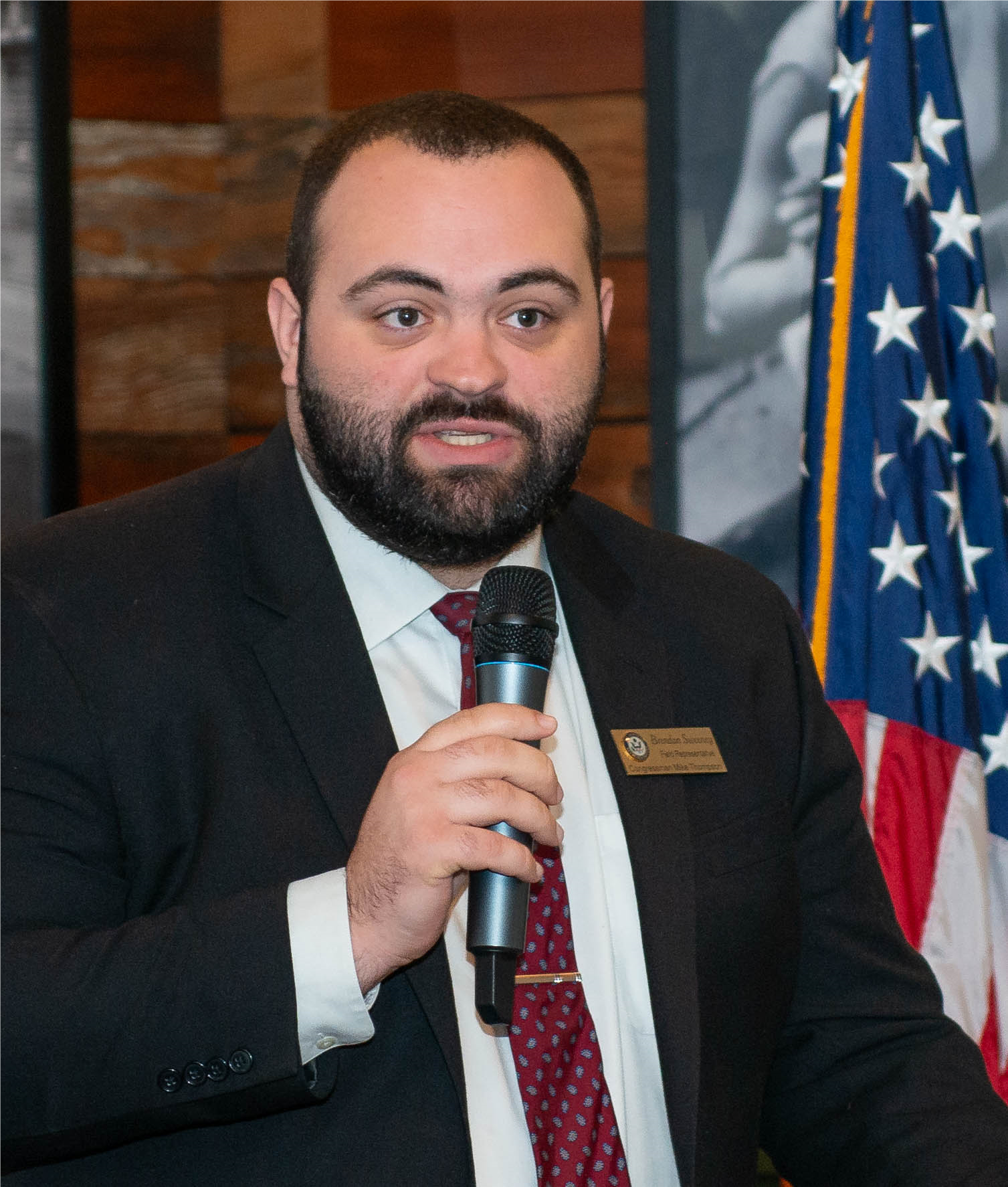
The Program from November 30, was Brendan Sweeney, Field Representative, Mike Thompson - Member of Congress, 4th District, California.
We had the pleasure of hearing Brendan Sweeney speak at our club this past Thursday. Brendan is a field representative for Congressman Mike Thompson. He discussed in detail all the hard work that the Congressman and his small but mighty team have accomplished so far.
Brendan wears several hats in his position. He meets with other members of the community and leaders. Sweeney is also a case worker who serves as an excellent conduit for the community who need resources from our federal agencies. Have an issue with your Medicare benefits or getting your tax return? Give him a call!
Brendan did a thorough job outlining some of the cornerstone bills that have been tirelessly worked on and passed by the Congressman.
Brendan explained the Inflation Reduction Act which gives people tax credits to cover electric vehicles and retrofit their homes. This represents the largest investment in saving the planet in our country's history. Brendan urges us to check out the tax credits if we're retrofitting your homes.
He expressed the Congressman's passion around telehealth. There is a bill called the Connect Act which gives basic Medicare beneficiaries full access telehealth services. They are hoping to make this a permanent benefit.
Other projects that the Congressman is focused on are a bill for a tax credit for more affordable housing and a bipartisan infrastructure law to create electrical grid undergrounding and expansion of electric vehicle charging stations. A bill closest to Congressman Thompson’s heart is the largest expansion of VA healthcare to make it easier for vets and family to access services due to exposure of toxic chemicals.
Brendan discussed Fire Survivors Tax Relief Bill. Survivors have been faced with obscene taxation on settlement proceeds throughout CA. This bill will exempt settlement proceeds. Unfortunately, Senator McConnel filibustered and halted the bill from going through; however, they are still working on running this bill and it has passed by the House. There is optimism it will pass by the senate. This bill will also benefit survivors of hurricanes and the train derailment earlier this year in Ohio.
Another important topic that is a focal point of Congressman Thompson is mental health. He is working on legislation where there is more funding for research to find ways to prevent mental illness.
He has also created the House and Violence prevention task force. He is focused on gun control legislation where there are universal background checks on all gun dealers. This will affect other states that currently allow unlicensed dealers to not do background checks on their customers.
Brendan went into detail about the constant threat of government shut down and how it effects government employees' livelihoods as well as our economy. Many government employees will continue to work for free, affecting their livelihoods, and tragically, no government agencies can be accessed by those who need it during this shut down.
Brendan urged us to call his department and let him know what needs to be fixed. An example of the community banding together and calling Congressman Thompson resulted in the Phone Act. Now disaster survivors can keep their original phone numbers when they rebuild. This was stripped away from many people, especially those who lived in Coffey Park following the loss of their homes from the Tubbs Fire.
Last, Brendan discussed their involvement with youth. They have created engaging programs to expand knowledge such as a summer reading challenge, an art challenge where students' pieces are judged, and the winner's piece is displayed at House of Congress for a year in D.C. as well as a coding challenge where students apps are share with businesses and shareholders in Washington D.C.
It is definitely apparent that both Brendan and Congressman Thompson have a robust agenda that probably does not include a long night's sleep.
Click HERE to view a limited time recording of Brendan Sweeney's presentation.
On a regular basis, our resident photo pro Warren Smith, submits pictures of what is going on at the weekly meetings. You can always find the most recent pictures at the websites photo journal called "Meeting Sighting" Please note that all the meeting photos for the entire Rotary year are at this location with the most recent on the last page.
Thanks for all the great pictures Warren!Link to Meeting Sightings. The most recent are on the last page!
The Petaluma Historical Museum and the Petalumans of Yesteryear
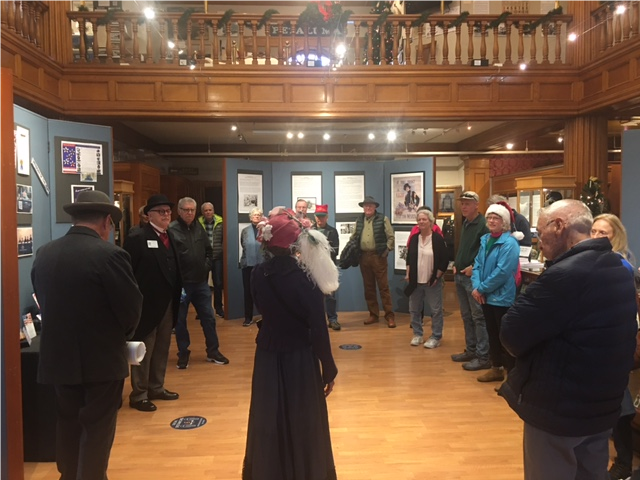
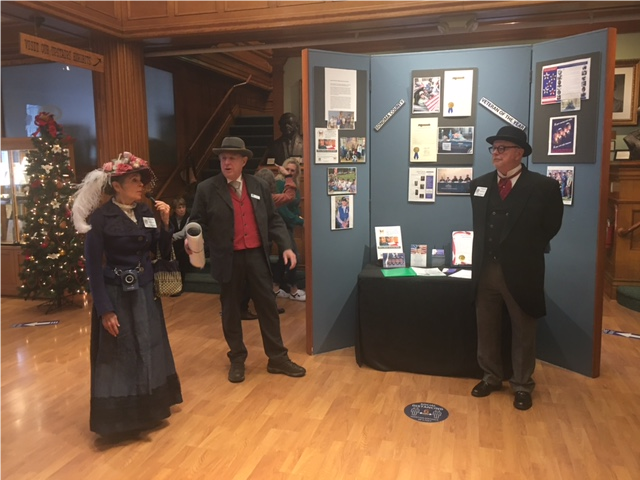
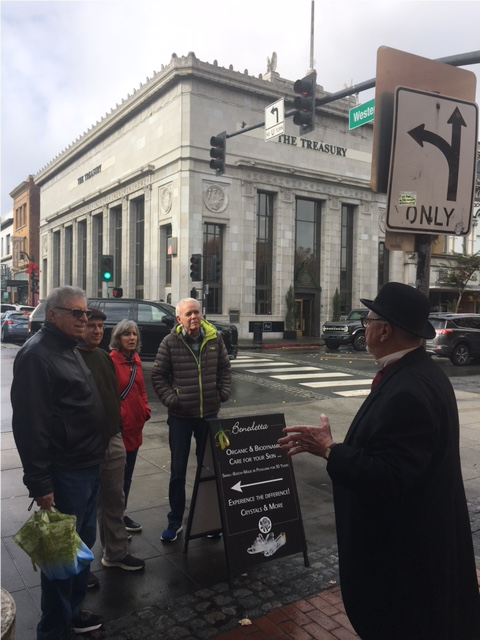
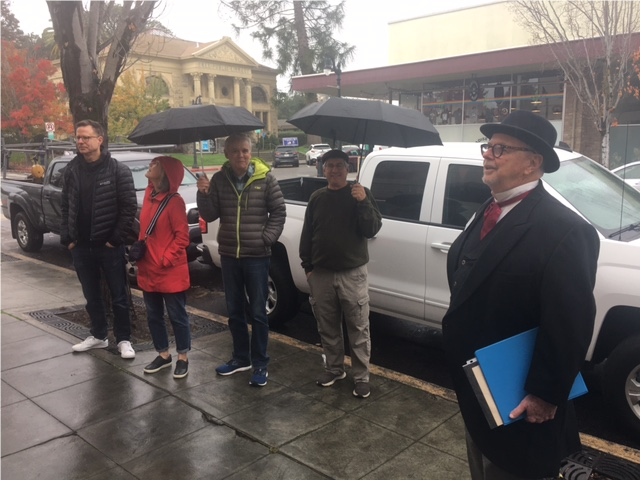
Sherri Davis Ortegren and Dennis Wigent were our guides. We met at Petaluma Historical Museum and Library.
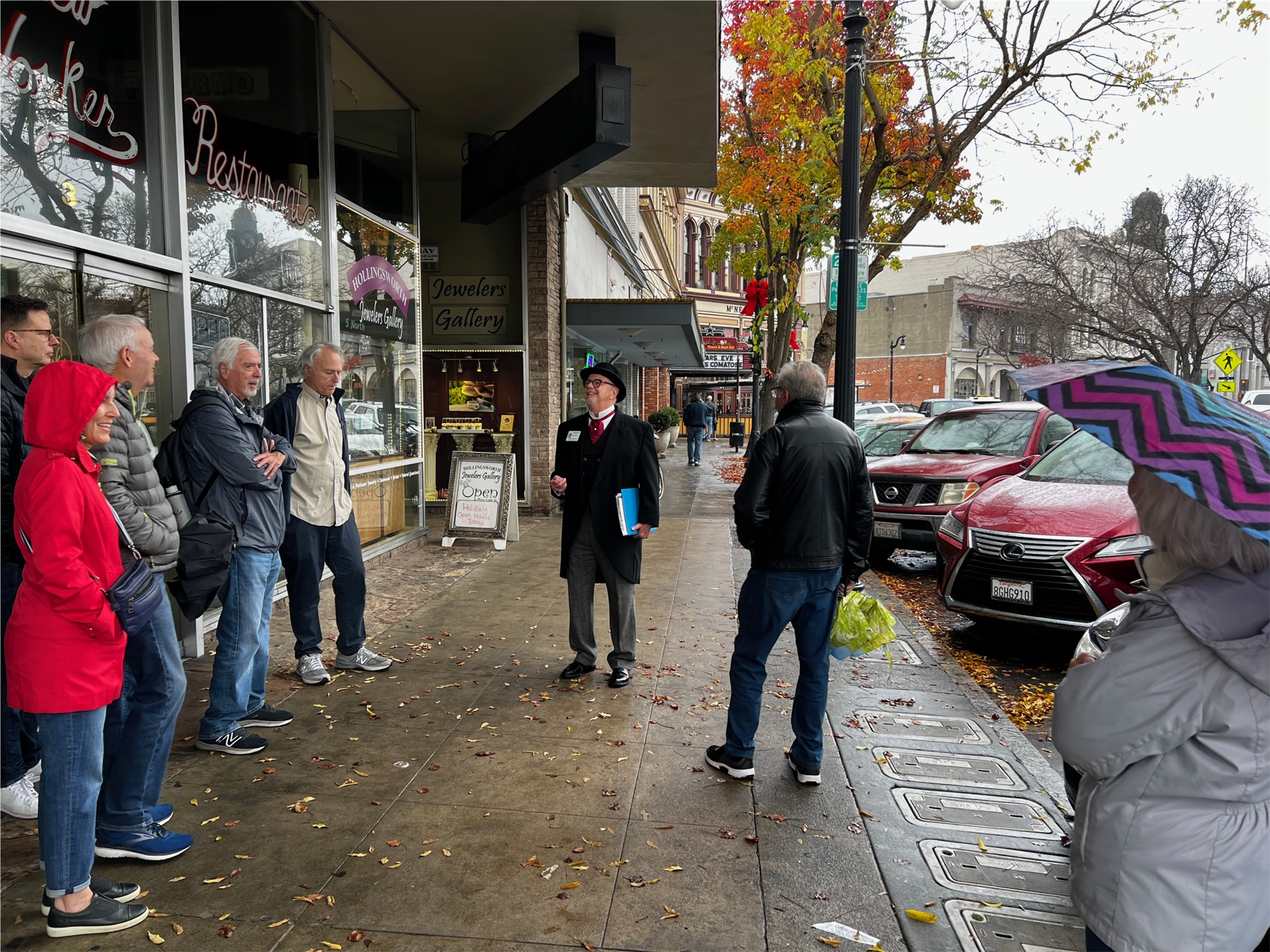
Santa Rosa Sunrise Rotary Club had a good turnout for our Holiday Season Guided Historical Walk in Downtown Petaluma on Saturday, December 2nd. It was so good, we split into two groups!
We learned the history of iron clad buildings and large store front windows.
A few morning sprinkles didn't dampen our curiosity.
From trains to boats, from horse and buggy to American Graffiti, Petaluma has a rich history.
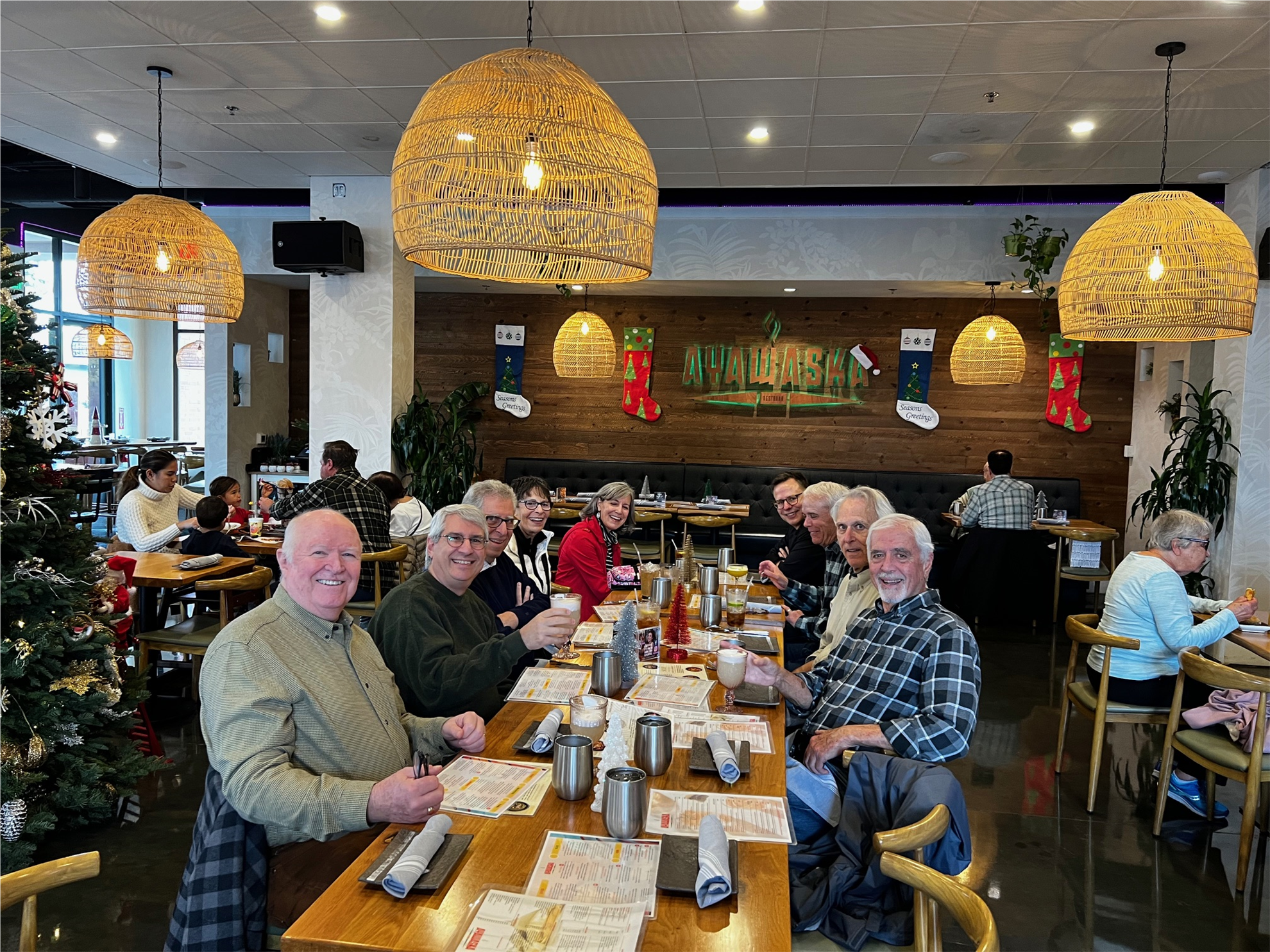
Some of us convened at Ayawaska Peruvian Restaurant for a delicious and refreshing lunch. Join us next time!
One day in early September the chief of a Native American tribe was asked by his tribal elders if the winter of 2011/12 was going to be cold or mild.
The chief asked his medicine man, but he too had lost touch with the reading signs from the natural world around the Great Lakes.
In truth, neither of them had idea about how to predict the coming winter. However, the chief decided to take a modern approach, and the chief rang the National Weather Service in Gaylord Michigan.
'Yes, it is going to be a cold winter,' the meteorological officer told the chief. Consequently, he went back to his tribe and told the men to collect plenty of firewood.
A fortnight later the chief called the Weather Service and asked for an update. 'Are you still forecasting a cold winter?' he asked.
'Yes, very cold', the weather officer told him.
As a result of this brief conversation the chief went back to the tribe and told his people to collect every bit of wood they could find.
A month later the chief called the National Weather Service once more and asked about the coming winter. 'Yes,' he was told, 'it is going to be one of the coldest winters ever.' 'How can you be so sure?' the chief asked.
The weatherman replied: 'Because the Native Americans of the Great Lakes are collecting wood like crazy.'
In December, I will attend the United Nations COP28 climate change summit in Dubai, United Arab Emirates. There, I will speak about the convergence of two global crises: climate and mental health. As the World Health Organization has noted, climate change worsens risk factors — such as disruptions to homes and livelihoods — for mental health problems. The emotional distress of a disaster also makes it difficult for people to recover and rebuild.
Rotary partner ShelterBox is an international disaster relief charity that has helped more than 2.5 million displaced people in approximately 100 countries with emergency shelter, essential household items, and technical support. I wish to share this month’s column with their CEO, Sanj Srikanthan, who explains that the words we choose to describe disasters matter.
— Gordon McInally
The term “natural” disaster has long been used to describe tropical storms, floods, earthquakes, and volcanic eruptions, but there needs to be an urgent shift in the language we use. While the term may seem harmless, and we’ve not always gotten it right, we’ve learned through our work with disaster-affected communities how it perpetuates a dangerous myth that nothing could have been done to prevent people being so badly affected. This misleading and harmful narrative can lead to a lack of action to help people who need it.
The language we use matters. When we frame disasters as natural, we fail to acknowledge the complex interplay between nature and the role of human actions and how they impact communities around the world.
Earthquakes, tsunamis, volcanic eruptions, and extreme storms, drought, and flooding occur because of natural processes on Earth. But it is how these events affect people or the environment that has the potential to make them a disaster — outcomes influenced by human factors like where people live, what types of homes they have, political instability, and the lack of proactive measures to protect vulnerable communities. A disaster is the result of systemic inequalities in access to resources and power. Where we live and how much money we have often determines our ability to recover. The people worst affected are those living in poverty, with the least means to protect themselves and few resources to withstand the next event.
By framing these events as natural, we undermine the need for proactive measures to protect vulnerable communities, masking the underlying social, economic, and political instability that makes marginalized and disadvantaged communities disproportionately affected. Our teams see firsthand how issues like inequality, poverty, urbanization, deforestation, and the climate crisis can make communities more vulnerable.
At ShelterBox, we simply say “disaster” or are more specific, describing the extreme weather, earthquake, tsunami, or volcanic eruption. I urge everyone to help us in breaking this cycle by committing to language that accurately reflects why people are affected so badly.
Only then does it pave the way to address the underlying causes of vulnerability and work toward a more just and equitable future for all, with the necessary investment, resources, and proactive measures to help protect affected communities.
Disasters are not natural. Let’s stop saying they are.
“So this is Christmas / And what have you done?” sang John Lennon in the holiday classic “Happy Xmas (War Is Over),” released in 1971 with Yoko Ono.
The holidays are a time of warmth and togetherness but also of reflection. Above all, the season is a time of generosity, especially to those less fortunate.
During your holiday giving, remember that gifts to The Rotary Foundation may not fit nicely in a present box, yet they keep on giving throughout the year.
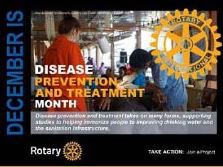
December is also Disease Prevention and Treatment Month. Just think of all the Rotary efforts that would not be possible without the generosity of you, our Rotary family. Consider the incredible progress we have achieved in our fight to end polio — the countless lives we’ve saved and the hope we’ve restored. Think of all the clinics around the world Rotary has equipped and the medical professionals trained through Foundation grants, helping fight heart disease and Guinea worm disease.
Your gifts to the Foundation also help make health care accessible to underserved communities in a big way through Programs of Scale. Right now, those grant recipients are working to end malaria in Zambia, reduce the mortality rate of mothers and their infants in Nigeria, and eliminate cervical cancer in Egypt.
Of course, our reach extends far beyond disease prevention and treatment. During times of disaster, we must act swiftly to alleviate suffering and offer support. In response to the devastating earthquake in Morocco in September, The Rotary Foundation Trustees established the Morocco Earthquake Response Fund to support immediate relief efforts led by Rotary members on the ground. You can contribute directly, and your districts can apply for grants from the fund until 21 September 2024 or until the funds are fully allocated. Anyone can initiate a fundraiser for the Morocco fund on Raise for Rotary, opening further avenues for your generosity.
We truly have the gift of giving. There are no limits to the opportunities to give and make a difference through Rotary.
As we approach the end of the year, I invite you to make your gifts before 31 December. Your generosity will have a profound impact on many — people who you may never meet, but whose lives you will change just the same.
On behalf of Esther and myself, we wish you all a joyful holiday season. Thank you for your continued support, dedication, and unwavering commitment to The Rotary Foundation and to what Rotary is all about: helping others.
An audacious request transforms South African schools
By Etelka Lehoczky
Partnerships can sometimes be slow to develop, but their results can be remarkable. Two Rotary clubs in South Africa and the U.S. might never have become partners if it weren’t for an enthusiastic expat who worked at a Jackson Hole hospital. But the outcome of their alliance is extraordinary: a US$540,000 overhaul of facilities at 11 South African schools that benefits more than 7,200 students every year.
Julia Heemstra, a health worker in Wyoming, USA, who used to live in South Africa, told a meeting of the Rotary Club of Jackson Hole about the water scarcity many South Africans deal with. She mentioned that on her next trip back, she planned to take along as many handheld water purifiers as she could fit in her luggage.
“It literally was just me putting water filters in my duffel bags and then heading up to the township and working with schools to distribute them,” Heemstra says. “I went and talked to Rotary about it. Rotarians came to me at the end of the meeting with their checkbooks, saying, ‘How much money do you need? And who do I write the check to?’”
The Jackson Hole members were eager to do more, so Heemstra helped them connect with the Rotary Club of Grahamstown, South Africa. At the time, Grahamstown members were working with the nearby Ntsika Senior Secondary School, which serves around 760 students ages 12-20. The school’s sanitation facilities were practically nonfunctional, and the school had limited access to water.
“They had an inconsistent water supply. When the water is shut off, the schools have to shut,” says Stuart Palmer, a past district governor in Wyoming and the main fundraiser for the projects. “You cannot have school if you don’t have water. We were seeing the children shortchanged in their education.”
Ntsika had only eight toilets, and they frequently clogged. Even worse, an overflowing sewage tank had created a kind of swamp outside.
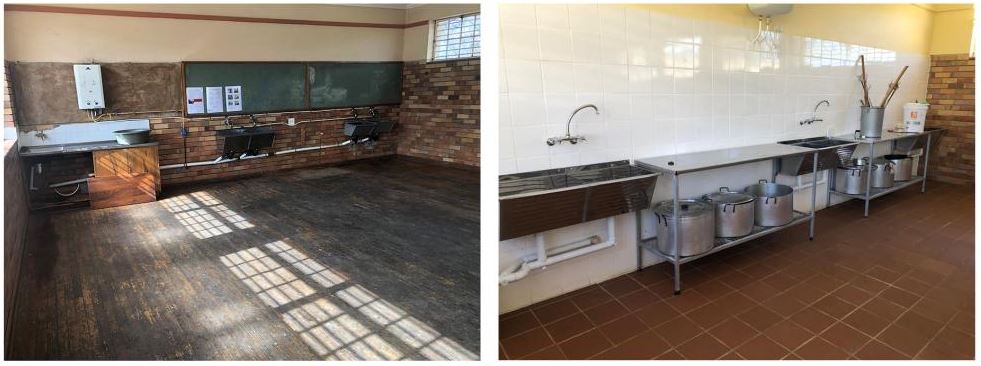
The kitchen at Mary Waters High School (left) before the renovation and (right) after the renovation.
Photos: Gavin Keeton
“We were told it was going to cost 1 million rand — about $80,000 in U.S. dollars at that time — to repair the facilities,” says Gavin Keeton, past president of the Grahamstown club. “That would have been far bigger than anything we’d ever done. But then, when we looked closely at the project, we realized it was going to cost double that.”
Enter the skilled fundraisers of Jackson Hole. Together with the Grahamstown club, they applied for a global grant of US$109,000 from The Rotary Foundation and raised US$48,000 in contributions, including donations from other clubs and a remarkable US$20,000 from nonmembers. A change in the exchange rate made the project more affordable. The Grahamstown club got to work, installing water tanks, repairing the gutters and sewage system, and completely remodeling Ntsika’s kitchen and toilet facilities.
“They just did everything we could possibly need,” says Madeleine Schoeman, Ntsika’s former principal. “They even put up mirrors in the bathrooms. I did not think that the mirrors would be such a big deal, but it’s made an immense difference to our children. Like most young people, they love knowing they’re still looking good.”
The success of the project made the Rotarians even more ambitious. In 2021, several districts collaborated on a US$34,000 district grant to upgrade the water systems at 10 area schools. The grant provided water tanks, filters, and pumps for the schools and paid to repair leaks and connect the new tanks to the municipal water supply. Jackson Hole partnered with Grahamstown again in December 2021, this time on a global grant big enough to completely remodel the toilet facilities and kitchens of seven schools.
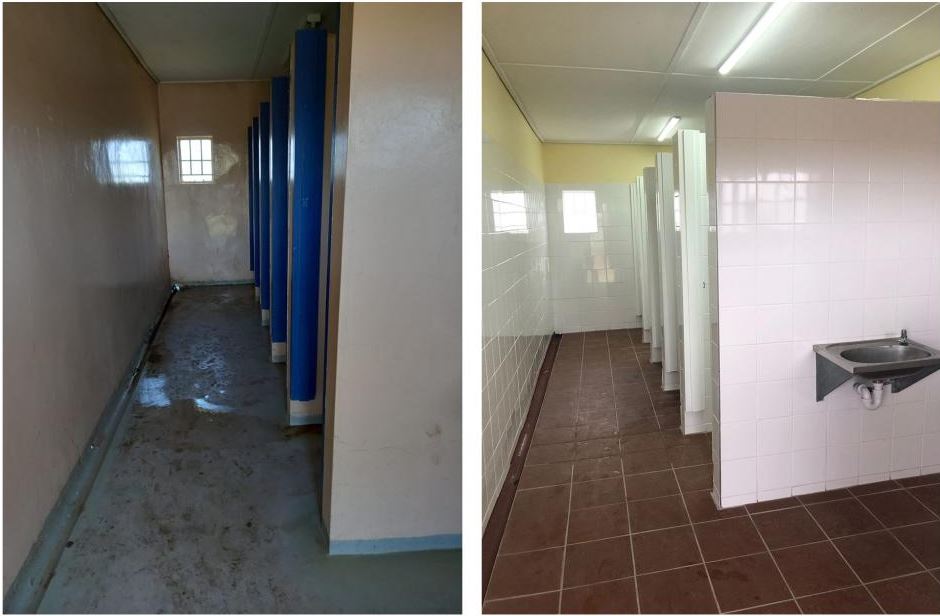
A toilet block at Khutliso Daniels Senior Secondary School (left) before the renovation and (right) after the renovation.
Photos: Gavin Keeton
“As we began to hear more about the issues with sanitation in the schools, the thought was, ‘We already did one successful sanitation project, and we have seven or eight more schools with the same issues,’” says Ken Small, a member of the Jackson Hole club and a past district governor. “So we said, ‘Well, let’s do another school.’ And to avoid the fatigue factor of having to do seven or eight applications, we said, ‘Let’s go for broke.’ We started a grant for all seven schools.”
The result was the largest Rotary global grant ever awarded to a club or district in South Africa. Totaling approximately 7.6 million rand (US$400,000), it pays for extensive renovations. Each school is getting new plumbing, new toilets, new tile and mirrors, and refurbished kitchens. Security gates and bars are being installed to prevent vandalism. To keep the facilities in good repair, staff members and parent volunteers are being trained in maintenance.
“Seeing the incredible change — you not only have water, but you’re getting a face-lift on all these schools,” Palmer says. “It’s huge.”
The global grant included US$270,000 in District Designated Funds and contributions from Rotary members, plus US$39,000 from The Rotary Foundation’s World Fund. The rest was donated by nonmembers. “We probably had a hundred individuals participate in this,” Palmer says.
The Grahamstown club began the work in July 2022 and plans to finish by March 2024. As the results of the project have become apparent, its impact has surprised even its funders.
“I would guess more than 50,000 kids in the next 10 years are going to use those facilities,” Small says. “That’s a huge, huge contribution.”


.png)




.png)