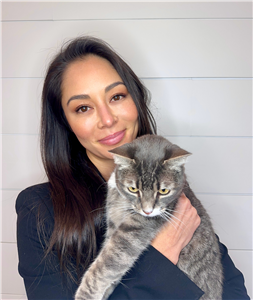
Olivia Kristiansen is the newly appointed CEO of Pets Lifeline, an animal shelter nonprofit in Sonoma Valley. Olivia has nearly two decades of experience working in the tech industry, with expertise in strategy, operations and organizational growth. Her track record includes pivotal roles at industry giants such as Yahoo, Uber and Twitter, where she spearheaded various initiatives to scale operations and foster growth. Before becoming CEO, Olivia volunteered at Pets Lifeline and then served on their Board of Directors.
Olivia will chat with us about her professional career in San Francisco's tech industry, her move to Sonoma and nonprofit and what's in store for Pets Lifeline in 2024 and beyond!
Pets Lifeline's mission is to protect and improve the lives of pets through sheltering and adoption, humane education, and community programs.
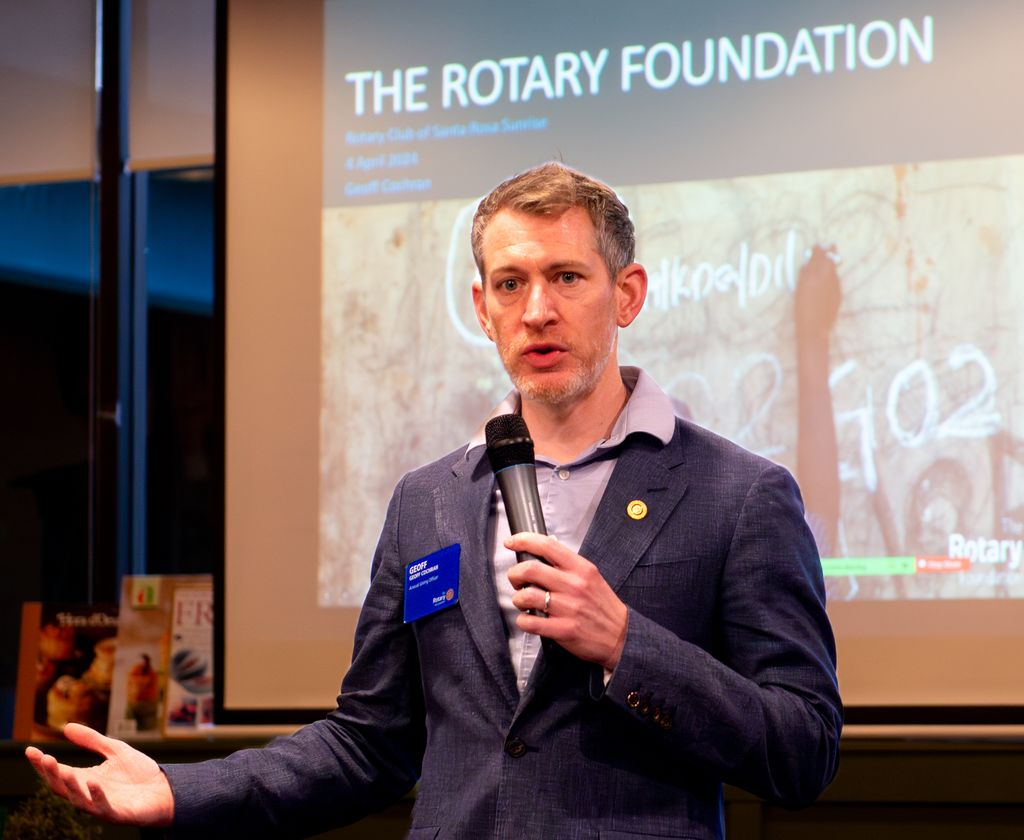
The Rotary Foundation, Presented by Giving Officer Geoff Cochran
On April 4, 2024, we were privileged to be visited by Geoff Cochran, one of 7 Annual Giving Officers for The Rotary Foundation’s (TRF), all the way from Evanston, Illinois. Geoff joined the Giving Officer team in 2019. Geoff gave us a summary of the status of TRF and its many charitable giving programs and most important current TRF projects. Geoff reached out to President Debra asking if she was interesting in having him as a speaker while he was here for a visit to the District’s Spring Training, telling Debra that he was specifically interested in seeing our club! Geoff tells us that the “Spirit of the Foundation” is alive and well in our club and he congratulated us on being a multiple Paul Harris Fellow and Every Rotarian Every Year club!
Geoff’s major focus as Giving Officer is on the Annual Fund. Geoff has worked with non-profits for two decades and has some amazing insights into TRF. Our Foundation is unique. TRF spends 90% of all donations on its charitable programs. This percentage is unheard of in charitable organizations, in which even the best managed funds typically spend 70-80% of donations on programs. The premier charitable organization rating organization, Charitable Navigator, has given TRF its highest rating every year for the last 15 years! TRF’s design is also unique in the charitable world: Nearly 50% of all donations to the Annual Fund are returned annually to the Rotary Districts after 3 years! The other 50% goes to TRF’s World Fund (our primary funding source for global grants). TRF’s 2023-2024 fundraising goals are impressive. The goal is for $500 million overall, split between the Annual Fund and Polio ($150 million each), the Endowment Fund ($140 million), and other ($60 million). The largest expected increase is for the Endowment Fund, for which TRF hopes to soon achieve its $2 billion goal.
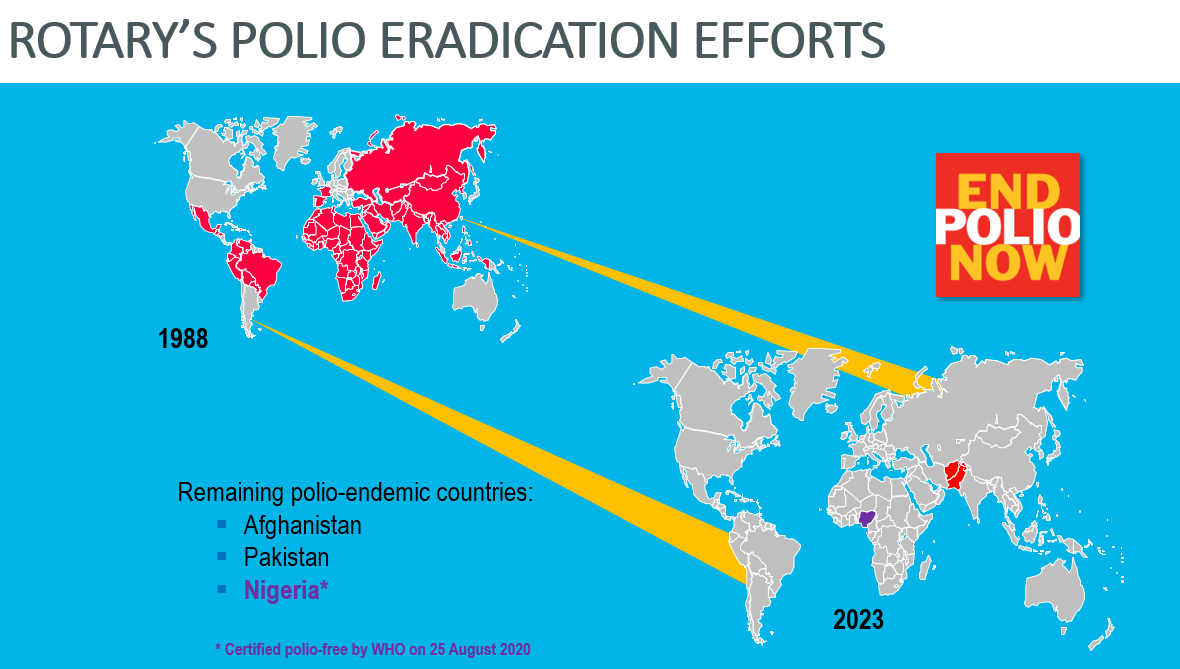
TRF’s flagship program is polio eradication. When we started the program in 1989 people laughed at us. Through our efforts and those of our close partners (primarily the Bill and Melinda Gates Foundation) we are on the brink of eradicating this horrible disease. So far this year there have only been 2 new polio cases in only 2 countries, Afghanistan and Pakistan!
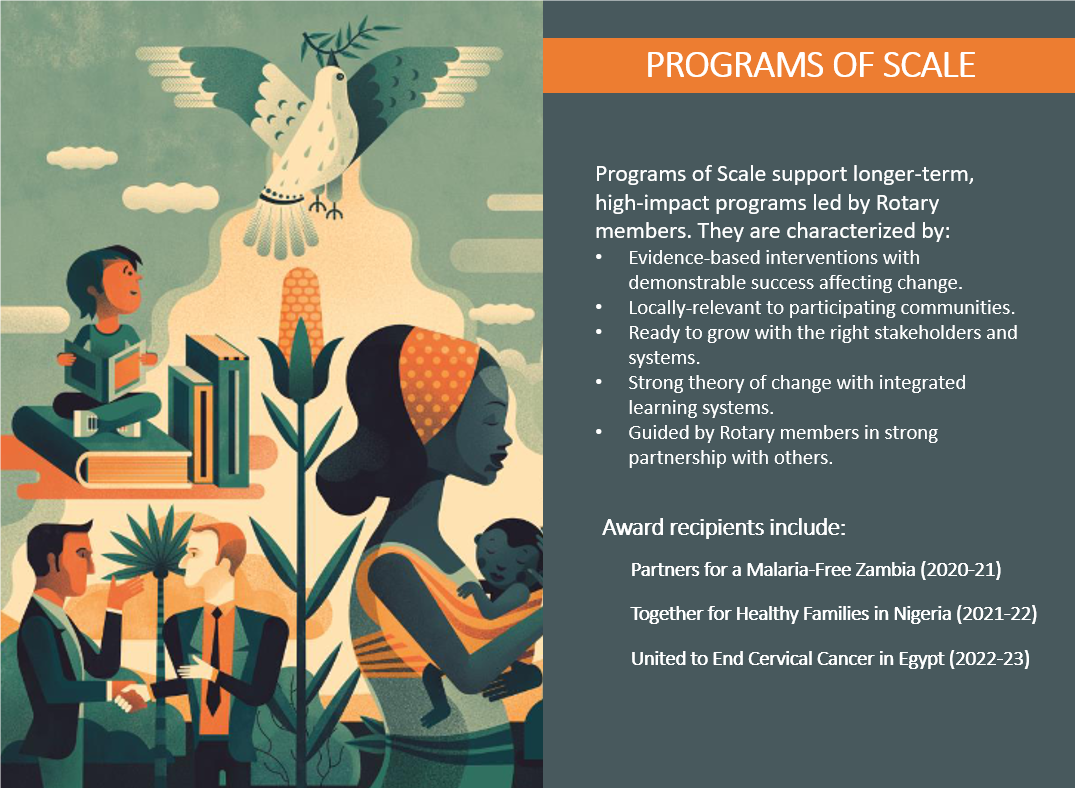
A new and innovative TRF project is the Programs of Scale. These are long-term, high-impact programs led by Rotarians. The first was Partners in Malaria-Free Zambia in 2020-2021, followed by Together for Healthy Families in Nigeria, and United to End Cervical Cancer in Egypt. A new program will expand the Zambia malaria project to incorporate 4 African countries.
The Rotary Foundation provides a number of incentives to help Rotarians donate. The Paul Harris Fellow awards Rotarians who donate a total of $1,000. Individual Rotarians can be credited with up to 9 Paul Harris Fellow awards. Major Donor awards are for lifetime donations of $10,000, $25,000, $50,000, and $100,000. The Arch Klump Society Award is for Rotarians who have donated $250,000. The Paul Harris Society Awards donors for making annual $1,000 donations. Clubs receive the Every Rotarian Every Year (EREY) award if each Rotarian in a club donates at least $25 in a year and the club’s per capita donations reach $100. Club members who give a minimum of $100 are sustaining members.
Geoff reminded us that becoming a donor is easy! Get online with Rotary.org, find “my Rotary”, sign in, click “donate”, and fill in the blanks. You can find your current donations and a donor history report under “My account.” It’s easy and painless. As Geoff noted, TRF loves major donors but the real engine for TRF is ordinary members donating $100 and $1,000.
Many thanks to Geoff for a clear, simple, integrated, and highly informative presentation about the Rotary Foundation. And remember; "Every Dollar Saves and Changes a Life"
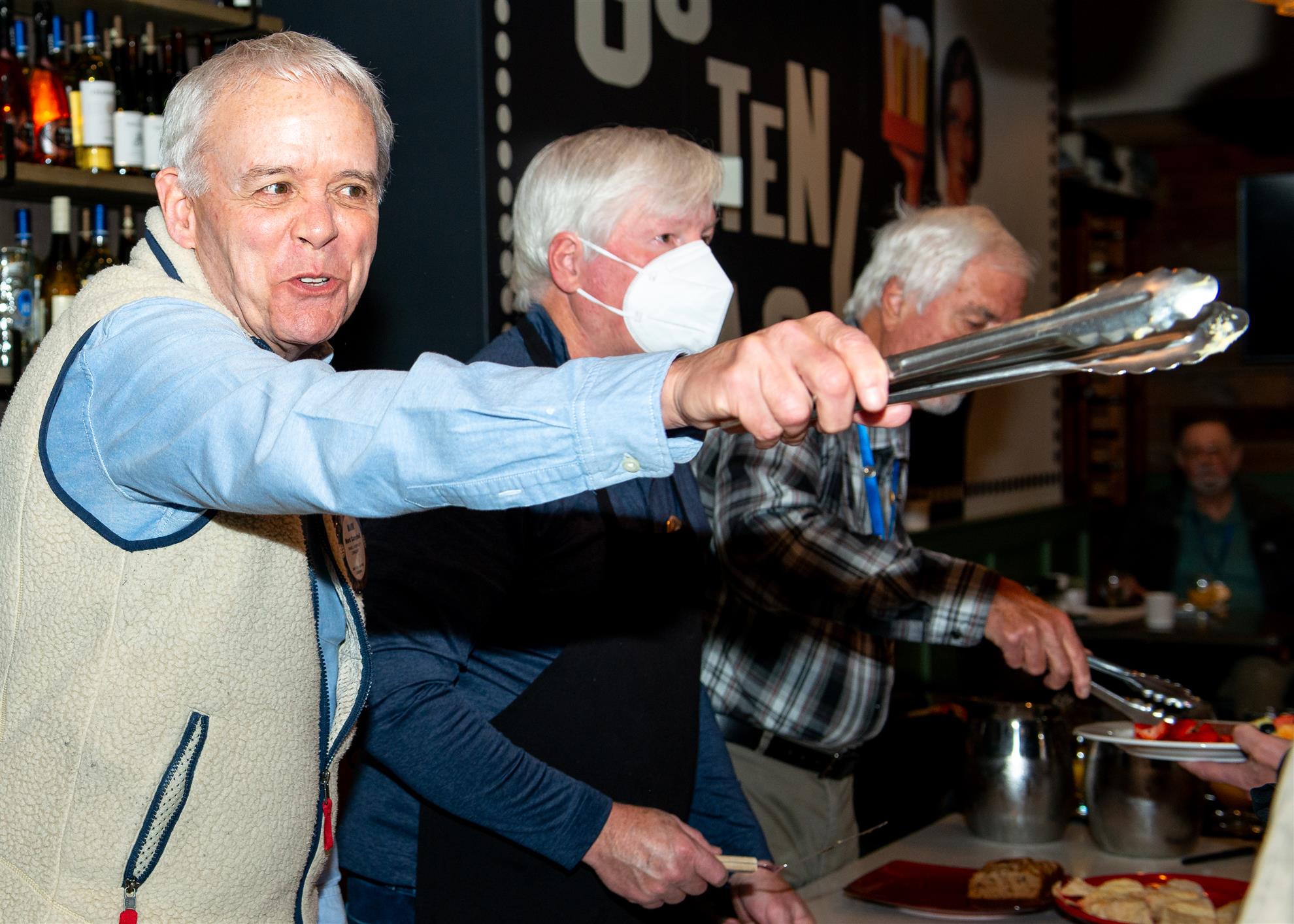
On a regular basis, our resident photo pro Warren Smith, submits pictures of what is going on at the weekly meetings. You can always find the most recent pictures at the websites photo journal called "Meeting Sighting" Please note that all the meeting photos for the entire Rotary year are at this location with the most recent on the last page.
Thanks for all the great pictures Warren!Link to Meeting Sightings. The most recent are on the last page!
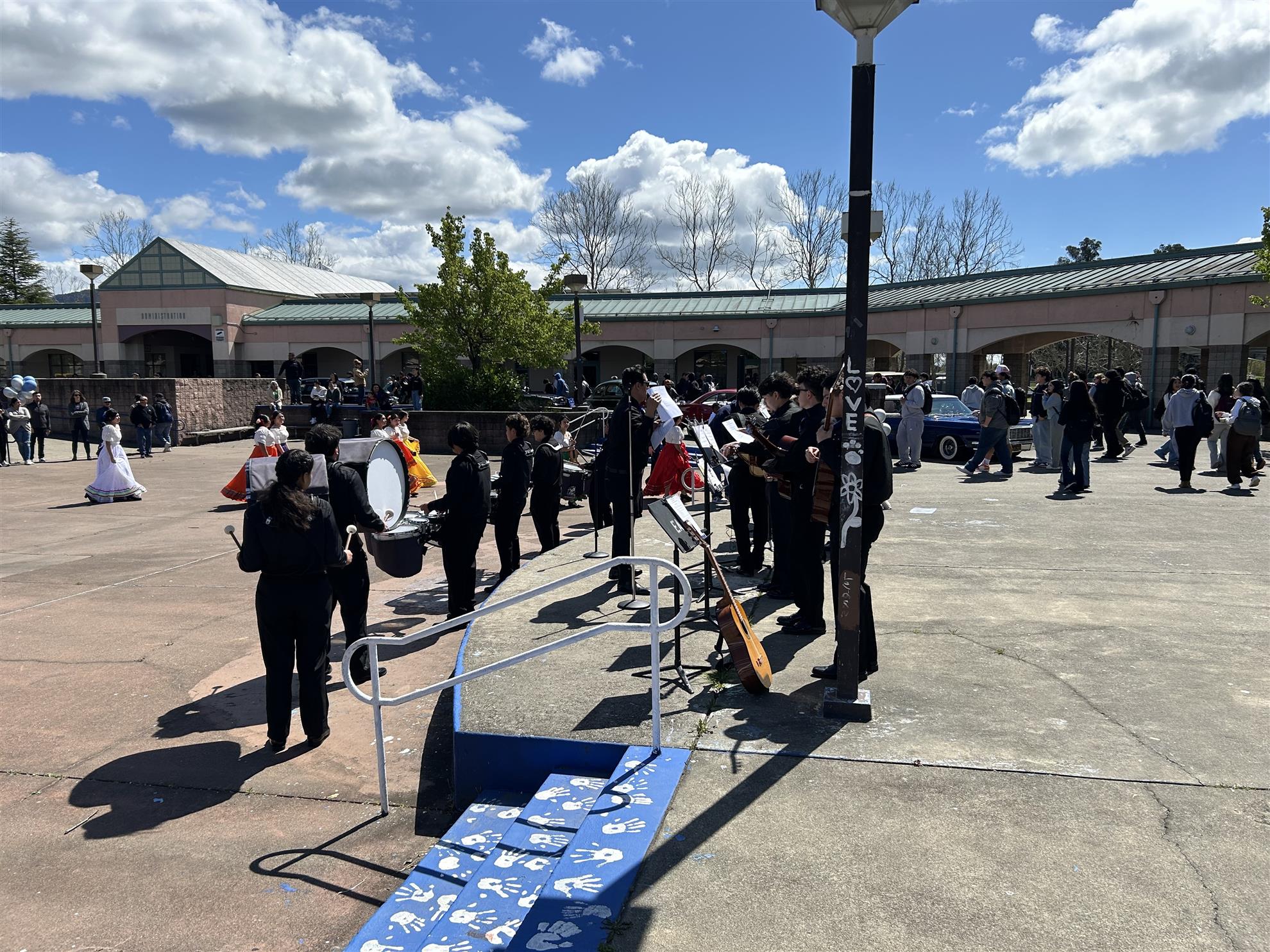
Note the handprints on the steps ~ signatures of a recent Senior Class.
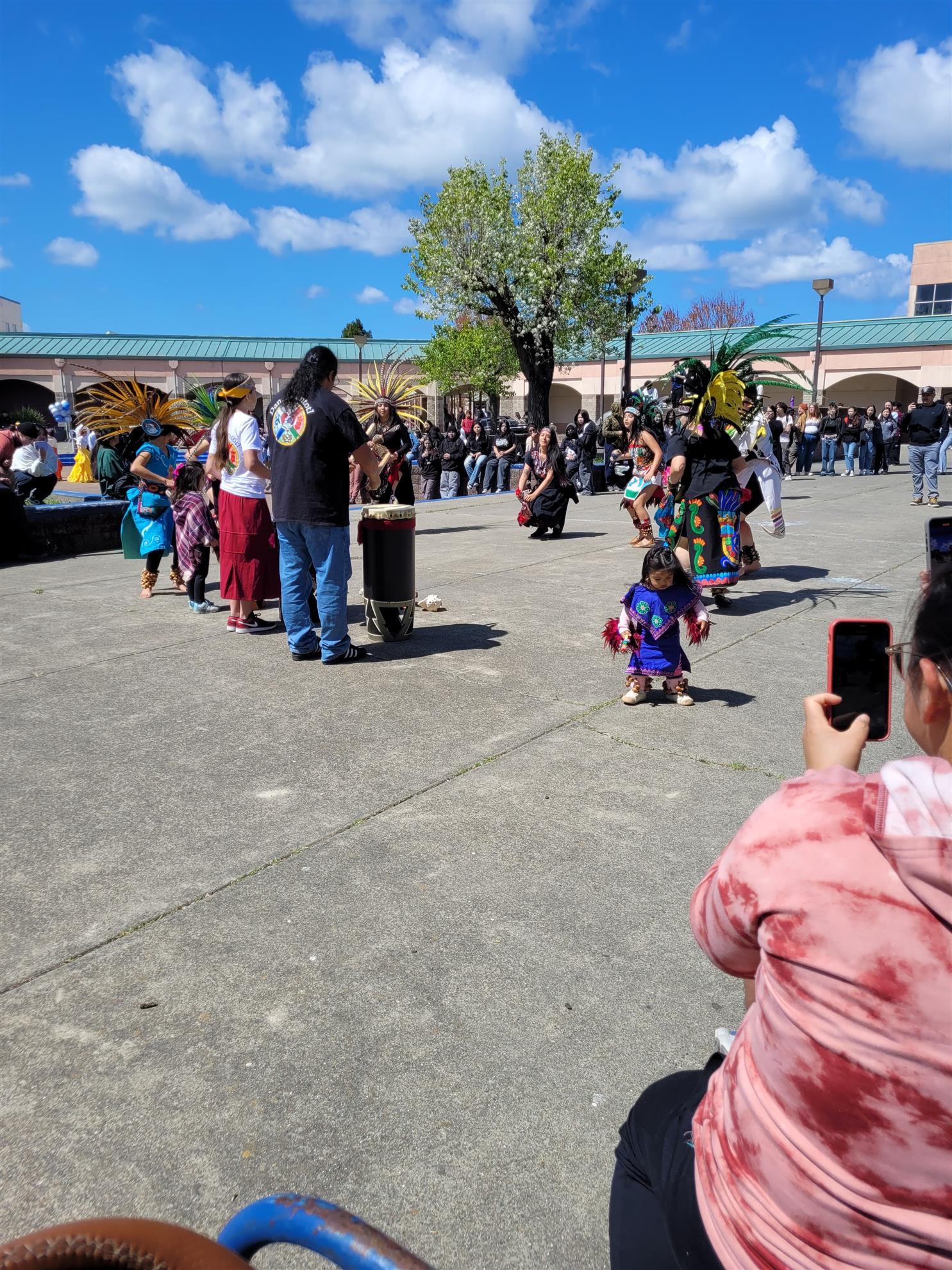
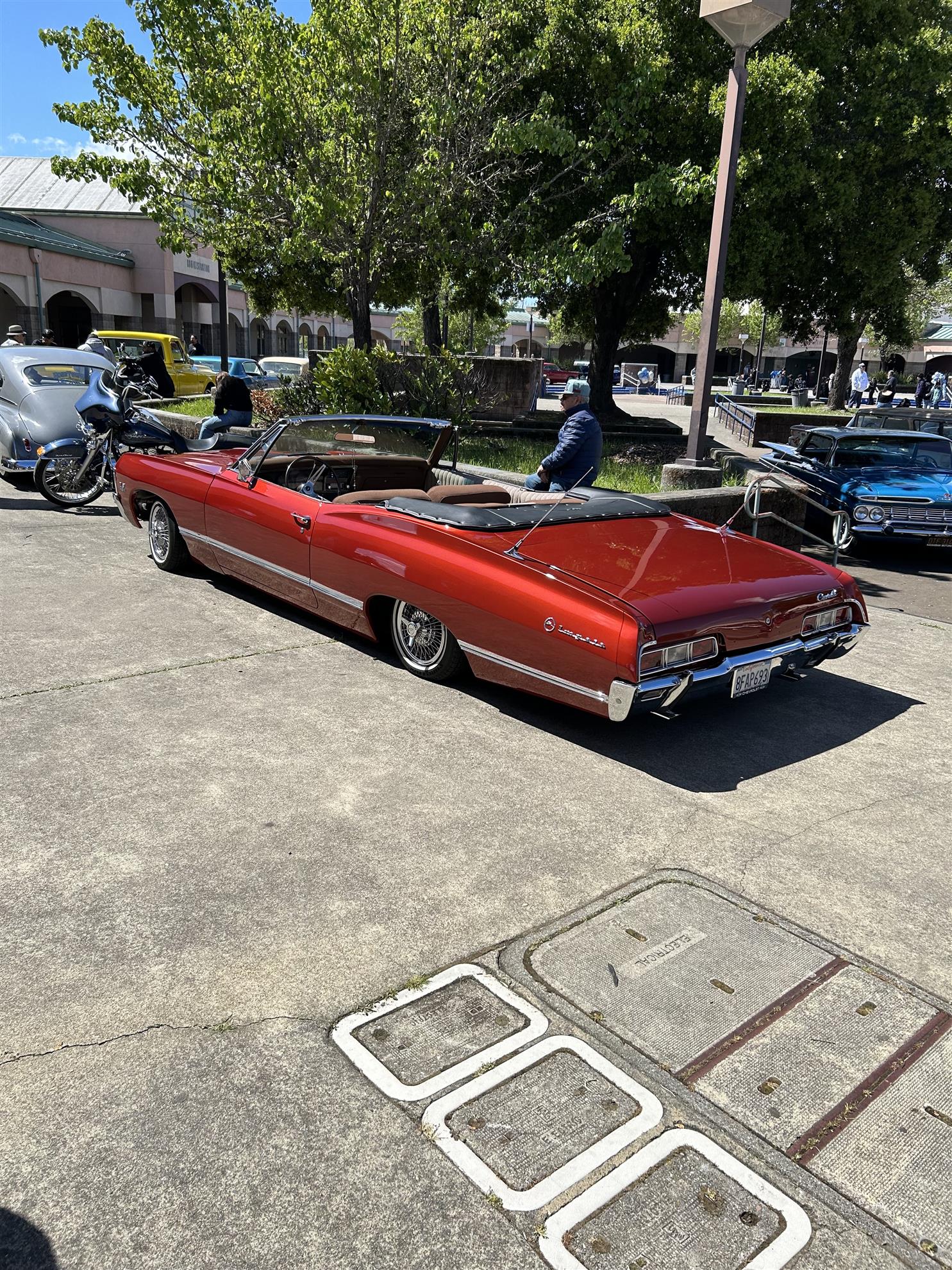
From 1940's restored Chevy's to flowing Ballet Folklorico with Mariachi music and heart pounding drum line percussion, Friday last was a blast of the past and window on today's talented student dancers and musicians.
Inspired by Assistant Principal Mr. Cunningham, the event featured Music Director Efrain Nava's Drum Line and newly organized Mariachi ensemble with Folklorico style dancers.
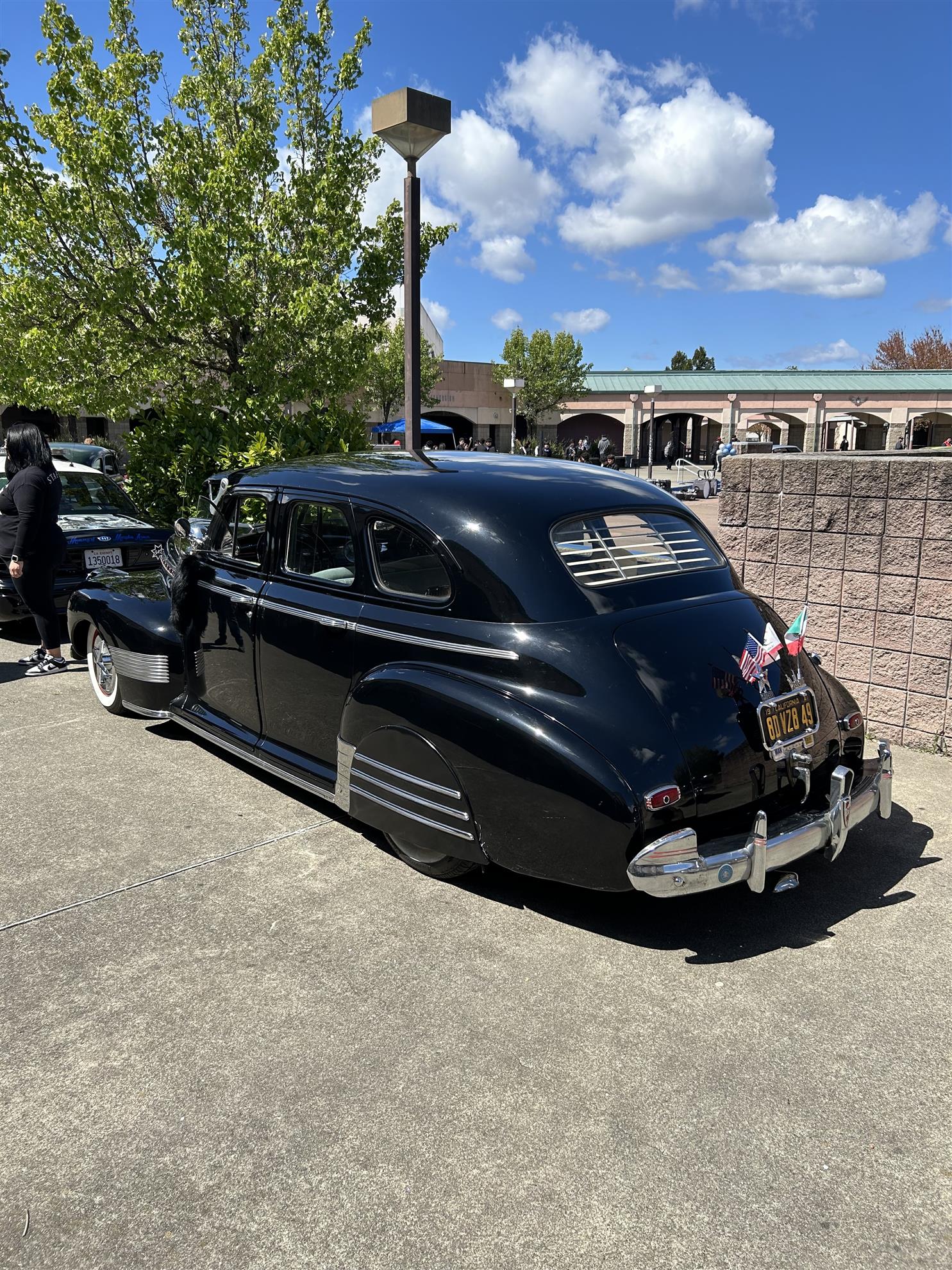
Can you find the skirt on this fine '49 beauty?
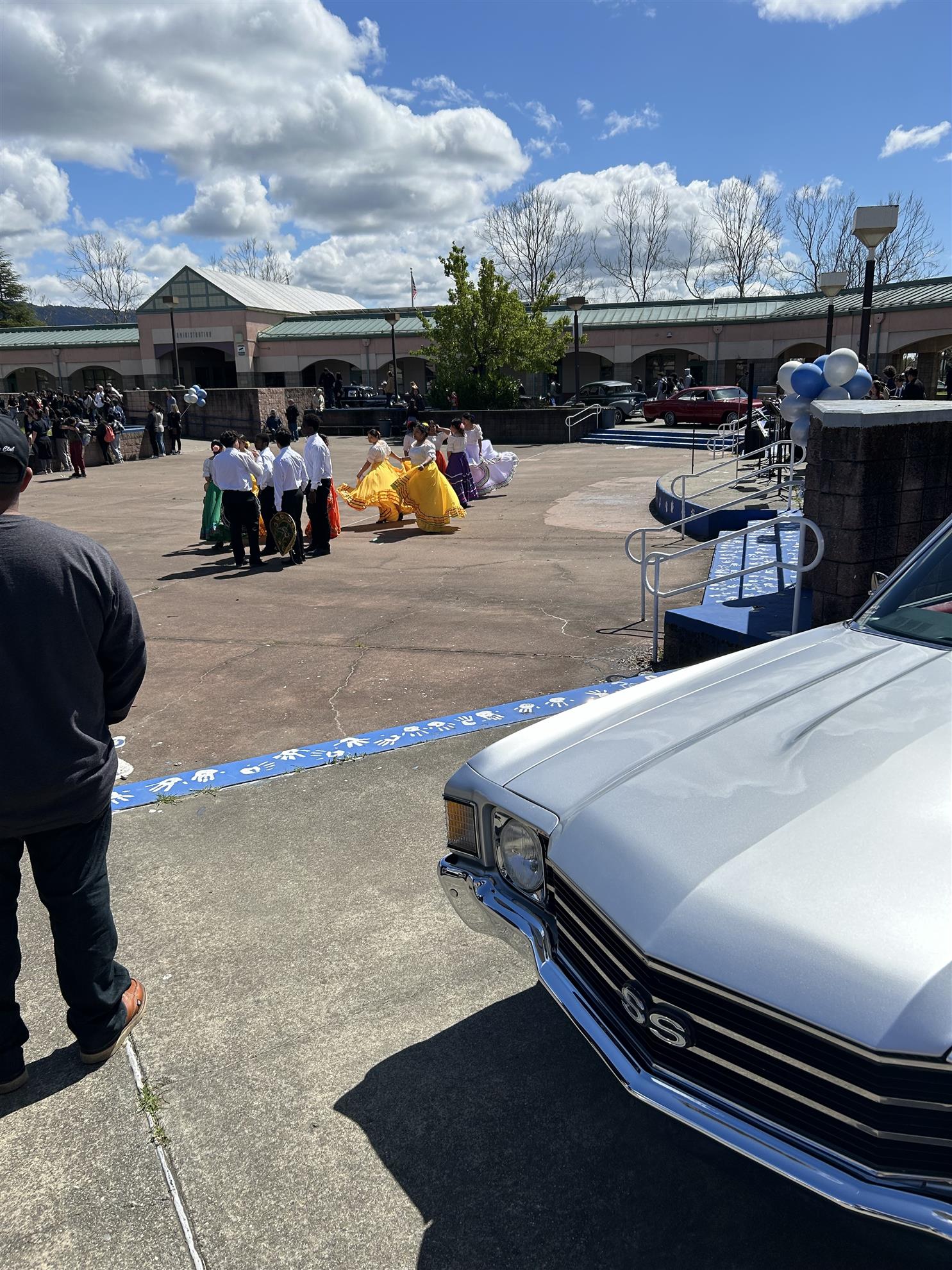
Students and a Super Sport lined the quad to hear and see the Folklorico dancers. Our SR Sunrise Rotary club members supported the students in obtaining their colorful costumes.
A Pomo herself, Elsie Allen's cultural heritage is kept alive in this dance. Known for her exquisite basket skill, Elsie brole tradition and permitted her creations to be studied and preserved rather than buried with her.
Well preserved, this early 60's Impala got much attention.
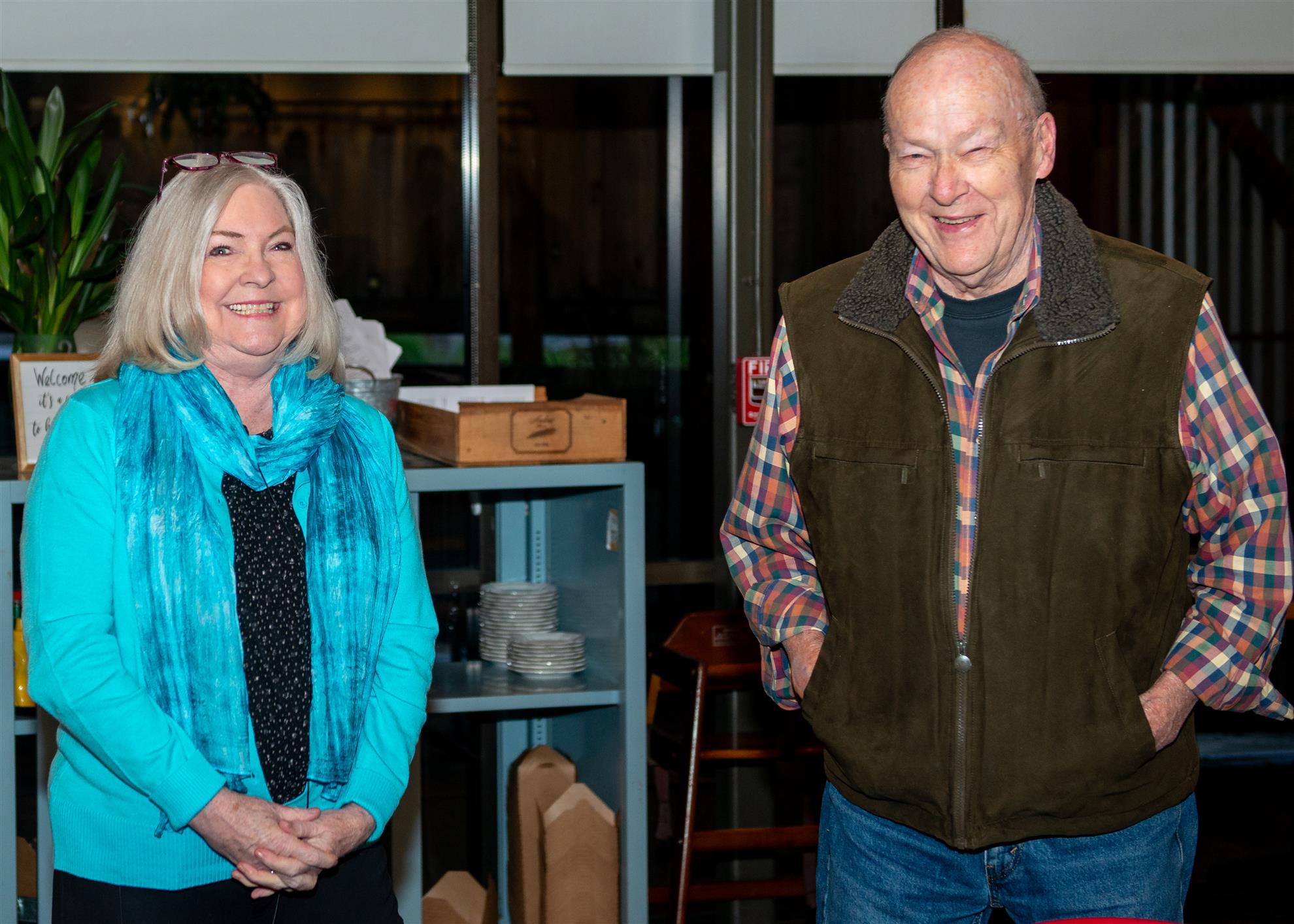
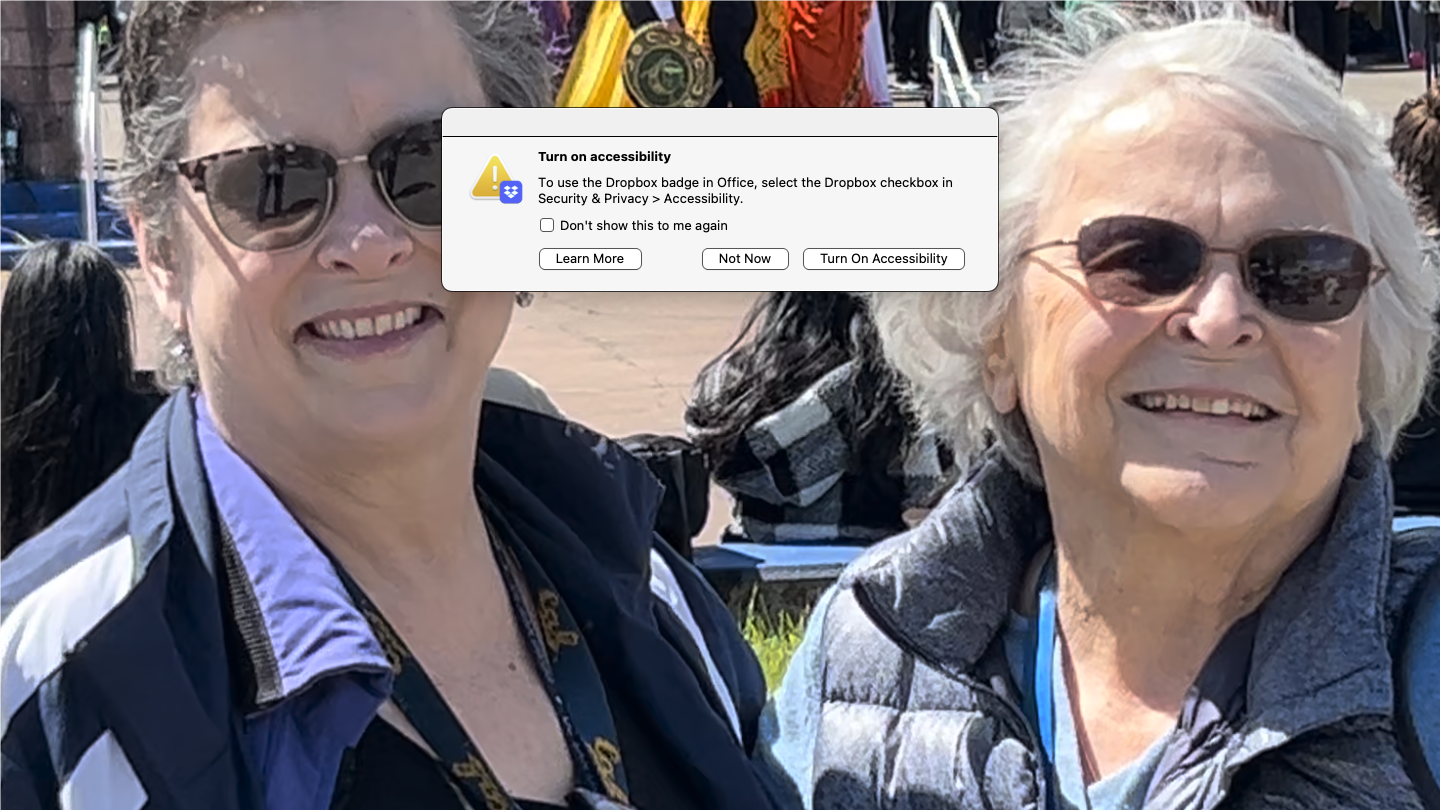
Kathy and Merle Hayes took in the sights and sounds with delight. A cold wind was blowing, but not dampening the spirits of all in attendance.
–
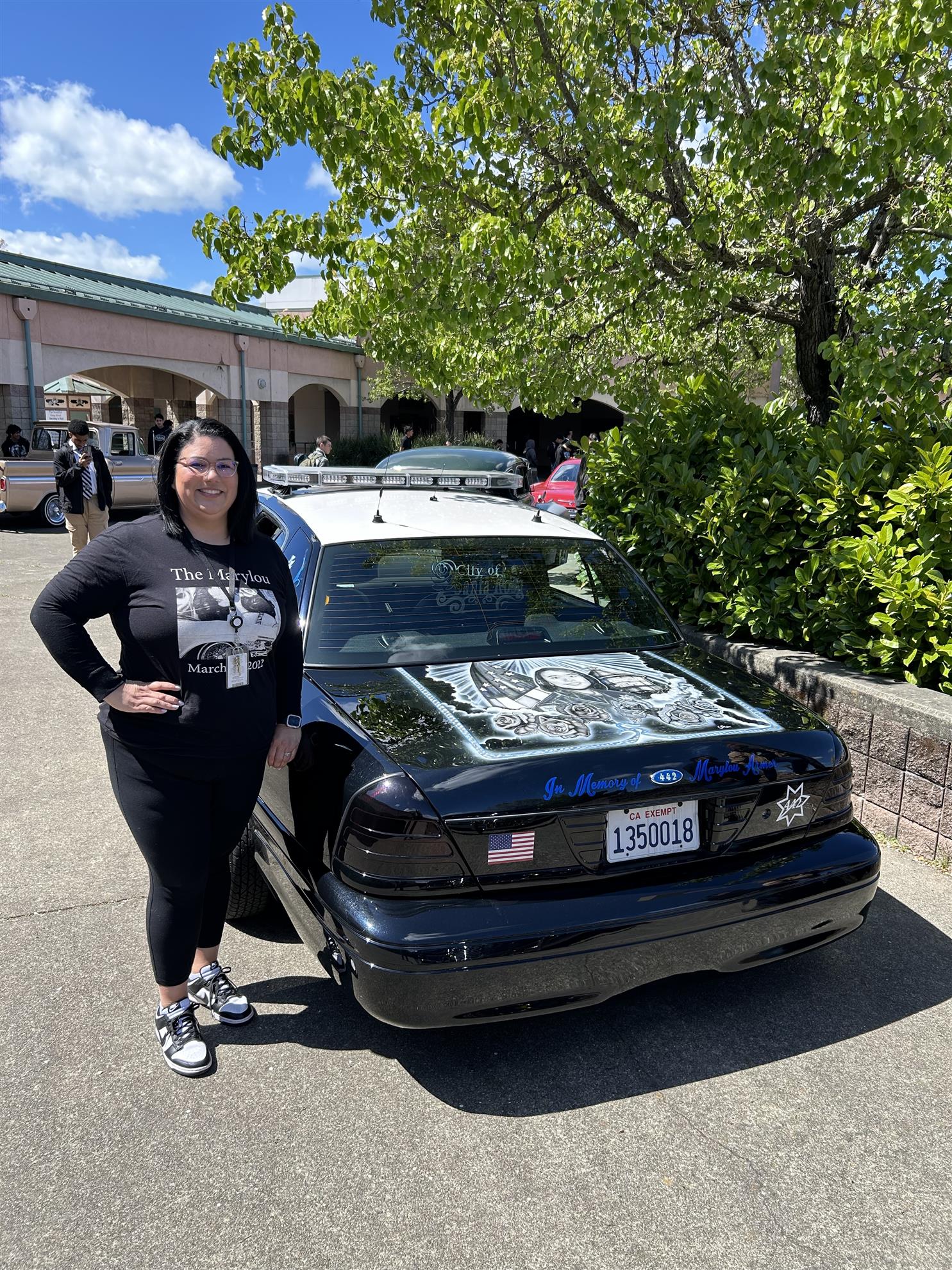
A very special entry, Santa Rosa Police Department's "Marylou" lowrider Mustang. In honor of Officer Marylou Armer, who died of COVID-19. Colleagues remember Marylou for her positivity and compassion in her work as a Detective in domestic violence cases.
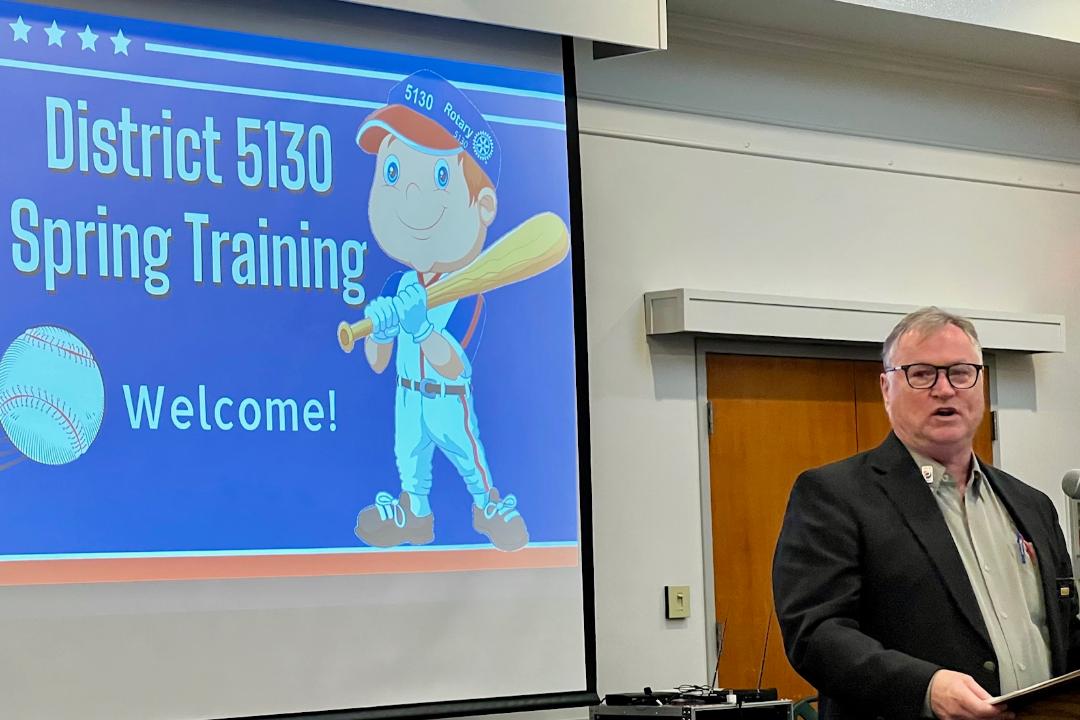
Opening Session, our District Governor Elect and emcee, Jim O'Grady.
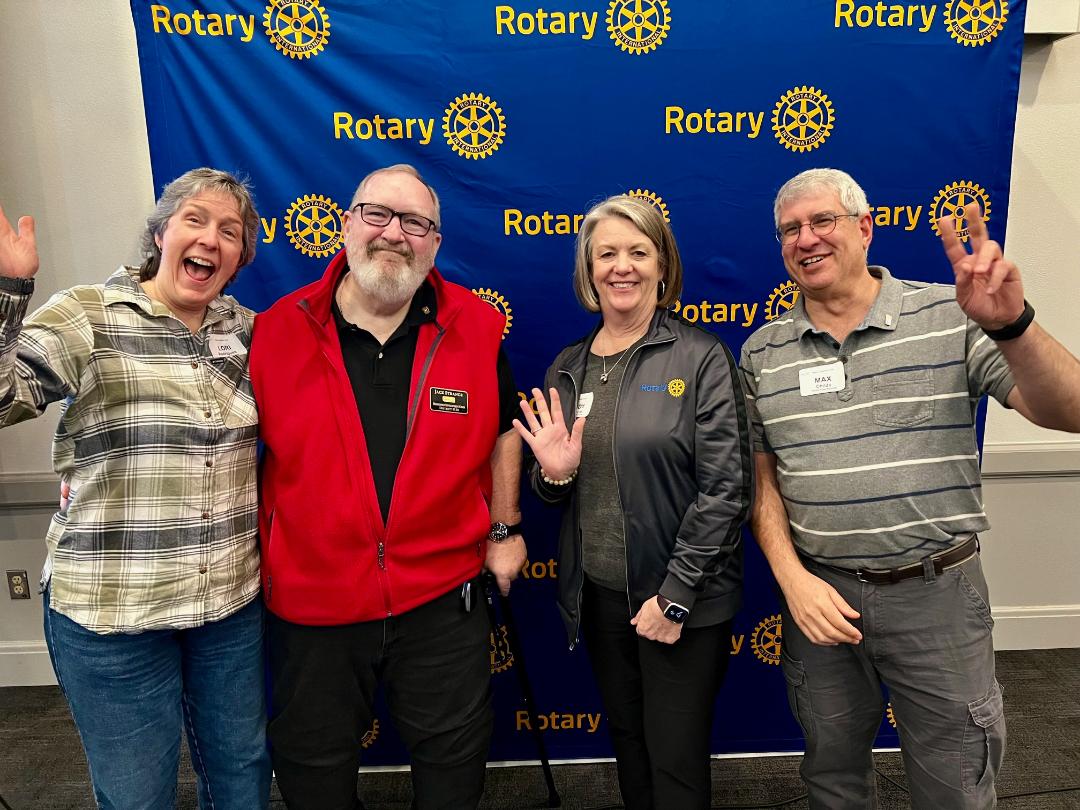
Representing Santa Rosa Sunrise, Lori Rodrigues, Jack Strange, Cindy Gillespie and Max Childs
Saturday, April 6th was a beautiful day in Ukiah and the Spring Training was well attended. Other than Foundation updates, there was a focus on mental health and Human Trafficking. A powerful message was given by Raine Howe, Rotarian and Executive Director of the Polly Klaas Foundation. Along with District Governor Nominee, Kristine Redko, she led one of the breakout sessions. There were thirteen other breakout sessions making for an informative and action packed day. Our very own Jack Strange led a successful session about membership.
I highly recommend attending a future District 5130 training assembly.
These are times that cry out for peace. The Middle East is in its most volatile condition in years. The war in Ukraine is the largest in Europe since World War II, and there are armed conflicts in Sudan and parts of Central Africa. Nearly every continent is experiencing a major armed conflict.
Rotary has a vital role to play in advancing the cause of peace — I often say Rotary needs to work toward peace as aggressively as those who wish to wage war. It’s the spirit found in our vision statement: “Together, we see a world where people unite and take action to create lasting change — across the globe, in our communities, and in ourselves.” We must never lose track of that last call — that to bring about change in the world, we need to foster change within.
It is up to us to model peacebuilding behavior among each other. We can do better than questioning the motives of one another and jumping to the harshest possible explanation. After hearing words that might strain or offend us, we have an opportunity to ask, with compassion and curiosity, the intent of those offending words. And then we have another opportunity to repair the breach.
If we wish to be a beacon to the world, let us start by being so to one another. Let’s help each other find greater understanding and productive alternatives to words that cause hurt and distrust. And let’s stick to our principles, but never doubt the sincerity of each other to end conflicts, not inflame them.
I’m reminded of a speech that U.S. Senator Robert Kennedy made on 4 April 1968, that dreadful day when the Rev. Martin Luther King Jr. was assassinated. Kennedy was in Indianapolis speaking to an audience in a predominantly African American neighborhood where people had yet to learn that Dr. King had been killed.
He shared the terrible news. He honored Dr. King for all he had done for the cause of justice and peace. And then he connected with the fuming, grieving crowd by saying: “For those of you who are Black and are tempted to be filled with hatred and distrust at the injustice of such an act, against all white people, I can only say that I feel in my own heart the same kind of feeling. I had a member of my family killed.” It was the first time he had spoken publicly about President John F. Kennedy’s assassination. And while many American cities exploded in violence that night, Indianapolis did not.
It is in times of crisis and despair that we need empathy most of all. Empathy is the most powerful tool of peace, and it is vital if we are to take the first brave, humble steps to Create Hope in the World.
For many, the Bahamas is a place to escape colder climes, relax on white-sand beaches, and snorkel in clear, turquoise waters. For me, it’s home. I grew up sailing on these waters and to this day, anytime I can, I am out on the water with family and friends. It’s where my heart is.
The environmental threats my country is facing are real. Our coral reefs, vital for biodiversity, are in danger due to warming seas and pollution. Hurricanes and tropical storms seem to get more intense with each passing year. Rising sea levels pose an existential threat to the Bahamas, eroding our beautiful coastlines as saltwater intrudes on our precious and limited freshwater resources.
Late last year, I was fortunate to represent Rotary at COP28, the United Nations climate change convention in Dubai, United Arab Emirates. The consensus coming out of the meeting was that progress on addressing climate change has been too slow. Participants said the world needs to pick up the pace to reduce greenhouse gas emissions, help communities become more resilient to climate change, and better support countries that are most vulnerable to it.
Rotary can be part of the solution.
As you know, protecting the environment is one of Rotary’s areas of focus. Many clubs are active in their communities with projects such as beach and roadside cleanups. With The Rotary Foundation, you can increase your impact by pooling resources with clubs and districts around the world. Foundation grants let you put the generous contributions of your fellow Rotary members to work to make the world better.
Imagine the possibilities. Perhaps Rotary districts in Canada and Australia could protect wetlands in New South Wales in Australia. Rotary leaders from Brazil, India, and Taiwan could lead grant projects to train farmers in the Indian state of Andhra Pradesh in sustainable agriculture. Rotary and Rotaract clubs from the Bahamas, South Africa, and New York could work with their districts to help my country restore its natural resources, one reef or mangrove at a time.
The problems our environment faces seem overwhelming until you realize that many are fixable. There are so many ways to help through Rotary. Even if we don’t lead a grant or volunteer on the project, we can all help protect the environment through our giving to the Foundation.
Rotary can’t save the planet all by itself. But as our progress in ending polio proves, Rotary’s impact is great when we put our vision for a better world in motion, and just get started.
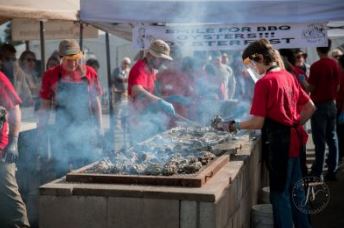
OysterFest has been a calendar highlight of the Pacific Northwest’s fishing industry for more than four decades. The two-day festival is hosted by the Rotary Club of Shelton Skookum, Washington. Last year’s event, held in October, attracted 13,000 seafood enthusiasts and raised $170,000 for community organizations. Seasoned seafarers and landlubbers alike got in some serious shelling, as the victor in a speed-shucking competition opened 24 oysters in 73 seconds. The champion in the half-shell — a separate challenge that also accounts for presentation, with penalties for errant cuts — clocked in at an adjusted time of 2 minutes and 10 seconds. “It is quite an event with the crowd cheering on their favorite to win,” says Laurie Brown, the club’s president-nominee. “Anyone can sign up, but most of the shuckers come from the various shellfish farms or restaurants.”
Suriname
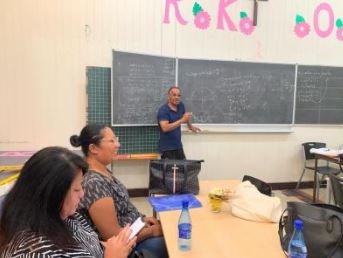
Passing rates on secondary school entrance exams that have dipped as low as 50 percent have vexed officials in Suriname. The Rotary Club of Paramaribo Residence, whose members include several teachers or retired educators, is aiming to improve those results and reduce dropout rates. In October, the club instituted a mathematics training project for around two dozen teachers at schools serving older children. The program includes courses on topics such as set theory, equations, functions, plane geometry, and trigonometry. “You have to use mathematics at every level of your life, and statistics show that in Suriname kids have low grades” in the subject, says club member Yvonne Mohabir. A retired school dean and Rotarian, Ewald Levens, leads the sessions, which are funded with the support of the Dutch Association of Mathematics Teachers.
This story originally appeared in the April 2024 issue of Rotary magazine.
Rotary projects make a difference in communities around the world.

.png)





.png)

 –
–



 OysterFest has been a calendar highlight of the Pacific Northwest’s fishing industry for more than four decades. The two-day festival is hosted by the Rotary Club of Shelton Skookum, Washington. Last year’s event, held in October, attracted 13,000 seafood enthusiasts and raised $170,000 for community organizations. Seasoned seafarers and landlubbers alike got in some serious shelling, as the victor in a speed-shucking competition opened 24 oysters in 73 seconds. The champion in the half-shell — a separate challenge that also accounts for presentation, with penalties for errant cuts — clocked in at an adjusted time of 2 minutes and 10 seconds. “It is quite an event with the crowd cheering on their favorite to win,” says Laurie Brown, the club’s president-nominee. “Anyone can sign up, but most of the shuckers come from the various shellfish farms or restaurants.”
 Passing rates on secondary school entrance exams that have dipped as low as 50 percent have vexed officials in Suriname. The Rotary Club of Paramaribo Residence, whose members include several teachers or retired educators, is aiming to improve those results and reduce dropout rates. In October, the club instituted a mathematics training project for around two dozen teachers at schools serving older children. The program includes courses on topics such as set theory, equations, functions, plane geometry, and trigonometry. “You have to use mathematics at every level of your life, and statistics show that in Suriname kids have low grades” in the subject, says club member Yvonne Mohabir. A retired school dean and Rotarian, Ewald Levens, leads the sessions, which are funded with the support of the Dutch Association of Mathematics Teachers.