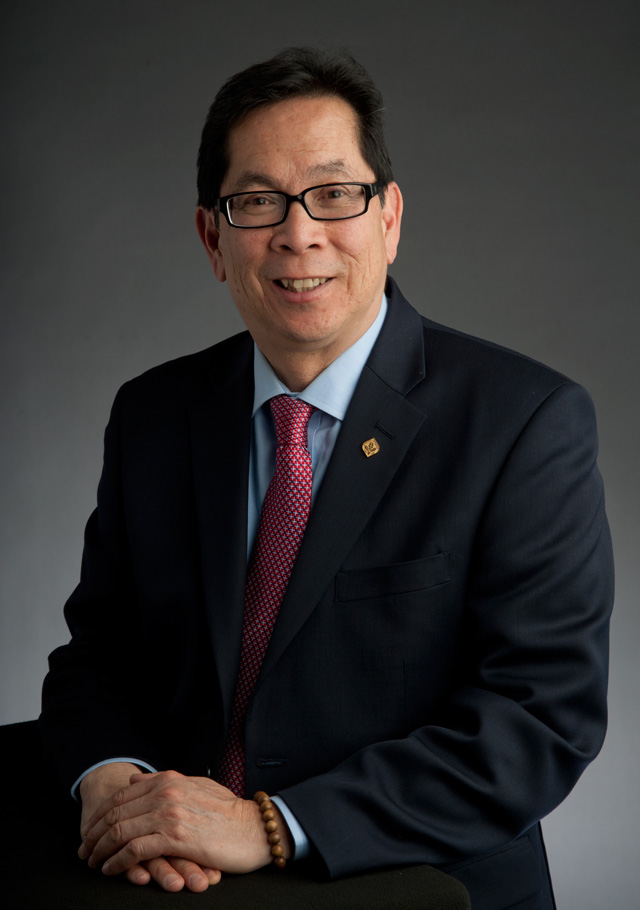
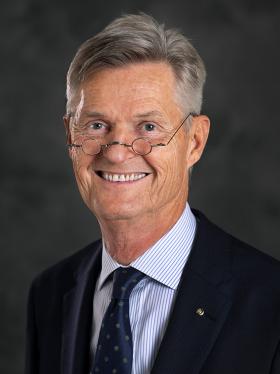
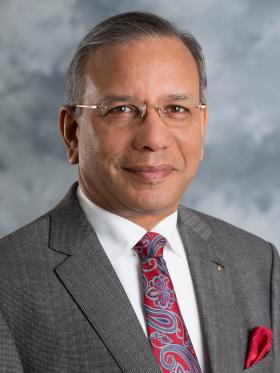
Dr. Chong will give an overview of enrolment trends and capital projects at SRJC.
Dr. Frank Chong is Superintendent/President of Santa Rosa Junior College (SRJC). Under his leadership, Measure H, the $410 million bond to support SRJC technology and facilities, passed in 2014 and in 2015, SRJC received full accreditation. Dr. Chong was Deputy Assistant Secretary for Community Colleges at the US Department of Education in Washington, D.C. under Secretary Arne Duncan. He has served as President of Laney College (Oakland) and Mission College (Santa Clara), and as Special Assistant to Willie Brown, Speaker of the California Assembly.
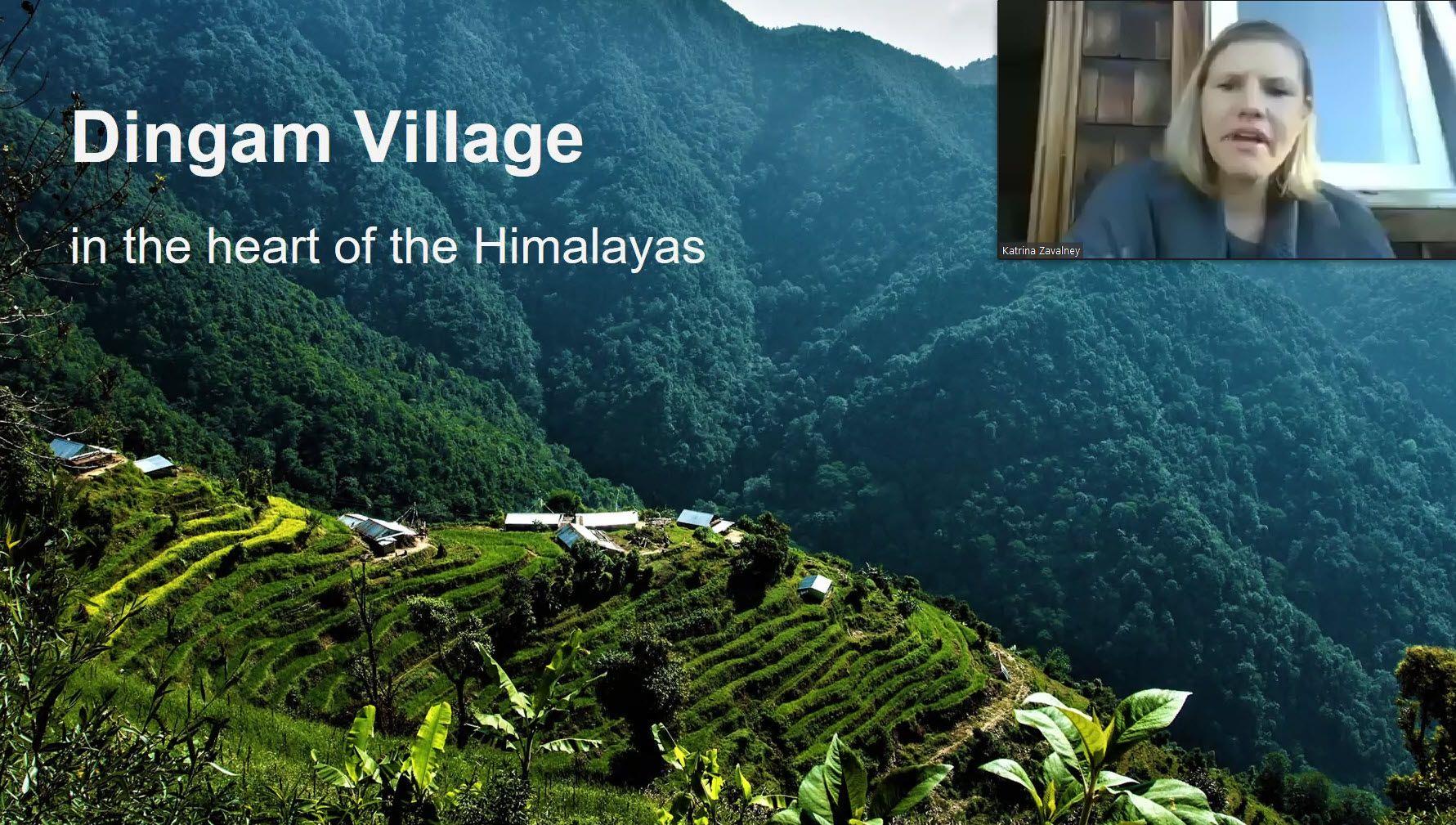
The speaker for our meeting on September 3, 2020 was Katrina Zavalney, a member of the Santa Rosa East Club. Katrina’s topic was her Rotary Grant Project in Nepal. Katrina has a master’s degree in Organizational Development and is the founder and Executive Director of Aranya Solutions. “Aranya” means “abundant forest” in Sanskrit. One of Aranaya’s recent projects is the revitalization of a trio of villages in Nepal. These villages, Dingam, Chipling and Thakani, are in the heart of the Himalayas and are covered in snow for half of the year. They do not cultivate enough food to support themselves. Villagers take jobs out of the area. The people are under-educated and there is a high incidence of alcoholism and gambling.
The project’s goals are to help develop resiliency and self-sufficiency. Aranya works cooperatively on the project with a global entity based in Nepal, the Institute of Cultural Affairs. Dingam was the original subject of the project but they learned that cooperation among the three villages would be a necessity. Each village is at least a 1 ½ days walk from the other. After putting local people together to work on planning and the development of projects, they decided to focus on the shitake mushroom industry. This is a high nutrition – high value crop. They also concluded that weaving was a traditional skill that could be resurrected. One element of economic development is the rule that 10% of all sales of these products goes to the three-village cooperative. Another key focus of Aranya on this project is women’s empowerment and education. Many of the key organizers and developers are women. Aranya also works to develop financial literacy, leadership skills, organizational capacity, and action planning among the locals.
The next step for these villages is the development of a community center, with offices and gathering places. The center will be built in one of these villages using some traditional, and some new, methods. Sandbags will be at the core of the structure, with local bamboo, clay, and rice straw for the walls. The building must be earthquake proof! Other important future projects will be the development of a health center and road improvements.
Aranya has worked on this project with the assistance of the Rotary International Global Grant program. RI provides key insights, including support with best practices, partnership and project management, budgeting, financial reporting, and oversight. The project earned a $35,000 Global Grant from RI and is working on another grant in the coming year. The total funding goal is $100,000 for the next two years.
Katrina, this is an amazing project and your work is going to improve people’s lives for years to come. Thank you for that work and thank you for speaking with us last Thursday. You are amazing!
On a regular basis, our resident photo pro Warren Smith, submits pictures of what is going on at the weekly meetings. You can always find the most recent pictures at the websites photo journal called "Meeting Sighting" Please note that all the meeting photos for the entire Rotary year are at this location with the most recent on the last page.
Thanks for all the great pictures Warren!Link to Meeting Sightings. The most recent are on the last page!
Early one morning, a husband and wife were making breakfast together. the man was making an omelet and beating the eggs with a fork. The woman said to her husband, "Don't forget to add salt to the eggs, dear." The man replied, "But I'm already assaulting the egg!"
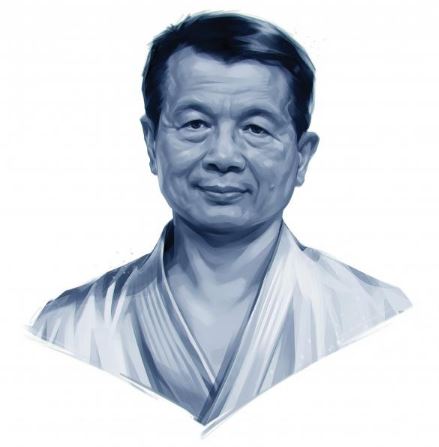
In a glass-enclosed dojo in the northern Thai city of Chiang Mai, Sombat Tapanya teaches children the principles of peace through aikido. Tapanya, a psychologist who has specialized in childhood trauma, has put to use insights he gained as a Rotary Peace Fellow at Chulalongkorn University in Bangkok in 2016.
Throughout his academic career, Tapanya focused on anti-bullying efforts, violence prevention, and helping people who were abused as children improve their parenting skills. Now retired from Chiang Mai University, where he taught behavioral science to medical students, he runs a small nonprofit, the Peace Culture Foundation, which promotes peace in the community.
He also continues his work with local government agencies and global organizations, most recently with UNICEF Thailand and the University of Oxford as a principal investigator on a project to teach better parenting skills. And he has worked on the Mekong Project, which trains therapists from throughout Southeast Asia in how to effectively treat the lifelong effects of childhood trauma.
THE ROTARIAN: What is the idea behind the Peace Culture Foundation?
TAPANYA: If we create a culture within the family and in schools that says using violence against others is OK, that leads to abuse. It would be more beneficial to create a culture of peace, where you treat others with respect, kindness, and empathy, as opposed to being No. 1 at the expense of others. That’s something we feel we need to instill in children. Aikido is part of that.
TR: How can a martial art teach peace?
TAPANYA: Aikido is a physical manifestation of the principles of respect, kindness, compassion, and being in harmony with others. The movement of aikido is all about blending, not clashing, opposing, or struggling. There is no competition; it’s about maintaining your center and balance, and we emphasize the spirit of loving protection. You don’t teach students to punch or kick; you teach them how to deflect and control and manage aggression without the intention to harm. We can use that metaphor in daily interaction: knowing when to stop before you hurt someone but to be assertive at the same time, not allowing people to step all over you. Being assertive, but not aggressive.
You teach them how to deflect and control and manage aggression without the intention to harm.
— Sombat Tapanya
TR: When did you discover aikido?
TAPANYA: I started studying aikido in my late 20s in Connecticut, where I was in graduate school. Before that I did Thai boxing and judo. But when I hit another guy, I feel the pain, so I didn’t enjoy boxing. And judo was really competitive. When you lose, you feel sorry for yourself, and when you win, you feel sorry for the other guy. I’m not a very competitive person, so when I found aikido, I liked it right away.
TR: What can we learn from your recent work on bullying prevention?
TAPANYA: In collaboration with the Thai Ministry of Education and the Rak Thai Foundation, the Peace Culture Foundation did a national survey on school bullying. The preliminary results are very similar to what I found 10 years ago, which is that 40 percent of Thai kids are bullied on a regular basis. The most frequent form of bullying is verbal. That can be very hurtful if repeated, and it usually comes with peer rejection. If it becomes prevalent and part of the school culture, it creates a culture of disrespect.
That’s why it’s important to promote a respectful culture. The Peace Culture Foundation is developing a program called Cultivating Peace Culture in School. It will be a three-year project in a small elementary school near my dojo. Teachers and parents will learn about positive discipline and bullying prevention, and we will start an aikido club at the school.
— ANNE STEIN
• Illustration by Viktor Miller Gausa
• This story originally appeared in the August 2020 issue of The Rotarian magazine.
Rotary youth exchange — one of the many programs for youths and young adults that we celebrate this month — was my path into true engagement in Rotary. My wife, Susanne, and I began hosting exchange students soon after I joined, and the experience helped me go from simply being a member of my Rotary club to being a true Rotarian. Now Rotary Youth Exchange is a family tradition, and a strong one: Over the past 24 years, we have hosted 43 students!
From the start, we loved it so much that, in addition to hosting students in our home, we became involved with the program by helping to organize student summer camps. During one such camp, I met Christine Lichtin, who was a German high school student at the time and whose father is a past president of my Rotary club. To try something new during this year of embracing change, I am turning this space, normally reserved for the president of Rotary, over to Christine so she can share her story.
My first contact with Rotaract was about 13 years ago, when I was with Susanne and Holger at a barbecue for the summer youth camp. Holger turned to me and said: "Why don't you visit a Rotaract club? You'll meet a lot of great young people who come together to have fun and to make a difference."
A few years later, when I was at Trier University, his words came back to me and I decided to give it a try. That was more than eight years ago, and I'm still at it. Once you are in Rotaract, you just don't want to get out. Rotaract has accompanied me everywhere, starting with the Trier club and then on to a club in Bologna, Italy, during the year I studied there. When I was in Kiel for my master's degree, I got involved with Rotaract there before landing at the Rotaract Club of Hamburg-Alstertal as I began my career. Each of those clubs has its own identity and focus, but all have the same intrinsic motivation.
I am now taking on a senior advisory role in my Rotaract club, which I really enjoy. I carry Rotaract in my heart, and it shapes my values, even as my interests evolve. One day, as if she had sensed this evolution, Susanne knocked on my door, wanting to introduce me to a young, modern Rotary club located between Hamburg and Mölln, my hometown. The E-Club of Hamburg-Connect, which Susanne helped charter, holds e-meetings, all of them very relaxed and personal. With members of different ages, everything just seemed to fit, so I thought, why not try it out? After all, time is precious and should be filled with fun whenever possible; the rest happens by itself.
Now I am in both worlds — a proud member of Rotaract and a Rotarian. And my small personal goal is to build a bridge between these two parallel worlds. All of us have very similar reasons for being part of the Rotary family.
It took some persistence to persuade Christine to become a member of Rotary, but it was well worth the effort. It is our duty to put in this kind of effort with youth program participants and Rotaractors so we can keep them in the family of Rotary. I hope you were inspired by her story. It's up to each of us to ensure that more young people like Christine can experience the many ways Rotary Opens Opportunities for us and for the people we serve.
In late 1914, Europe was divided by hundreds of miles of trenches. British and French forces on one side were within shouting distance of German troops on the other. The pope made a plea for a Christmas truce, but the shooting continued.
Then, on Christmas Eve, soldiers from behind British lines heard an unexpected sound — not gunfire, but singing. Next, they heard a single voice shout out, "English soldier, merry Christmas!" followed by "English soldier, come out to join us!"
Both sides cautiously emerged over the parapet into the no man's land between the trenches. Before long, the soldiers realized that it was a real truce. They fraternized, singing Christmas carols, exchanging souvenirs and whiskey, and even taking up a friendly soccer match.
The cease-fire continued only two days before the troops returned to their trenches, resuming bloodshed for nearly four long years. But the story of the Christmas truce reminds us that peace is possible, if we choose to accept it. If peace can last a few days, could it not also last months or years? And how do we prevent conflict in the first place?
In his Nobel Peace Prize lecture in 1964, American civil rights leader Martin Luther King Jr. said, "We must concentrate not merely on the negative expulsion of war, but on the positive affirmation of peace."
With Positive Peace, our society's structures, policies, and everyday attitudes and actions promote justice at all levels, sustaining a peaceful coexistence. It's an answer to the calls for justice and peace we have heard on the streets in protests from Minneapolis to Paris this year.
Positive Peace, studied at our Rotary Peace Centers around the world, is not just an academic idea for the Rotary Peace Fellows. Through Rotary's partnership with the Institute for Economics and Peace, the Rotary Positive Peace Academy offers free training to every Rotary member on how to wage Positive Peace in every project we do at the grassroots level, including Foundation grants.
Positive Peace resonates at all levels of The Rotary Foundation. Our literacy projects help children gain equal access to literacy, so opposing sides on an issue can understand each other better. Through our Foundation grants that provide clean water, communities gain stability, as more children stay in school rather than fetching water for hours on end.
Our role as civil society leaders who wage Positive Peace will continue to expand, not only through partnerships and more grants, but also through our hearts, minds, and hands as we offer our gifts to make the world a better place.
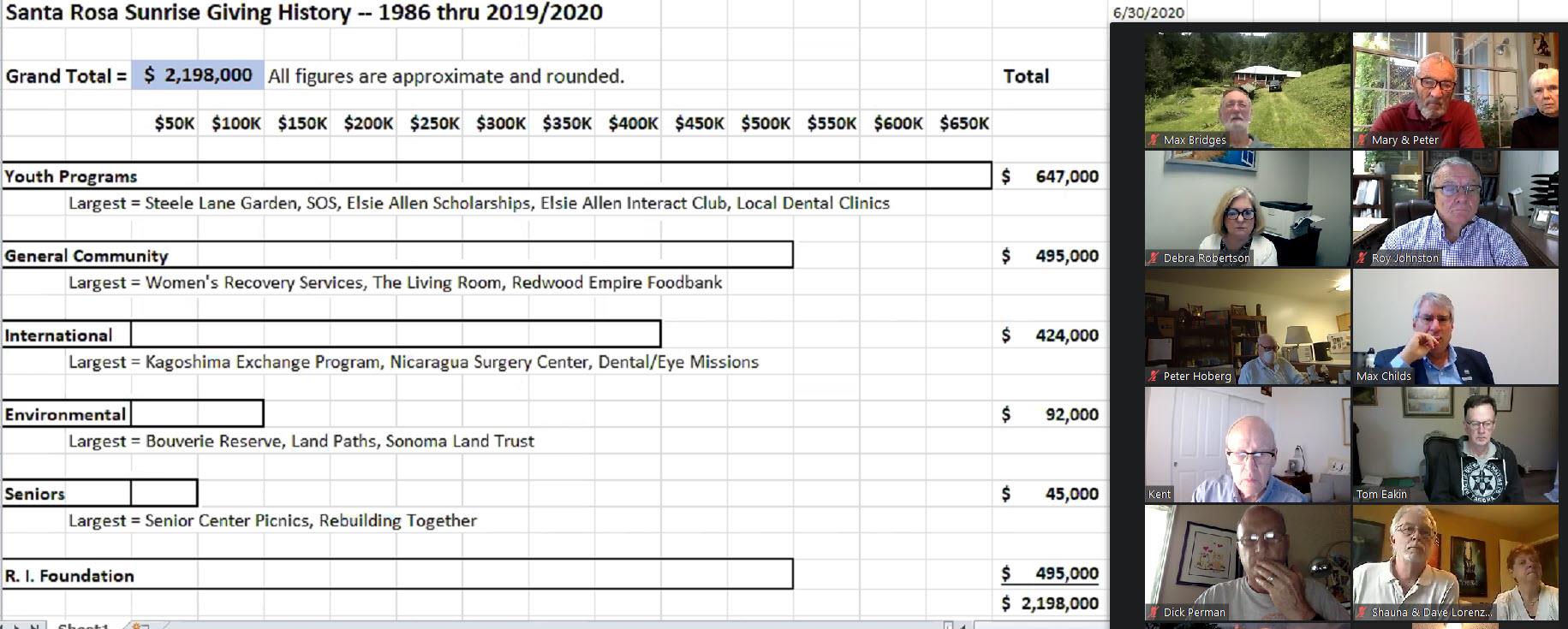
Rotary Club of Santa Rosa Sunrise - Founded June 30, 1986


.png)

.jpg)