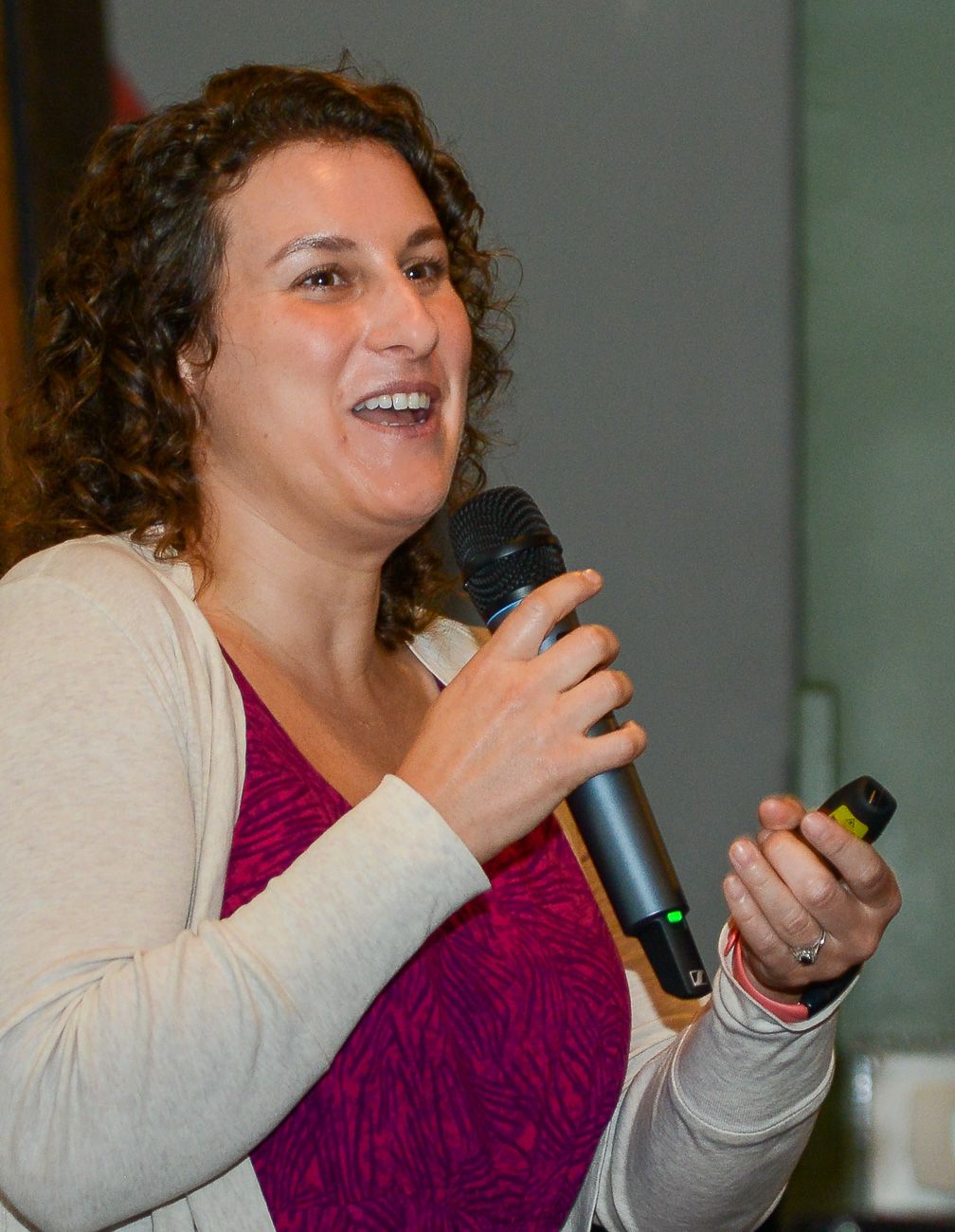
Claire Nordlie, City of Santa Rosa Sustainability Coordinator - Water Conservation in Santa Rosa
Our speaker for August 25, 2022, was Claire Nordlie, Sustainability Coordinator for the City of Santa Rosa. Claire has a degree in Environmental Science from SSU and a master of science degree from the University of Denver in Environmental Policy and Management. She is a Qualified Water Efficient Landscaper, Certified Landscape Irrigation Auditor, and a Certified Climate Change Professional. She manages of team of 8 water conservation members who assist customers with indoor and outdoor water use efficiency projects. Claire told us that the City of Santa Rosa has about 175,000 customers with a $150 million dollar budget. The City’s regional wastewater treatment plant serves 213,000 customers. The City has 1,200 miles of water and sewage pipes! The City reuses 17mm gallons of water daily. The Geysers injection well system, supplied by wastewater from the treatment plant, is the largest reinjection plant in the world! Keeping the water/sewage system operating is a herculean task due in part to the ancient pipes often used and the consequent water/sewage pipe breaks, maintenance, and constant replacement.
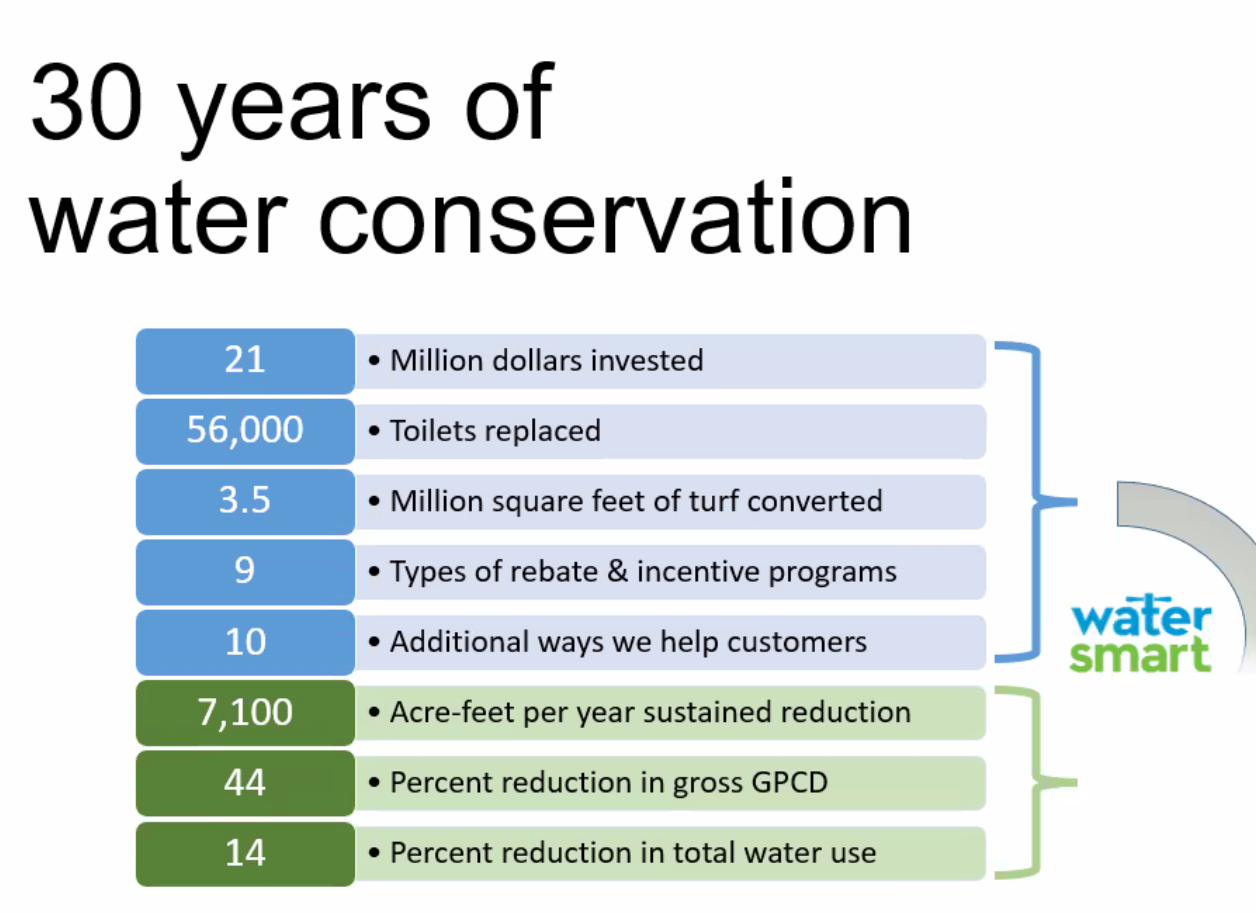
The majority of Sonoma County’s water comes from wells along the Russian River. Only a small amount of recycled water is used as potable water. Santa Rose produces 6.6 billion gallons of recycled water annually and 100% of that water is reused in normal/dry years, either for Geysers recharge or for urban use or irrigation. Santa Rosa water users have had 30 amazing years of water conservation!
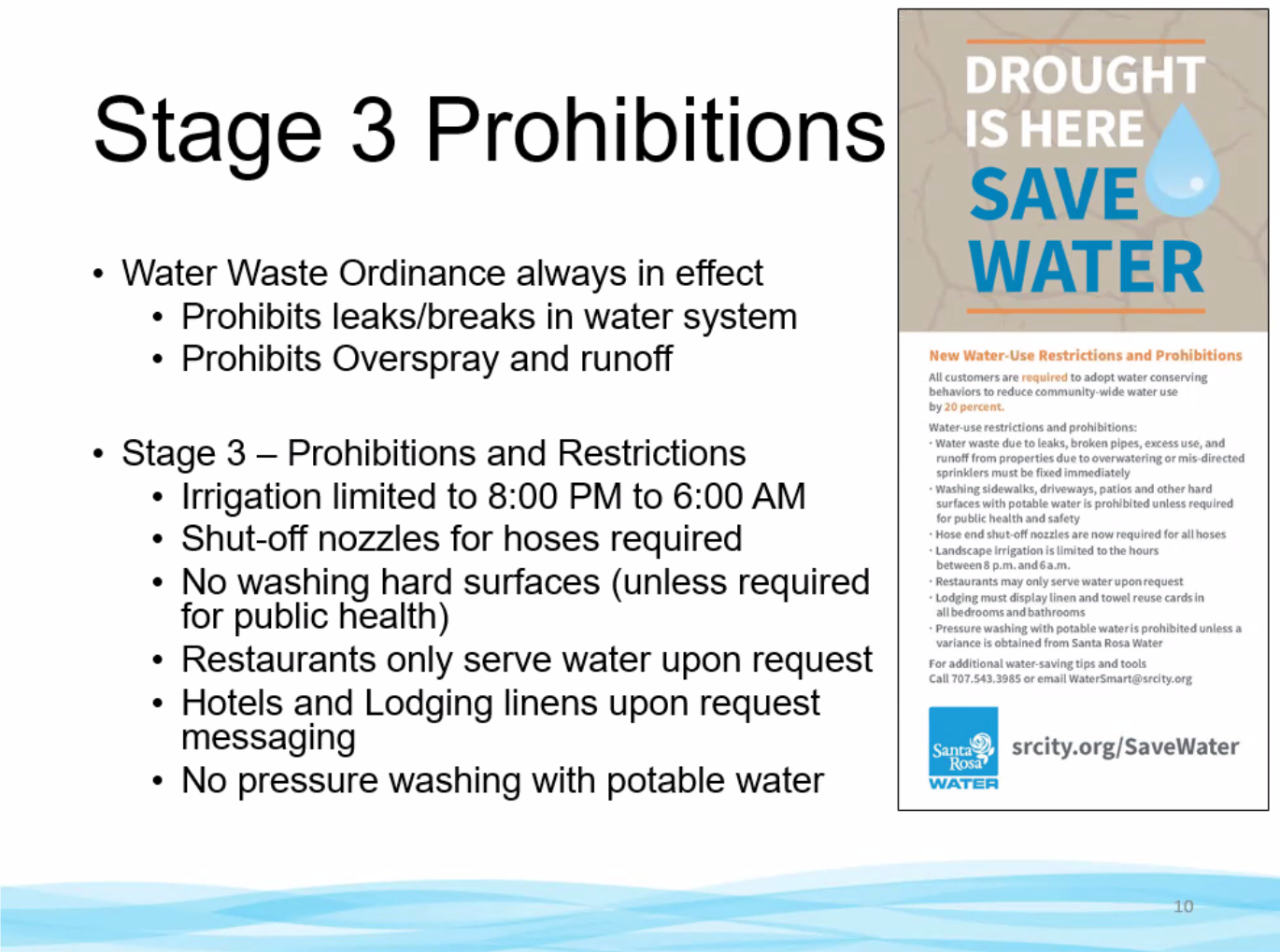
The City also has a strong water shortage contingency plan, coordinated with our regional partners, for current and future drought conditions. In fact, on June 29, 2021, the City implemented stage 3 of that plan due to a 16 – 20% supply shortage caused by 3 straight years of drought, including 2 of the driest years in over 100 years of record keeping. The stage 3 prohibitions are mandatory and are implemented by outreach to customers, water waste patrols, automatic metering, and variances for certain necessary activities. The City also provides strong support to users, including a website that discusses indoor and outdoor rebates for such items as efficient clothes washers, showerheads, aerators, toilet flappers, hose nozzles, irrigation efficiency, rainwater harvesting, greywater reuse, and pool removal rebates. See https://www.srcity.org/834/Rebates-Services.
Thank you, Claire, for all of your team’s hard work and success in helping to alleviate the consequences of our drought conditions (and for speaking with us). You are doing great work!
Click HERE to view the recording of Claire's presentation. Available for a short time only.
On a regular basis, our resident photo pro Warren Smith, submits pictures of what is going on at the weekly meetings. You can always find the most recent pictures at the websites photo journal called "Meeting Sighting" Please note that all the meeting photos for the entire Rotary year are at this location with the most recent on the last page.
Thanks for all the great pictures Warren!Link to Meeting Sightings. The most recent are on the last page!
Posted by Rich Randolph Ken Petro Merle Hayes, Jim Moir Steve Zwick
Cars Class and Conversations
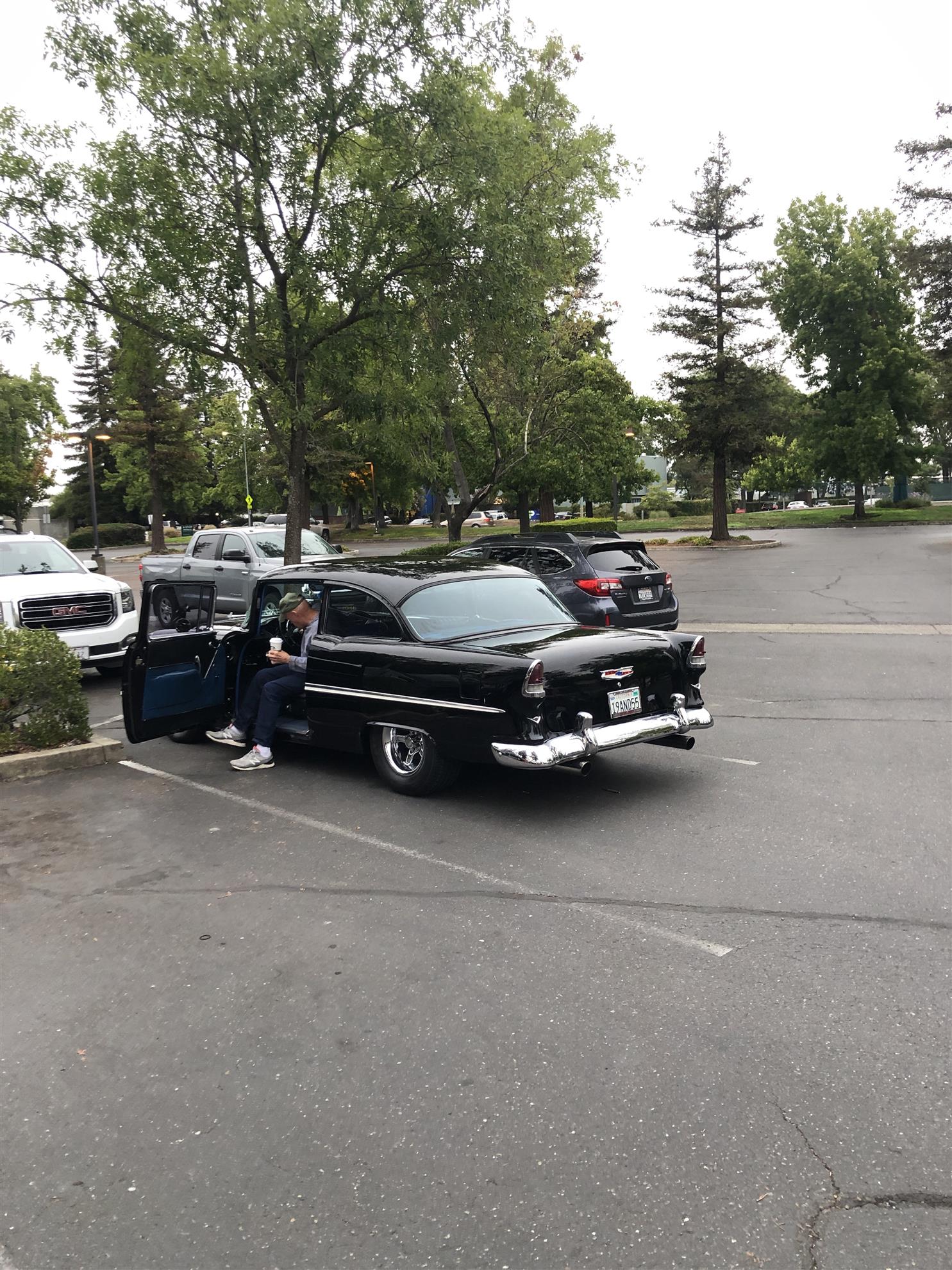
The rumble was heard before "19AND55" appeared in the lot. her petrol-fume fragrance a nearly forgotten memory of free wheeling internal combustion engine hay-days.
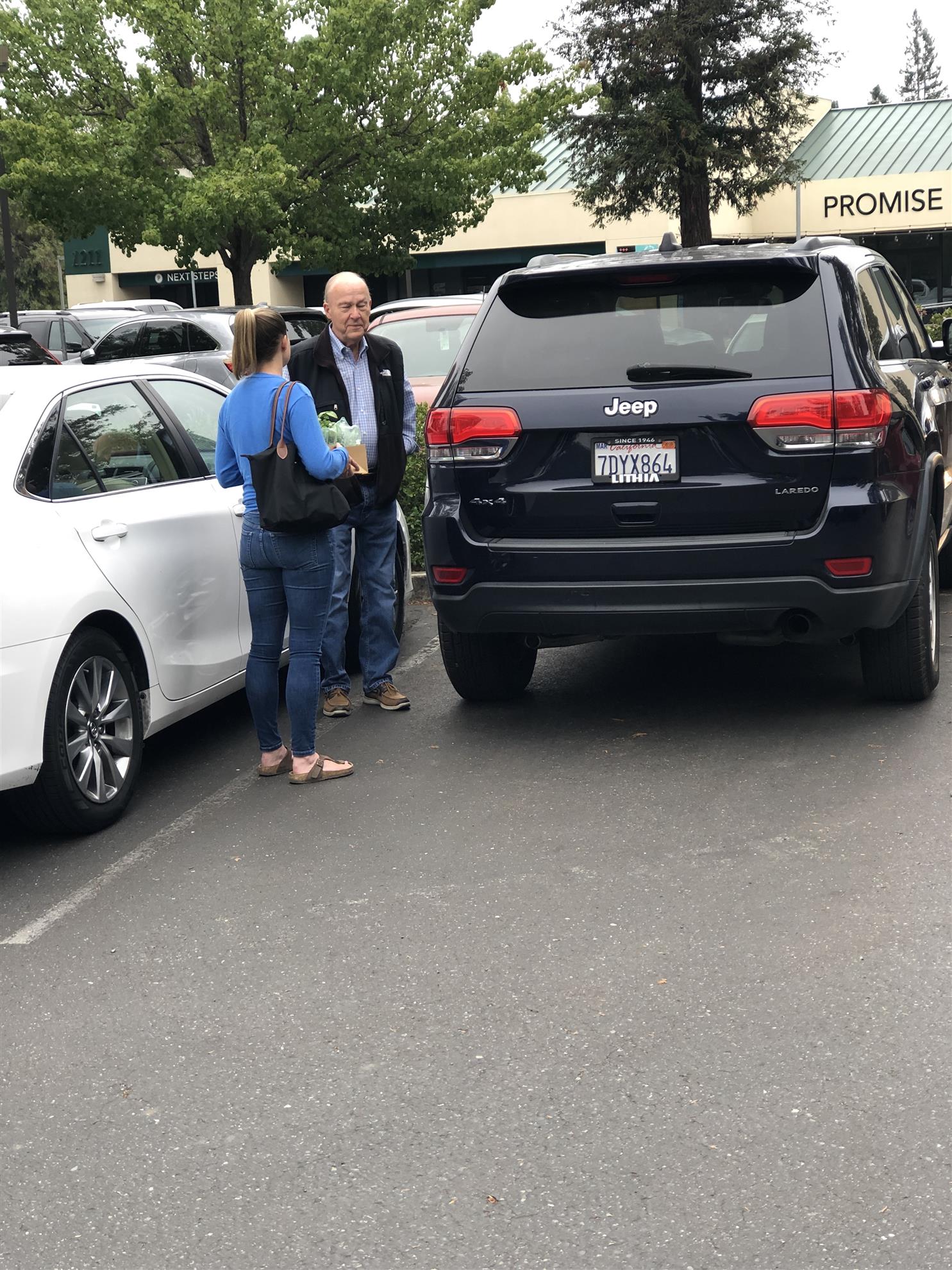
Similar is sheen, Kent Seegmiller's newer Jeep ID'd his and immediate Past President Jennifer Adam's post meeting conference. Subject unknown, no spyware employed ~ merely noted how Rotary connects people, before during and after our meetings.
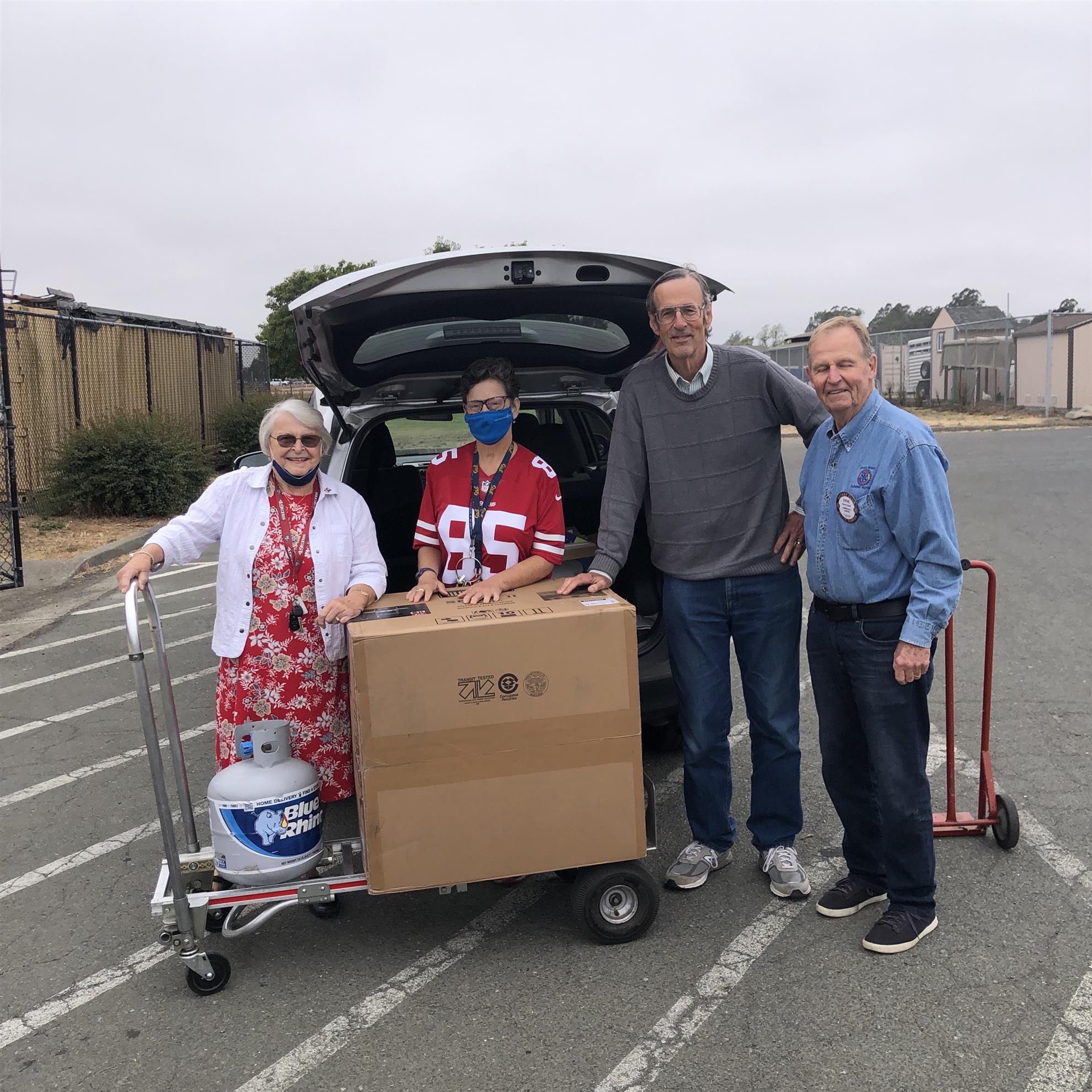
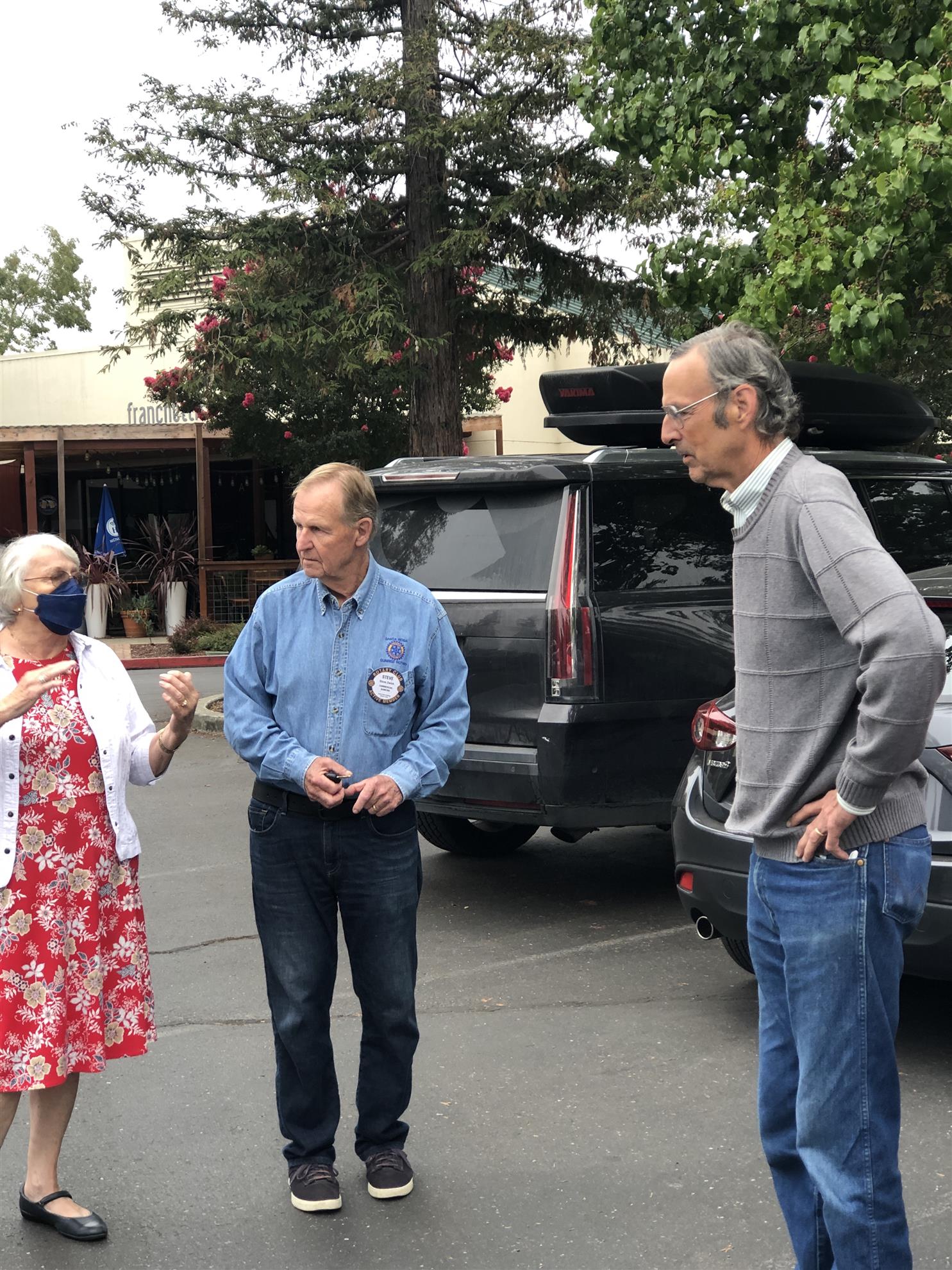
Hmmm? What's our plan? Merle Hayes consults with Steve Zwick on a route to Elsie Allen High School while Jim Moir awaits assignment to deliver and off load the crated BBQ in Steve's SUV. Can they arrive at nearly the same time ~ and place?
\
This is a good sign! Same place, same time. Yet, where is the BBQ? It better show up soon: Steve is stressing with the 40 lb. propane tank.
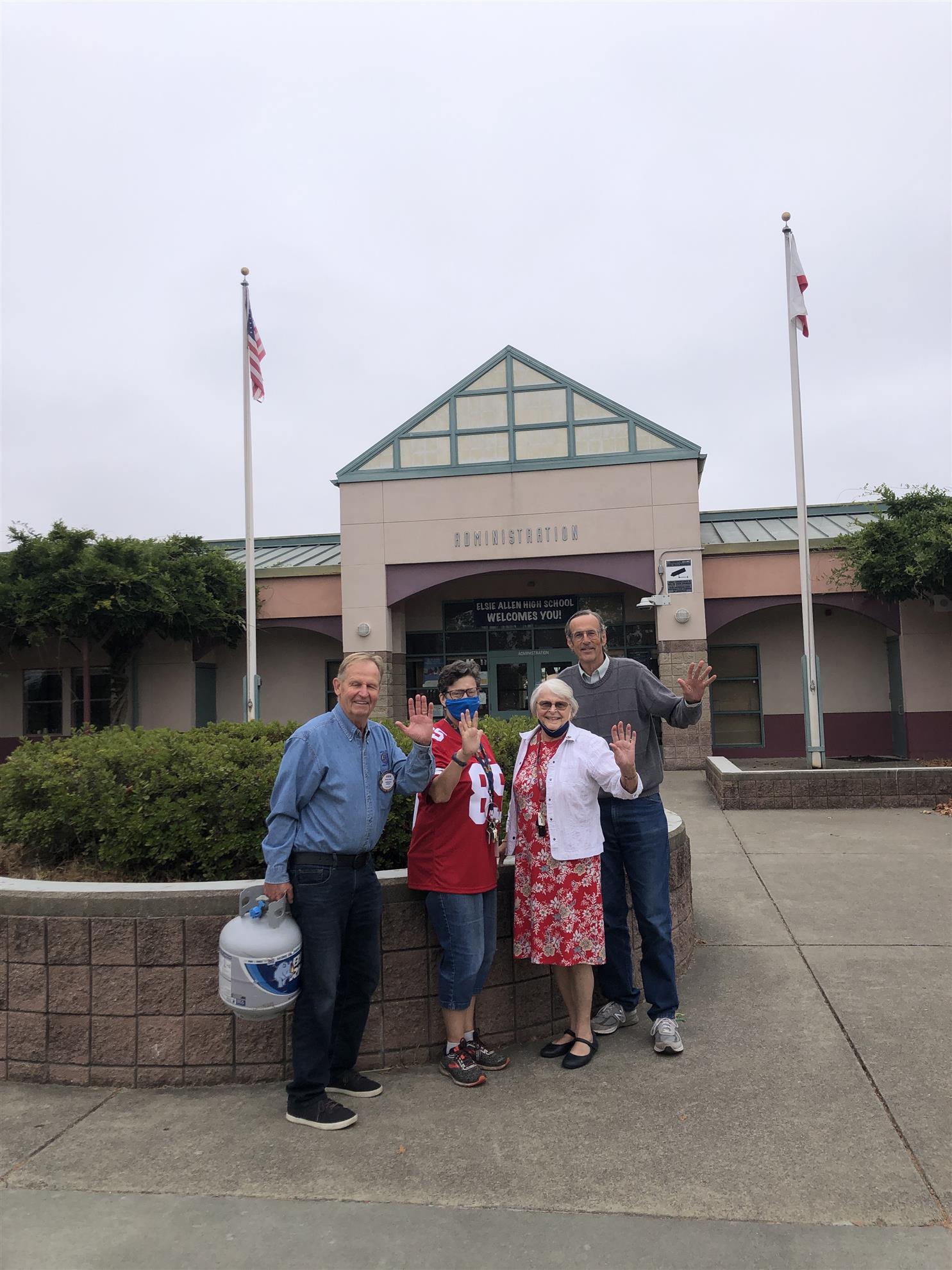
Mission accomplished! Campus Liaison Kathy Hayes (85) got us to the right gantry, Touch down safely at Elsie Allen High School where the Webber ES310 will take off to new heights of burgers, dogs, veggies and grilling ops for campus groups. Appropriate and fire proof signage will applied.
Thank you to everyone who helped make this supply dream a red hot reality!!!
Once upon a time there was a knee who was very special. His brother to the left bragged about his scientific achievements And their neighbors were pleased with their beautifully enhancements. But the little knee was very special. He was real!
One day the knee slipped out while walking in San Francisco. And someone said, “Maybe you should use a cane.“ And this made the little knee nervous and sad.
A few months past and both knees decided to try their luck on a machine called the leg press. The fancy left knee pushed four bands. Impressive! The little knee tried so hard but all he could push was ………one.
And so he began to rethink his pride in being real and weigh it against the need to do his job well. He thought and considered and evaluated for a few months. But he knew he had to do the right thing.
And so a plan evolved to make the real knee stronger, longer and straighter. It would be nice to have that kind of bold new look and to be a fully working member of the team.
So the decision was made. Total right knee replacement.
The renowned orthopedic surgeon who had recreated all the other joints, recommended special robotic surgery and did the job at Sutter Hospital on August 15. Everything worked out beautifully. Then the
new robotically improved knee took everyone to Spring Lake Village skilled nursing facility where they are all training to be an integral part of a new and improved body.
Around the last turn of the century there was an ace pitcher in baseball named Milt Famey. Milt Famey was phenomenal, the Babe Ruth of pitchers they said, and when he was on the mound it was lights out. He typically struck out 18 or more players in a game, sometimes over 20. One day though, he had no control whatsoever. From pitch #1, he was all over the place, the catcher was diving for balls on every pitch. Milt actually walked the first five batters in a row, all on four straight pitches. When the latest batter trotted down to first the first baseman came over to say hi and said, “Gee, I wonder what’s up with Milt? He can’t hit the broad side of a barn today. That’s not like him at all.” The runner laughed and said, “We figured it out after the second batter. Look down there at those cans behind the fence.” The first baseman looked down the line and sure enough there was a pile of cans. “What’s that?” he said. The runner said, “It’s Schlitz, the beer that made Milt Famey walk us.”
Rotary statement on recent polio detections in U.S., Europe
The recent detection of the vaccine-derived poliovirus type 2 case in New York, USA, and isolates in several environmental samples collected in London are stark reminders that as long as polio exists anywhere, it is a threat everywhere. It also highlights the importance of vaccination as the only form of protection against polio and other vaccine-preventable diseases and the work that needs to be done in our communities to encourage the uptake of vaccines. Also, as the world gets closer to zero wild poliovirus cases, it is increasingly important to track all forms of the virus wherever they may appear, including in polio-free regions.
The U.S. is still considered low risk for paralytic outbreaks of polio due to the high level of vaccine coverage across the population. If a child has received the entire course of vaccines, the risk of becoming paralyzed by polio is negligible. According to the Centers for Disease Control and Prevention, 92.6% of children aged 24 months are fully vaccinated against polio, slightly below the 95% World Health Organization target.
The best things countries can do to protect themselves from polio until the disease is eradicated from the world are to: maintain high vaccination coverage and robust disease surveillance and be ready to respond in the event of an outbreak to minimize the risk and consequences of polio re-introduction or re-emergence anywhere.
The world currently has a unique opportunity to stop virus transmission for good. Still, all parties, including donors and country governments, must re-commit to polio eradication by fully supporting the Global Polio Eradication Initiative (GPEI) 2022-2026 strategy. This focuses on adopting an emergency posture while generating greater accountability and ownership from country governments to eradicate wild polio and end variant poliovirus (cVDPV) outbreaks.
Rotary, a global service organization with over 1.4 million members, has been at the center of the worldwide effort to eradicate polio for over three decades. Every year, through our funding partnership with the Bill & Melinda Gates Foundation, Rotary commits $150 million to the global effort to eradicate polio. We have contributed more than $2.6 billion and countless volunteer hours to end polio forever. Together with our partners, we engage communities everywhere to encourage high vaccination rates, immunizing over 400 million children annually. More than 20 million people are walking today who otherwise would have been paralyzed because of our efforts and those of our partners in the GPEI.
The time for urgent action is now. A new vaccine has been deployed – novel oral polio vaccine 2 (nOPV2) – which is more genetically stable to stop outbreaks of circulating vaccine-derived poliovirus effectively. With sustained political and financial commitments, the GPEI is confident that we can achieve a world in which no child is paralyzed by polio again.
18 August 2022
Rotary Club of Santa Rosa Sunrise - Founded June 30, 1986


.png)





.png)


 \
\