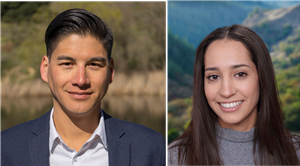
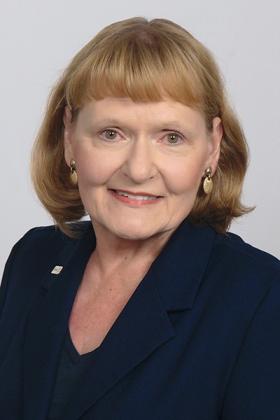
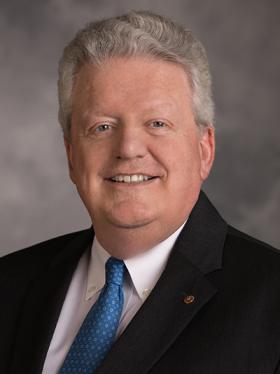
NEAL RAMUS: As Director of Community Engagement and Education at Sonoma Land Trust, Neal Ramus leads strategic efforts to expand audiences, address community needs, and ensure diverse voices and perspectives are represented in the organization’s work. Neal brings extensive experience in community program development, having held leadership roles at the California Academy of Sciences, the Petaluma Wildlife Museum, and Sonoma State University. A nationally recognized expert in youth development and program evaluation, he has been invited to present at more than 20 national and international conferences, from Washington, D.C., to Chongqing, China. Neal holds a bachelor’s degree with distinction in biology and a master’s in business administration from Sonoma State University. A Petaluma native, his deep-rooted connection to the land, people, and rich diversity of Sonoma County informs his approach to community engagement.
ALAYZA CERVANTES: Alayza Cervantes is the Community Outreach Manager at Sonoma Land Trust, where she connects the community with the organization’s opportunities for engagement and education. Alayza oversees the volunteer program, coordinates internships for local university and college students, and shares information about Sonoma Land Trust at community events. She is passionate about encouraging people to explore and appreciate the beautiful landscapes of Sonoma County.
Kent Porter - Press Democrat Photojournalist Extraordinaire - "You Have to Be There When it Happens."
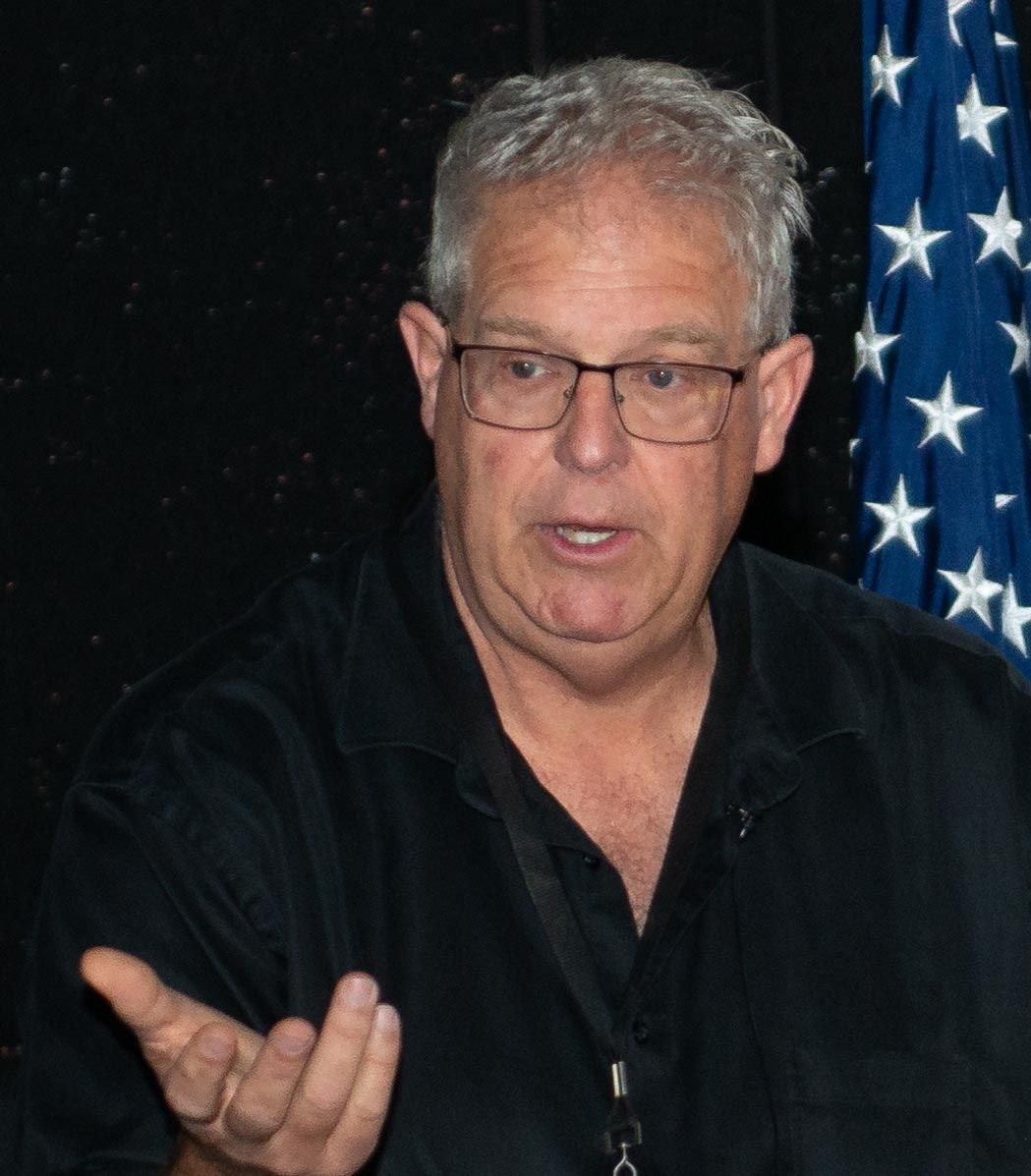
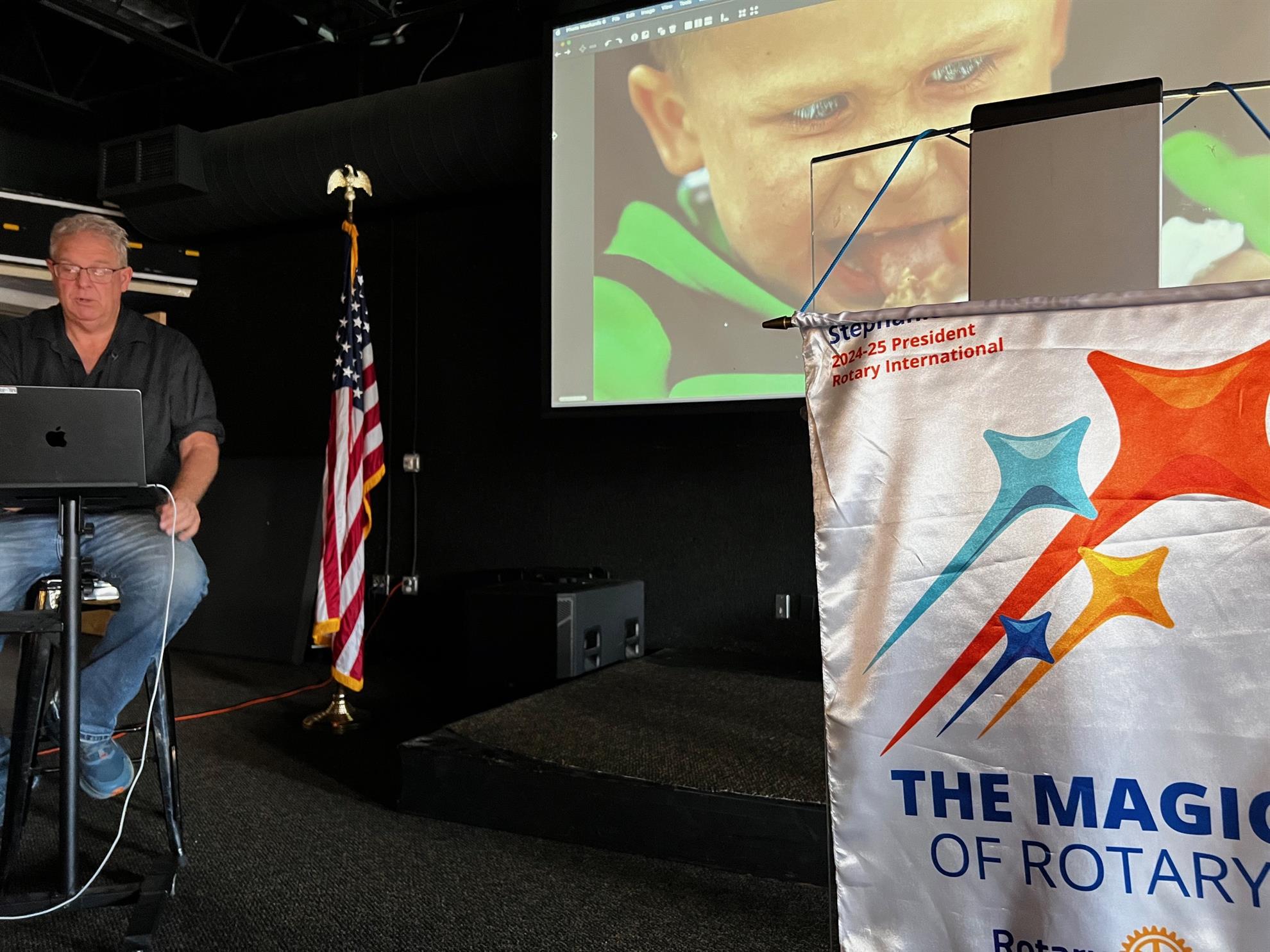
Our speaker on April 3, 2025, was Kent Porter, the Santa Rosa Press Democrat’s staff photographer. Kent has been with the PD for 38 years and is part of the PD team that won the 2018 Pulitzer Prize for coverage of the October 2017 Tubbs fire. Kent’s photos have been published worldwide, and many are instantly recognizable by the PD’s readers. He is a prize-winning photojournalist who likes to spend his vacations chasing storms.
Kent showed us many of his photographs and discussed how he got the shots and what made his shots different from those taken by other photographers. One interesting point is that Kent drives a 4-wheel drive vehicle, which allows him to go places other photographers can’t. Kent showed us his famous photo of a burning oak tree in Knights Valley in the second week of the Kincaide Fire. He and other photographers took photos of a sleeping firefighter. Kent drove off, passed an oak tree, and doubled back to the tree. He took photos of the tree from different angles and fiddled with the exposures. During one of the photos, Ken was amazingly lucky capturing a large meteorite as it flashed behind the tree, combined with sparks from flying flaming embers exploding off the tree’s limbs. Kent says that sometimes you have to just hang around to get the great shots. Photographers just have to be there when it happens!
Kent also has amazing stories about the Tubbs Fire, including the one about the woman with cancer who put family photos in a locked box in the family home near Coffey Park. The woman passed away before the fire, but the locked box of family photos survived the fire because a cast iron bathtub on the home’s second floor flipped over when the second floor fell, somehow trapping the box of photos inside its nearly fireproof protection! Kent showed us other amazing photos from his many years of photojournalism, including the Glass Fire from the Skyhawk vantage, the August 2024 Lake County fire, Tubbs Fire, Boyles Fire in Lake County, lots of storm chasing photos, the Aurora Borealis from Clear Lake, a total eclipse from Texas, the Atlas Comet at the Geysers, a baseball practice during a drought in Southwest Texas, Pt. Reyes National Seashore, arguments between a Trump supporter and a protester, a Halloween wedding, a child eating at a cheesesteak festival, St. Patrick’s Day parade in Healdsburg, Black Lives Matters protesters, mudslide damage to a home in Rio Nido, a Special Olympics polar plunge, and many others.
Kent also spoke about the adverse effects of so many years photographing catastrophic events, including the fact that PTSD is fairly common among photographers who spend their lives chasing catastrophe. The Tubbs Fire in particular was particularly devastating to him.
Thank you so much, Kent, for enriching our lives with your amazing photography and for the fantastic presentation.
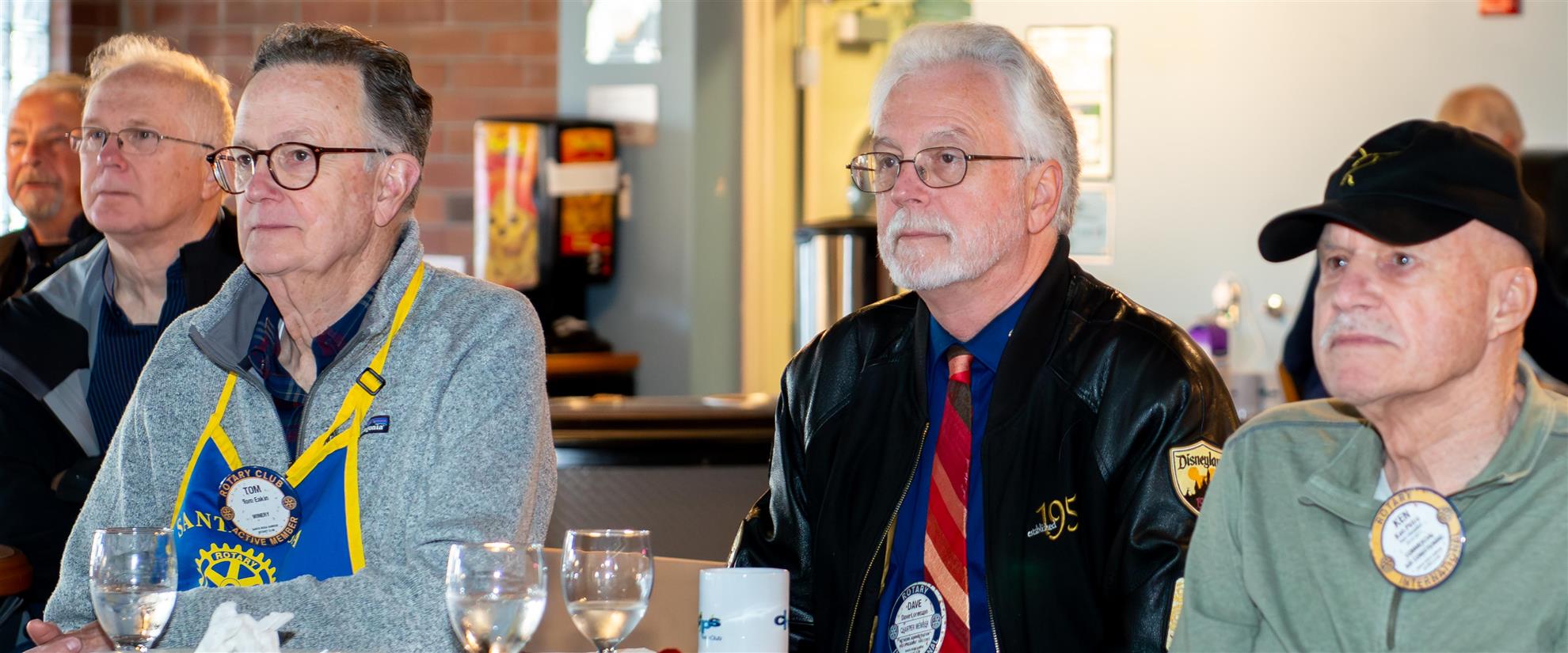
On a regular basis, our resident photo pro Warren Smith, submits pictures of what is going on at the weekly meetings. You can always find the most recent pictures at the websites photo journal called "Meeting Sighting" Please note that all the meeting photos for the entire Rotary year are at this location with the most recent on the last page.
Thanks for all the great pictures Warren!Link to Meeting Sightings. The most recent are on the last page!
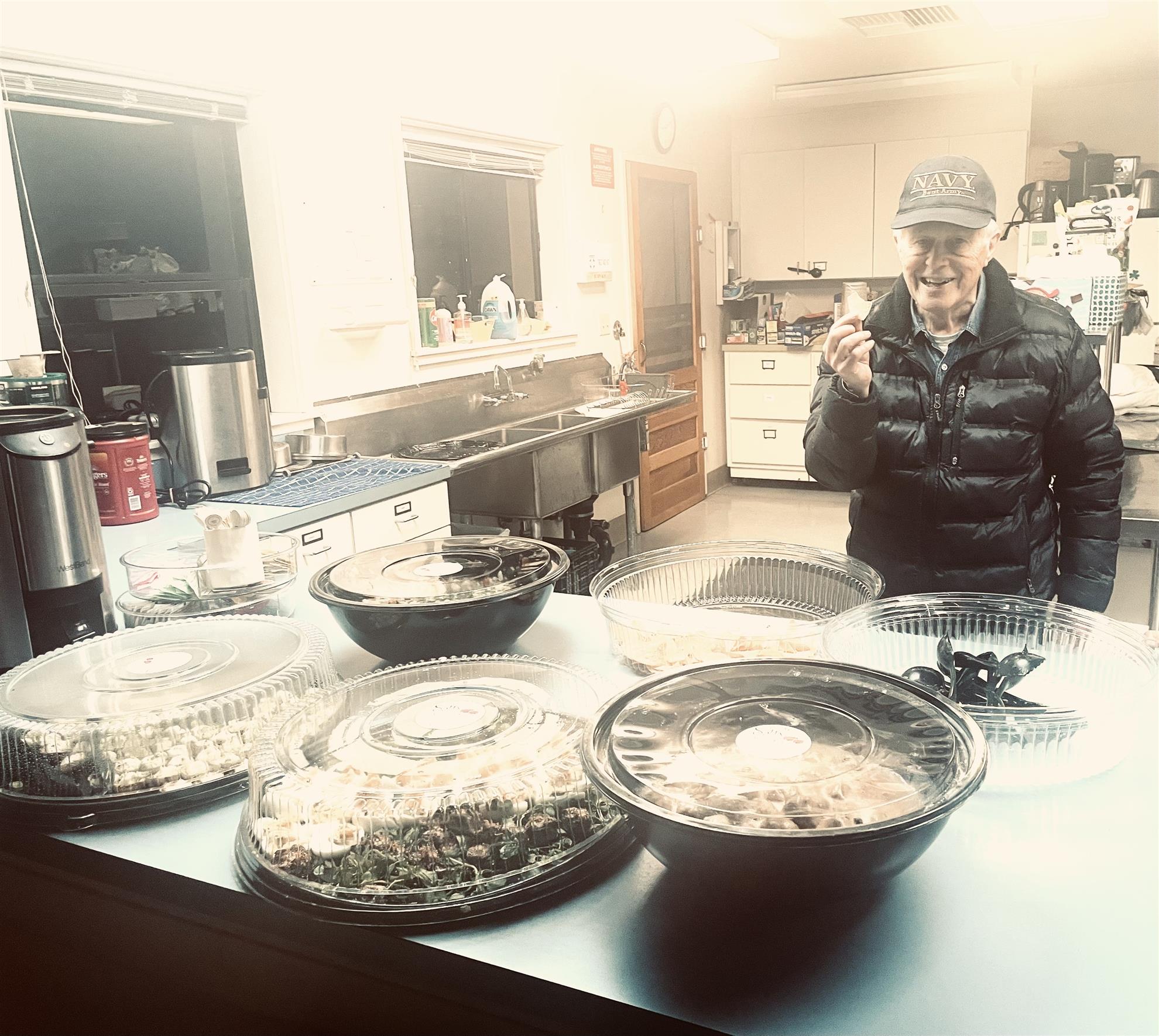
Rotarian Dan Lambert stands sentinel over gourmet catered food surplus from his East-West Club multi club social last Friday at Robert Fergeson Observatory in Sugarloaf State Park.
Rotarians from Sonoma, Rohnert Park, Cotati, Santa Rosa, Sunrise, Valley of the Moon Interact and Sonoma Valley feasted their eyes and tummies at the near 50 star and moon gazer event!
Dan transported the food with encouragement from Rebecca Randolph down the mountain for consumption and distribution at a shelter meal in Kenwood the following day.
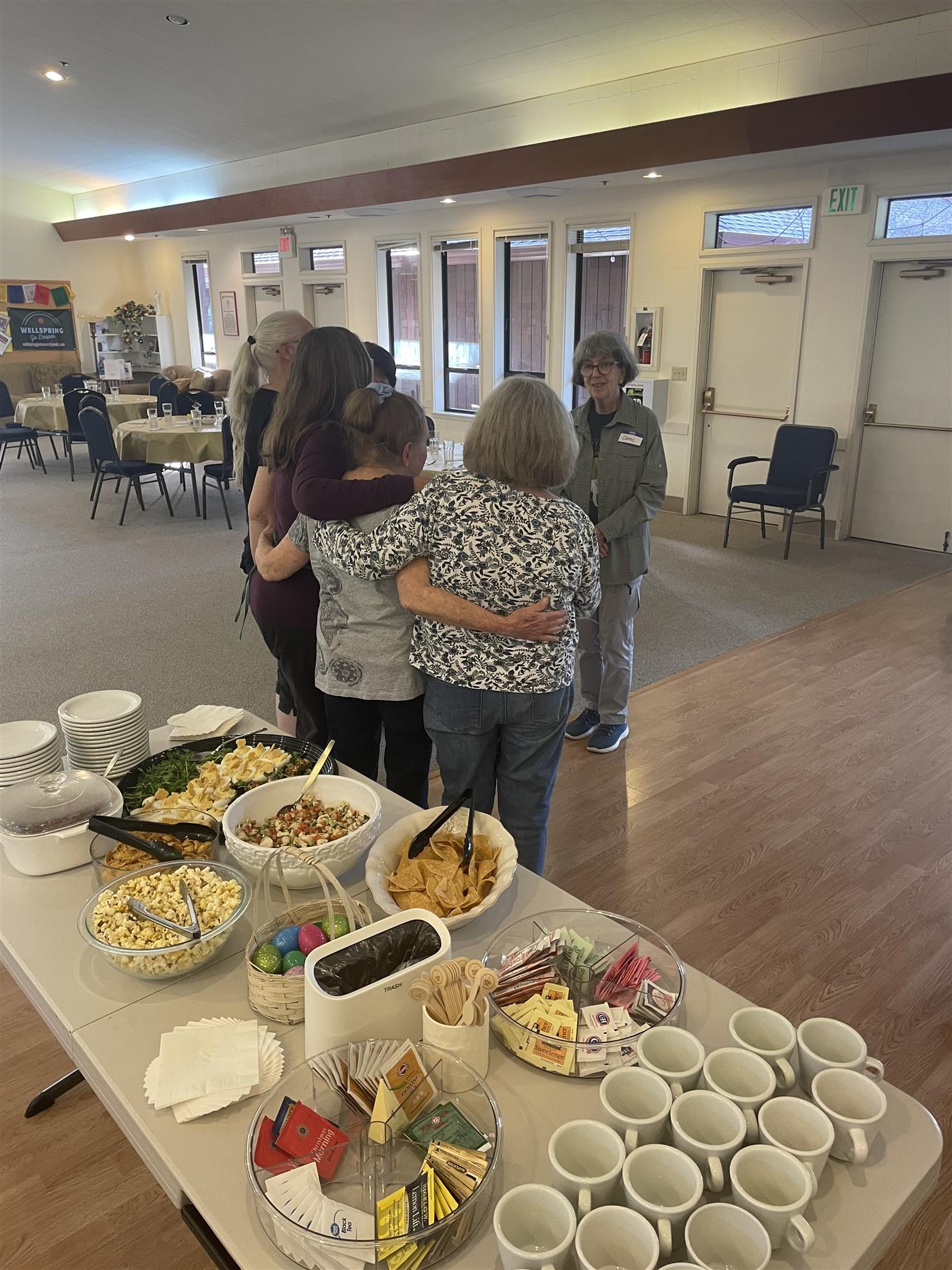
Hosts and servers prepare for the shelter guests who soon arrived and dined on shared food.
The abundance of the previous day mixed with magic of Rotary resources truly leveraged surplus to serve: E pluribus pluribus out of many many more were fed.
A dad buys a lie detector robot which slaps people when they lie. He decided to test it at dinner. "Son, where were you today?" The son says, "At school, Dad." Robot slaps the son. "Okay, I watched a DVD at my friend's house!" "What DVD?" Kung Fu Panda." Robot slaps the son. "Okay, it was an adult film!" Dad yells, "What? When I was your age, I didn't know an adult film was!" Robot slaps the dad. Mom Laughs, "He's certainly your son!" Robot slaps the mom.
As the chill of winter gives way to the warmth of spring, we have an opportunity to rejuvenate our commitments to each other and to the communities we serve.
A shining example is the Rotary Club of Windsor-Roseland in Ontario, whose members support a program providing hot meals to people facing homelessness and food insecurity. On any given evening, the Soup Shack run by Feed Windsor-Essex serves up to 130 people, offering nourishment and a sense of community and care.
Club member and Past District Governor Aruna Koushik got the club involved after seeing a news segment about the Soup Shack.
Koushik collaborated with club members to quickly approve the purchase of a stove, pots, and pans for its new permanent space. Soon after, club members met with the Soup Shack team, toured the new location, and presented a check for 3,000 Canadian dollars (about US$2,000) to support its efforts. They also committed to volunteering their time to prepare and serve meals once the facility is operational.
This exemplifies how Rotary members can come together to address community needs, foster engagement, and make a tangible impact. By identifying opportunities for service and mobilizing resources, we not only support those in need but also strengthen our bonds with each other and with the communities we serve.
As we embrace the renewal that spring offers, let’s take inspiration from the Windsor-Roseland club. Consider these ways to reinvigorate engagement within your club:
Identify emerging needs: Stay attuned to the evolving challenges in your communities. Engage with local organizations to understand where your club’s support can make the most difference.
Mobilize resources quickly: When opportunities arise, act swiftly. Leverage the skills and networks within your club to gather resources, from financial contributions to equipment to volunteer time.
Foster collaboration: Encourage members to take initiative and collaborate on projects. Empowering individuals to lead and contribute their unique talents enhances engagement and drives success.
Commit to ongoing involvement: Beyond initial contributions, pledge continued support.
Regular service keeps members connected and reinforces the club’s commitment to sustained impact.
By embracing these approaches, we can harness the energy of spring to renew our dedication to service and engagement. Let’s seize this season as an opportunity to revitalize our efforts, strengthen our connections, and continue making a positive difference in the world.
This is The Magic of Rotary — transforming lives, inspiring hope, and creating lasting change for the communities we serve.
You can find all prior "RI President's Messages" at this LINK
As my 26 years of Rotary leadership at the international level wind down, I’ve been reflecting on favorite memories and the extraordinary opportunities Rotary has given me. One stands out this month: the decision to establish the environment as one of Rotary’s areas of focus.
We had seen how Rotary members were already preserving waterways, planting trees, and reducing pollution. Environmental stewardship was clearly an essential part of our work. As RI president in 2019-20, I was proud to have proposed the addition of the environment as an area of focus, after years of advocacy by Rotary members.
I am even prouder of what that addition — and all of you — made possible. Since 1 July 2021, clubs and districts, supported by global grants, have expanded their work to protect our planet’s resources — restoring mangroves, saving forests, and cultivating coral reefs.
These grants hold endless possibilities, and I invite you to dream. Take inspiration from initiatives like Keep Mongolia Green, championed by Past RI President D.K. Lee, President-nominee Sangkoo Yun, and Rotary members in Korea. This major reforestation is combating Gobi Desert dust storms and creating Mongolia’s largest green zone.
I am also proud of our new strategic partnership with the United Nations Environment Programme. This collaboration empowers Rotary members to implement projects such as river cleanups and plastic waste reduction, leveraging global resources and expertise.
In November, I had the pleasure of leading a delegation of Rotary volunteers at the United Nations climate conference in Azerbaijan. You can read my account of it on Rotary 360 at blog.rotary.org.
So many opportunities are waiting for us. We know how much we can achieve together, so team up with your district and apply for a Foundation grant to support an environmental project.
Stewardship of the environment is deeply personal to my wife, Gay, and me. That is why we have established a named endowment fund through the Foundation, helping to ensure that future generations working on these projects will have the resources they need.
As we celebrate Environmental Month this April, I invite you to consider how you can make an impact. Every action matters. Explore environmental project ideas in Rotary’s new Service Project Center, take part in an existing initiative, or support The Rotary Foundation through a gift. In this way, members worldwide can protect our shared home.
I thank you, as always, for all that you do for Rotary and our Foundation.
You can find all prior "Messages from the Foundation Trustee Chair" at this LINK
Need help with a grant? Your district Rotary Foundation chair has the answer.
By Arnold R. Grahl
Peace Geoffrey Taremwa has more than 20 years’ experience implementing grants through his work for an overseas development agency. So during some of his visits to Rotary club projects, he noticed a problem.
“Clubs would receive their money but would end up doing something else that they thought was good,” says Taremwa, a past governor of District 9214 in Tanzania and parts of Uganda. “At the end of the day, this becomes a stewardship issue because it was not what was discussed in the grant application.
“The biggest problem we had was a lack of knowledge,” he adds. “Many Rotarians do not have sufficient knowledge of how to complete a global grant application.”
Consult your district Foundation chair
District Rotary Foundation chairs can bridge that gap. These advisers help clubs by explaining grant eligibility and procedures, building relationships with districts around the world as potential project partners, securing funding, and creating connections with mentors who can help with grant applications and reports. By working with their district Rotary Foundation chair, clubs can have a smoother global grant experience and ultimately support more communities in a more effective, sustainable way.
Taremwa, now the district Foundation chair, is working to streamline the grant process in his district, implementing changes he launched as governor in 2022-23. The new process clusters clubs together for grant applications, activities, and training events. The district’s outgoing Foundation chair and grants team conduct the training rather than incoming leaders. And grant support officers (a new role) mentor the club clusters on all grant applications, making sure money is spent according to plan and reports are filed on time.
The new process is working. “We have many more global grant applications,” Taremwa says. “And many clubs have been inviting our teams to go to them and do a training at the club level. Our stewardship teams are busier than before.
“Fundraising is also becoming easier,” he says. “We have told members, this is your money. Please contribute, and your money is available. If you don’t contribute, your money is not there.”
Consider a review committee
District 3292 in Nepal and Bhutan modified its grant process to address a different problem: Within clubs involved in global grant projects, many members lacked critical information about the grant.
M.K. Jha, a past district Foundation chair from Nepal, recalls an example from when two Rotary club presidents, from Nepal and India, met at a conference and decided to pursue a global grant together. But after it had been approved, the Nepalese Rotarian moved on, and no one else in his club knew anything about the grant.
To prevent issues like this, the district created a review committee, which includes the district Foundation chair, to screen all grant applications. To be considered, clubs complete a community assessment and fill out an authorization form and District Designated Fund request form. Projects must have been selected by the club’s service project committee and approved by both its Rotary Foundation committee (which identifies funding) and board. The club is then required to hold an assembly to discuss the project with all its members.
The district review committee pores over the minutes of the club’s meetings and verifies the data in the community assessment. If it all looks good, the team then helps the club through the rest of the application and reporting process.
“By doing this, each and every member comes to know what is going on,” says Jha, now an assistant regional Rotary Foundation coordinator. “If members know what is being done in the community, it helps with reporting and avoids many issues.”
Additional resources
Between administering grant applications, overseeing fundraising efforts, and managing district grant funds, district Rotary Foundation chairs have a lot on their plate. Rotary International has created many resources, including online learning courses and downloadable guides, to help district Rotary Foundation chairs understand and relay information about the grant application process. These resources help the leaders serving in this role to work with clubs to produce projects that have an even greater impact.
RI’s regional grants officers are also available to help districts with their grant processes. These Rotary staff members can provide guidance on project eligibility, address common problems, and offer tips for success. Clubs are strongly encouraged to contact their regional grants officers in the early stages of project planning.
This story originally appeared in the April 2025 issue of Rotary magazine.
The Rotary Foundation offers grants that support a wide variety of projects, scholarships, and training.

.png)






.png)