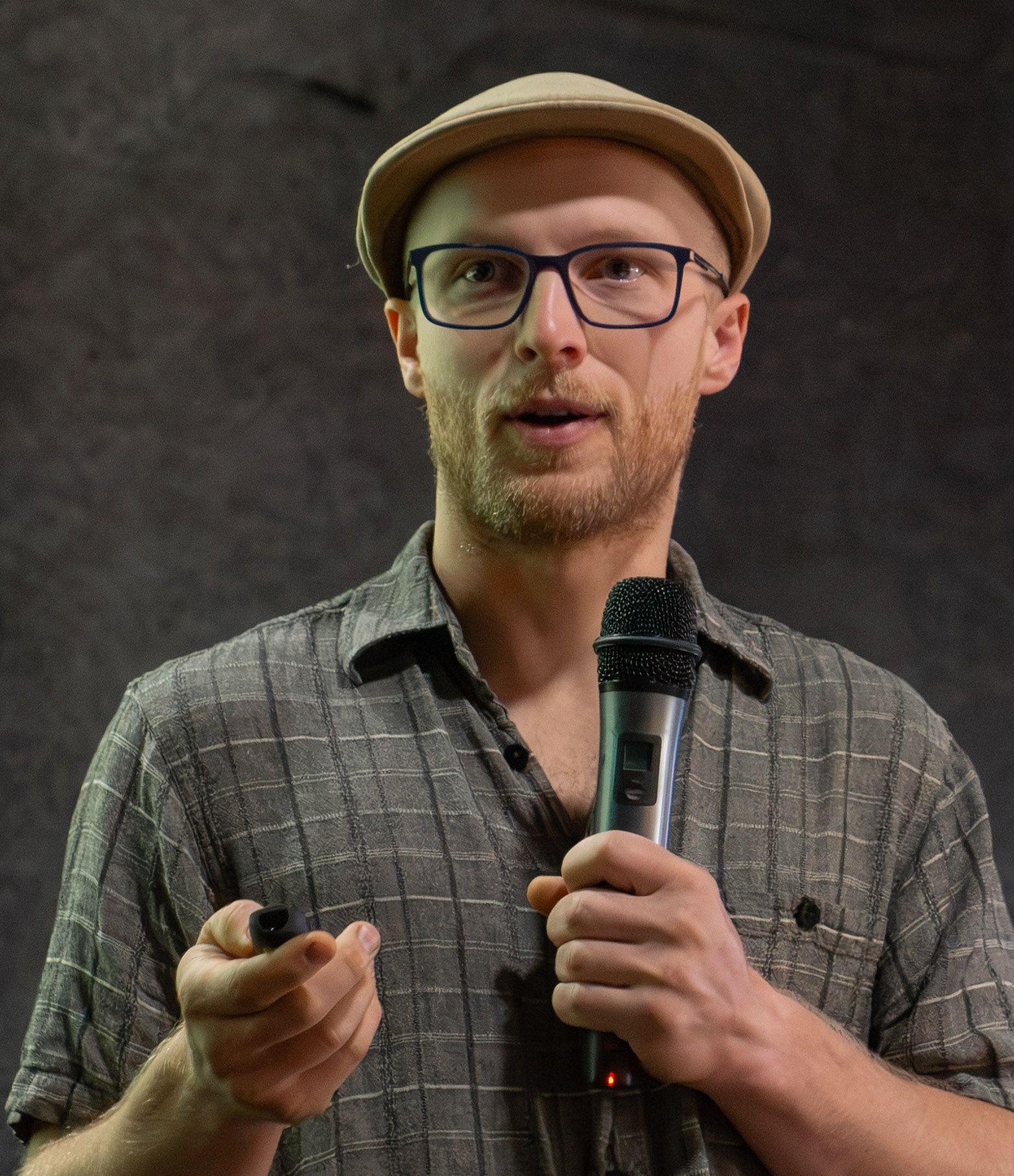
Miles Horobin, Garden Manager for the Occidental Arts and Ecology Center
Our speaker for November 5, 2026 was Miles Horobin, the Garden Manager for the Occidental Arts and Ecology Center (OAEC), a 501(c)3 nonprofit organization on an 82-acre property in Western Sonoma County. Miles joined OAEC in 2020. The land is collectively owned by seven individuals under an LLC, which leases the property to the nonprofit. OAEC employs approximately 25 salaried staff, 25 community members, and 20–25 hourly staff for retreat cooking and operations.
OAEC's mission centers on ecological literacy, environmental justice, sustainable land stewardship, and community resilience. For 32 years, OAEC has offered Permaculture Design Courses under its Resilient Community Design (RCD) program, educating the public on ecological literacy and sustainable living. A major and widely recognized initiative is the Bring Back the Beaver campaign, which advocates for the conservation of Castor canadensis — a keystone species native to California and the West Coast that was largely extirpated due to the historical fur trade. OAEC also serves as a fiscal agent for 9 external organizations. These fiscally sponsored projects (FSPs) span multiple states, including organizations working on oil refinery community safety, plastics advocacy, and agricultural housing. Examples of some of the FSPs’ work include fence line community safety near oil refineries (e.g., Fence Line Watch), plastics and recycling advocacy, and agricultural housing (e.g., Casa Agraria in Yolo County).
OAEC's on-site operations encompass a retreat center, two production gardens, an orchard, a retail nursery, and wildlands management across the property. The retreat center hosts social and environmental justice organizations approximately one-third to one-half of the year. The gardens produce food and flowers for retreat guests. The gardens are approximately one acre in size with an additional acre of orchard and have been certified organic since the late 1970s through CCOF and remain under an organic easement with the Sonoma Land Trust — likely the first such easement in California and possibly the nation. A recently installed solar microgrid system, featuring a rooftop solar array and a shipping container of lithium-ion batteries, provides energy independence for the site. The system generates enough power for the entire property, offers battery backup during outages, and feeds surplus energy back into the regional grid. A six-and-a-half acre-foot pond supplies all irrigation water for the gardens and landscaping. OAEC hosts annual seed swaps to promote food sovereignty, cultural heritage, and community seed sharing. Community members can engage through Wednesday volunteer days (10:00–5:00, including a communal lunch), nursery visits, and public site tours beginning in April. OAEC's Wildlands program manages the natural areas of the 82-acre property, conducting ecological trainings in partnership with institutions such as Sonoma State University. OAEC received the North Bay Forest Improvement Program (NBFIP) grant to carry out fuel reduction work — including limbing and thinning — while maintaining ecological integrity and demonstrating responsible land stewardship practices for other organizations. OAEC also hosts an annual theatrical variety show called the Chautauqua Review every September. The Mother Garden Nursery, open Wednesday through Saturday from 11:00 to 5:00, offers annual vegetables, perennial plants from around the world, and California natives.
Thank you, Miles, for presenting the terrific information to us about OAEC. And, thank you for helping the cause of ecological literacy, environmental justice, land stewardship, and community resilience!
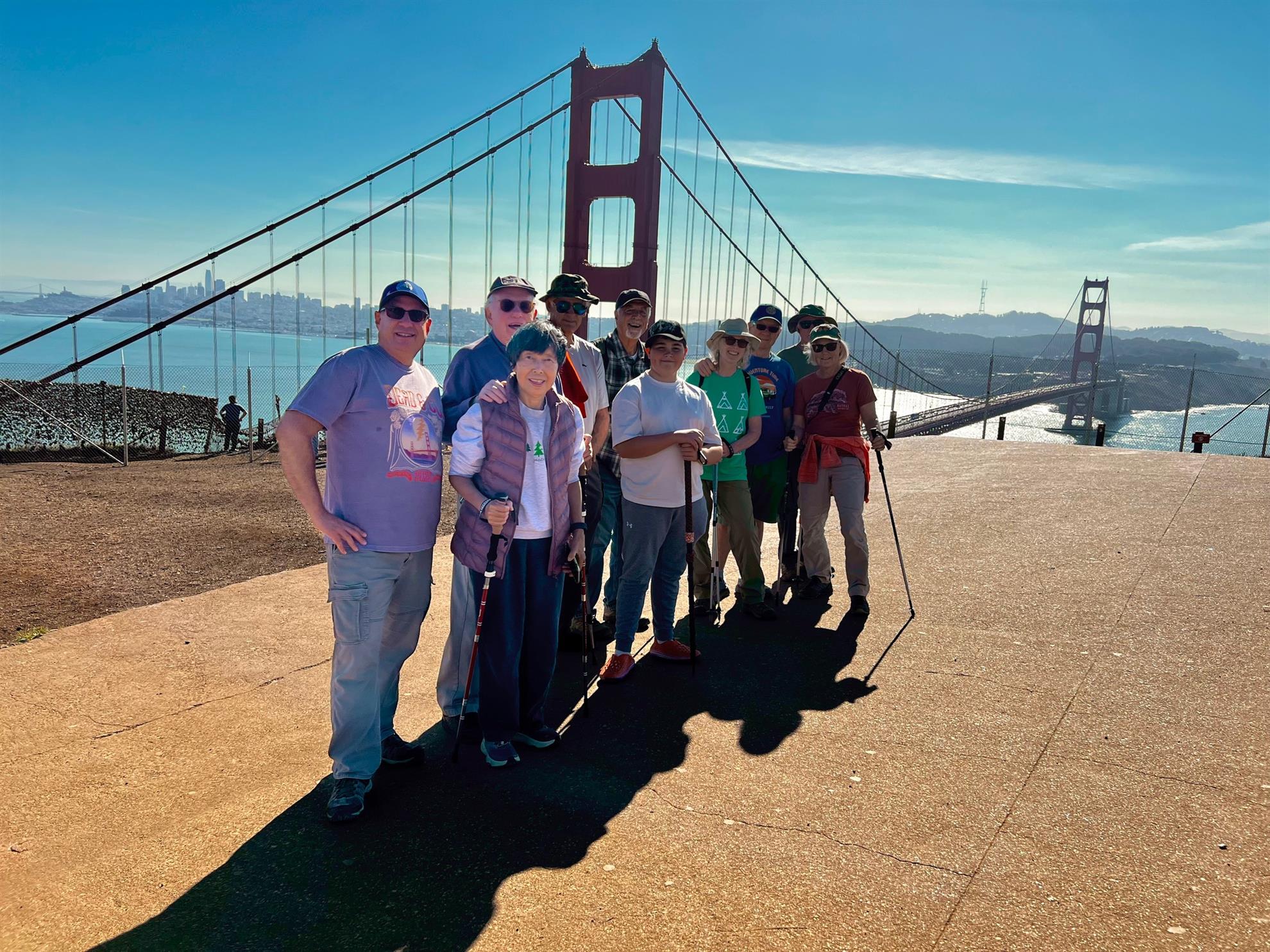
It was a post card setting for our Saturday hike in the Marin Headlands!
Marin Headlands Hike. In order: Max Childs, Marty Behr's cousins, Wong-Ho & Myron, George Pappas and his grandson, Marty, Penny Millar & Paul O'rear, Marty’s brother-in-law Ron and Marty’s sister-in-law Phyllis.
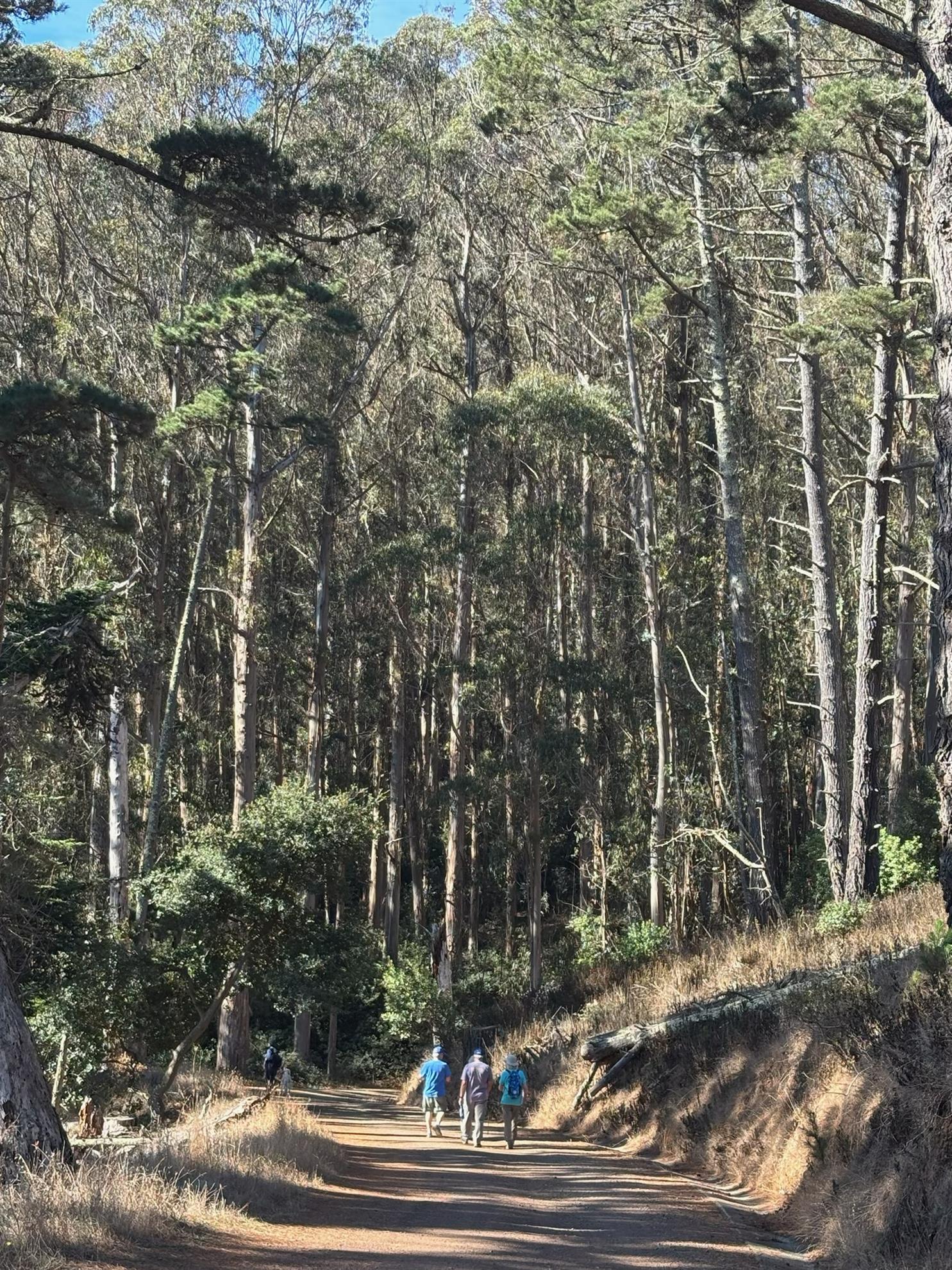
Penny, Paul & Max on the road to Kirby Cove.
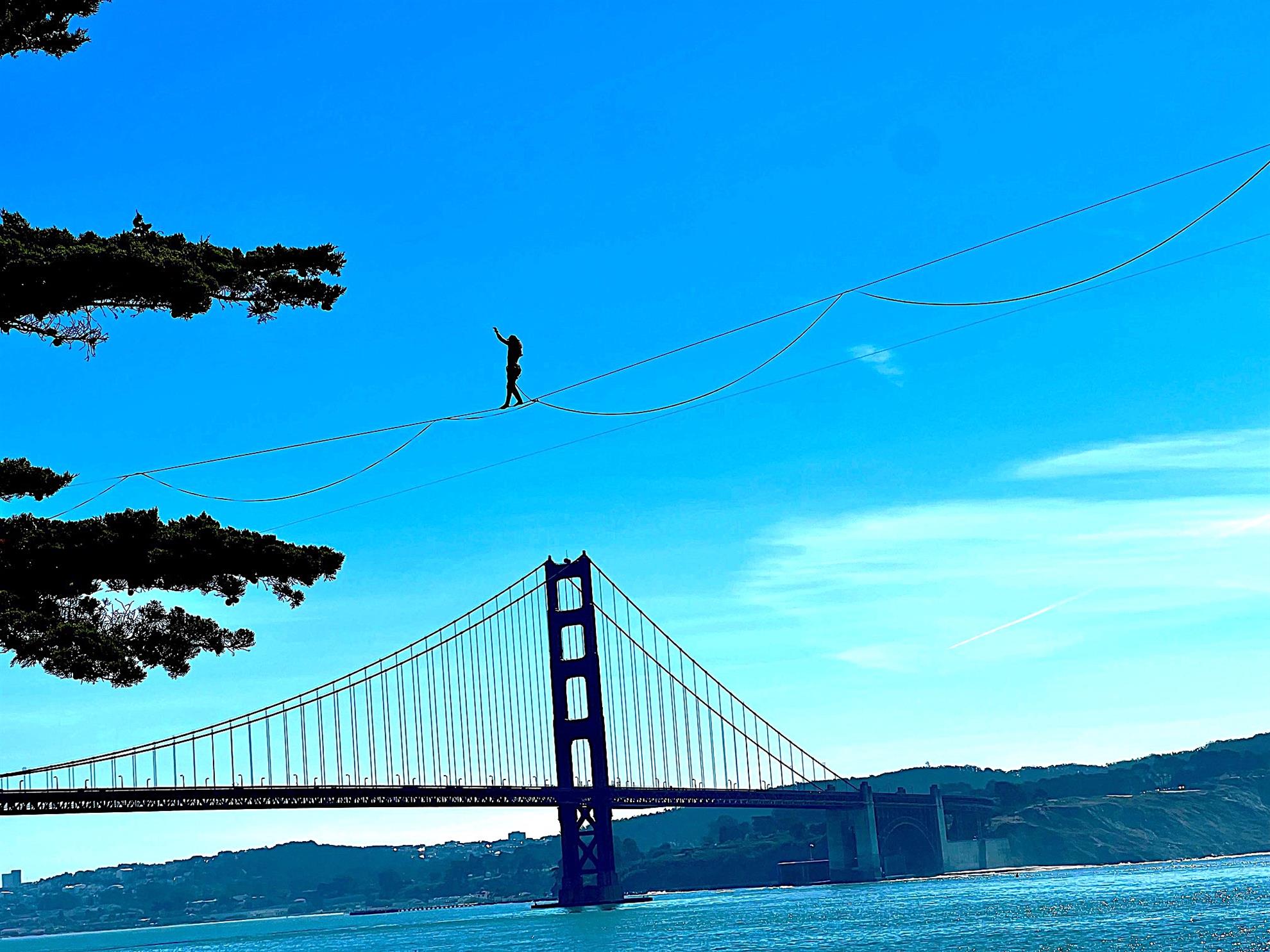
Tightrope walker traversing Kirby Cove.
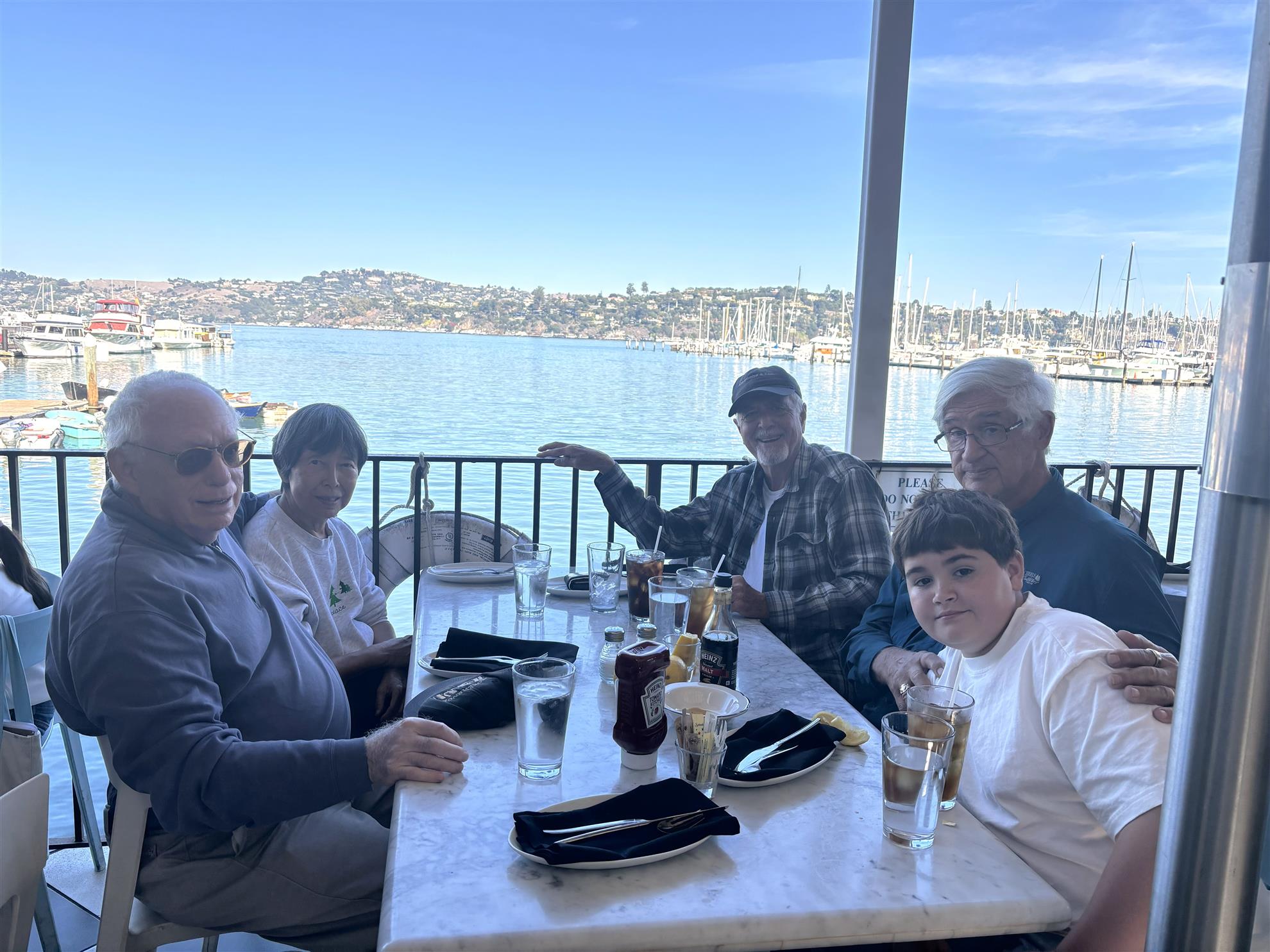
Myron, Wong-Ho, Marty, George & George’s grandson at Salito’s on the water in Sausalito for lunch after hike.
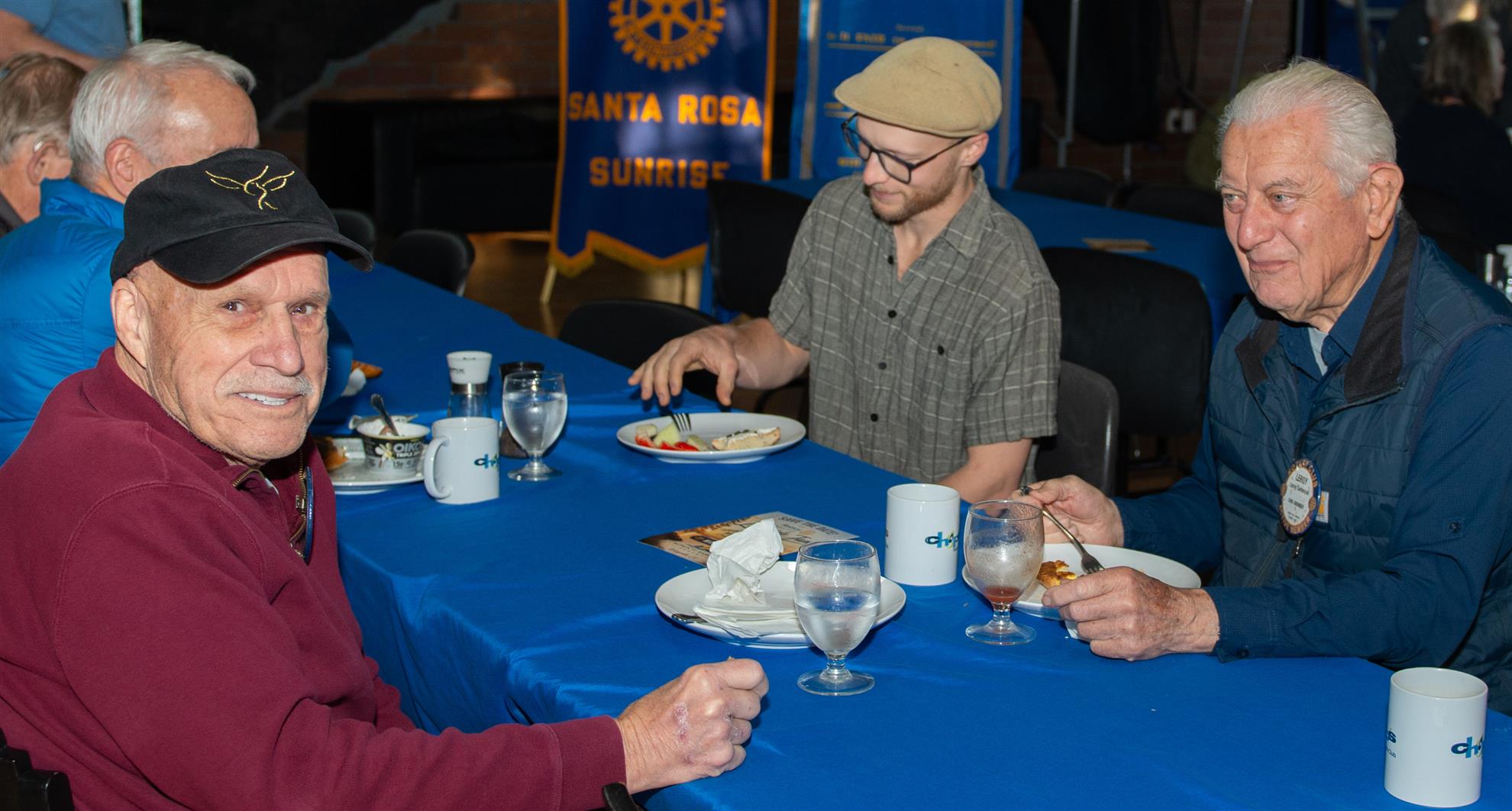
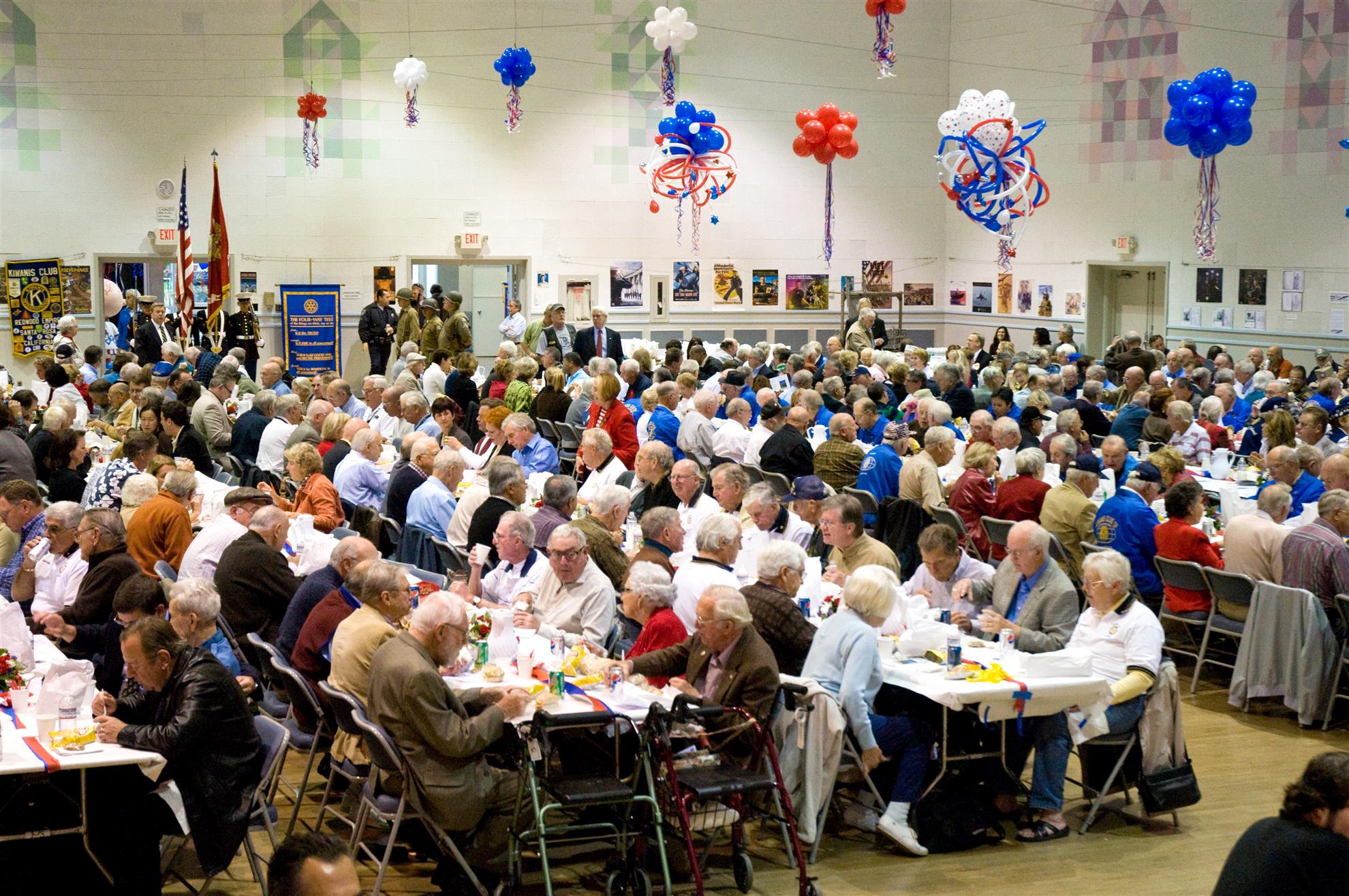
On a regular basis, our resident photo pro Warren Smith, submits pictures of what is going on at the weekly meetings. You can always find the most recent pictures at the websites photo journal called "Meeting Sighting" Please note that all the meeting photos for the entire Rotary year are at this location with the most recent on the last page.
Thanks for all the great pictures Warren!Link to Meeting Sightings. The most recent are on the last page!
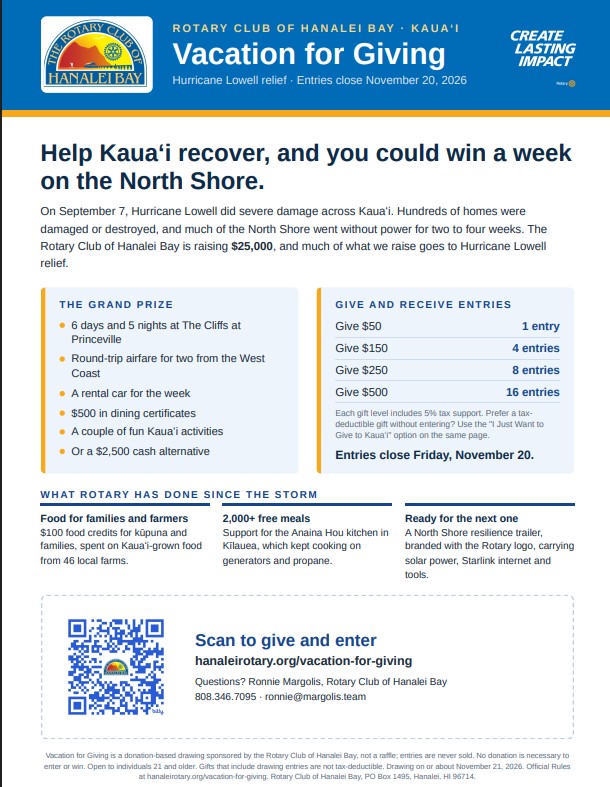
Help Kauaʻi recover, and you could win a week on the North Shore.
Help Kauaʻi recover, and maybe win a week on the North Shore. Hurricane Lowell struck Kauaʻi on September 7, damaging or destroying hundreds of homes and leaving much of the North Shore without power for weeks. Our fellow Rotarians of the Rotary Club of Hanalei Bay are raising $25,000 for relief through Vacation for Giving. Give $50 or more by November 20 for a chance at 6 days and 5 nights at The Cliffs at Princeville, round-trip airfare for two from the West Coast, a rental car, and dining certificates. Learn more and give: hanaleirotary.org/vacation-for-giving
Change within ourselves is the first step toward the impact we seek to make in the world.
I remember my first encounter with Rotary. I saw a Rotarian on television. I was a teenager with my thoughts elsewhere, when suddenly my full attention was on this man. I did not know it then, but that moment would change my life.
That is the thing about impact. We often imagine it as something we create out there, in a community we visit or in a project we fund. But that impact is brought about through the change within us as well.
Increasing our impact is the first priority of Rotary’s Action Plan, and it asks us not only to do good but to do good that lasts and can be measured. It means choosing sustainable, needs-based projects over comfortable ones and asking honestly whether a project will still be serving people five years from now without us in the room.
When I say we must Create Lasting Impact, I do not mean impact that fades once the ribbon is cut or the well is dug. I mean the kind of impact that changes the person doing the work as surely as it changes the person benefiting from it. Rotary changes all of us. It changed a teenager watching a television broadcast. It has changed millions of Rotarians and Rotaractors since 1905. And it will keep changing people, long after this Rotary year, if we do the work now to make sure it can.
That work starts with membership. Impact scales with people. Every hand we add is another hand that can dig a well, teach a child to read, deliver a vaccine, or simply show up for a neighbor in need. As we approach our 125th anniversary in 2030, our goal is to reach 1.25 million Rotarians and 125,000 Rotaractors worldwide. That is not a number for a banner. It is a measure of how much more good we can do together, and how many more lives, including our own, Rotary still has the chance to change.
I have often challenged you to do better than your best. Growing our membership is where that challenge lives most urgently. Invite the colleague who keeps asking what Rotary is about. Welcome back the member who drifted away. Partner with the Rotaract club down the street. Every one of those conversations is a small act with lasting consequences.
We have 125 years behind us and a great deal of work still ahead. Let us build the kind of Rotary that keeps changing people the way it changed me, one member, one project, one act of service at a time. Together, let us Create Lasting Impact.
You can find all prior "RI President's Messages" at this LINK
Recently I met Selu Polley, a Ugandan police officer and a member of the 25th class of Rotary Peace Fellows at International Christian University in Japan.
Growing up next to the Nakivale refugee settlement in southern Uganda — one of the oldest and largest in the world — Selu knew some of its residents. Now he hopes to focus his peace fellowship research on Nakivale, to prepare him to serve his own community.
That conversation took me back to my own visit there in 2022 and reminded me that the seeds of peace can spring up where we least expect them.
Nakivale is home to more than 286,000 people who have fled conflicts in the Democratic Republic of Congo, Burundi, Rwanda, and elsewhere, many of them women who walked for days and often weeks to reach safety.
Their stories will stay with me forever.
Every single one told me her husband had been murdered. Several had lost children to violence, hunger, or exhaustion. Through immeasurable grief, their presence was steady, dignified, and resolute.
When I asked what they needed, not one asked for money. Not one asked for food or shelter. They asked for opportunity. They wanted the chance to build small businesses so they could feed their children and send them to school. Their request was simple and powerful: Help us create something that will last.
To that end, I have been working with Paul Mushaho, a first-cohort graduate of the Rotary Peace Center at Uganda’s Makerere University, who started Nakivale’s first Rotaract club. With support from The Rotary Foundation, we are funding a sewing room where these women can learn a trade, earn an income, and build stability. Through those clubs, young people in Nakivale see themselves not as survivors but as leaders.
As we celebrate Rotary Foundation Month in November and embark upon the 25th year of Rotary Peace Fellows, remember how far the Foundation has come, and the work of the more than 1,900 peace fellow alumni.
The journey to peace is begun by leaders like Paul, strengthened by the Nakivale women who refuse to give up hope, and carried forward by peace fellows like Selu.
Peace is not an abstract concept. It is an action, built one opportunity at a time, often by those who have endured the unimaginable and still choose hope. Through The Rotary Foundation, we can choose hope alongside them, and help it grow into something that lasts.
You can find all prior "Messages from the Foundation Trustee Chair" at this LINK
Learn how Rotary clubs are taking action in Canada, the Cayman Islands, Wales, India, and Indonesia.
by Brad Webber
30 Oct 2026
Canada
The Rotary Club of Calgary Heritage Park in Alberta collected more than 2,000 pieces of donated art for its Second Chance Art Sale. “The art sale is hugely successful for enhancing member engagement and increasing awareness of Rotary in our community,” says Bill Skinner, a past president of the club. The sale itself is a visual stunner, Skinner notes, with wall art, textiles, and ceramics displayed in an off-season hockey arena. “It overwhelms customers on their first visit,” he says. The event, held in April, goes beyond decluttering and finding new homes for paintings: Proceeds have funded projects including a science and mathematics school in Nigeria, the refurbishment of a water system in Guatemala, and the rehabilitation of below-market housing by clubs across Calgary.
Cayman Islands
Believing that healthy Rotarians are best equipped to deliver service, the Rotary Club of Central Cayman Islands hosts a robust exercise regimen open to the islands’ Rotarians and Rotaractors. Beginning in July 2025 the club instituted Wellness Wednesdays on the third week of the month, with sessions attended by a core group of 30 of the club’s 80 Rotarians, says Jennifer Leach-Tippetts, a past president. “Most sessions are led by local fitness professionals and wellness experts. One of our members, a certified water fitness instructor, led our water aerobics sessions in May,” Leach-Tippetts says. Other activities include pickleball, spin classes, kickboxing, and 5-kilometer runs. The club also recruits meeting speakers on topics such as nutrition and avoiding burnout.
This story originally appeared in the November 2026 issue of Rotary magazine.
Rotary Club of Santa Rosa Sunrise - Founded June 30, 1986










 Santa Rosa Vet's Building





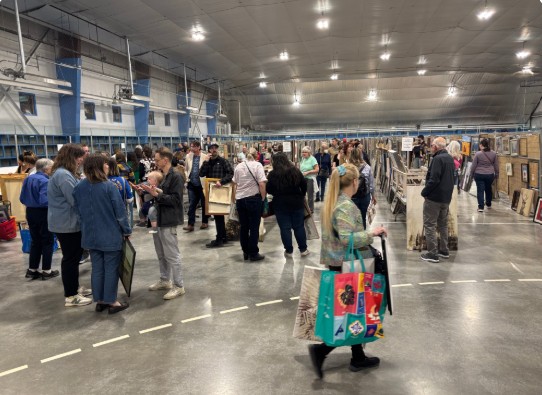 The Rotary Club of Calgary Heritage Park in Alberta collected more than 2,000 pieces of donated art for its Second Chance Art Sale. “The art sale is hugely successful for enhancing member engagement and increasing awareness of Rotary in our community,” says Bill Skinner, a past president of the club. The sale itself is a visual stunner, Skinner notes, with wall art, textiles, and ceramics displayed in an off-season hockey arena. “It overwhelms customers on their first visit,” he says. The event, held in April, goes beyond decluttering and finding new homes for paintings: Proceeds have funded projects including a science and mathematics school in Nigeria, the refurbishment of a water system in Guatemala, and the rehabilitation of below-market housing by clubs across Calgary.
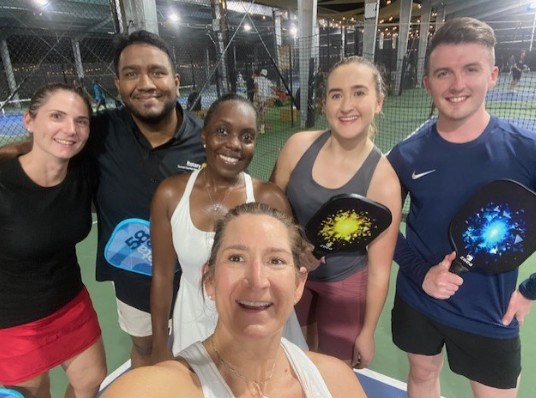 Believing that healthy Rotarians are best equipped to deliver service, the Rotary Club of Central Cayman Islands hosts a robust exercise regimen open to the islands’ Rotarians and Rotaractors. Beginning in July 2025 the club instituted Wellness Wednesdays on the third week of the month, with sessions attended by a core group of 30 of the club’s 80 Rotarians, says Jennifer Leach-Tippetts, a past president. “Most sessions are led by local fitness professionals and wellness experts. One of our members, a certified water fitness instructor, led our water aerobics sessions in May,” Leach-Tippetts says. Other activities include pickleball, spin classes, kickboxing, and 5-kilometer runs. The club also recruits meeting speakers on topics such as nutrition and avoiding burnout.