Lisselot Troconis, Executive Director of People Helping People El Salvador
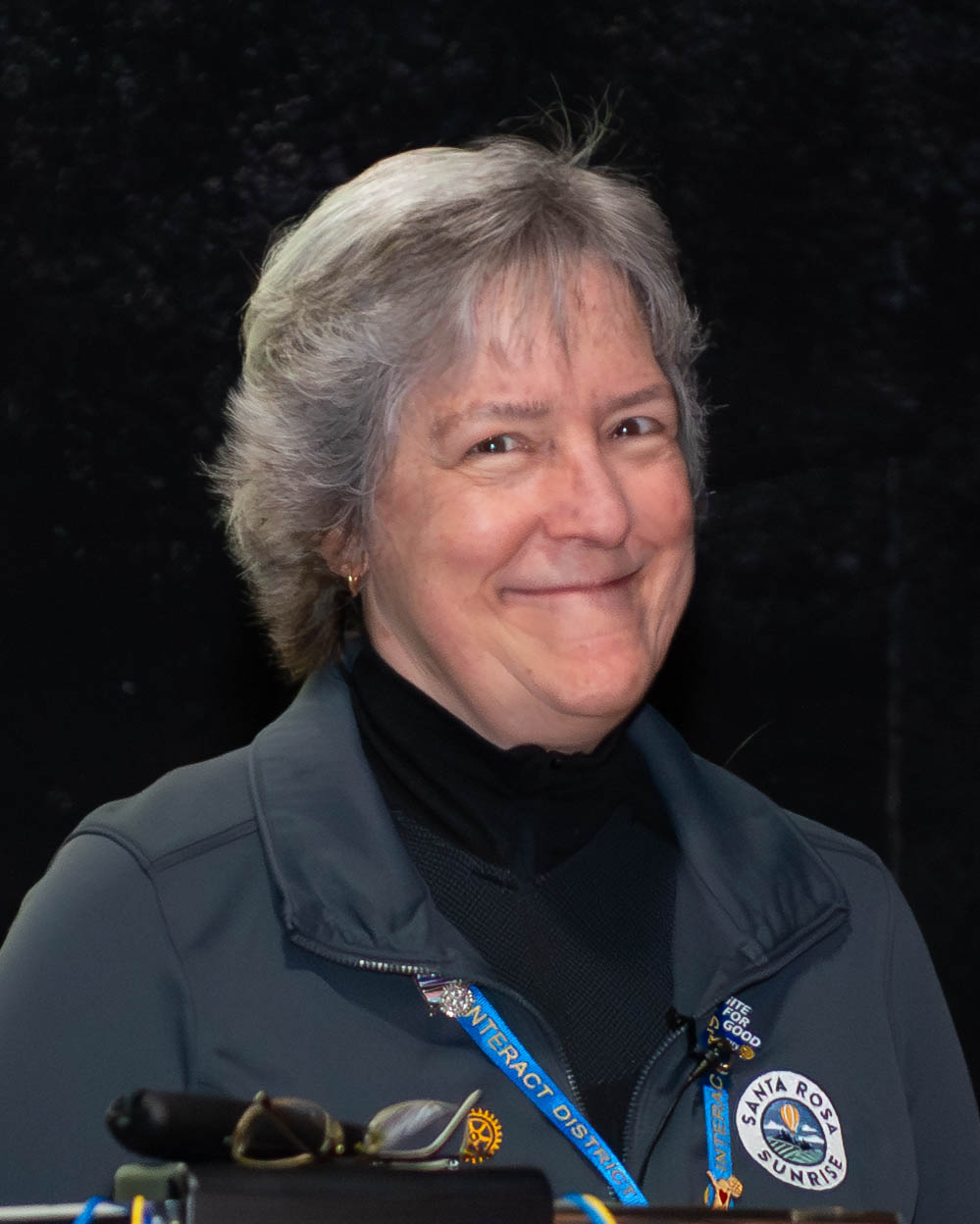
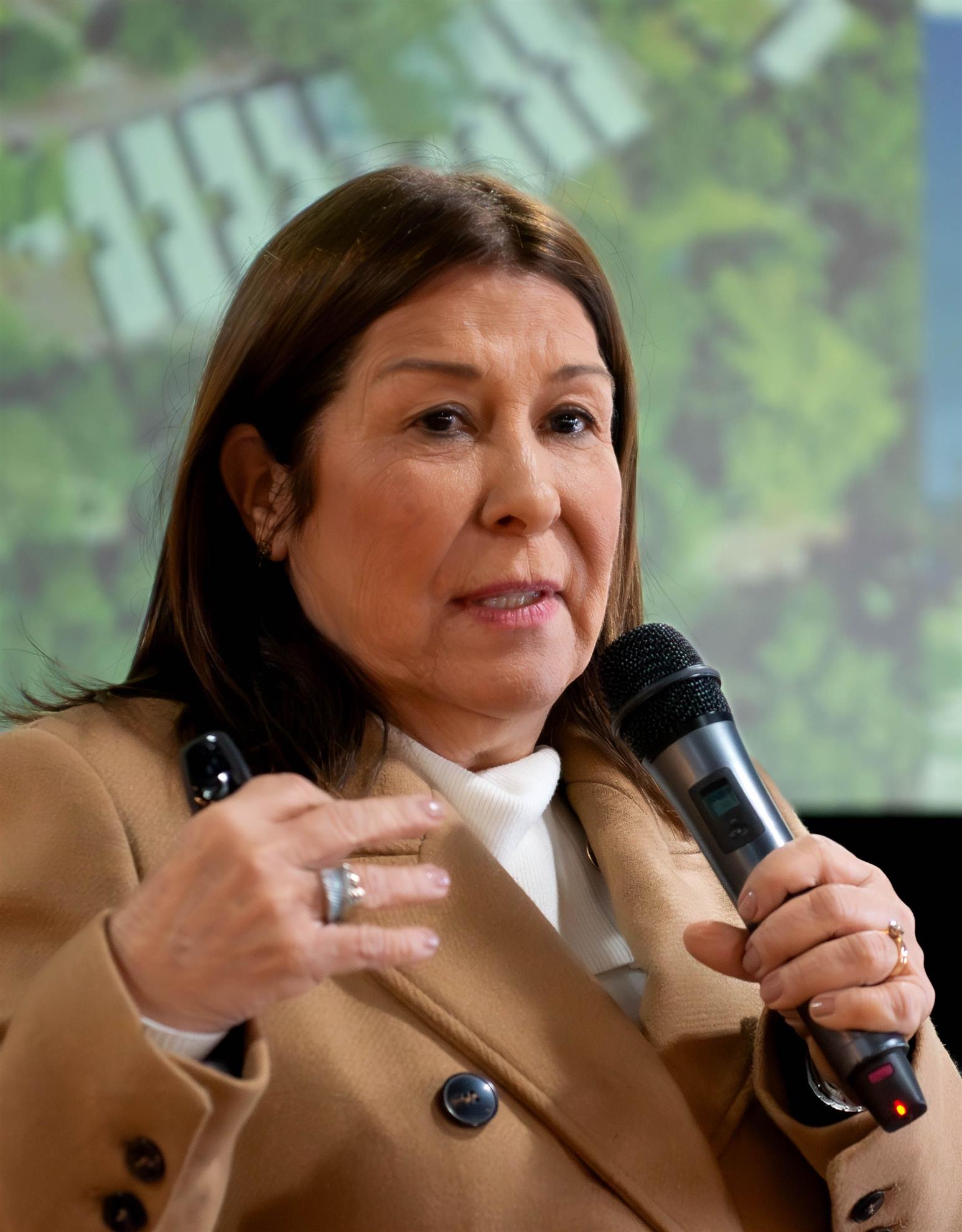
Our speaker for February 5, 2026 was Lisselot Troconis, Executive Director of People Helping People El Salvador, a non-profit organization. Lisselot was raised in Venezuela but attended high school in the U.S. She has lived in El Salvador since 2000. People Helping People (“PHP”) works in four areas: housing, hunger, healthcare, and education. It partners with Fuller Center for Housing, New Story Charity, the Ministry of Housing, and local city halls in El Salvador.
The Housing Program is intended to raise the standard of living in the areas served, reduce emigration, and raise self-esteem. PHP has built 1,000 homes in 16 communities throughout the nation, with 158 homes under construction. The typical community has between 75 and 130 homes and is self-sustaining. Families reimburse the cost of their homes (around $10,000-11,000) without interest over approximately 18 years. To qualify, families must live within 10 km of the new community, maintain their existing jobs and schools, and have no criminal records. Homes include proper utilities including water, electricity, and waste disposal systems.
The Healthcare Initiative Program takes a multidisciplinary approach to support patients and concentrates on breast cancer screening, early detection, and treatment. Breast cancer incidence is rising in El Salvador. The program includes mobile dental services. PHP also helps provides wigs for women impacted by breast cancer and scholarships for children whose mothers are affected by breast cancer. 20,000 women have been scanned thus far. The Hunger Relief Program helps reimburse food for people while paying the mortgages. It has distributed 660,000 pounds of food thus far. Additional services include drilling wells, providing wheelchairs and distributing Christmas toys annually. The Education and Training Programs include the operation of a culinary school, English as a second language initiative, and scholarships. Economic conditions in El Salvador are improving, with lots of new investment and construction. Safety is “amazing”; people are now able to walk anywhere at any time.
Thank you, Lisselot for the presentation, for all her good work in El Salvador, and for assisting us in our upcoming El Salvador eyecare mission.
Click HERE to view a limited time recording of Lisselot's presentation.
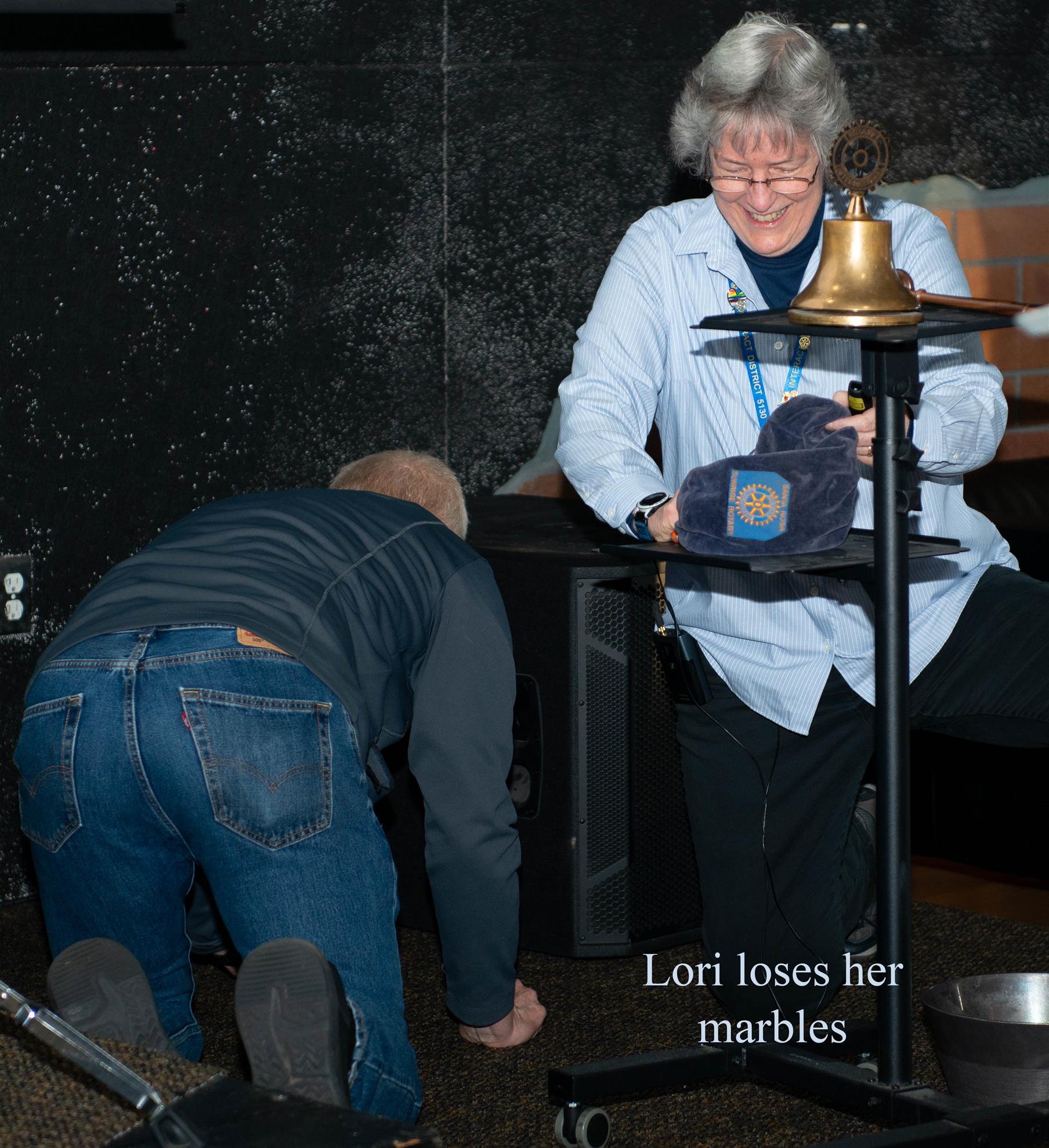
On a regular basis, our resident photo pro Warren Smith, submits pictures of what is going on at the weekly meetings. You can always find the most recent pictures at the websites photo journal called "Meeting Sighting" Please note that all the meeting photos for the entire Rotary year are at this location with the most recent on the last page.
Thanks for all the great pictures Warren!Link to Meeting Sightings. The most recent are on the last page!
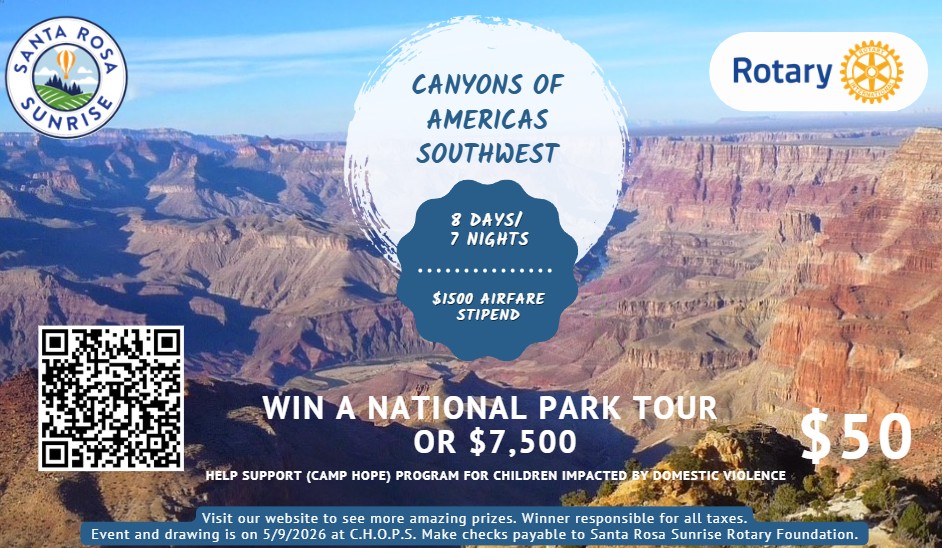
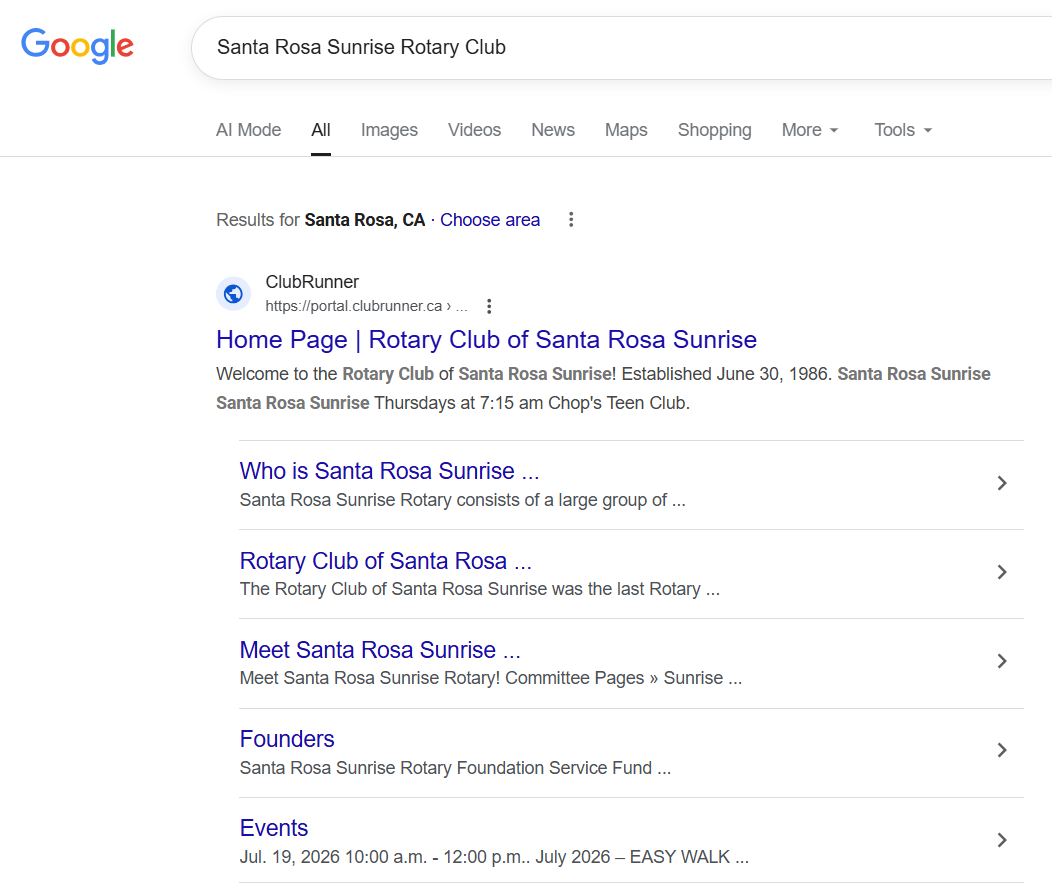
The fundraising committee wanted to be sure that both the membership, and all others interested know how to get to our “Clubrunner” website. Here are a number of options;
Option number 2 is to simply do a Google web search; Search for Santa Rosa Sunrise Rotary Club and the first result should be the correct link;
Option 3, in all future bulletins, there will be links posted to both the Club Website, and the 2026 Super Raffle Website in the left had column, near the top
Option 4 is directly to the Fundraiser portion of the website by going to srsrotary.com
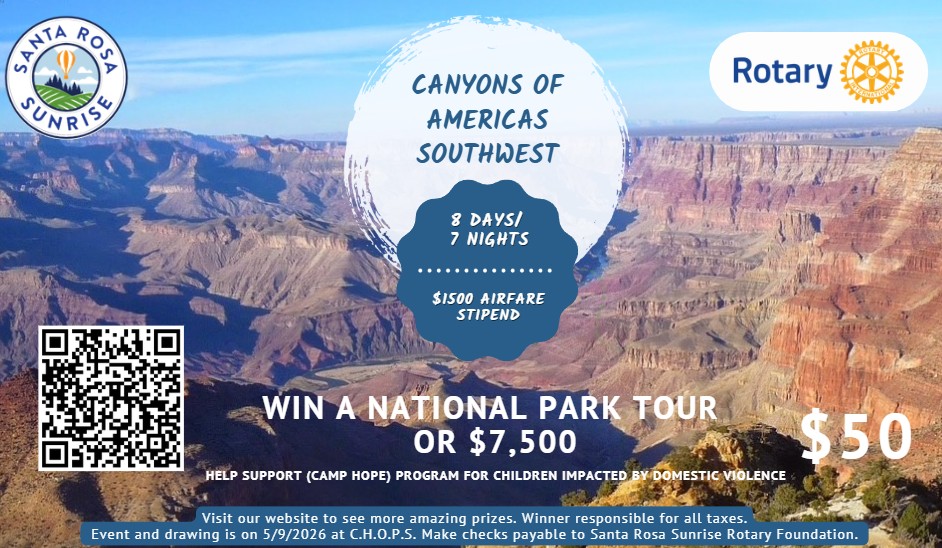
Option 5 is to use the QR code on the fundraiser Raffle ticket (lower left hand corner), which will take you to srsrotary.com
"Am I mentioned in the will?" the nephew asked anxiously.
"You certainly are" , replied the lawyer.
Right here in the third paragraph your uncle says: To my niece Sarah I bequeath a hundred thousand dollars, to my cousin Janice fifty thousand dollars, and to my nephew Charles, who was always curious to know if he was mentioned in my will, I say "Hi, Charles"
At last month’s International Assembly, President-elect Olayinka “Yinka” Hakeem Babalola called on members of the Rotary world to live out our presidential message for the 2026-27 Rotary year: Create Lasting Impact.
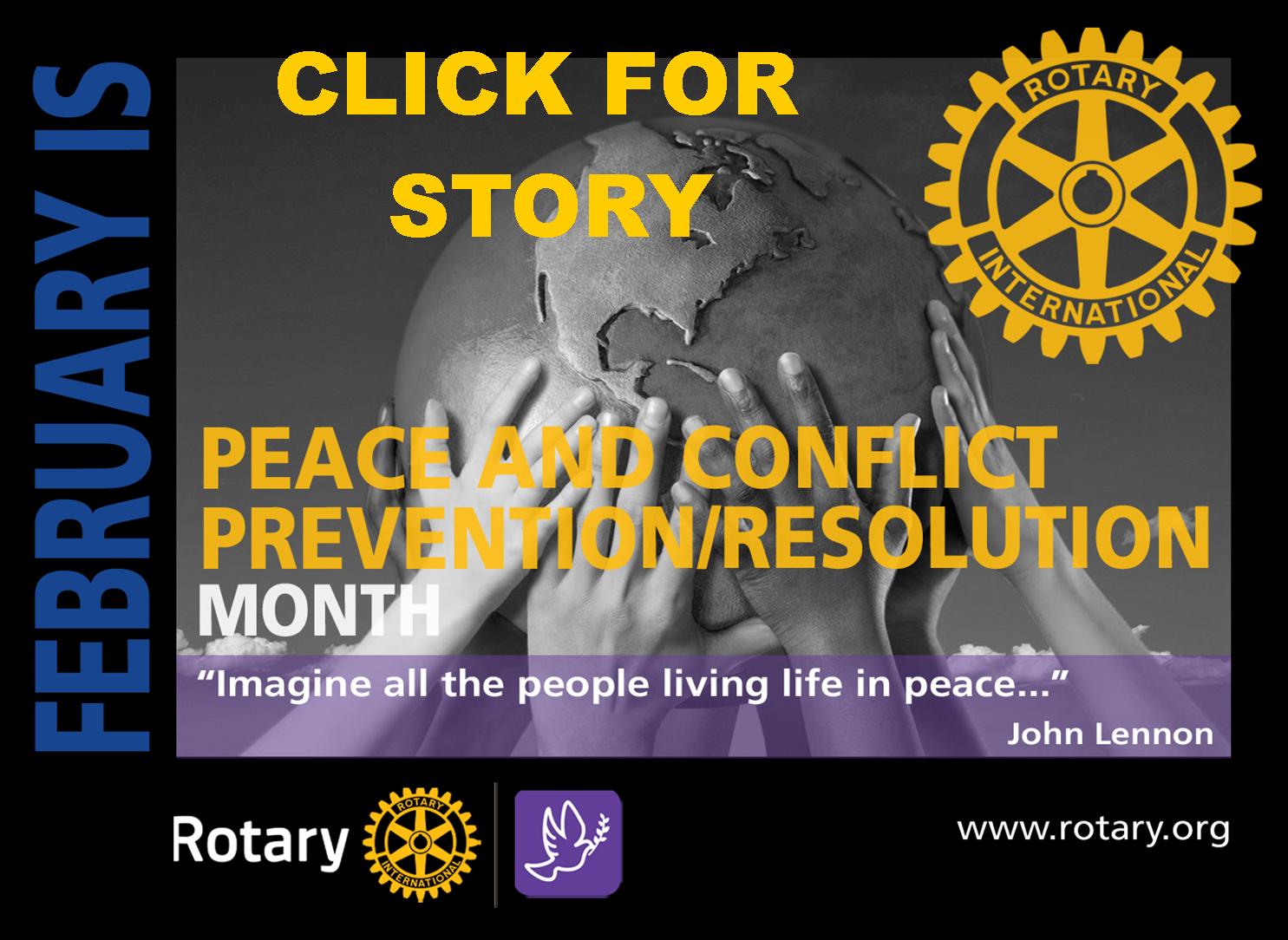
This February, as we observe Peacebuilding and Conflict Prevention Month, we have an opportunity to channel Yinka’s call to action into real change.
Peace is not simply the absence of war. A life free from conflict but marked by hunger, instability, or the inability to care for one’s family is not true peace. Peace requires liberty, opportunity, and respect for human dignity. Yet fear often blocks that path — fear of change, of cultural loss, of people we don’t understand.
Fear isn’t defeated through avoidance or aggression. Knowledge is the first step toward peace. Rotary embraces this idea. Our Rotary Peace Centers and their peace fellows, along with other peace education initiatives, demonstrate how knowledge builds trust and helps communities find solutions to conflict.
In Colombia, decades of conflict have left deep wounds. The 2025 Rotary Foundation Programs of Scale awardee, Pathways to Peace and Prosperity, partners with the United Nations World Food Programme to expand opportunity, improve conflict resolution, and connect people with social services. Its goal is to break cycles of violence, poverty, and food insecurity so peace can take root.
In Maharashtra, India, People of Action honoree Swati Herkal built peace through prosperity. Her project confronted farmers’ declining soil health, rising debt, and illness caused by chemical fertilizers. She and her Rotary partners launched a regenerative agriculture program that revitalized the land, lowered costs, and restored stability. More than 1,100 farmers now participate and over 50 villages have adopted the model.
Rotary also advances peace by restoring dignity. In Chad, Rotary Peace Fellow Domino Frank discovered that more than 1,500 women who fought in a rebellion had been erased from reintegration programs. His advocacy led to Chad’s first Rotary Foundation global grant and the creation of Corridors of Peace. More than 100 women — triple the goal — completed literacy and vocational training and formed a cooperative to support their families.
From Colombia to India to Chad, the lesson is clear: Peace is not a dream. It is the result of sustained action with a focus on true, lasting impact. To replicate these successes, Rotary clubs can take three steps: Learn from peace fellows and other peace experts in our organization, apply a peacebuilding lens to community assessments, and prioritize impact over ceremony.
In a world filled with fear, Rotary cannot be satisfied with half-measures and empty words. If we are truly people of action, then action must define us. Together, we can Create Lasting Impact — across the globe, in our communities, and in ourselves.
You can find all prior "RI President's Messages" at this LINK
February is Peacebuilding and Conflict Prevention Month, a perfect time to reflect on The Rotary Foundation’s mission to advance world understanding, goodwill, and peace. Whether improving health, supporting education, or alleviating poverty, peace is at the heart of everything Rotary does.
Rotary Peace Centers bring our ideals into the world by training the next generation of peacebuilders. Since 2002, more than 1,800 Rotary Peace Fellows have become catalysts for peace in over 140 countries.
I am often asked whether our peace fellows continue working for peace after their studies. The answer is a resounding yes. Many serve in United Nations agencies, governments, nongovernmental organizations, and groups they’ve founded themselves.
Recently, I met with the recipients of our latest Programs of Scale award, Pathways to Peace and Prosperity in Colombia. This $3 million partnership with the World Food Programme is establishing four peace hubs that will train 1,000 people in conflict resolution and support 700 entrepreneurs in communities touched by conflict.
During the meeting, I thought I recognized one participant as Brigitta von Messling, a German peace fellow I worked closely with in Berlin 13 years ago. But so much time had passed I wasn’t sure. When I asked Gladys Maldonado, a leader of the Colombia initiative, she confirmed it was Brigitta:
Brigitta is based in my city, Cúcuta, and is an active member of my Rotary club. She does wonderful work with the United Nations as an observer of the 2016 peace agreement Colombia signed with rebels. She even travels to remote locations in the Catatumbo region, an area of northern Colombia that has experienced violence by armed groups.
She has my utmost admiration. I had the good fortune of meeting her three years ago. She’s incredibly intelligent, with a gift for recognizing the strengths of others.
Brigitta is invaluable to my country, my city, and my Rotary club. She connected me with the World Food Programme so we could build the Programs of Scale project, which has filled my city and country with hope.
What Gladys said about Brigitta echoes so many stories we hear about Rotary Peace Fellows worldwide: They are invaluable. They remind us that peace is built one person at a time.
Your support of The Rotary Foundation opens countless opportunities for transformation.
You can find all prior "Messages from the Foundation Trustee Chair" at this LINK
For more than a decade, Iowa Rotarians have conjured up a frightful tradition for people seeking a Halloween scare. The undertaking started in 2012, when the Rotary Club of Eldora leased an abandoned city-owned hospital and turned it into a haunted fundraiser attracting visitors from across the state and new interest in the club. When the hospital was sold in 2023, the Rotarians created a new spooky attraction, an outdoor haunted trail. Costumed actors, including high school thespians, line the half-mile wooded path. “Honestly, the area is creepy enough without any props or decorations,” says Marc Anderson, club president. Proceeds are donated back into the community, primarily to the high school boosters. The club’s dozen members all pitch in to handle crowd control and ticket sales. “Most importantly,” Anderson says, “one Rotarian has to pick up pizzas to feed our actors at the end of each evening.”
Jamaica
Called Jamaica’s storm of the century, Hurricane Melissa swept across the island in October, devastating southwestern coastal communities. “Trees and power lines had fallen, roofs had been blown away, and some buildings had collapsed,” says Dominica Pradère, a past president of the Rotary Club of Montego Bay, one of the worst-hit areas. Two members’ homes were severely damaged, and all were left without electricity or running water for weeks. “Once we were able to communicate, we began to explore ways to assist people whose situations were far worse than our own,” Pradère says. Club members provided relief packages to several communities, working in partnership with the Rotary clubs of Kingston and Ocho Rios, and ShelterBox and Food For The Poor. “Fortunately,” Pradère says, “we have a network of Rotary friends and other organizations around the world who want to assist as we help communities and institutions to get back to normal.”
This story originally appeared in the February 2026 issue of Rotary magazine.



.png)









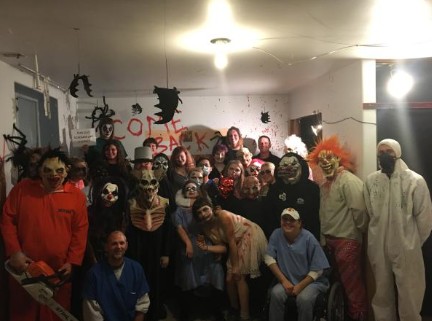 For more than a decade, Iowa Rotarians have conjured up a frightful tradition for people seeking a Halloween scare. The undertaking started in 2012, when the Rotary Club of Eldora leased an abandoned city-owned hospital and turned it into a haunted fundraiser attracting visitors from across the state and new interest in the club. When the hospital was sold in 2023, the Rotarians created a new spooky attraction, an outdoor haunted trail. Costumed actors, including high school thespians, line the half-mile wooded path. “Honestly, the area is creepy enough without any props or decorations,” says Marc Anderson, club president. Proceeds are donated back into the community, primarily to the high school boosters. The club’s dozen members all pitch in to handle crowd control and ticket sales. “Most importantly,” Anderson says, “one Rotarian has to pick up pizzas to feed our actors at the end of each evening.”
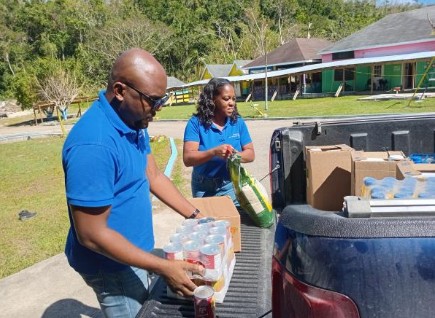 Called Jamaica’s storm of the century, Hurricane Melissa swept across the island in October, devastating southwestern coastal communities. “Trees and power lines had fallen, roofs had been blown away, and some buildings had collapsed,” says Dominica Pradère, a past president of the Rotary Club of Montego Bay, one of the worst-hit areas. Two members’ homes were severely damaged, and all were left without electricity or running water for weeks. “Once we were able to communicate, we began to explore ways to assist people whose situations were far worse than our own,” Pradère says. Club members provided relief packages to several communities, working in partnership with the Rotary clubs of Kingston and Ocho Rios, and