As we approach Thanksgiving and holiday/festive season, most everyone makes plans to gather with family and/or friends. We cherish the memories of celebrations past and look forward (most of the time!) to upcoming gatherings. For this week’s meeting, there is no guest speaker. Instead, Mark Campbell invites you to take a trip down memory lane. But instead of the usual Hallmark-esque warm fuzzy fond memories, we want you call up at least one instance where something went off the rails. Whether it was at home or on the road, bring us your memory of something that was completely unexpected. You either cried or laughed…or a bit of both. It did not go as planned. So tell us all about it and what you remember most and what, if anything, you learned from it.
Need an example? The first Christmas in our last home in Seattle comes to mind. We had 11-foot ceilings so I naturally bought a 12’ tree so couldn’t even put the topper on it. I nearly threw out my back wrestling the tree into the holder but we finally got it decorated and it looked great (except for the bent over tip). A few days later, we went off to the holiday dinner party. When we got home the tree had toppled onto its side and water was all over the rug and floor. A bunch or ornaments had met their maker. The expression on the face of Maddie, our old and gentle Bernese Mountain Dog, said nope, not me. Oreo, our cat, had retired to the bedroom under a bed. In years past, she found ways to knock ornaments to the floor, claw presents, and most damming of all, would attempt to climb the tree. Our 10-pound demon brought down a 10-foot tree. We cleaned it all up, bought a few more drug store plastic ornaments and had a great Christmas. But since then our trees are always 5’-6’ footers and we hang the cheapo ornaments at the bottom so Oreo can amuse herself.
So, come prepared with at least one ‘holiday from hell’ memory to share with the group. The tables will be arranged for small groups (4, 6, or 8). Each group is to pick the one memory they agree takes the cake. Be prepared to share it. And let’s all be grateful as we so much to be grateful for.
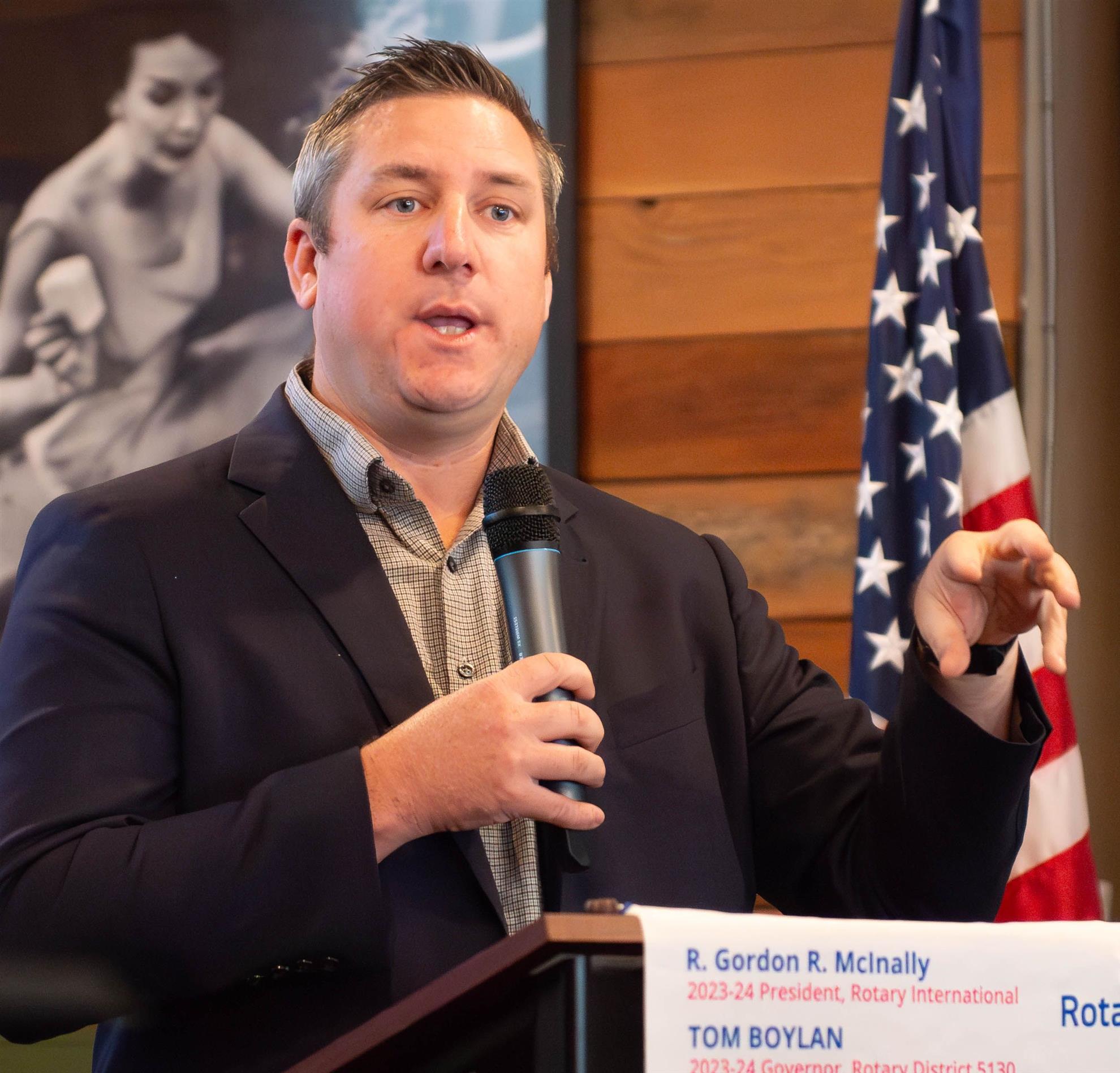
Our speaker for November 9, 2023, was Santa Rosa City Councilperson Chris Rogers. Chris was first elected to the Council in 2016 and reelected in 2020. He represents District 5, the district covering downtown Santa Rosa, Railroad Square, and the Luther Burbank areas. He represents Santa Rosa on a variety of boards and agencies, including Sonoma Clean Power, the transportation committee, the legislative task force and Bay Area Governments Executive Committee. He chairs Santa Rosa’s Climate Action subcommittee, long term finance subcommittee, and works on the Environmental Quality Committee. Chris has a master’s degree in public administration from Sonoma State University.
Chris’ presentation focused on problems in housing. He noted that local governments no longer have a strong say in how to respond to the housing crisis in California. Every 8 years, the state sets the target for the number of homes needed in California for each income level. Local governments like Santa Rosa must plan for enough housing to meet the needs in their own communities. Chris referred to this needs assessment plan as the RHNA. Santa Rosa is required to plan for 4,685 new housing units for the 2023-2031 period. RHNA also requires that new housing meet specific affordability criteria. The system classifies affordability into 4 separate income groups; very low, low, moderate, and above moderate. So far, Santa Rosa has been failing to meet the requirements in all categories except “above average.” The state’s housing requirements are very strict and there are serious consequences if Santa Rosa can’t meet the requirements. Under Senate Bills 35 and 423 California cities and counties out of compliance with RHNA requirements forfeit their authority to deny affordable housing projects.
The City’s strategy is to concentrate on “growing up” residential housing in downtown Santa Rosa. Unlike other areas, downtown has good access to freeways and mass transit. Building up can vastly expand the number of available housing units in the quickest possible way. This is especially true because the City owns or controls properties in downtown Santa Rosa that could be used to increase housing. As of now, 2,000 units of housing have been approved in Santa Rosa. Some of these approvals may not be built because of the recent uptick in interest rates, but some are ready to go now. In addition, Santa Rosa recently earned the coveted Prohousing designation from the state. This designation is an acknowledgement of Santa Rosa’s commitment to addressing housing availability and affordability. Santa Rosa will also receive a $10 million grant to assist in its efforts to build additional housing.
Many thanks to Chris Rogers for his power-packed presentation and his advocacy on behalf of Santa Rosa. Great job and keep up the good work!
Click HERE to see the limited-time recording of Chris Rogers' presentation.
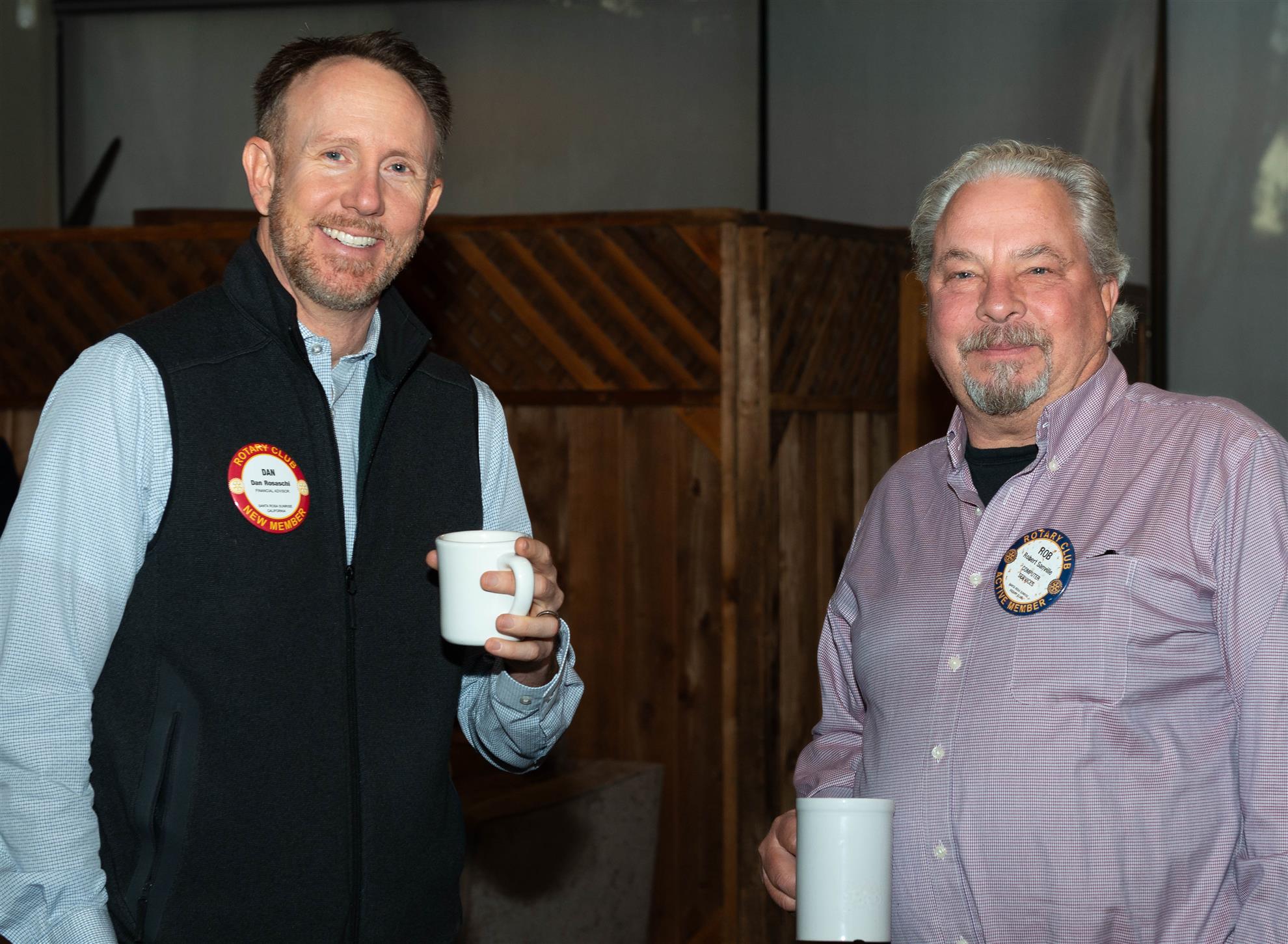
On a regular basis, our resident photo pro Warren Smith, submits pictures of what is going on at the weekly meetings. You can always find the most recent pictures at the websites photo journal called "Meeting Sighting" Please note that all the meeting photos for the entire Rotary year are at this location with the most recent on the last page.
Thanks for all the great pictures Warren!Link to Meeting Sightings. The most recent are on the last page!
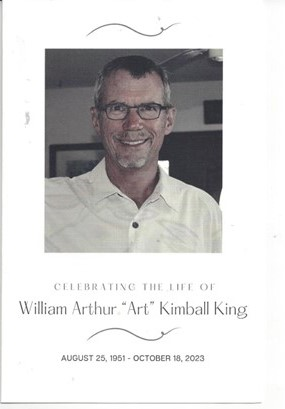
In Memoriam: Santa Rosa Sunrise Rotarian, Art King
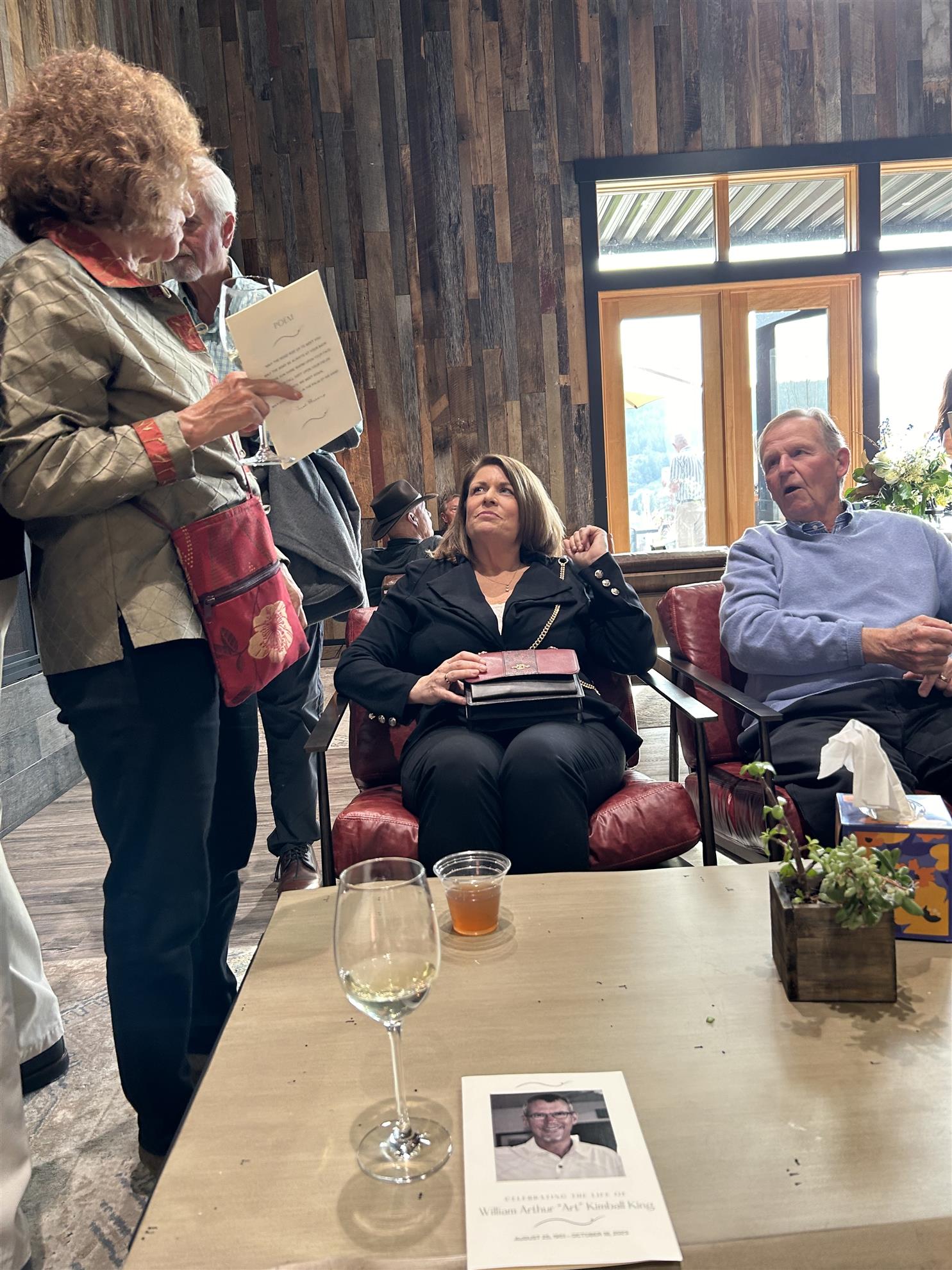
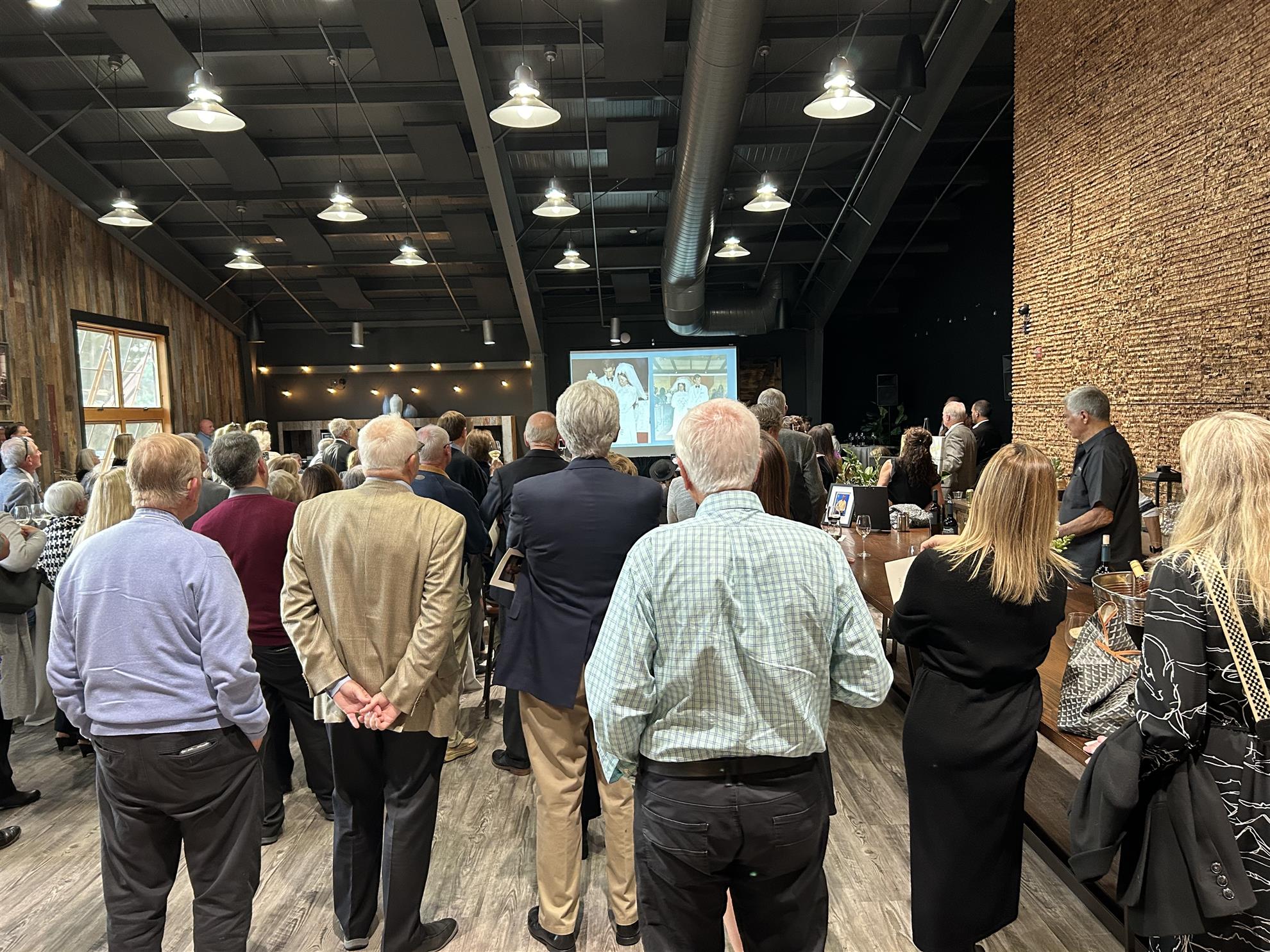
Art King's family and friends gathered Friday November 10 at Sugarloaf Crush & Winery giving tribute and a toast to him.
Art built lasting friendships in Santa Rosa and Seattle where he served as a Partner with Moss Adams. His community engagement included President of Sunrise Rotary 1997-98.
Daughters Michelle and Teresa led a closing toast.
A celebration of his life was held at Sugarloaf Wine Co. on November 10, 2023.
In lieu of flowers, donations may be made via check to the Santa Rosa Sunrise Rotary, Art King Memorial Fund, and mail the check to PO Box 14953, Santa Rosa, CA 95402, and please write Art King in the memo line.
Santa Rosa Sunrise Rotarians and Friends: Please join us for our November Wednesday Walk.
NEW DATE AND NEW LOCATION. Guests welcome.
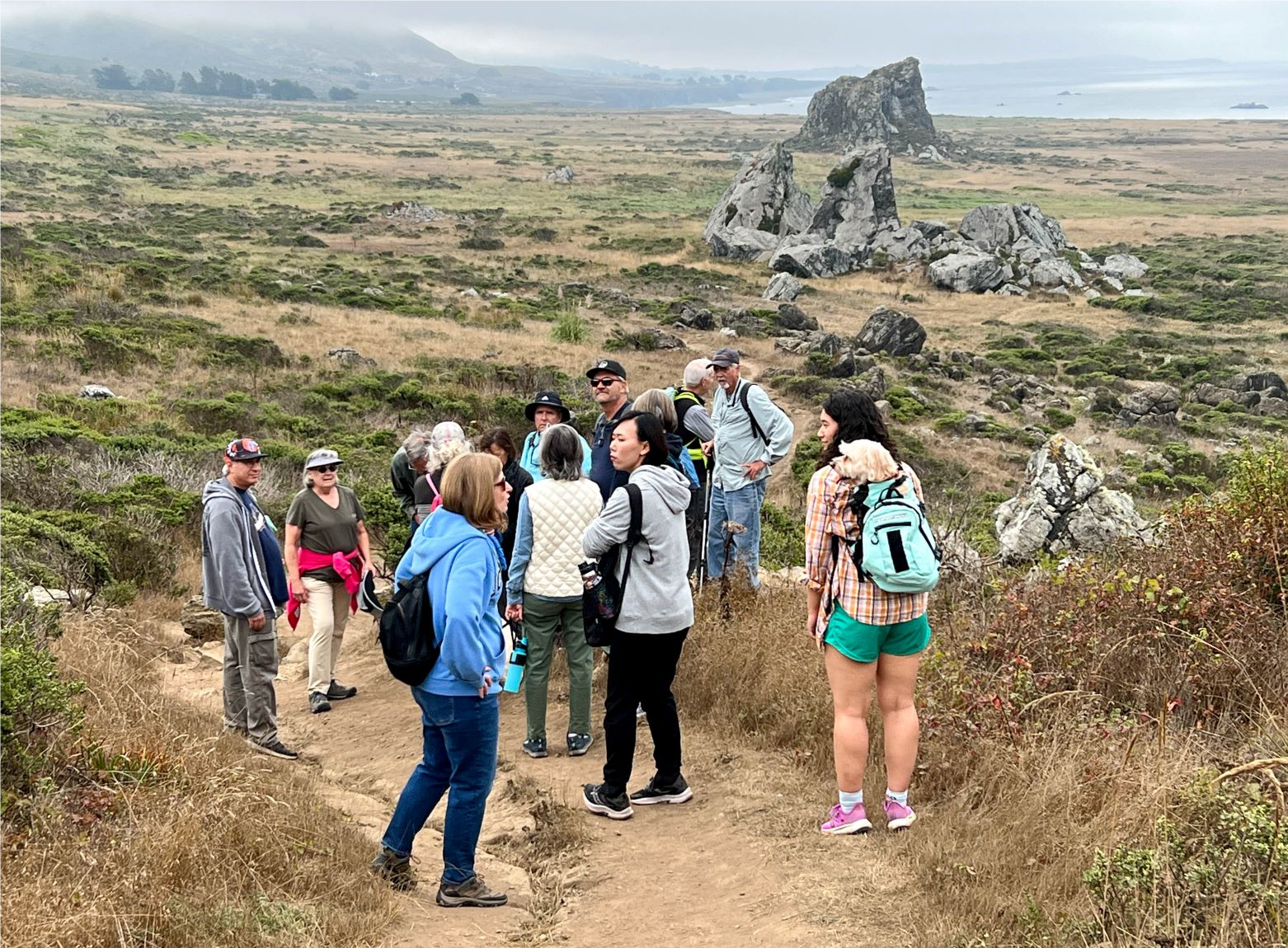
WEDNESDAY WALK -- NOV. 15 -- 4:00pm-5:00pm-- Brush Creek Trail
Location: Meet at the Union Hotel parking lot on Mission near Sonoma Hwy.
280 Mission Blvd, Santa Rosa
Description: Enjoy a late afternoon walk of about two miles along Brush Creek. This trail is in the middle of the city, but natural in most places ... and with a bit of fall color. A flat and mostly paved trail.
Optional: Those who want to extend the camaraderie can stay for a drink and some appetizers at The Union Hotel.
Bring: A water bottle for hydration. Dog-friendly -- on a leash.
Questions -- Contact Marty Behr at behr@whidbey.com or 206-391-3427.
**SAVE THE DATE FOR OUR TRADITIONAL DECEMBER HOLIDAY CITY WALK**
HISTORIC PETALUMA -- Led by a docent from the Petaluma Historical Society
The boss, Ms. Bennet, always scheduled the weekly staff meetings for four-thirty on Friday afternoons. When one of the employees finally got up the nerve to ask why, she explained, "I'll tell you why - I've learned that's the only time of the week when none of you want to argue with me."
Next year, Rotary takes a step toward supporting peacebuilding in the Middle East and North Africa region when recruitment begins for our newest peace center in partnership with Bahçeşehir University (BAU) in Istanbul.
A series of events in the coming year will recognize the new center at BAU and Rotary's work to promote peace. The 2024 Rotary International Convention in May will mark 25 years since the first Rotary Peace Centers were announced — coincidentally at the Rotary Convention in Singapore in 1999. Recruitment for the first cohort of Rotary Peace Fellows at BAU also starts in 2024, and selected candidates will begin their program in early 2025.
Since its beginning, the peace centers program has prepared more than 1,700 peace fellows working in more than 140 countries to create a more peaceful world. That is certainly worth celebrating, but Rotary Peace Fellows are more than statistics on a page. Their actions have helped Create Hope in the World and will continue to do so.
For example, Jennifer Montgomery and Gorett Komurembe — peace fellows from the program at Makerere University in Uganda — are co-founders of Magenta Girls Initiative. The international nongovernmental organization equips Ugandan girls and young women with the support and tools to overcome harmful gender norms, generational poverty, gender-based violence, trafficking, and trauma.
Ndzi Divine Njamsi, another peace fellow who studied at Makerere, has taken lessons learned about Positive Peace and is sharing them with students of his own in Cameroon. He became interested in the Rotary Positive Peace Activator training program after witnessing extremism, online hate speech, and violence in Cameroon. Since completing the program, he has brought his lessons on peace to students at the Yaoundé International Business School and other organizations in the Central Africa country.
The world needs more people like the graduates of the program at Makerere and our other peace fellows. To that end, we can all advance peace by encouraging our local peacebuilders to learn more about Rotary and apply for this impactful fellowship. Rotary members can also mentor candidates for the fellowship. Or you can work with peace fellows who have already graduated. They probably have an initiative or two that would benefit from your help.
Our peace centers in North America, Europe, Africa, Australia, and Asia depend on financial support as well. The program at BAU was made possible thanks to a generous gift of $15.5 million to The Rotary Foundation from the Otto and Fran Walter Foundation.
This new Rotary Peace Center will offer a one-year professional development certificate in peace and development studies for fellows focusing on peacebuilding within the Middle East and North Africa region.
Peace must be waged persistently; it is the soil where hope takes root. But as with any journey, we take one step at a time. Let’s take those steps together.
This month, as we celebrate The Rotary Foundation, let’s recognize it for what it is: one of the world’s best humanitarian organizations.
Many charities, relief organizations, and nonprofits do the same type of work, and the public associates them with the causes they work on. But I wonder how many people know that Rotary supports those same causes — seven of them in fact — which we call our areas of focus.
If they want clean water, good health, and a sustainable future for our planet, they support what our Foundation does. If they envision a world where peace, full literacy, and economic opportunities for communities to support themselves exist, they also believe in Rotary’s mission. And if they want to see mothers and their babies thrive, their vision aligns with the work we do.
And we have a lot of work in progress through the Foundation. Polio eradication is changing the world, one drop of vaccine at a time. Rotary Peace Centers are training peacebuilders to reduce violence and resolve conflict. And through Foundation global and district grants, we are improving lives in a real way.
The way we work also sets us apart. We have global reach, with more than 48,000 field offices in the form of Rotary and Rotaract clubs. We emphasize good stewardship of your funds and efficient implementation of your projects. And we always aim for sustainable solutions.
During the 2022-23 Rotary year, the Foundation awarded 1,098 global grants. If you think of what a single grant can do, you begin to grasp the scale of our work and the magnitude of our impact — an impact people can see and feel in their daily lives.
Our district supported a global grant project that focused on basic education and literacy in Malawi, where we helped train 38 teachers who are responsible for 4,000 students. We also built two toilets and installed a pump, so they had water for drinking and hand washing.
I will never forget that when Esther and I visited the school, a young boy pointed to my Rotary pin, recognizing it from other volunteers who wore their pins during the project. He said, “I know you helped me. I won’t be able to travel to thank the others who helped me, so please thank them for me.”
So thank you, Rotary, on behalf of a child in Malawi whose future you made a little brighter, and on behalf of thousands of others you have helped by supporting The Rotary Foundation.
The Rotary Club of Almancil International takes an active approach in its mission to serve children, notably those with autism spectrum disorders or Down syndrome. Members sponsor activities including surfing lessons and animal therapy. In June the club unveiled a sensory room at a school to serve students ages 5 to 16. “The room is now complete, with state-of-the-art equipment including a soothing waterbed, music, and many sensory light and tactile objects,” says club member Peter Hinze, who coordinated the project. “[It] can provide a sense of calm and help improve [students’] visual and auditory skills and help regulate their behavior.” The project cost more than $16,000. The club provided about $5,000, with businesses and friends donating the remainder.
Belgium
The Rotary Club of Virton en Gaume organized two days of concerts to celebrate the 10th anniversary of the Coralpins Gaumais, a trio that plays the traditional alphorn, a wooden horn once used by shepherds in the Alps. More than 140 alphornists, flag throwers, and bell ringers in folk costume participated in the event in May. The event raised money for the club’s charitable causes. The alphorn was the ideal instrument for harmoniously bringing together nature and the people who live in the region, says Jean-Marie Henin, a past club president. The club was inspired to put on the concert series after it organized visits by the Coralpins Gaumais to nursing homes and other care facilities during the COVID-19 pandemic.
Rotary projects make a difference in communities around the world.


.png)






.png)







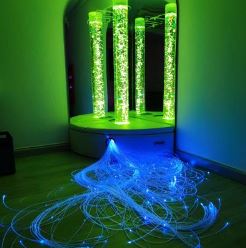 The Rotary Club of Almancil International takes an active approach in its mission to serve children, notably those with autism spectrum disorders or Down syndrome. Members sponsor activities including surfing lessons and animal therapy. In June the club unveiled a sensory room at a school to serve students ages 5 to 16. “The room is now complete, with state-of-the-art equipment including a soothing waterbed, music, and many sensory light and tactile objects,” says club member Peter Hinze, who coordinated the project. “[It] can provide a sense of calm and help improve [students’] visual and auditory skills and help regulate their behavior.” The project cost more than $16,000. The club provided about $5,000, with businesses and friends donating the remainder.
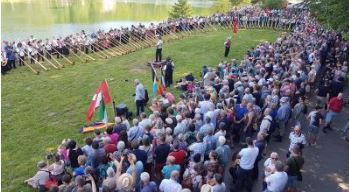 The Rotary Club of Virton en Gaume organized two days of concerts to celebrate the 10th anniversary of the Coralpins Gaumais, a trio that plays the traditional alphorn, a wooden horn once used by shepherds in the Alps. More than 140 alphornists, flag throwers, and bell ringers in folk costume participated in the event in May. The event raised money for the club’s charitable causes. The alphorn was the ideal instrument for harmoniously bringing together nature and the people who live in the region, says Jean-Marie Henin, a past club president. The club was inspired to put on the concert series after it organized visits by the Coralpins Gaumais to nursing homes and other care facilities during the COVID-19 pandemic.