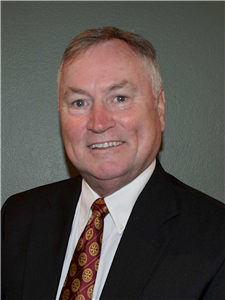
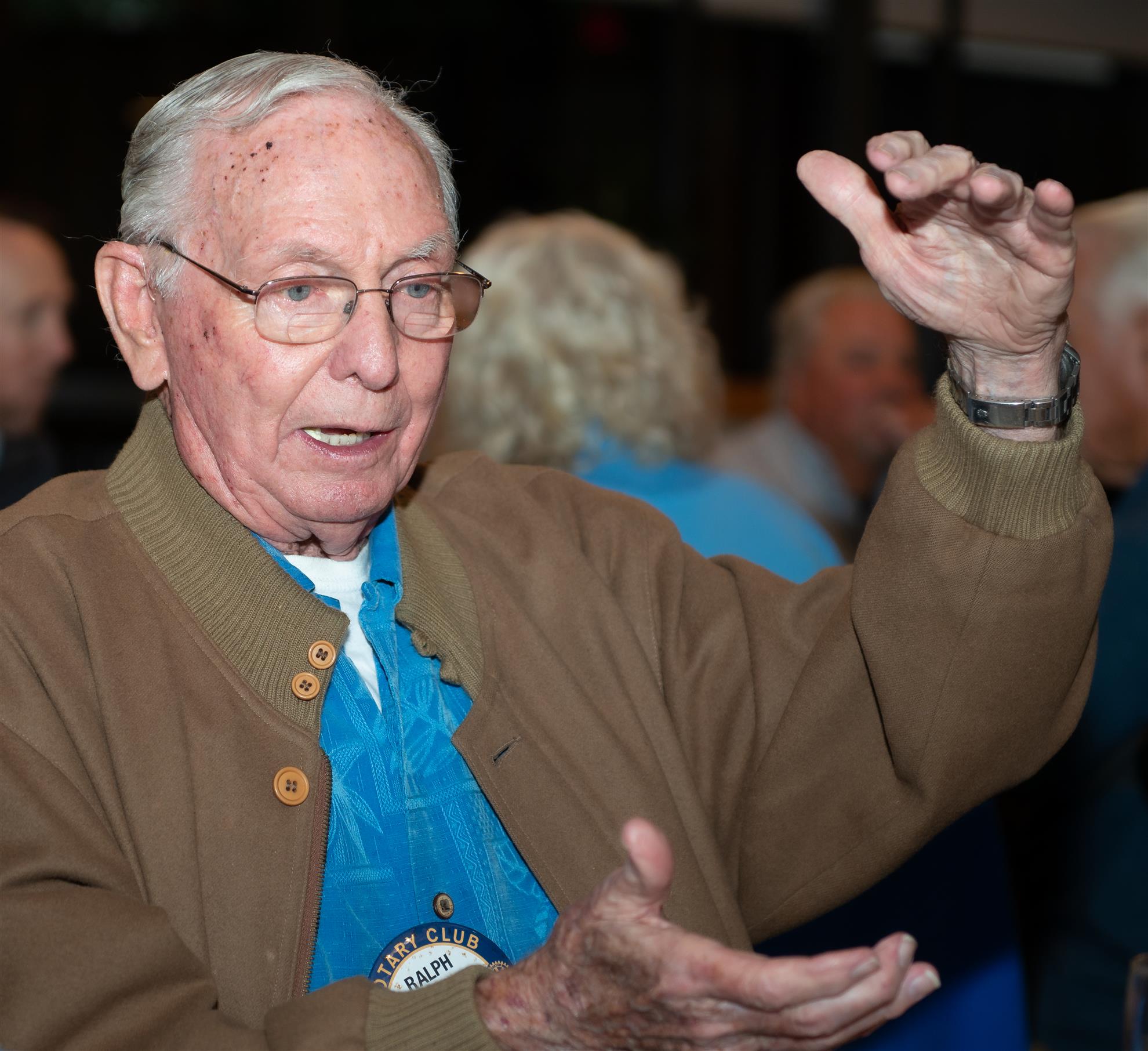
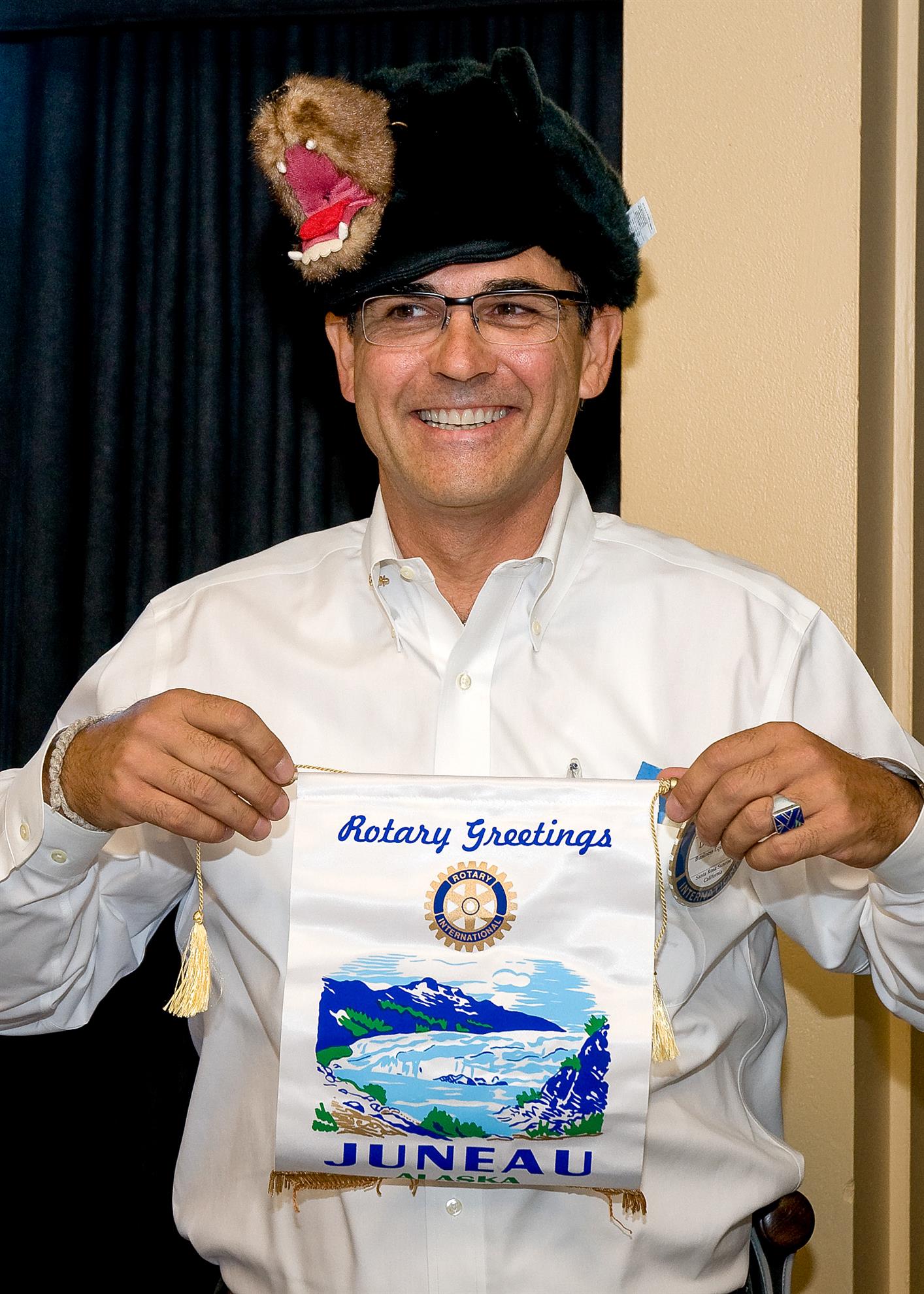
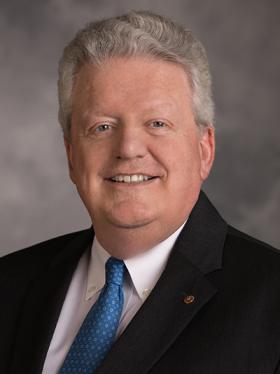
Jim O’Grady is a former educator and business owner and lives in Sonoma County with his wife Joanne. Jim and Joanne have 3 grown children, a lovely granddaughter, and another grandchild on the way. He was invited to join Rotary 17 years ago and since then he and his wife have enjoyed the friendship and community activities that Rotary has to offer. Jim has been president of his club, Petaluma Valley, twice, and loved every minute of both tenures. He enjoys taking an active interest in club programs and projects both within the community and around the world. In his spare time, Jim enjoys traveling and playing the accordion as well as spending time with family and friends. Jim believes in, “Will it Build Better Friendships?” taken from the Four-Way Test. Not just the friends we make with other Rotarians, but the many friends in our community, especially those we have served: the faculty and children at the schools we help, the homeless families at COTS where we do several projects each year; or even the giving out of dictionaries creates new friendships; and the many friends we have created in our club’s work in Uganda and other areas around the world. These are a few of the activities Rotarians do that create lasting friendships and bring about a better world.
Effective Climate Action Demands Ending Wildfires, by Dr. Brien Seeley
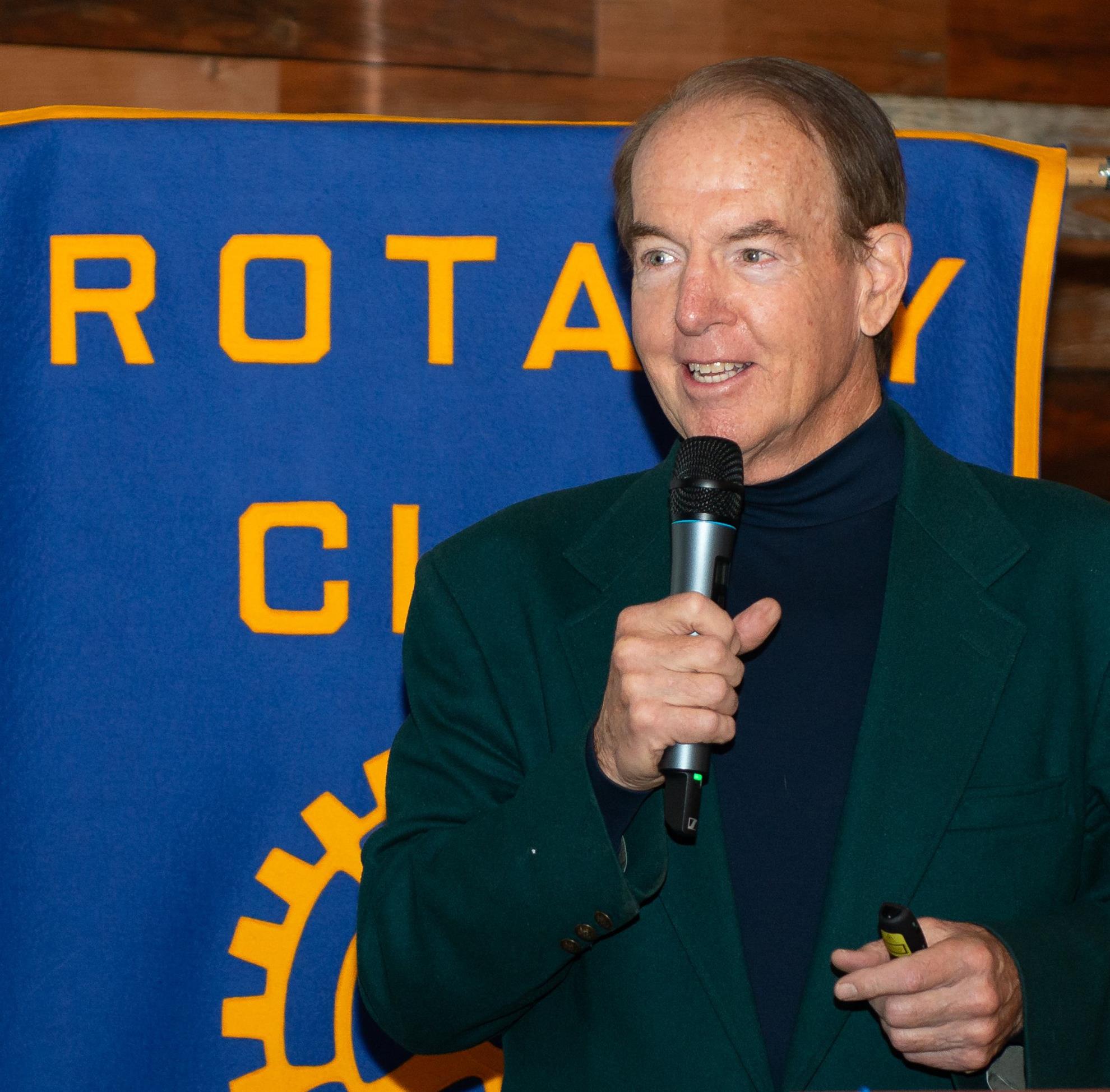
Our speaker for Thursday, August 29, 2024, was Dr. Brien Seeley, whose topic was “Effective Climate Action Demands Ending Wildfires.” Brien is an ophthalmologist and long-time advocate for electric aviation. He is the President and founder of the Sustainable Aviation Foundation. He founded the Electric Aircraft Movement in 2007 by organizing and chairing the work’s first-ever electric aircraft conference.
Dr. Seeley’s efforts to promote electric aviation led him to develop the idea for building fleets of ultra-quiet, payload-agnostic electric sky taxis. These sky taxis would be emission free, quiet, have short take-off and landing requirements, the ability to fly out of 3-acre airparks, and provide door-to-door service. A large fleet of these taxis could drastically reduce carbon emissions in the nation’s air and transportation travel services. More recently, as a result of the influx of high-damage wildfires, he became involved in searching for ways to limit wildfire damage by using a fleet of small electric aircraft similar to his sky taxis. Wildfires have become an environmental disaster. 8 of the 10 largest wildfires in California history have occurred in the last 5 years. Global wildfires cause 2.4 times more CO2 emissions than global fossil fuel use! According to Dr. Seeley, wildfires may be the cause of recent extreme weather and fire events. Further, forests destroyed by wildfires take 10-50 years to reach 50% of their CO2 capturing capacity, which severely limits the earth’s ability to effectively capture carbon in the atmosphere.
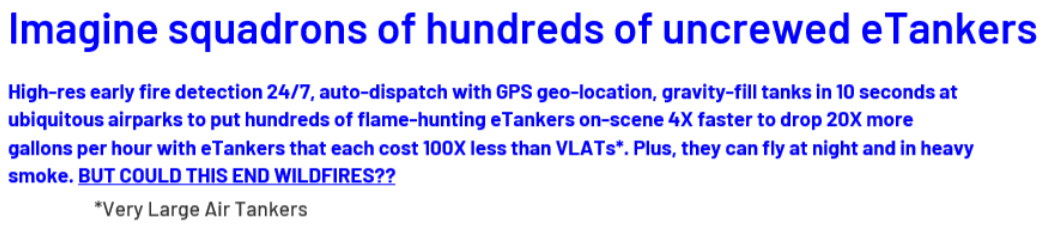
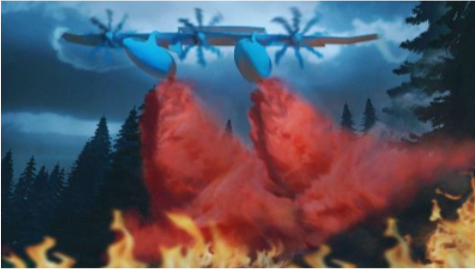
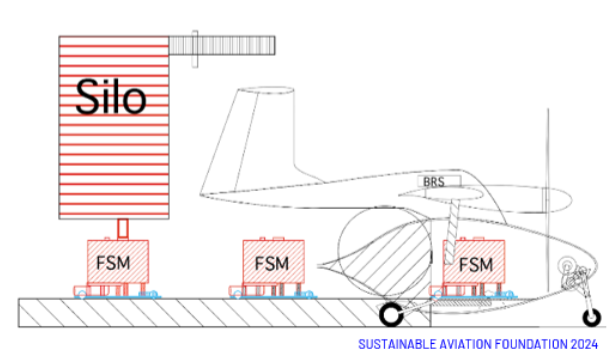
Dr. Seeley believes that fleets of small autonomous aerial firefighters (AAF) would be more effective than the very large air tankers currently used to fight fires. These are limited for various reasons, including their inability to fly at night or in smokey conditions. Along with an effective early warning and dispatch system, AAFs could almost immediately attack and destroy small fires before they become large fires and thus end the damage caused by wildfires. A brigade of eTankers making nearly continuous drops could completely contain a remote wildfire within about 30 minutes of ignition! If this could be done on a massive scale we could end wildfires, drastically cut CO2, and limit global temperature rise to 1.5 degrees centigrade. All of this is technically feasible, affordable (compared to the cost of unabated wildfires), and may be the fastest and most effective way to curb the climate crisis. Dr. Seeley believes that unless we can very quickly limit the damage caused by wildfires, the climate crisis will continue to spiral out of control.
Thank you Dr. Seeley for the excellent presentation. Dr. Seeley’s foundation, Sustainable Aviation, can be reviewed at sustainableaviation.org.
Click HERE to view a limited-time recording of Dr. Seeley's presentation.
On a regular basis, our resident photo pro Warren Smith, submits pictures of what is going on at the weekly meetings. You can always find the most recent pictures at the websites photo journal called "Meeting Sighting" Please note that all the meeting photos for the entire Rotary year are at this location with the most recent on the last page.
Thanks for all the great pictures Warren!Link to Meeting Sightings. The most recent are on the last page!
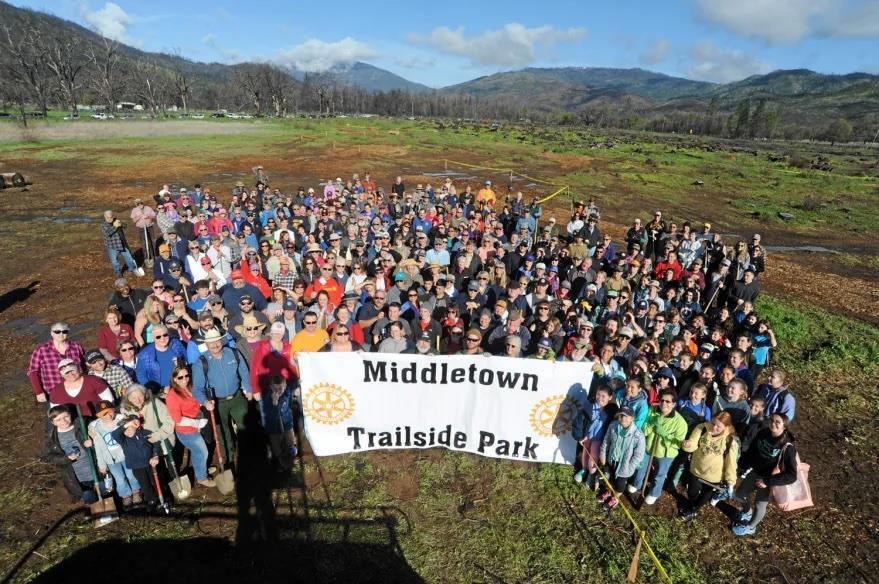
This view of the crew captures the scope of response on a Saturday, including St Isabella School in San Rafael where Sunriser, Jack Strange was Interact Advisor. His club raided transportation funds to bring 60+ coeds and some parents. Elsie Allen Interactors John and Logan Ledde, Advisor Doug Gibson, Merle Hayes, Rich Randolph and Eloise Tweeten dug and tucked in the wee 6-inch saplings.
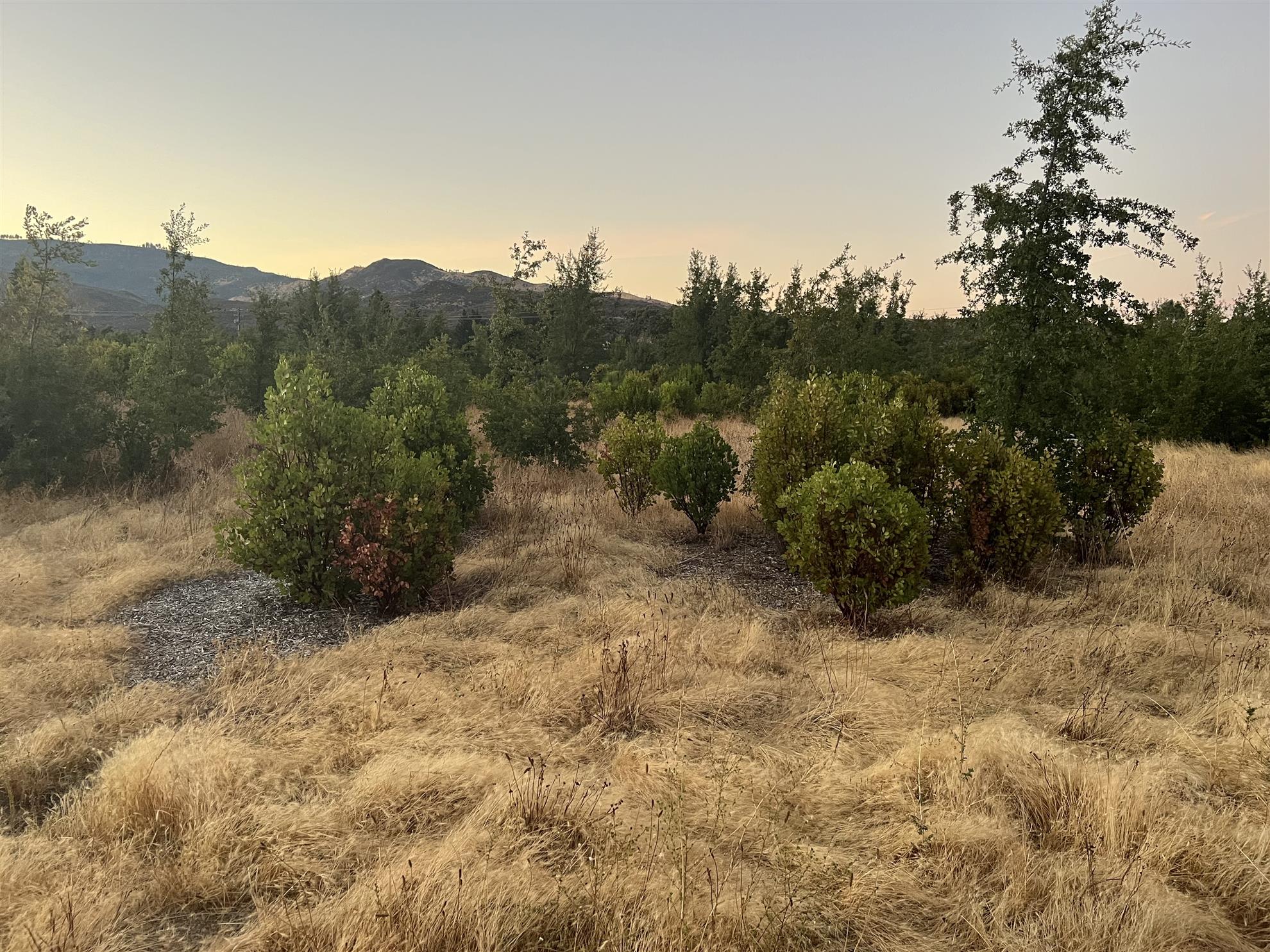
In the ensuing seven years, soil, sun and water have been restoring the landscape of Trailside Park in Middleton. Denuded in the 2015 Valley Fire, these acres were ground zero for a large-scale community collaborative replanting project stretching from Marin and Napa to Sonoma and Lake Counties. "LARCA" Lake Area Rotary Club Association was formed in response to fire relief. The US dept of Agriculture and University of California Cooperative Extension partnered with nurseries for 100,000 seedling fir, pine and other plants for regional reforestation.
Gaining about a foot a year the seedlings have survived seven seasons and their pivotal role in habitat and climate influence is apparent.
Since the March 2017 planting crew of over 400 youth and adults alike slogged through the boggy meadow.
The Magic of Rotary is belonging, and it’s a feeling that can appear when you least expect it.
Earlier this year, I was in Slovakia serving as a president’s representative during a six-week trip through Europe. When I wrote to Katarina Cechova, governor of District 2240 at the time, I mentioned that my grandmother Veronica Zilka grew up in a small village in the area before settling in the U.S.
It wasn’t long before Cechova tracked down my grandmother’s village, Jakubova Vol’a. She even organized a visit for me, where I received an unforgettable Slovakian welcome.
When I entered the community center of Jakubova Vol’a, a small crowd of people dressed in traditional Slovakian clothing greeted me. They sang with beautiful and powerful Central European voices that reminded me of my grandmother.
A lot of families play cards or games when they get together. When I was young, my father would pick up his accordion and lead my family in song. My grandmother would sing along with her impressive voice.
When I walked into the community center and heard traditional music from my childhood — when I saw a woman play the accordion the way my dad played — I suddenly felt like a little girl sitting at my grandmother’s house in Monessen, Pennsylvania. I burst into tears of joy at the memories.
But the magic didn’t stop there. District Governor Cechova really outdid herself. A local genealogist worked with a videographer to make a short film about my grandmother. We watched the video together in the community center.
When the video ended, I turned around and saw a man standing in the back of the room. I quickly learned that this stranger, Frantisek Zilka, was my second cousin. His grandmother and mine had been sisters. I felt like I had been struck by lightning.
I visited my newfound cousin’s home, which happens to be the home where my grandmother was born. There, he shared old photographs I had never seen of my dad, my uncle, and my grandmother.
Since then, I can’t stop thinking about my family of Rotary. When I refer to you as my family, I’m not just being kind. I really think of everyone in Rotary as my family. But I never would have imagined that my Rotary family would introduce me to long-lost personal family.
Sitting in that community center listening to traditional Slovakian music from my childhood filled me with joy and a profound sense of belonging. I am so grateful to District Governor Cechova and everyone who helped create that magical experience.
As members of Rotary, we have a unique opportunity to share the same magic with each other and with the world. I encourage you to consider how you can help spread that magic and ensure other members of your club — other members of our Rotary family — feel like they truly belong.
You can find all prior "RI President's Messages" at this LINK
“The great use of a life,” wrote American philosopher William James in 1900, “is to spend it for something that outlasts it.”
Some leave a legacy through family and friendships, others through faith or principles, and still others through their professions. The Rotary Foundation offers another powerful option.
As a believer in the power of passing down a legacy through The Rotary Foundation Endowment, I was humbled that my wife, Gay, and I were able recently to help others in Rotary leave their legacy.
Our district (6860 in northern Alabama) had never organized a fundraising dinner focused on the Foundation’s Endowment before, but we knew it was time. We called it a legacy dinner, emphasizing giving’s long-term impact.
Progress was slow at first, and there were skeptics who doubted we could raise $1 million, our initial goal. However, we remained optimistic, setting a date for 23 February 2024, Rotary’s anniversary.
During this campaign, committee members traveled throughout northern Alabama, meeting with small groups in fireside chats about contributing to the Endowment. Then, significant gifts began coming in. One Rotarian made a $25,000 commitment, handing over a check for $10,000. Soon, other members followed suit, and we had more than $200,000 in gifts and commitments.
We still had far to go but if there is one thing I know about Rotary, it is this: If you present the opportunity to members, they will respond. Topping off the district’s generosity were two surprises. One was a bequest commitment of $500,000, and then another of $560,000.
By the end of the campaign, our committee had exceeded our greatest expectations: We had raised $2,729,863.14 for the Endowment, nearly triple our goal. The impact of those gifts will create a legacy that will keep on giving forever.
No single club or district alone will achieve our goal of fortifying The Rotary Foundation Endowment to $2.025 billion by 2025. Not all of us can give $25,000 now or as part of an estate plan. But I also know many of us can.
Please help us reach that Endowment goal and in doing so leave behind a legacy and further the work of future generations of Rotary members by visiting rotary.org/legacy. On behalf of the Foundation Trustees, I am grateful for your Rotary legacy.
You can find all prior "Messages from the Foundation Trustee Chair" at this LINK
About 200 college students, faculty, and community members took turns swinging baseball bats at junkyard vehicles during a Car Smash for Charity event organized by the Rotaract Club of Vancouver-University of British Columbia. The fundraiser, held each of the past three years before final exams, “offers people a fun way to relieve stress or test their own strength, while supporting a wonderful cause,” says Sara Lee, a past co-president of the club. The event, held on the campus quad in April, raised more than $2,200 Canadian for education-related endeavors. A scrap car company delivered a Volkswagen and a Chevrolet and collected the remnants afterward for recycling. “Our team is continually amazed at the response the event receives,” Lee says.
United States
The Rotary Club of Patchogue in New York has raised more than $138,000 over the past dozen years by feting civic and business leaders in rollicking style. The most recent soiree, held in March to roughly coincide with St. Patrick’s Day, attracted nearly 250 guests. Attendees paid $125 each for food and drinks and to listen to friends and relatives roast local celebrities. “There were some slightly embarrassing stories of their childhood and baby pictures,” says Paul Moran, a club member and organizer. A band featuring Moran and other Rotarians performed cover tunes to help lead the merriment. More than $17,000 was donated to the Patchogue Community Service Foundation, principally for youth services, including Camp Pa-Qua-Tuck, a residential program for people with disabilities that is operated by Rotary District 7255.
This story originally appeared in the September 2024 issue of Rotary magazine.
Rotary projects make a difference in communities around the world.



.png)





.png)




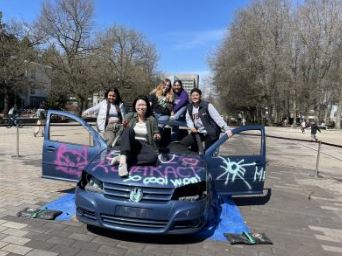 About 200 college students, faculty, and community members took turns swinging baseball bats at junkyard vehicles during a Car Smash for Charity event organized by the Rotaract Club of Vancouver-University of British Columbia. The fundraiser, held each of the past three years before final exams, “offers people a fun way to relieve stress or test their own strength, while supporting a wonderful cause,” says Sara Lee, a past co-president of the club. The event, held on the campus quad in April, raised more than $2,200 Canadian for education-related endeavors. A scrap car company delivered a Volkswagen and a Chevrolet and collected the remnants afterward for recycling. “Our team is continually amazed at the response the event receives,” Lee says.
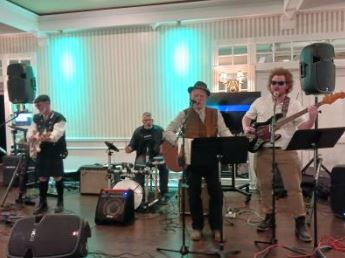 The Rotary Club of Patchogue in New York has raised more than $138,000 over the past dozen years by feting civic and business leaders in rollicking style. The most recent soiree, held in March to roughly coincide with St. Patrick’s Day, attracted nearly 250 guests. Attendees paid $125 each for food and drinks and to listen to friends and relatives roast local celebrities. “There were some slightly embarrassing stories of their childhood and baby pictures,” says Paul Moran, a club member and organizer. A band featuring Moran and other Rotarians performed cover tunes to help lead the merriment. More than $17,000 was donated to the Patchogue Community Service Foundation, principally for youth services, including