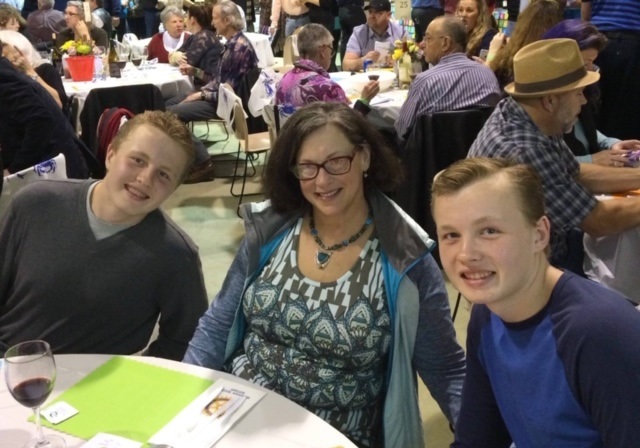
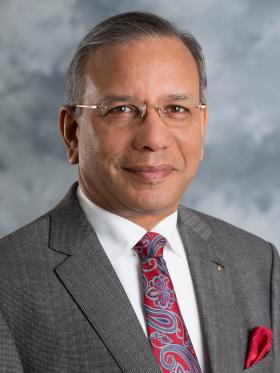
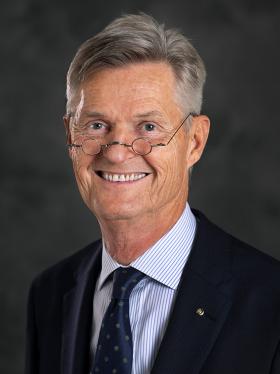
Kathy Hayes earned a degree in Political Science from U.C. Davis in 1986. She worked over 20 years in the public affairs arena including working for State Senator (now Congressman) Mike Thompson. She served as the CEO for the North Bay Association of REALTORS and as program director for Habitat for Humanity of Sonoma County.
Recently, Kathy has focused on education working as a substitute teacher at Elsie Allen High School and figuring out how to contribute in the education arena. She currently serves as the Administration Assistant at Elsie Allen High School. She also serves on the City of Santa Rosa Community Services Board, Elsie Allen Site Council and has been recently appointed the Santa Rosa City School Boundary Committee (Phase 1).
Kathy is the proud parent of twin boys who started at Cal this fall from their living room sofa.
Michael Perman of NBC Sports Explains Sports Programming in 30 Minutes!
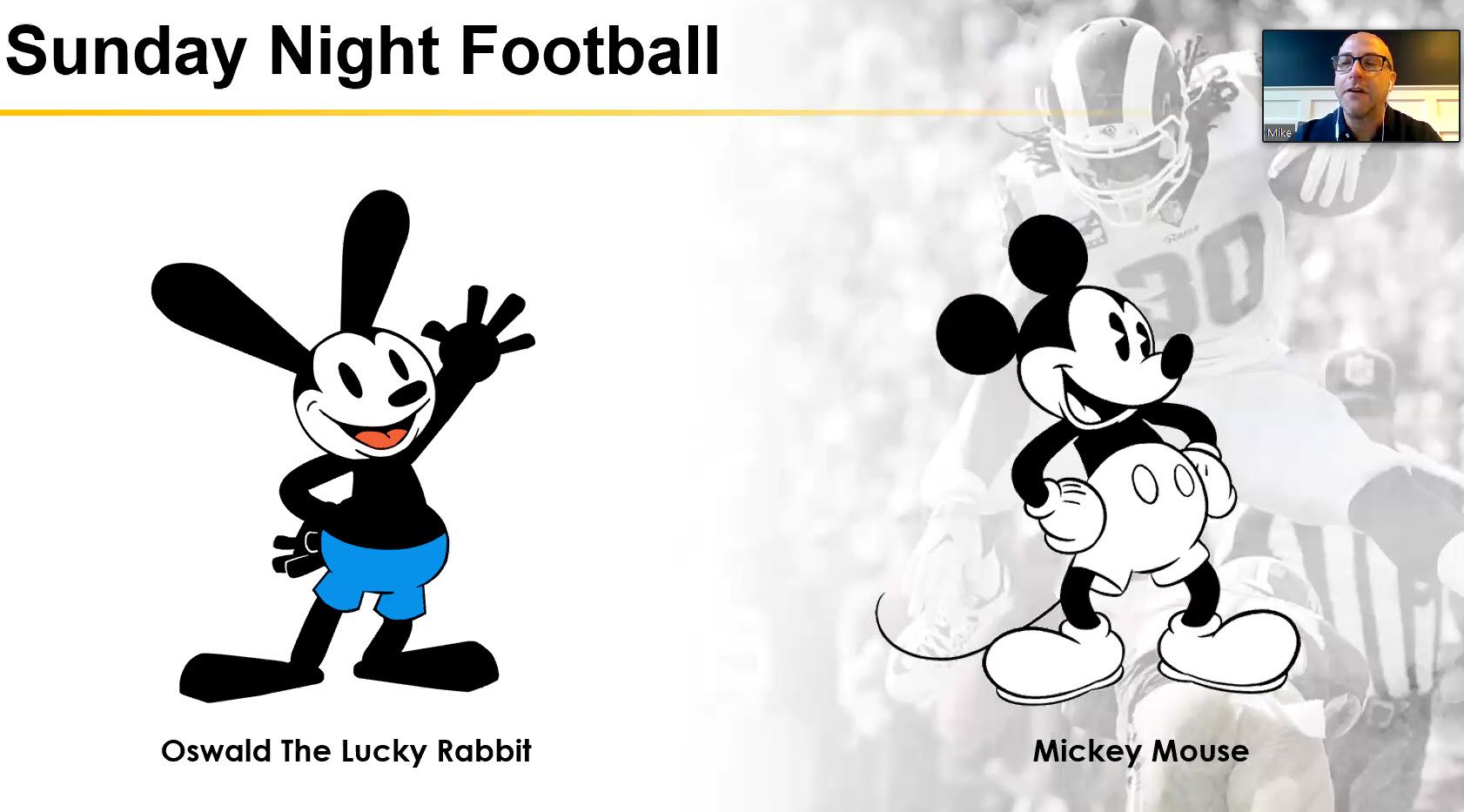
Our speaker for the Sunrise meeting of Thursday, May 8, 2020 was Michael Perman, VP of Programming, NBC Sports Group (and son of Dick Perman!). Michael gave us a whirlwind tour of the world of high-end sports programming and the effect of COVID-19 on that world. Michael oversees Acquisitions, Program Planning, and Scheduling for both NBC and NBCSN. That work includes such sports luminaries as the NHL, NASCAR, IndyCar, the Tour de France, the Olympics, the PGA Tour, Sunday Night Football, the Super Bowl 2022, and dozens of others. Did you think your own personal and/or business scheduling is complicated? Try Michael’s life!! Michael also told us an amazing story about how NBC Sunday Night Football acquired the rights to sportscaster Al Michaels from ABC by trading NBC’s rights to Oswald the Lucky Rabbit back to ABC (Disney). It turns out that Walt Disney lost the rights to the precursor to Mickey Mouse (Oswald) years ago and those rights ended up with NBC. So, Al Michaels was traded for a cartoon character! Best or worst trade of all time?
Michael believes that the age of massive sports/media contracts will continue into the foreseeable future. As an example, the newest Major League Baseball contract with Fox/Turner will be a 39% increase over the last contract. In other words, this bubble is not going to pop anytime soon.
NBC Sports makes sports events bigger! NBC can use its massive distribution channels to promote specific events. This promotion strategy is called the “Symphony” at NBC: all of the “properties” promote important movies, sporting events and other upcoming programs. An example is the 2020 Super Bowl, the most watched show in television history, with 114.4 million viewers! NBC was able to use all of its considerable clout to promote the game, and its success was mind boggling. Despite COVID-19, or maybe because of it, Michael’s life has been and will continue to be very busy. His group has had to replace or relocate over 1,800 hours of disrupted sports programming. Michael also mentioned that NBC Sports will broadcast the 2022 Super Bowl and the Olympics in the same month!
Thank you, Michael for this amazing glimpse at the intricacies of sports media and the challenges faced by the media in bringing live sports to us. It turns out that it is even more complicated than we thought! And thanks to Dick for bringing Michael to our meeting!
On a regular basis, our resident photo pro Warren Smith, submits pictures of what is going on at the weekly meetings. You can always find the most recent pictures at the websites photo journal called "Meeting Sighting" Please note that all the meeting photos for the entire Rotary year are at this location with the most recent on the last page.
Thanks for all the great pictures Warren!Link to Meeting Sightings. The most recent are on the last page!
A photon walks into a hotel. The desk clerk says, "Welcome to our hotel. Can we help you with your luggage?" The photon says, "No thanks, I'm traveling light."
Over the years, Tom Gump has been successful in attracting members to his Rotary Club of Edina/Morningside, Minnesota. But he found himself tapping into the same pool of friends and acquaintances. Lately, Gump, who is now governor of District 5950, has become adept at a new strategy: starting new clubs by harnessing people’s passions.
After learning that 88 percent of the members of new clubs were new to Rotary — which means those clubs weren’t poaching members from existing clubs — he realized that many potential members simply need to find a club that is right for them.
Gump was also concerned about keeping the members Rotary already has. He cites another study that shows people who leave Rotary usually do so within three years of joining. “How do we get them to stay?” he wondered. The answer: “Bring together people with a passion for a cause.”
Over the past two years, Gump’s district has created four clubs. One of them is the Rotary Club of District 5950 Passport, which brings together members who had to leave their club because of a job change but wanted to stay with Rotary. The three others are cause-based clubs, beginning with the Rotary Club of Twin Cities Eco. “That was the club that got us started on the new club process,” Gump says. “If we can do this with the environment, why not do it with other causes? That was right in front of us.”
The next move was to help create the Rotary Club of Minnesota Veterans (District 5950), a first for Rotary. Chartered last fall, the club, with about 50 members, is thriving. Its first blood drive attracted 60 donors, and other projects help both veterans and people currently serving in the military. “Rotary is a perfect fit for veterans,” says Brittany Ritchie Sievers, the club’s former membership chair, who spent 10 years in the U.S. Army. “They have an innate need to serve their brothers and sisters in arms and their community.”
And in May, in another first for Rotary, the district chartered the Rotary Club of District 5950 Ending Human Trafficking, an e-club with Karen Walkowski as its charter president. Its members include not only Minnesotans but people across the United States and in Thailand and the United Kingdom. “Rotary is the magnet that brings these people together,” says Gump, “and all because we’re reaching out to our community in a way we never did before.”
• Interested in starting a new club or learning more about ways to connect through Rotary? Visit rotary.org/start-club.
• Illustration by Sjoerd Van Leeuwen
• This story originally appeared in the August 2020 issue of The Rotarian magazine.
In the early 1990s, polio was still a concern in my country. As the Sri Lanka PolioPlus Committee chair, I was part of a task force of Rotarians, government officials, and UNICEF representatives that drove all polio eradication efforts, including National Immunization Days (NIDs).
But those were difficult days; civil war was raging in Sri Lanka. The government said NIDs could happen only outside conflict zones. This meant one-third of the country's children would not be vaccinated — an unacceptable proposition.
Rotary stepped in with UNICEF to engineer a cease-fire. Establishing contact with one of the world's most feared and elusive rebel leaders was not easy, and we were careful to maintain Rotary's good name during negotiations.
A few weeks later, my secretary delivered a letter to my office, her hands shaking. Signed by the rebel leader himself, it read: "Dear Mr. Ravindran: If you can persuade your government to stop the war for two days, then we are willing to lay down our guns for two days too, for our war is not with children."
Soon the NID was on, and vehicles bearing the Rotary emblem traveled to the vaccination booths in the areas occupied by insurgents, receiving the same respect and courtesy as the Red Cross.
Obstacles can seem insurmountable until we overcome them.
In March 2020, the polio program made the tough decision to temporarily suspend polio immunizations while the polio infrastructure that Rotary members had helped build was used for COVID-19 response. But with the wild poliovirus now banished from the African region and circulating in just two remaining countries, we continue to move forward. Our history shows that we can overcome even the most difficult situations. But we can't do it without your help.
World Polio Day is 24 October, and it's the greatest opportunity we have to raise funds and awareness for Rotary's polio eradication efforts. Visit endpolio.org/worldpolioday to get tools for planning virtual events and fundraisers, and to register your club's event.
Please consider making a donation to End Polio Now, to be matched 2-to-1 by the Bill & Melinda Gates Foundation. In the face of a pandemic, there is a serious risk of further spread of polio. Your support is more important than ever, and it will ensure that together we can tackle the remaining obstacles and achieve a polio-free world.
During a recent Zoom meeting with Rotarians and Rotaractors, I looked at the smiling faces on my screen and realized how much our organization has changed in a short period. It is clear that there is no going back to the "old normal" in Rotary — and I see that as an exciting opportunity!
Innovation and change are happening at so many levels as we rethink and remake Rotary. Rotary's new flexibility is blending with digital culture to drive change in ways that many of us have never seen before. We can learn a lot from Rotarians like Rebecca Fry — who, at age 31, already has 15 years of Rotary experience.
I see Rotary as a phenomenal platform to change the world. I believe I can have the greatest influence by empowering others to create the change they wish to see in the world. I've gained leadership insights through my experiences in RYLA and Rotaract, and now, as charter president of the Rotary Social Impact Network, a new e-club.
Engaging Rotary program alumni is key in forming new clubs. Our club is proof that Rotaractors and other alumni want to join Rotary — but sometimes they can't find the Rotary club that's right for them. Our club has 31 members, all between the ages of 23 and 41, and almost all of them are alumni of Rotary programs.
We need to be able to integrate and align Rotary with the other personal and professional goals we're pursuing. In chartering this club, we set out to design a personalized model of Rotary that is focused on added value for our members. We have also sought to leverage connections — through Rotary Fellowships, Rotary Action Groups, and other international partnerships — in order to elevate our members' experiences beyond the club.
Our club meets and manages most of its projects online, using Microsoft Teams to engage 24/7 in topics that interest our members. This also means our club is not geographically bound to any one location: Although many of us are in Australia, we also have members in Germany, Italy, Mexico, Tanzania, and the United States.
Also key for our club is measuring the impact of our projects. For Plastic Free July this year, we created an awareness campaign promoting ways that individuals could reduce their use of plastics, and we reached more than 6,000 people. It's a project with a tangible impact that anyone can take part in wherever they are. I'm proud that, through our club, we are bringing people together for a new type of Rotary experience. I am excited for our future.
All Rotary clubs have the opportunity to be innovative clubs, just like Bec's club. Let's trust those clubs, learn from them, and lend them our support. Change in Rotary happens at the grassroots level, as clubs lead the charge, defining what this new Rotary can be.
Change is constant, and we have more work to do in many areas. It is important that we celebrate the contributions of people of all backgrounds and promote people from underrepresented groups so that they have greater opportunities to participate as members and leaders in Rotary.
The tools to make Rotary more inclusive, more relevant, and more fun for everyone are at our fingertips. Let's use them now, and we will see how Rotary Opens Opportunities for ourselves and for those yet to discover us.
Rotary Club of Santa Rosa Sunrise - Founded June 30, 1986

.png)

.jpg)