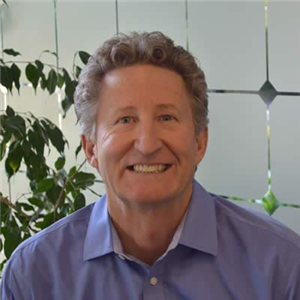
Last year brought some big sweeping changes to the California solar business. Where are we in this process and how is the industry adapting? What does it mean for homeowners who have solar already, or for those considering now considering it? Industry veteran Dana Smith will share his thoughts to help us understand the key points, including:
Review of changes and how it impacts us
Effects on existing customers and new solar buyers
"New math" for investment decisions
The changing role of battery storage and the ”Bill-Saving Battery"
Quick tips on “shopping for solar”
Dana Smith is a Partner and Clean Energy Consultant at Solarcraft, a leading solar contractor in the North Bay. Dana began his solar career at SolarCraft in 2010, initially in Residential Sales, Sales Administration and Sales Management. For many years, Dana led the Commercial Sales Team at SolarCraft. By mid-2019 that amounted to 30 projects, 2.5 MW of installed solar and $8 million dollars of commercial sales. Dana combines a high level of integrity, and customer perspective with expertise in local energy markets, project finance, renewable energy technology and the unique culture and diversity of the North Bay community. Prior to solar, Dana was involved with a series of companies that offered Software as a Service (SAAS) and cloud-hosted business services. When not working long hours in solar, you will find Dana hiking or mountain biking in the hills of Sonoma and Marin Counties.
Carlos Perez Presents "Bike Monkey" and Levi's GrandFondo
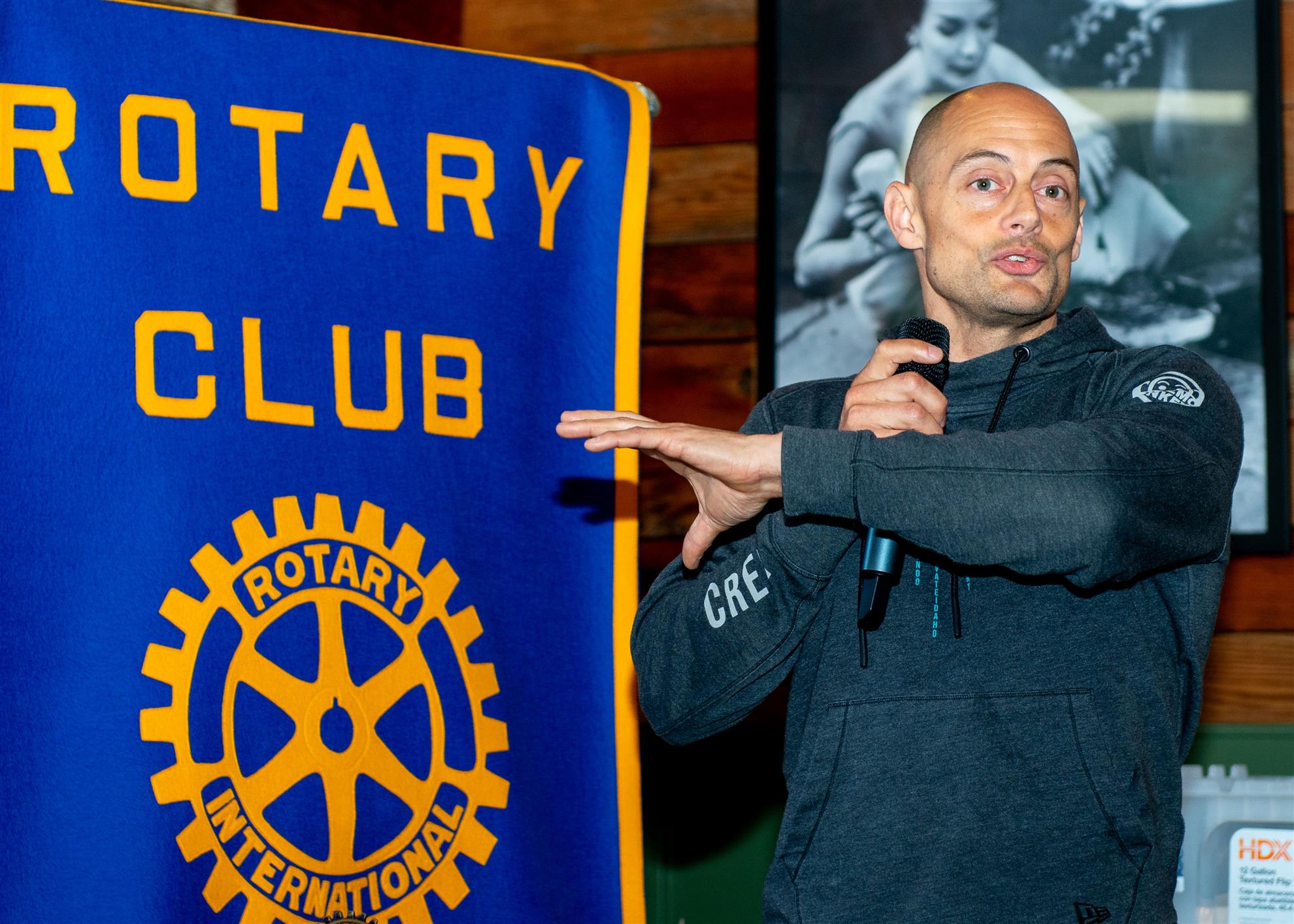
Our speaker for March 7, 2024, was Carlos Perez, the founder and president of Bike Monkey. Carlos is also a co-founder along with Levi Leipheimer of the King Ridge Foundation, a 501c3 charitable organization. Carlos is a Sonoma County native and an avid bike enthusiast. After putting on his first road bike event, Carlos quite his job as a computer programmer and devoted his professional life to organizing bike events. He started Bike Monkey in 2005. Bike Monkey is the event organizer that promotes and operates Levi’s GranFondo, the seminal Sonoma County road bicycle event. Bike Monkey’s first project was the Boggs State Demonstration Forest event, an 8-hour mountain bike race. It is an endurance relay mountain bike race and one of the few such races alive and well today.
Bike Monkey’s second event was the Levi’s GranFondo in 2009. The Levi’s GranFondo was the first gran fondo in North America. The term “gran fondo” means “Big Deep” and generally refers to a long-distance road cycling ride that can be enjoyed by riders of all skill and experience levels. They have been a staple in Europe but were unknown in the U.S. before Levi’s GranFondo. Carlos and Levi Leipheimer created the King Ridge Foundation in 2009, which became the non-profit arm of the GranFondo. The goal of the King Ridge Foundation is to help at-risk youth break the cycle of violence and trauma. Since its inception, the King Ridge Foundation has donated $3.5 million for at-risk and also donated 50 bikes per year to at-risk kids. King Ridge also donated 100,000 tree saplings to the Boggs Forest for replanting after the fires decimated the forest.
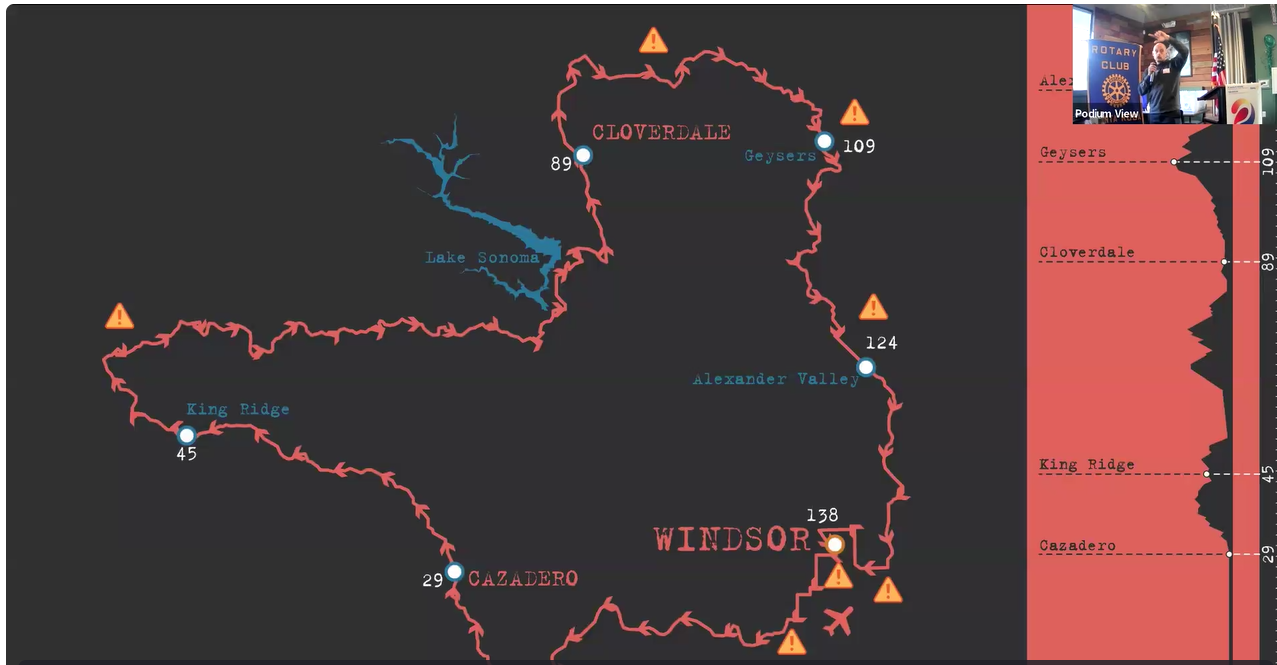
Within a few years of Levi’s GranFondo’s first event, there were gran fondos all over the U.S. However, the number of road races such as the GranFondo has declined for several years. Levi’s once had up to 7,500 riders but now typically has about 2,000 riders. Nationally, the number of events has also seriously declined. Some of the problems include the difficulty of putting on such events, the complexity of traffic control, insurance increases, the recent increase in gravel and forest road events, and inflation. In an effort to increase ridership and interest in Levi’s GranFondo this year, Carlos has decided to push the “race” side of this road race by holding a 7-hour professional race during the GranFondo. The race will be called the “Growler” and will be the toughest race in North America. The route is 138 miles with a 13,000 elevation gain. Carlos already has over 25 professional athletes signed up for the Growler. The purse will be $50,000!
The next GranFondo will be held on April 13, 2024. Thank you, Carlos, for the great presentation and for all of your efforts to keep this signature Sonoma County event operating. We’ll see you on April 13!
Click HERE to view a limited-time recording of Carlos' presentation.
On a regular basis, our resident photo pro Warren Smith, submits pictures of what is going on at the weekly meetings. You can always find the most recent pictures at the websites photo journal called "Meeting Sighting" Please note that all the meeting photos for the entire Rotary year are at this location with the most recent on the last page.
Thanks for all the great pictures Warren!Link to Meeting Sightings. The most recent are on the last page!
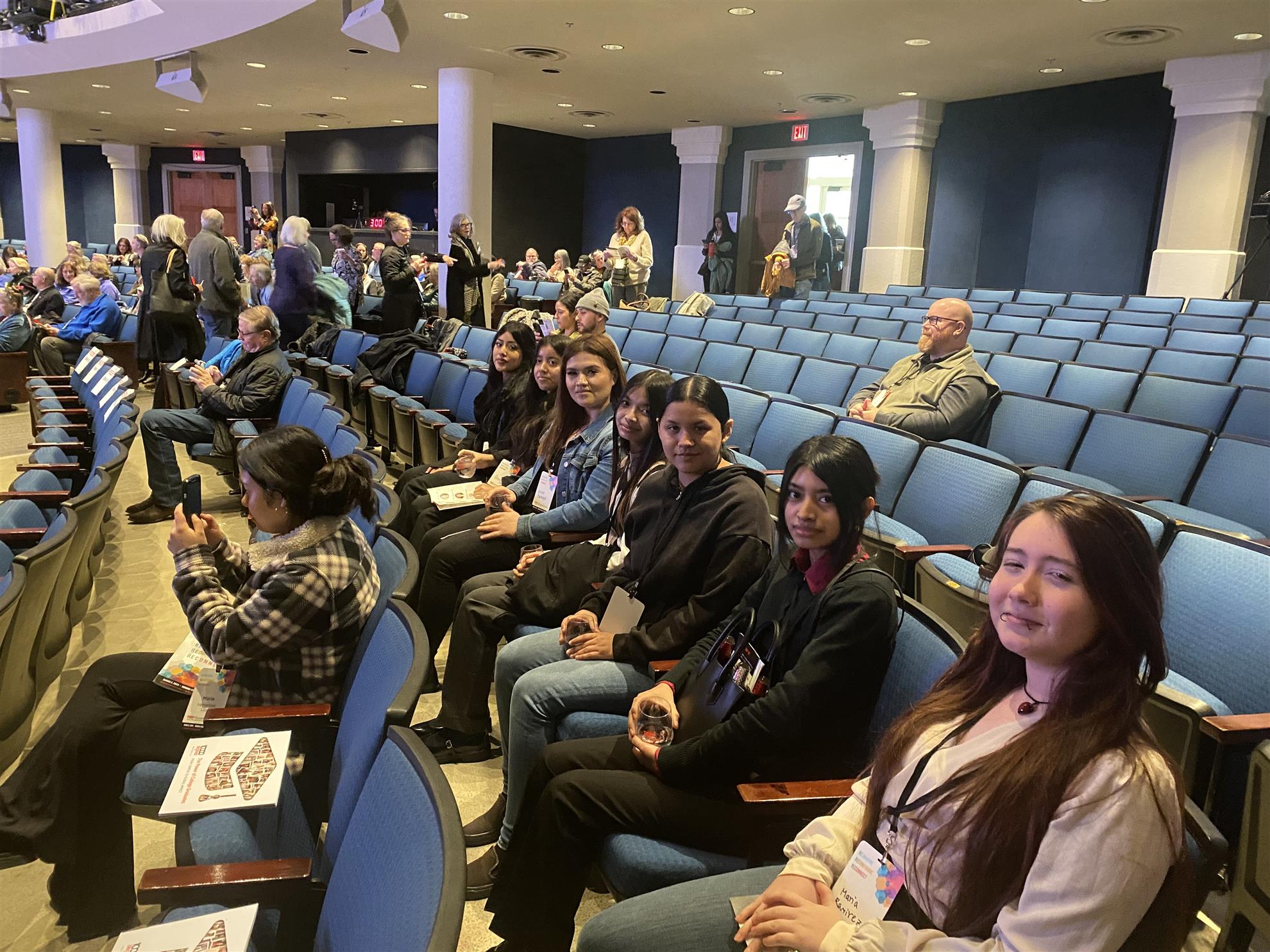
Seven Elsie Allen High School Interacters eagerly await commencement of Sonoma County TEDx talks at Sonoma County Day School on March 2nd.
Through a generous grant from Sunriser Harry Coffey, the students gained inspiration to the themes to Reimagine, Reconfigure and Reconnect with the future.
Using the metaphor of a kaleidoscope, students minds shifted unique and powerful approaches to challenges through the filter of curiosity and creative collaboration.
Accompanying students are Interact Advisor, Willie Billeter, Sunrisers Harry Coffey and Merle Hayes along with Faculty Advisor Doug Gibson.
A man was very ill and on the verge of dying. The doctor called the man's wife in and said,"There are three things that you can do to help your husband back to health" "What are they, sir?" "One: You must make him three huge meals every day. Two: Never argue with him. Three: Make love to him every night." "Agreed." Said the woman On the way home when the husband asked what the doctor said, the woman replied, "Sorry, honey, but you aren't going to make it."
There are many pathways to peace, and in Rotary, we are fortunate to have Rotary Peace Fellows who demonstrate this truth time and again.
Each year, Rotary awards up to 130 fellowships for leaders around the world to study peace and development, and what these peace fellows learn prepares them to work in conflict prevention and resolution and promote Positive Peace. Here are a few examples of the creative ways peace fellows advance peace:
Promoting sustainability
Alejandra Rueda-Zarate combined her Rotary Peace Fellowship in peace and conflict resolution with her master’s degree in energy and resources to support her dream of protecting the Colombian countryside.
She founded the organization NES Naturaleza in 2011 to help farmers in Colombia and across rural Latin America gain access to knowledge and training to uphold sustainable farming standards. That support has improved the lives of nearly 4,500 farmers, inspiring many of them to become entrepreneurs. And it’s helped promote both natural and social sustainability throughout Latin America.
Ending racism
Peace fellows Geoffrey Diesel and Kathy Doherty have applied their fellowships in peace and development studies toward co-founding the Racial Equity Project, a subcommittee of Rotary Positive Peace Activators in North America committed to studying ways to create a more peaceful society through anti-racism efforts.
The Racial Equity Project takes a deep look into how the eight Pillars of Positive Peace could support efforts to address racism, and it works to spread this message to communities across North America. The organization initially grew from Rotary’s strategic partnership with the Institute for Economics and Peace, a global think tank dedicated to promoting Positive Peace.
Managing disasters using data
Through a Rotary Peace Fellowship, Jamie LeSueur earned a master’s degree in social science within peace and conflict research. He now leads emergency operations for the International Federation of Red Cross and Red Crescent Societies, setting a management and operational framework for agency collaboration in emergency response situations.
Jamie has found that research data is a powerful tool to bring calm to the complex world of disaster response. No matter what an organization’s protocols might entail, letting research be the foundation for decision making helps clarify even the most complicated emergencies.
These stories — and hundreds like them — show how Rotary is creating a generation of leaders ready and able to build peace worldwide. Nearly 1,800 peace fellows have graduated from Rotary Peace Centers, and they are applying their craft in more than 140 countries.
May the continuing work of peace fellows and the Rotary members who support them inspire you to continue to Create Hope in the World through service, fundraising, and creative thinking.
Rotary’s focus turns to two themes this month. March is Water, Sanitation, and Hygiene Month, and we celebrate World Rotaract Week 11-17 March. Both WASH and Rotaract are near and dear to me.
Clean water, basic sanitation, and proper hygiene are fundamental human rights, yet a staggering 2.2 billion people still lack access to safe drinking water.
We’re taking action. Over the past decade, your Rotary Foundation has invested more than $180 million in over 2,500 water and sanitation projects worldwide. Rotary is on the ground making a difference through global grant-supported projects funded by your contributions to the Foundation.
But Rotary can’t do it alone. We have partnered with organizations like USAID to deliver large-scale solutions. The Rotary-USAID Partnership has helped thousands access water and sanitation services in the Dominican Republic, Ghana, the Philippines, and Uganda.
Our Foundation is the connector for other water partnerships, too. This was the case when I worked with leaders from Rotary District 7020 to set up the Haiti National Water, Sanitation, and Hygiene Initiative, known as HANWASH. Foundation grants continue to play a critical role in our strategy of working with nongovernmental organizations, municipalities, and government agencies in communities throughout Haiti.
Rotary efforts to connect people with clean water go beyond providing a basic necessity. We are paving the way for healthier communities and brighter futures, and doing so in a sustainable manner. With access to water, communities enhance education levels, improve health, and further development.
When we talk about partnerships, we can’t forget our closest ally, right here in the family of Rotary: Rotaract. The engagement, energy, and ideas of Rotaract complement the experience of Rotary clubs and increase our collective impact.
Yet many Rotary members still do not know that, as of 2022, Rotaract club activities can be included in district grants, and they are eligible for global grants, expanding avenues for collaboration.
I encourage all Rotary and Rotaract clubs to foster closer collaboration and engagement in our Foundation, whether it’s rolling up their sleeves on a project or giving.
We all know that in Rotary, great opportunities are always around the corner. When you combine water and sanitation projects, Rotaract, and the Foundation, all will become a big part of your life, as they have in mine — and not just this month, but forever.
Most North American plant species depend on insects, predominantly bees, for pollination. “Your whole food web is supported by bees,” says Dave Hunter, a member of the Rotary Club of Woodinville, Washington. The club leads a project that nourishes bees while beautifying the Seattle suburb. Members use donated wine barrels to construct planters to attract pollinators. Local businesses can sign up to have one placed at their storefront for a donation of $150 a year to the club’s foundation. The planters have QR codes that take visitors to information on the club’s website about the program and pollinators’ importance. “We are not just putting planters out; we’re educating through them,” says Hunter, proprietor of Crown Bees, which sells bees, bee houses, and other materials. The club also partnered with the city, businesses, a garden club, and a nonprofit organization to host a Pollinator Fest in May that attracted about 500 people to hear the latest buzz on bees.
Canada
The Rotary Club of Olds, Alberta, is livening up its process for awarding grants to community groups. In November, representatives of about a dozen organizations pitched their proposals at a contest modeled on Dragons’ Den, a CBC television program (much like Shark Tank in the U.S.) in which venture capitalists judge entrepreneurs’ proposals for investment. The organizations were allotted five minutes to make their pitch, followed by five minutes of questioning by a panel of Rotarian “dragons,” or judges. Club President Randy Smith concedes that the awardees would have received their share of the roughly $10,000 regardless of who won. But he says the spirited affair gave the groups, including Interactors and fire department cadets, an opportunity to hone their presentation skills and showcase their creativity.
This story originally appeared in the March 2024 issue of Rotary magazine.
Rotary projects make a difference in communities around the world.


.png)






.png)





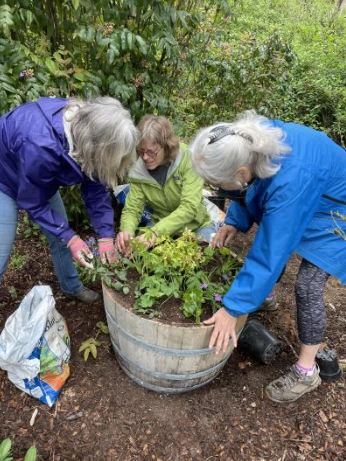 Most North American plant species depend on insects, predominantly bees, for pollination. “Your whole food web is supported by bees,” says Dave Hunter, a member of the Rotary Club of Woodinville, Washington. The club leads a project that nourishes bees while beautifying the Seattle suburb. Members use donated wine barrels to construct planters to attract pollinators. Local businesses can sign up to have one placed at their storefront for a donation of $150 a year to the club’s foundation. The planters have QR codes that take visitors to information on the club’s website about the program and pollinators’ importance. “We are not just putting planters out; we’re educating through them,” says Hunter, proprietor of Crown Bees, which sells bees, bee houses, and other materials. The club also partnered with the city, businesses, a garden club, and a nonprofit organization to host a Pollinator Fest in May that attracted about 500 people to hear the latest buzz on bees.
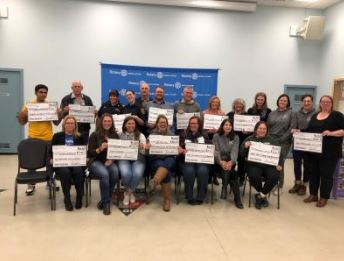 The Rotary Club of Olds, Alberta, is livening up its process for awarding grants to community groups. In November, representatives of about a dozen organizations pitched their proposals at a contest modeled on Dragons’ Den, a CBC television program (much like Shark Tank in the U.S.) in which venture capitalists judge entrepreneurs’ proposals for investment. The organizations were allotted five minutes to make their pitch, followed by five minutes of questioning by a panel of Rotarian “dragons,” or judges. Club President Randy Smith concedes that the awardees would have received their share of the roughly $10,000 regardless of who won. But he says the spirited affair gave the groups, including Interactors and fire department cadets, an opportunity to hone their presentation skills and showcase their creativity.