Our speaker on April 17, 2025, was Cynthia Gregory, a writer, writing coach, and publisher. Cynthia has a Master of Fine Arts degree in literature, is a certified life coach, and works with other writers to help them sharpen their writing skills and get their work published. She’s “all about the story.” Our brains are wired for stories; they teach us language, sensory prediction, empathy, emotion, and imagery. Stories help us with memory and strengthen neural pathways. By reading and hearing stories we connect to characters, helping us make stronger social connections.
Cynthia fell in love with writing as a youngster. She started her career writing travel and food articles. Her early efforts at fiction writing were rejected by publishers, so she doubled down and worked harder. One rejection she received came with a handwritten note from the publisher telling her that her work was great and that she should keep trying. She started registering in story-writing contests and did well; she even finished 2nd in a contest competing against thousands of other writers. Her first book was “Journaling as Sacred Practice: An Act of Extreme Bravery.” It took her 48 days to write it at a pace of 1,000 words per day. It is about how to journal better with short exercises about what writers can do to improve their writing. “What is Possible From Here” is a collection of short stories including stories she’d been working on for years and stories that came out of the Covid experience and the 2017 fires in Sonoma County. “Love Notes From the Soul: Stories of Transformation and Hope” is a collection of short stories from 30 authors from 7 countries. “Love Notes” grew out of a retreat she attended at Big Sur. She was sitting on a bench, reading poetry, and listening to monks chant when we heard a voice telling her “love notes.” She followed up on this idea by collaborating with these authors on an anthology whose premise is how we deal with adversity.
Cynthia’s mentorship of other writers has led to a variety of interesting books, including one about occupational therapy for autistics and another about better health through menopause. She teaches writers some of the important lessons she’s learned, including not taking rejection seriously and doubling down on improving one’s writing skills through journaling, practice, and collaboration.
Thank you, Cynthia, for the wonderful presentation and for lifting us up with your passion and commitment.
On a regular basis, our resident photo pro Warren Smith, submits pictures of what is going on at the weekly meetings. You can always find the most recent pictures at the websites photo journal called "Meeting Sighting" Please note that all the meeting photos for the entire Rotary year are at this location with the most recent on the last page.
Thanks for all the great pictures Warren!Link to Meeting Sightings. The most recent are on the last page!
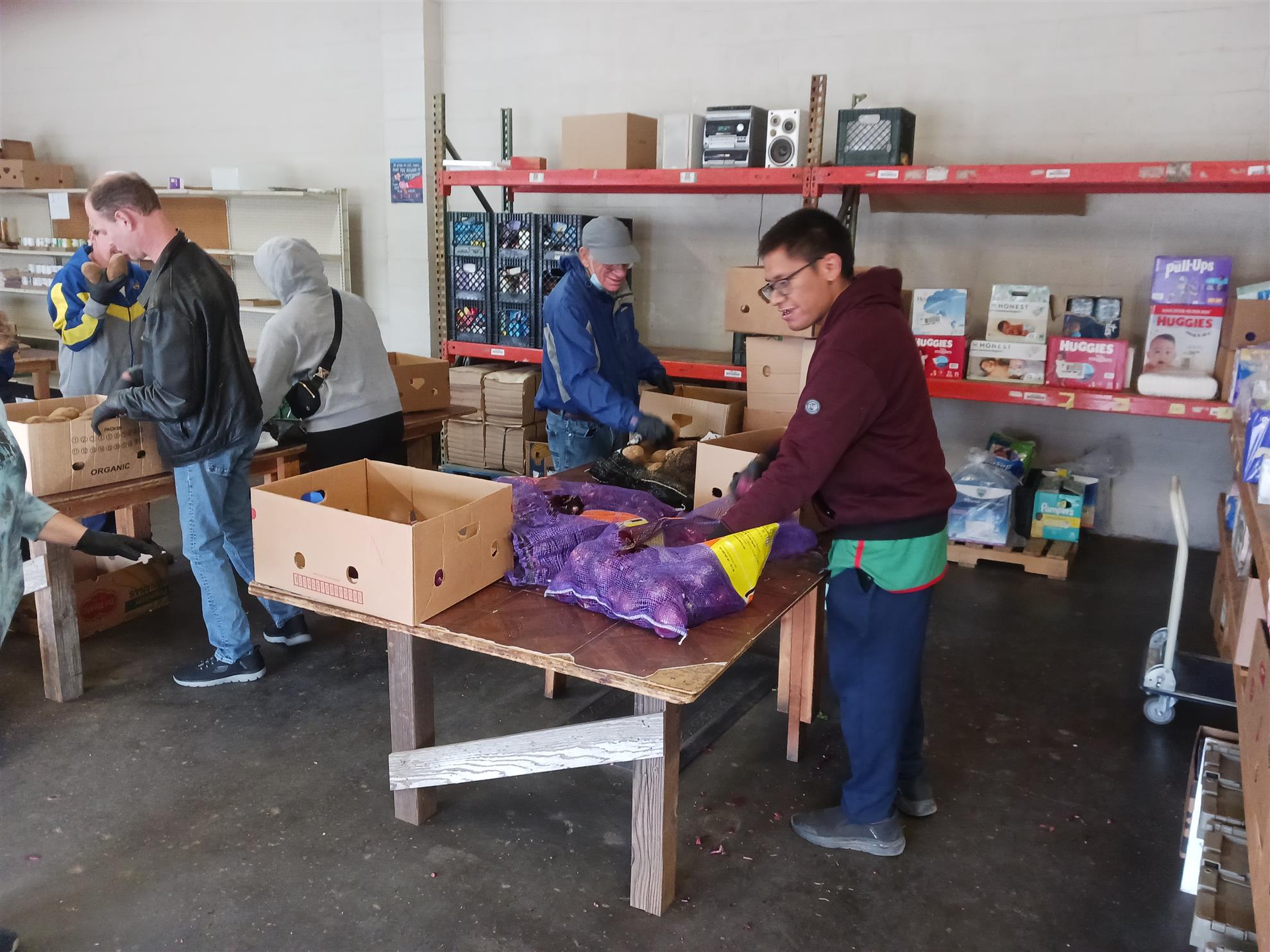
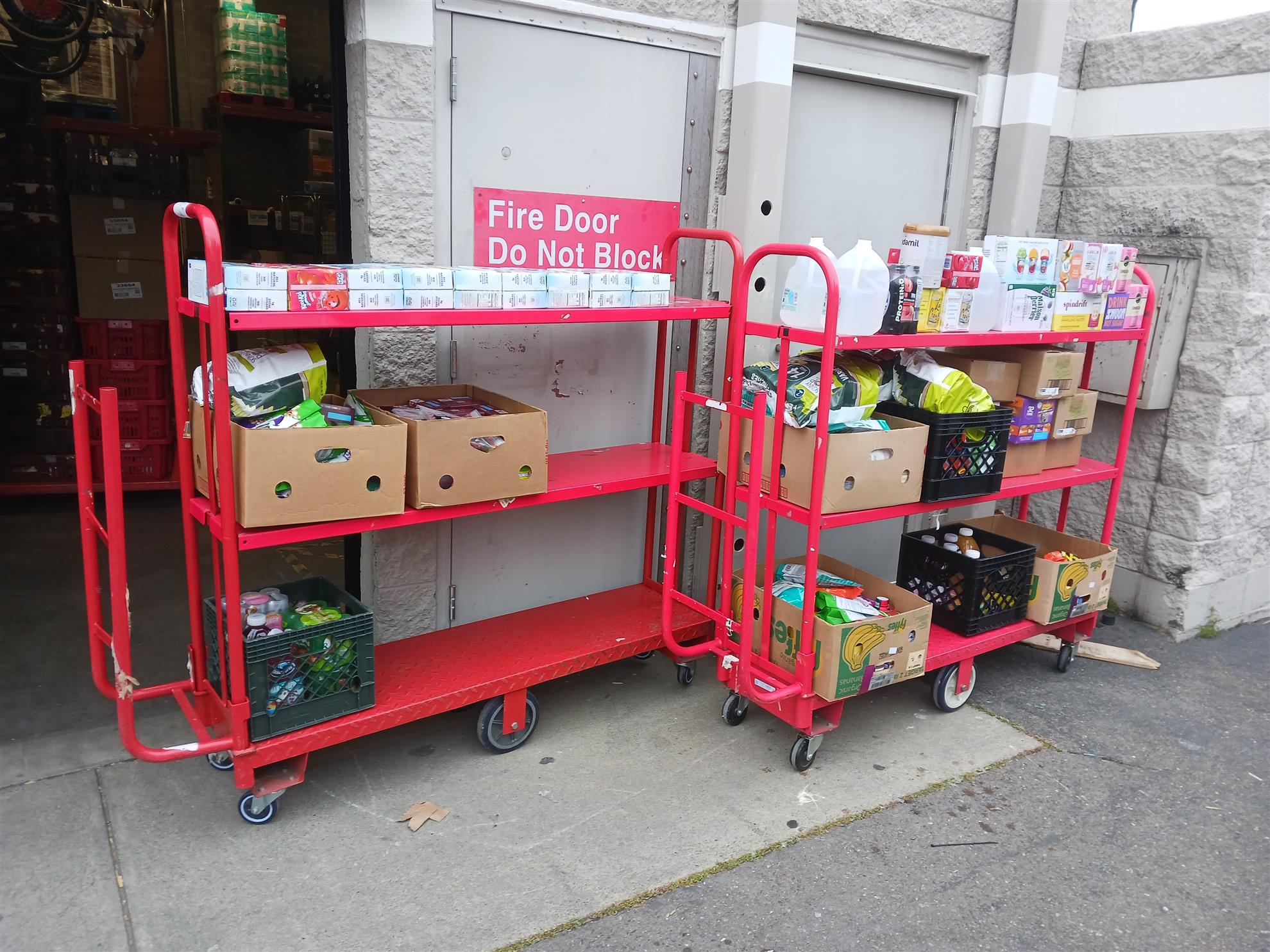
Volunteers from Becoming Independent sort, shelve and bag food donated to FISH Pantry. This photo by Sunriser, Steve Zwick, recorded the handling of his pickup from Target in Rohnert Park.
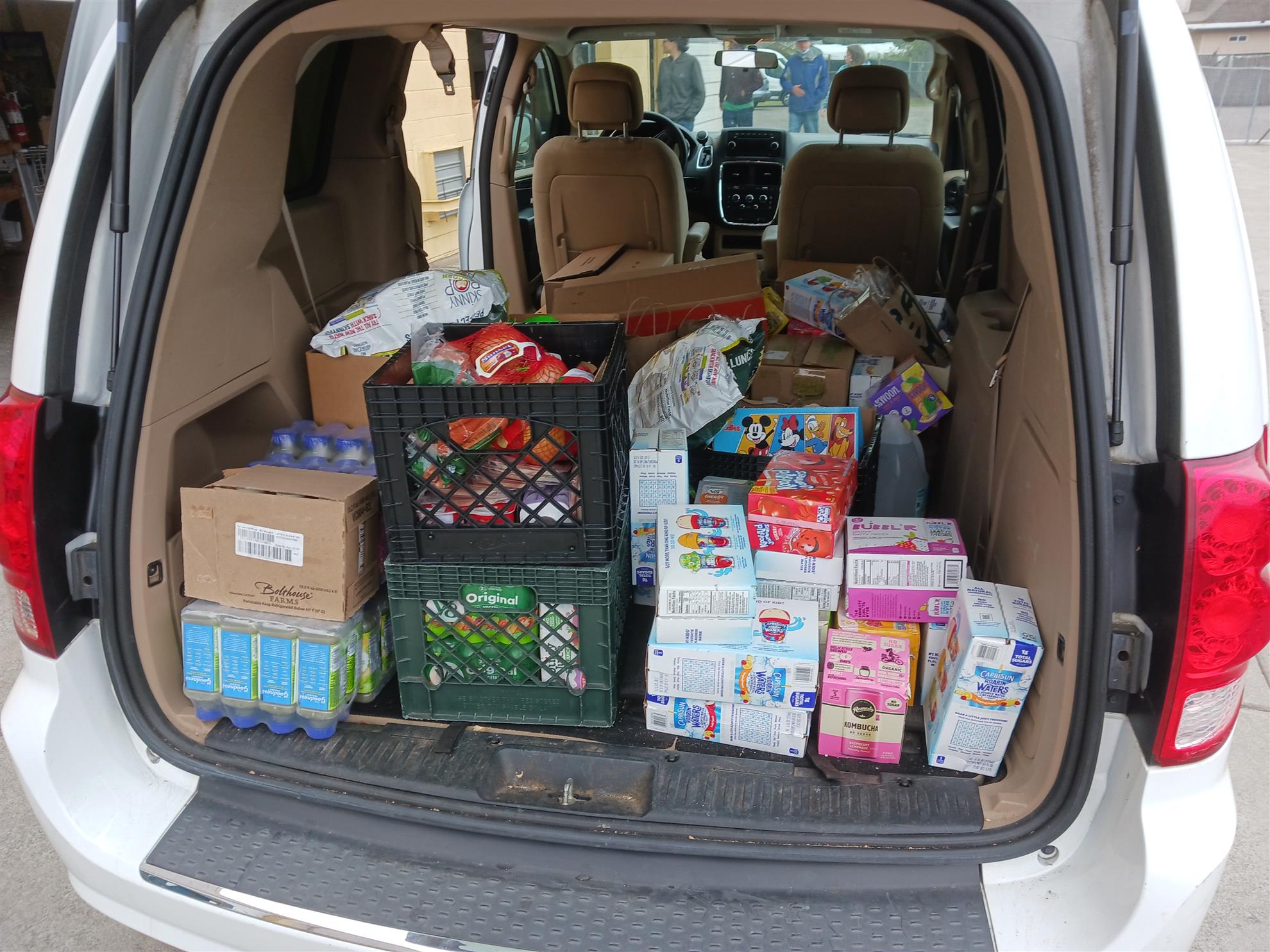
This is not Steve's SUV. FISH provides a van for drivers like Steve, Paul O'Rear, Peter Hoberg and Steve Herron to gather donations from local markets and community gardens. Back at FISH on Sebastopol Road, additional volunteers unload and restock respective shelves, freezer and fridges to assure correct inventory movement.
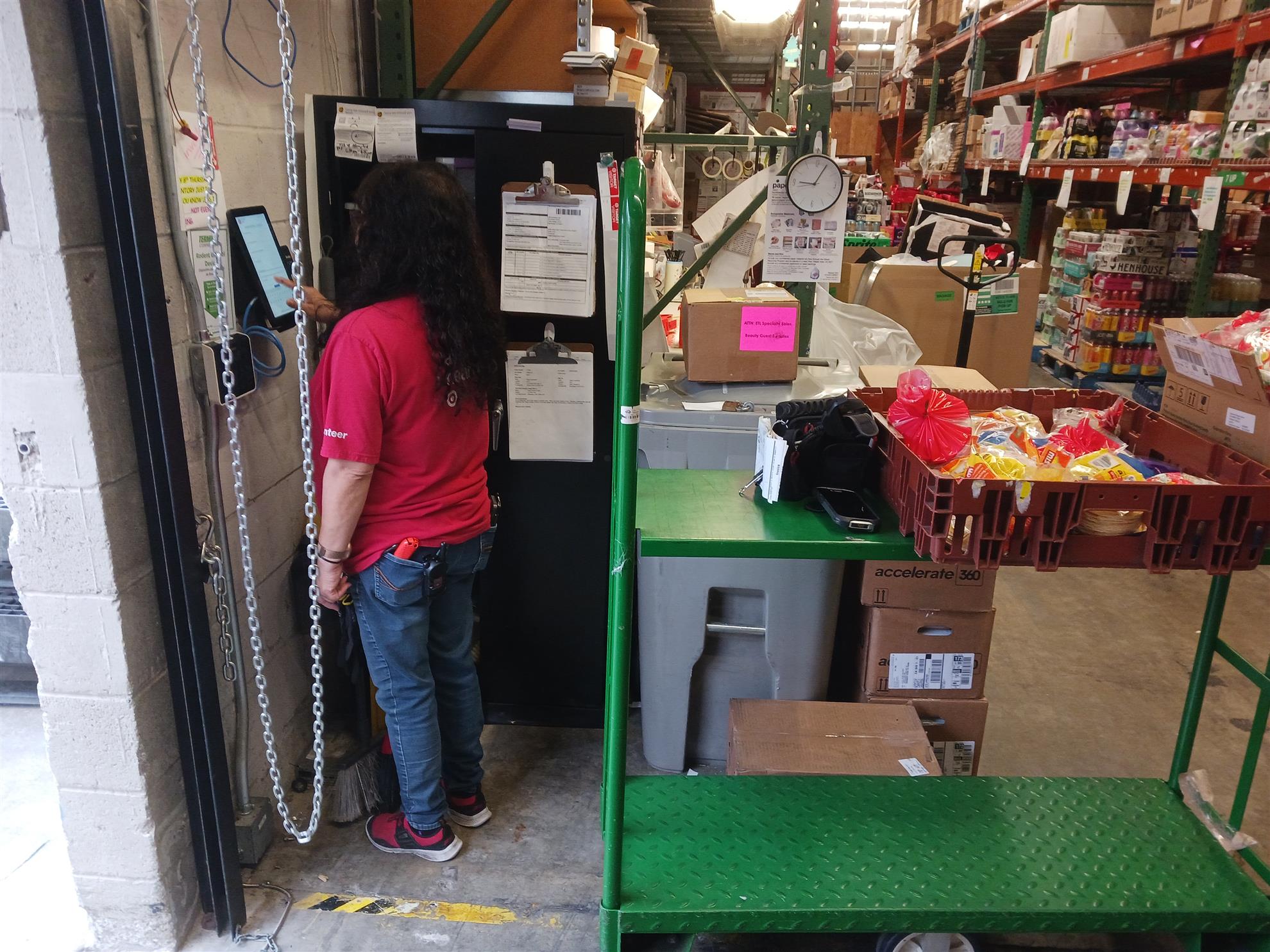
The FISH warehouse has high density space utilization! Can you spot the freezer?
This where it started, Steve's stop at Target Rohnert Park and rendezvous with Tammy, the store gatekeeper. Steve then single handedly transfers the food into the FISH van, returning full, replenishing stock to supply 500 recipients weekly, their two-bag full limit. On a monthly basis, that is 2,000 people at least who have more to eat and a measure less of food insecurity.
This community collaborative of labor, sharing surplus, reducing waste is due reason to support these vendors.
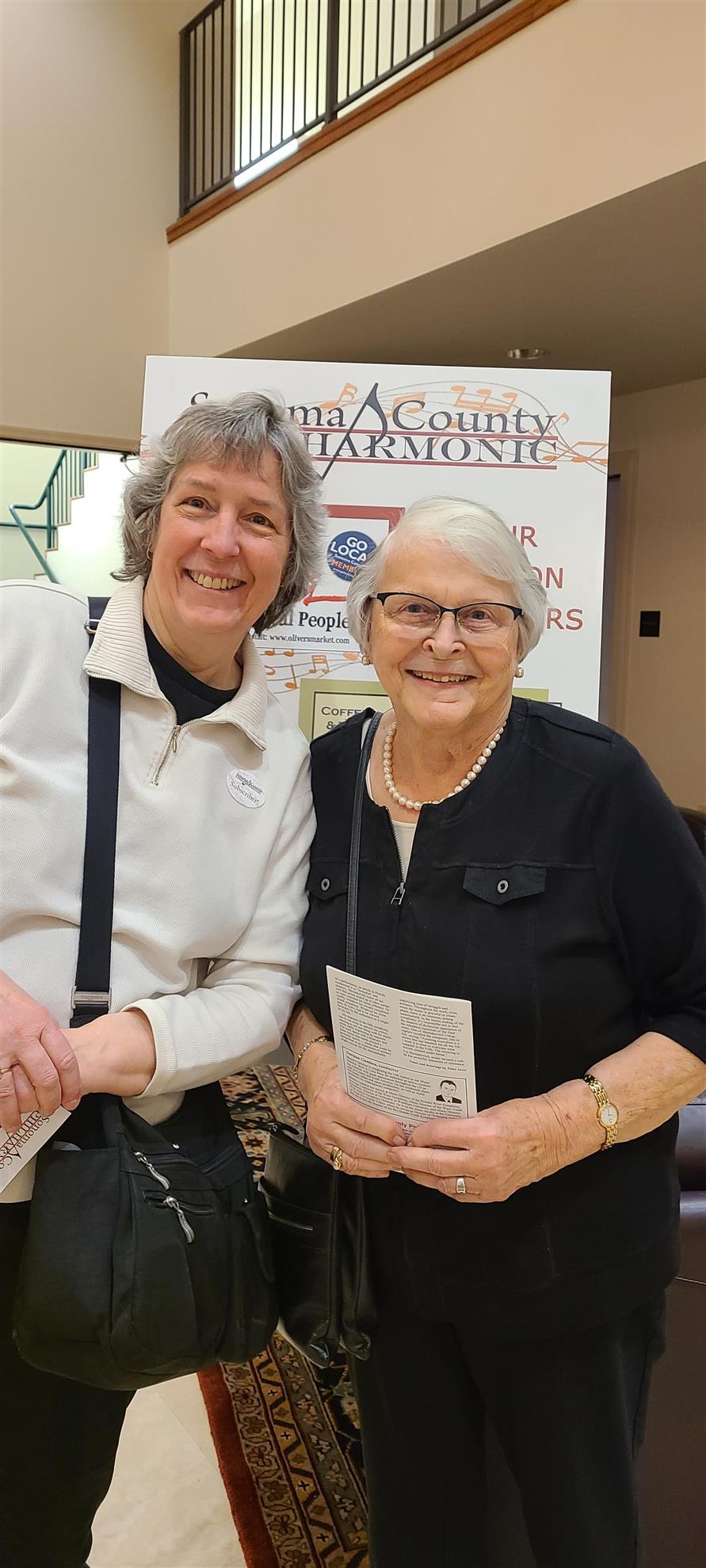
Merle Hayes and Lori Rodrigues volunteered to usher at Sonoma County Philharmonic's Saturday, April 12th's night performance. Lori exclaimed "it was a fun service project!"
In Jerusalem, a female journalist heard about a very old Jewish man who had been going to the Wailing Wall to pray, twice a day, everyday, for a long, long time. So she went to check it out.
She went to the Wailing Wall and there he was!
She watched him pray and after about 45 minutes, when he turned to leave, she approached him for an interview.
“Sir, how long have you been coming to the Wall and praying?”
“For about 60 years.”
“60 years! That’s amazing! What do you pray for?”
“I pray for peace. I pray for all the hatred to stop and I pray for all our children to grow up in safety and friendship.”
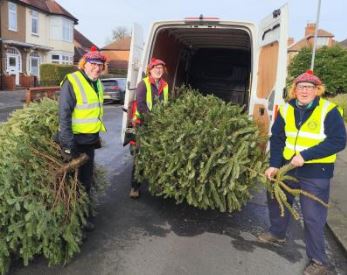
The Rotary Club of Darlington has raised nearly $160,000 over the past 14 years by giving Christmas trees a new use. In January, more than 70 Rotarians and friends collected 18,000 trees to be chipped and sold to a biomass processor to generate electricity. Teams traveling in vans worked in snow and ice over two days to gather the trees and collect donations per pickup. The project is as much a fun social occasion as it is service, says David Hayward, who has led the campaign since its beginning. “Everything is loaned free from local supporters, including a large cafe to operate from, the big vans, a tree surgeon chipping all the trees, plus hundreds of pies and pasties to keep our volunteers well fueled,” he says. “Success relies on number of trees plus enthusiasm, dedication, energy, and fun.” The funds raised support a hospice and other local charities.
Netherlands
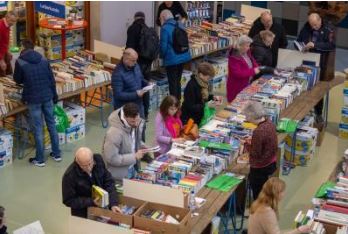
An annual sale of used books, puzzles, and other items speaks volumes for the fundraising prowess of the Rotary Club of Venlo-Maas en Peel. Over three days in January, thousands of bookworms bought $75,000 worth of books, a record sum directed to the club’s charitable foundation, says Peter Elbers, governor-elect of District 1550. Around 140 Rotarians and other volunteers staffed the fair, which the club co-founded 36 years ago. The event is the culmination of a year’s work, with Rotarians sorting and categorizing about 450,000 books each year in warehouse space donated by a club member, Elbers says. Books left unsold are pulped for recycling. “Some people come every year to buy a few bags full of books and return them as a gift a year later,” Elbers says, “and then, of course, buy new books again — a good way of implementing environmentally friendly circulation.”
This story originally appeared in the April 2025 issue of Rotary magazine.
Connect with Rotary on WhatsApp
Rotary now has a WhatsApp channel! It has updates on Rotary projects, useful news, and plenty of fun. It’s in English only for now. See the channel here and select “follow.” Or find it by selecting “Updates” or “Channels” on the WhatsApp menu bar and searching for “Rotary.”

.png)






.png)



 The Rotary Club of Darlington has raised nearly $160,000 over the past 14 years by giving Christmas trees a new use. In January, more than 70 Rotarians and friends collected 18,000 trees to be chipped and sold to a biomass processor to generate electricity. Teams traveling in vans worked in snow and ice over two days to gather the trees and collect donations per pickup. The project is as much a fun social occasion as it is service, says David Hayward, who has led the campaign since its beginning. “Everything is loaned free from local supporters, including a large cafe to operate from, the big vans, a tree surgeon chipping all the trees, plus hundreds of pies and pasties to keep our volunteers well fueled,” he says. “Success relies on number of trees plus enthusiasm, dedication, energy, and fun.” The funds raised support a hospice and other local charities.
 An annual sale of used books, puzzles, and other items speaks volumes for the fundraising prowess of the Rotary Club of Venlo-Maas en Peel. Over three days in January, thousands of bookworms bought $75,000 worth of books, a record sum directed to the club’s charitable foundation, says Peter Elbers, governor-elect of District 1550. Around 140 Rotarians and other volunteers staffed the fair, which the club co-founded 36 years ago. The event is the culmination of a year’s work, with Rotarians sorting and categorizing about 450,000 books each year in warehouse space donated by a club member, Elbers says. Books left unsold are pulped for recycling. “Some people come every year to buy a few bags full of books and return them as a gift a year later,” Elbers says, “and then, of course, buy new books again — a good way of implementing environmentally friendly circulation.”