The Board recently approved grant funding to support the 4th Annual Job & Resource Fair for the unsheltered population in Santa Rosa. This will be the fourth time our Club has hosted this luncheon event.
To make this large, public event successful we also need a group of Club members to help out at this event. In total we need 12-15 volunteers for the bulk of the event, but especially from 8:30am-11am to prepare the lunch.
Please reply to me if you can help us out on the 28th! I will send you back more details of the day.
When: Weds, Oct 28th between 8:30am - 2pm
Where: Son Cty Fairgrounds, Garrett Building (East side, off of Brookwood)
Our Mission:
1. Help w table set-up for event in the two large buildings.
2. Prepare a bagged sandwich lunch for an estimated 300-400 people. We will prepare this lunch on-site from 8:30am-11am.
3. Distribute the lunch to the participants via buffet line, starting at noon.
4. Clean-up our preparation/distribution area from 1:30-2pm.
5. After the lunch is prepared by 11am, we can also use a few volunteers between 11am-2pm to help welcome and direct participants from the parking lot to the Garrett Buildings.
If you would like to help out participants with creating their job resumes or helping with registration between 11am-2pm, we could use 3-4 volunteers for this task (bilingual in Spanish is also very much needed).
Volunteering for this event is a rewarding experience. We bring a bit of kindness and support to those in need within our local unsheltered community who are coming to this event to improve their readiness for gainful employment.
The attached flyer provides more information on the event.
Please mark your calendars and Reply To Me directly, if you can help us out with this Club project. We can use your help in the am especially, even if you can only stay for a few hours!
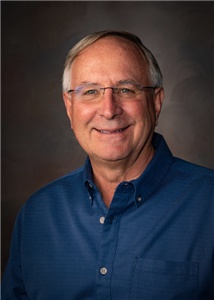
Jeff Kolin is a longtime public servant, community leader, and dedicated Rotarian whose career has been defined by building partnerships, strengthening communities, and creating lasting public impact.
Jeff's 38-year career in local government included service with eight California cities, one county, and a recreation and park district. He served as City Manager of Beverly Hills, Santa Rosa, and Pittsburg, where he led major infrastructure, economic development, and community enhancement projects.
Following his municipal career, Jeff provided strategic consulting services to local governments throughout California, assisting communities with public outreach, organizational development, and policy initiatives.
An active Rotarian for more than 28 years, Jeff served as President of the Rotary Club of Santa Rosa and has held numerous leadership positions within Rotary. As District Governor for 2026–2027, he is focused on strengthening club vitality, expanding Rotary’s reach, fostering collaboration among clubs, and creating meaningful opportunities for service.
His governor theme, “Building Bridges, Connecting Communities,” reflects his belief that Rotary’s greatest strength lies in bringing people together to make a positive difference.
Jeff and his wife Patty live in Santa Rosa, California, where they enjoy family time with their daughters and grandchildren, as well as travel, cycling, cooking, and wine collecting.
Marrying Conventional and Renewable Energy with Jim Brencic
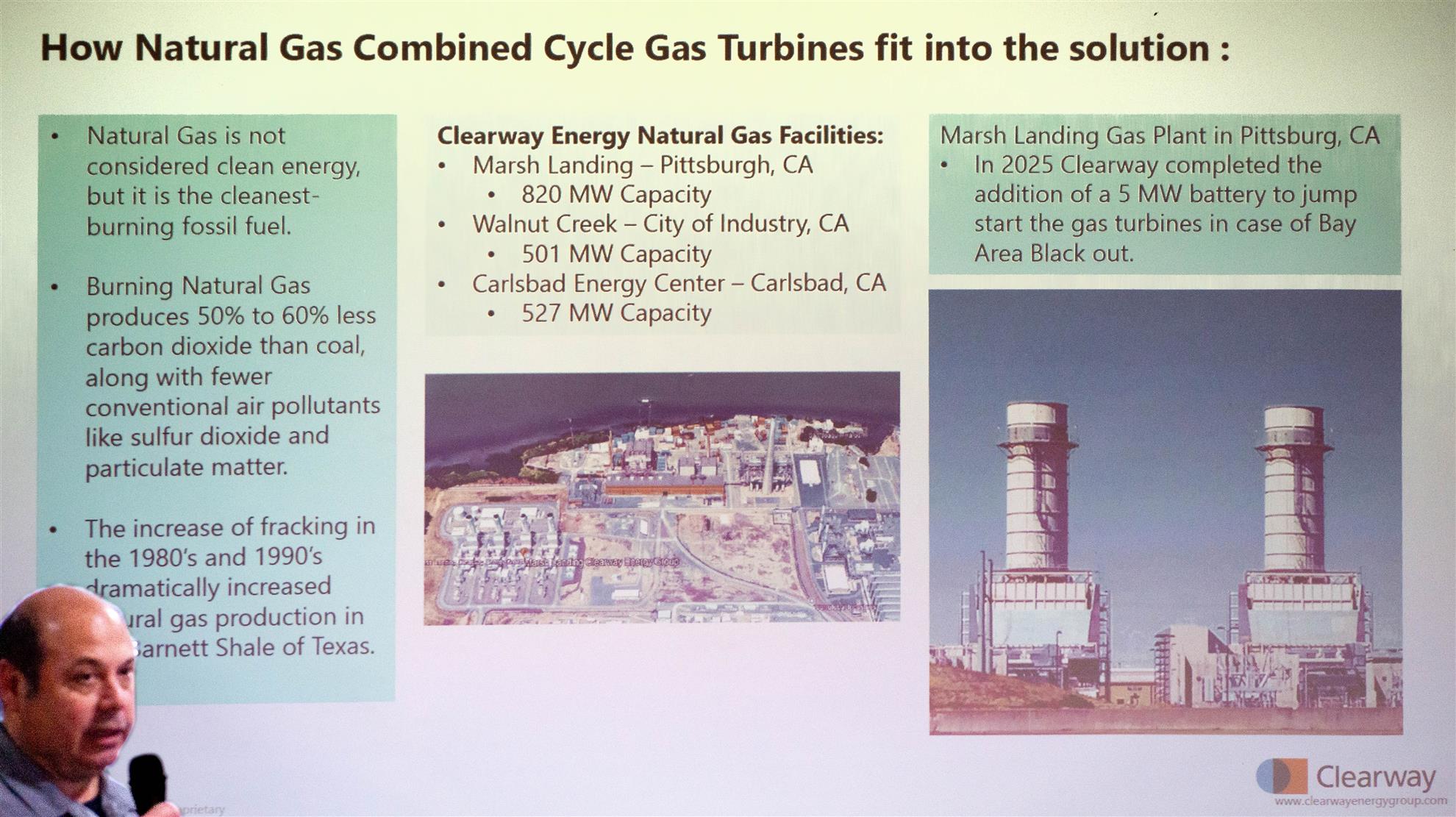
Sunrise Rotary presents - Marrying Conventional and Renewable Energy with Jim Brencic Oct 08, 2026 Overview This meeting featured a presentation by Jim Brencic, a Senior Construction Director at Clearway Energy Group, on the topic of utility-scale renewable energy and its integration with conventional energy sources. Jim drew on over 16 years of experience in the renewable energy sector — including 6 years at SunPower and 10 years at Clearway Energy Group — to provide a comprehensive overview of how the United States is transitioning its energy mix, the economics of that transition, and why a combined renewable-plus-conventional approach is the most viable path forward to meet growing national energy demand. Key Concepts or Theories • Utility-Scale Renewable Energy: Large-scale solar, wind, and battery projects (ranging from 100 to 500+ megawatts) that contribute significantly to the national grid, as opposed to smaller residential or commercial installations. • Energy Firming with Natural Gas: The strategy of using natural gas as a supplemental power source to compensate for the intermittency of solar and wind energy, ensuring reliable supply during peak demand periods. • Levelized Cost of Energy (LCOE): A metric reflecting the total project-level cost of producing energy over a plant's lifetime, used to compare the economic competitiveness of different energy sources. • Battery Energy Storage Systems (BESS): Utility-scale battery installations that store cheap daytime energy and deploy it during evening peak demand, acting as a critical bridge between renewable generation and grid reliability. • Investment Tax Credit (ITC): A federal tax incentive that has significantly reduced the cost of solar energy development, currently set to expire at the end of 2030. Important Questions Raised • How do we balance the rapid transition to renewable energy without prematurely eliminating conventional energy infrastructure and the economic ecosystems built around it? • Given the intermittency of solar and wind, how can battery storage and natural gas firming together provide a reliable and cost-effective energy supply? • Where does the difference between the wholesale cost of energy production and the retail price paid by consumers actually go? • What role should nuclear energy play in the broader energy transition? • How will the expiration of the Investment Tax Credit in 2030 affect the economics of renewable energy development? Key Takeaways and Summary of Learning Objectives • Utility-scale renewable energy projects (solar, wind, battery) are rapidly scaling up across the United States, with individual projects now reaching 500 megawatts or more. • Fossil fuel resources are finite: coal has approximately 139 years remaining, while oil and natural gas each have roughly 45–50 years of supply left globally. • The United States currently generates approximately 46% of its electricity from low-carbon sources, with California leading at approximately 57% renewable energy. • A combined strategy of solar and wind as the base load, supplemented by natural gas for peak demand, is more cost-effective than relying solely on conventional energy. • The LCOE for solar is currently around $50 per megawatt hour, compared to approximately $110–$120 per megawatt hour for combined cycle natural gas turbines. • Battery storage systems play a critical role in shifting cheap daytime solar energy to evening peak demand periods. • The Investment Tax Credit (ITC), expiring at the end of 2030, has been a major driver of cost reductions in solar energy; its expiration is expected to cause energy costs to rise temporarily before technology improvements bring them back down. • Utility-scale projects have a defined lifespan of approximately 20 years, with legally required decommissioning plans and bonds to restore land to its original state. Topic 1: Scale and Scope of Utility-Scale Renewable Energy Utility-scale renewable energy refers to large power generation projects that feed electricity directly into the grid, as opposed to rooftop or commercial-scale systems. Jim provided a clear framework for understanding the scale of these projects: 1 megawatt powers approximately 133 homes, 100 megawatts powers about 13,000 homes, and 500 megawatts can power approximately 66,500 homes. For context, a 550-megawatt plant could power all of Santa Rosa's 70,000–73,000 housing units from sunrise to sunset. Projects that were once considered large at 20–50 megawatts a decade ago have grown to 500- megawatt-plus installations, often developed in multiple phases. These projects are distributed across both red and blue states, with Texas and California standing out as the two largest renewable energy producers in the country. Jim highlighted the Antelope Valley in Southern California as a premier renewable energy hub — a flat, south-facing Mojave Desert landscape with ideal solar irradiance, known soil conditions suitable for pile-driven foundations, strong community support, and robust grid interconnection infrastructure. A 15-mile stretch of the valley is densely packed with solar installations, with wind turbines filling the Tehachapi Mountains above. Relevant Q&A Question: Are solar panels being installed over the California aqueduct canals? Answer: Jim confirmed awareness of such proposals but noted he has not personally worked on those projects. He referenced his experience with the Department of Water and Power as a related but distinct effort. Topic 2: Global and U.S. Energy Transition Jim presented a global snapshot of the current energy mix to contextualize the scale of the transition underway. Globally, approximately 19% of energy comes from low-carbon sources, including solar, wind, hydro, and nuclear. China, despite its massive coal consumption, generates 43% of its energy from low-carbon sources and dominates global solar panel manufacturing. The United States currently sits at approximately 46% low-carbon energy, with nuclear contributing 19%, hydropower 9%, wind 11%, and solar 7%. California leads domestically at approximately 57% renewable energy, and Jim noted that approximately two to three weeks prior to the meeting, California was powered entirely by renewable energy for approximately one week during favorable solar conditions. Texas, despite being a traditionally fossil-fuel-heavy state, has become a renewable energy leader, with wind alone accounting for 22% of its electricity generation. Jim emphasized that coal — the dirtiest fossil fuel — must be phased out, while natural gas, as the cleanest-burning fossil fuel with 50–60% less CO₂ than coal, serves as a practical transitional energy source. He cautioned against the political overreach of attempting to eliminate all conventional energy by 2030, arguing that the economic and social infrastructure built around fossil fuels in states like Texas and Oklahoma must be respected in any realistic transition plan. Relevant Q&A Question: What is Jim's view on nuclear energy as part of the solution? Answer: Jim acknowledged nuclear as a legitimate and separate energy source worthy of consideration but noted it falls outside the scope of the renewable-plus-gas-firming solution he was presenting. He offered to discuss it further after the presentation. Topic 3: Project Case Study — Rosamond Complex, Antelope Valley Jim walked through a detailed case study of a multi-phase project complex he has been developing in the Rosamond area of Antelope Valley over the past 10 years, illustrating how utility-scale solar and battery projects are built, interconnected, and operated. • Rosamond Phase 1 (Solar): 192 megawatts, reached commercial operation in 2020. • Rosamond Central Battery Project: 147 megawatts, 4-hour duration — the first utilityscale battery project Jim worked on. Charged from the grid during low-cost daytime hours and deployed during evening peak demand. • Rosamond South 1: 162 megawatts solar with integrated battery storage, developed across multiple parcels with different landowners requiring individual lease negotiations. • Rosamond South 2: 192 megawatts, 8-hour battery duration, providing extended evening dispatch capability. Collectively, these four projects can power 177,000 homes during daylight hours and an additional 178,000 homes for 4 hours after sunset. Notably, 112 megawatts from this complex is sold to Marin Clean Energy under a power purchase agreement, directly serving Northern California customers. Jim also described a battery installation at the Marsh Landing natural gas plant near Antioch, commissioned by PG&E as an emergency black-start resource — capable of restarting the gas turbines and restoring power to the Bay Area in the event of a total grid blackout caused by a cyberattack or natural disaster. Relevant Q&A Question: How long do the solar panels last, and what happens to degradation over time? Answer: Jim (responding to Stephanie) explained that panels last approximately 20–25 years with a degradation rate of only 0.1–0.2% over that entire period. Operations teams conduct thermal scans and DC health testing to maintain plant performance, and repowering programs are used to extend project life. Topic 4: Technology and System Components Jim provided a technical overview of the key hardware components that make up a utility-scale solar and battery project, drawing parallels to residential systems to make the concepts accessible. • Solar Panels and Trackers: Large utility-scale panels are mounted on steel H-piles driven directly into the ground (no concrete foundations). A torque tube connects the panels along each row, allowing them to track the sun using a smart algorithm that optimizes the angle of solar irradiance throughout the day. NEXTracker, based in Fremont, California, holds approximately 30–35% of the U.S. tracker market and leads in smart tracking technology, including wind-stow (panels lie flat in winds over 50 mph) and hail-stow (panels tilt to approximately 7 degrees to deflect hailstones) capabilities. • DC Collection and Inverters: Panels are wired together in strings, with DC power collected underground and routed to central inverters. Each 5-megawatt block consists of six approximately 800-kilowatt inverters that convert DC power to AC power. • Transformers and Substations: Transformers step up voltage for transmission to the project substation, where the plant interconnects with the utility grid. The Southern California Edison Whirlwind Substation, built between 2010 and 2014, aggregates energy from the entire Antelope Valley renewable complex and transmits it statewide via a 500 kV transmission line. • Battery Energy Storage: Utility-scale battery packs are arranged in rows on pile-driven foundations. Control systems at the end of each row manage power collection and dispatch to the grid substation. Relevant Q&A Question: How does the smart tracker respond to extreme weather conditions? Answer: In winds exceeding 50 mph, the tracker automatically stows panels in a flat position to prevent wind uplift. In hail-prone regions such as Texas, panels are tilted to approximately 7 degrees to minimize the impact surface area of hailstones. Topic 5: Economics of Renewable Energy vs. Conventional Energy Jim presented a detailed cost comparison using the Levelized Cost of Energy (LCOE) framework to make the economic case for a hybrid renewable-plus-gas strategy. Current LCOE benchmarks: • Solar: approximately $50 per megawatt hour • Wind: approximately $75 per megawatt hour • Combined Cycle Natural Gas: approximately $110–$120 per megawatt hour The Investment Tax Credit (ITC), which expires at the end of 2030, has been instrumental in driving solar costs down. With the ITC, the blended cost of a solar-plus-gas combination in 2026 is approximately $91 per megawatt hour, compared to $115 per megawatt hour for gas alone. By 2030, the combination is projected to reach approximately $98 per megawatt hour even after the ITC expires, with further reductions expected through 2040 as technology continues to improve. Jim also explained the tax equity investment model: large financial institutions purchase Renewable Energy Credits (RECs) generated by these projects to offset their own tax liabilities, providing a critical financing mechanism for project development. Relevant Q&A Question: If the wholesale cost of energy is roughly 3–7 cents per kilowatt hour, but consumers pay around 50 cents per kilowatt hour at peak, where does the difference go? Answer: Jim confirmed that the difference goes to the utility, which charges for transmission, distribution, infrastructure maintenance, and other grid services layered on top of the wholesale generation cost.
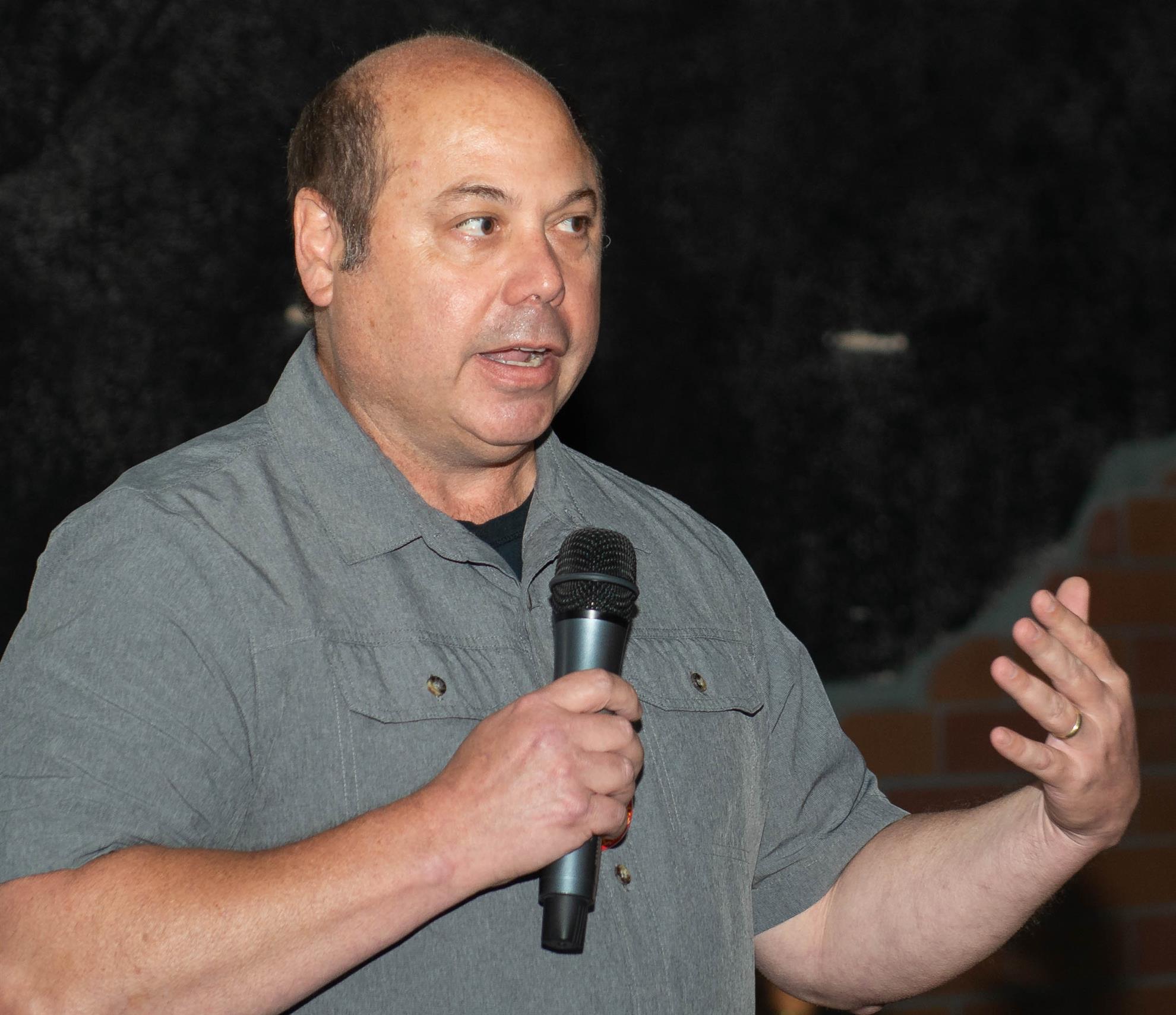
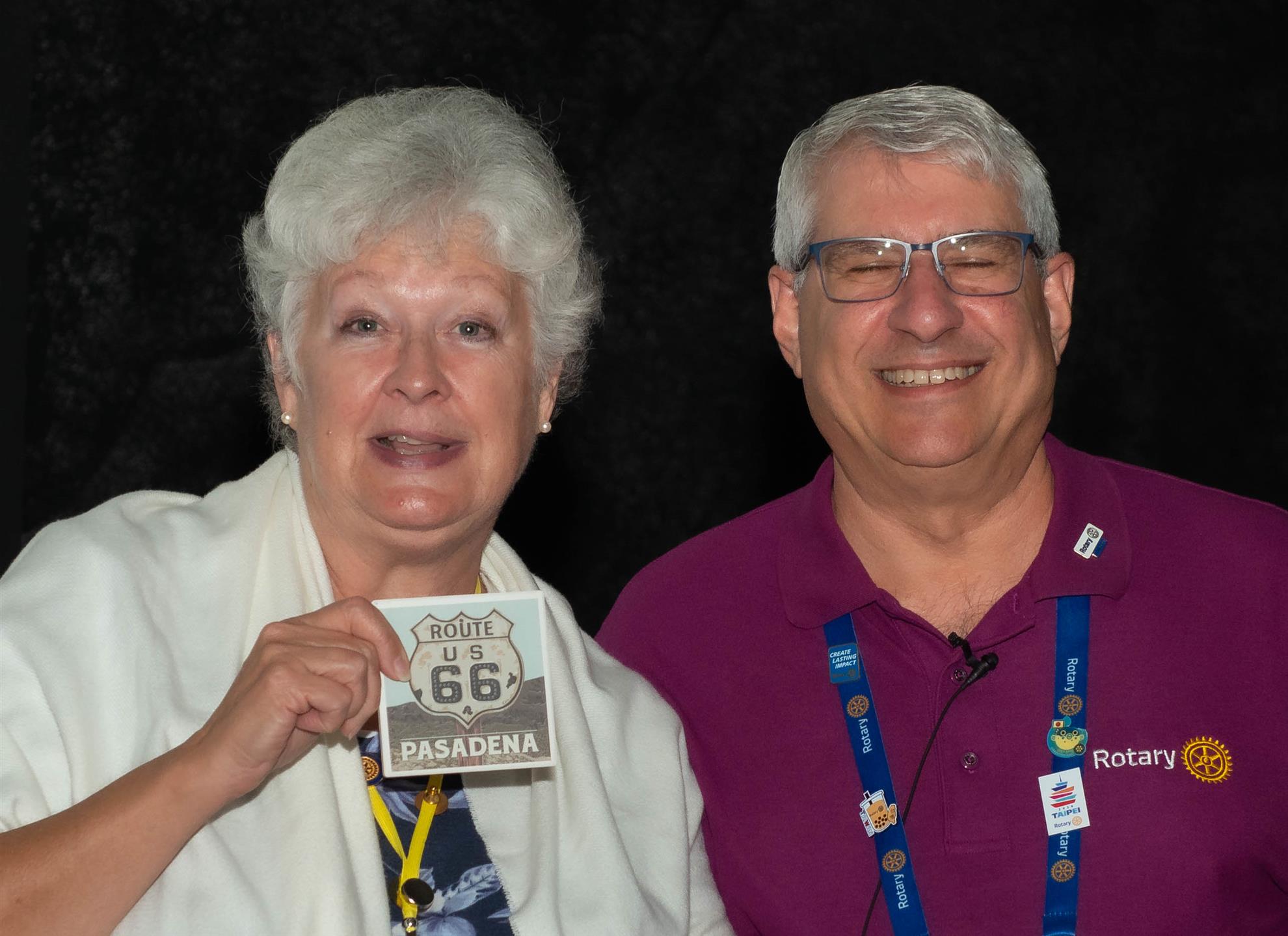
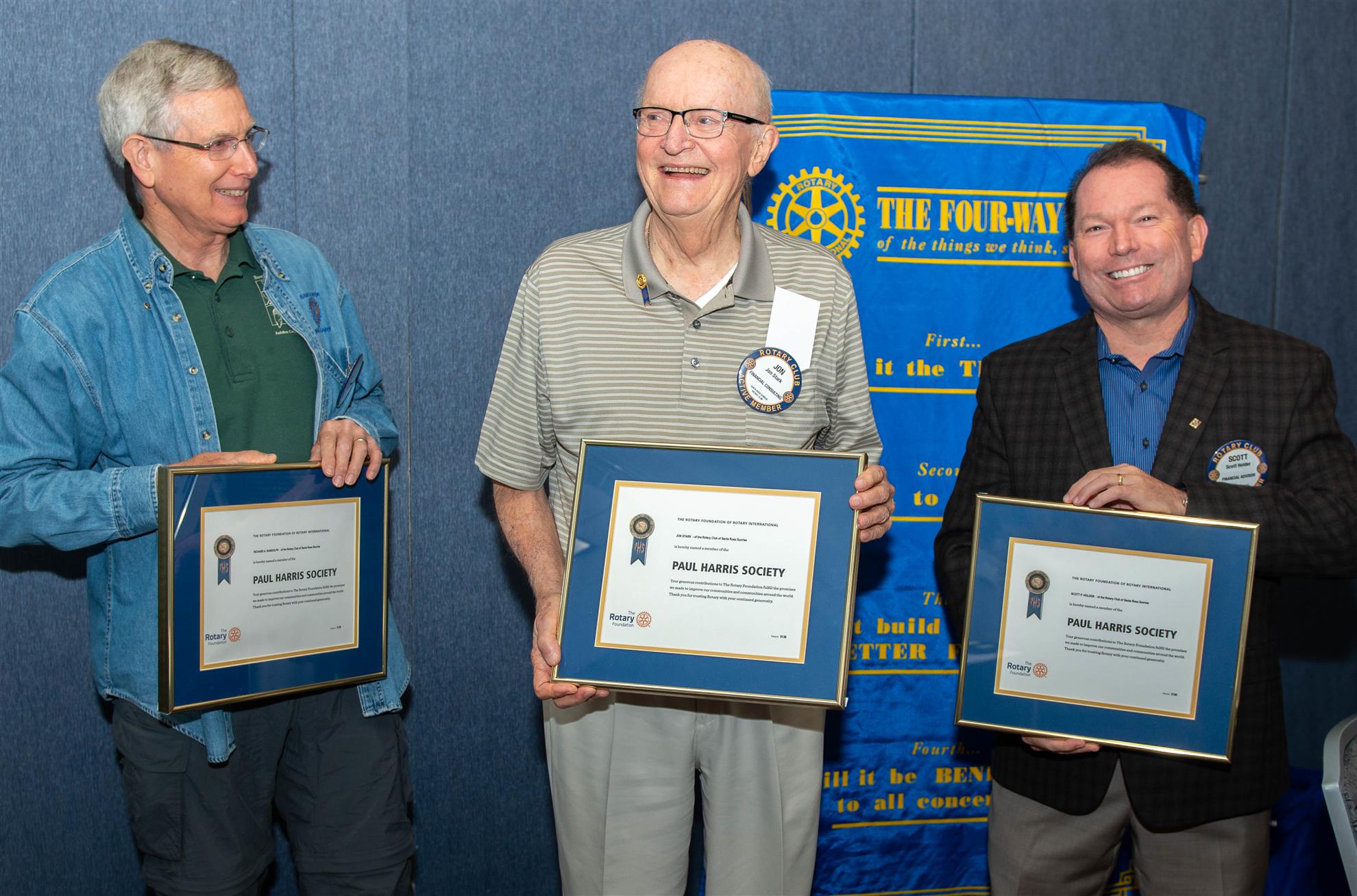
On a regular basis, our resident photo pro Warren Smith, submits pictures of what is going on at the weekly meetings. You can always find the most recent pictures at the websites photo journal called "Meeting Sighting" Please note that all the meeting photos for the entire Rotary year are at this location with the most recent on the last page.
Thanks for all the great pictures Warren!Link to Meeting Sightings. The most recent are on the last page!
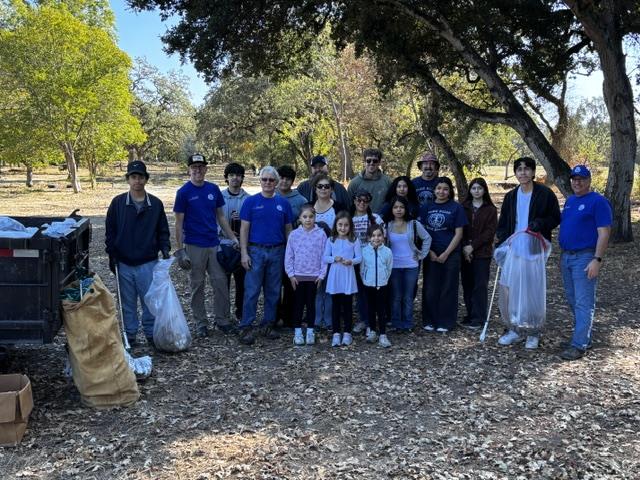
Keeping our Watershed Beautiful - Roseland Creek Cleanup - A Glorious Santa Rosa Sunrise!
Participants included members of Santa Rosa Sunrise Rotary Club, Roseland "Satellite" Rotary Club and Elsie Allen High School Interact Club.
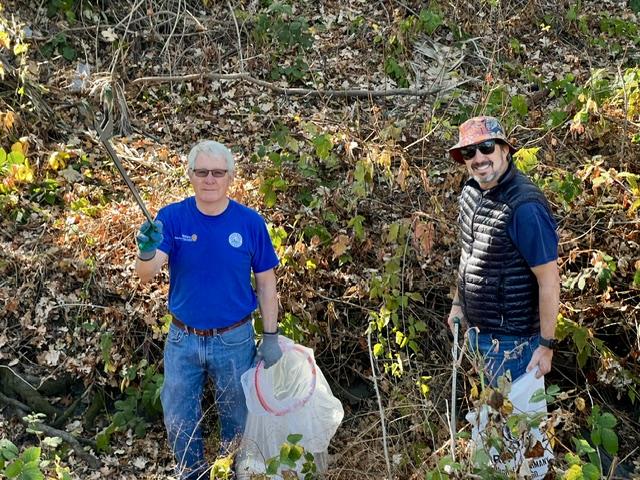
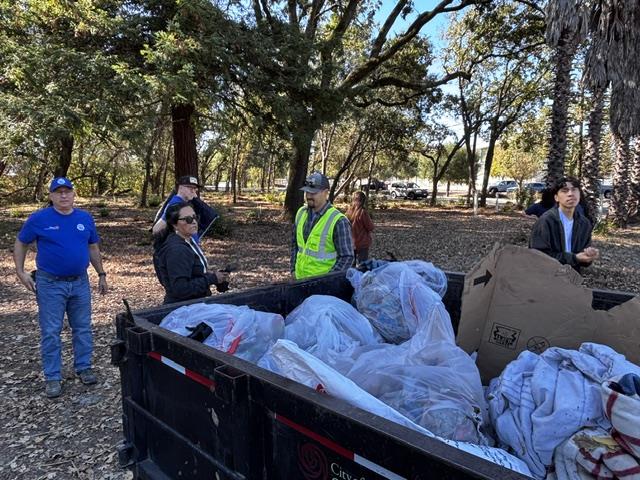
Saturday morning several people from the new Roseland Rotary club (in formation) participated in a cleanup project of Roseland Creek, alongside a few Sunrisers and a dozen EAHS Interact students.
Fueled by donuts, the group used pickers and trash bags supplied by the City Water Department’s Creek Taskforce. The City rep, Kyle, also gave the group a talk on creeks in Santa Rosa and the challenges involved in keeping them clean.
Cathy’s Torch. Her Legacy. Our Journey to End Polio.
From October 2-24, 2026, Rotary clubs throughout District 5130 will carry a community relay torch on an extraordinary journey across Northern California, uniting Rotarians, families and communities in the worldwide effort to end polio.
Beginning in Crescent City and concluding in Petaluma on World Polio Day, the torch will travel through communities across Del Norte, Humboldt, Mendocino, Lake, Napa and Sonoma counties.
One District. One Mission. A World Free of Polio.
Each participating Rotary club will organize a local event featuring the torch. Activities may include walks, runs, bicycle rides, community gatherings, youth participation and ceremonial handoffs from one Rotary club to the next.
Together, these events will create one continuous District-wide journey of hope, remembrance and action.
The Story Behind Cathy’s Torch
The community relay torch honors the memory of Catherine “Cathy” Ritter and the spirit of service she embodied. In 1984, Cathy participated in a community fundraising torch relay through South Lake Tahoe, where local residents gathered along Highway 50 to cheer on the participants.
Cathy was the daughter of longtime Rotarian Bob Rogers, a polio survivor and member of the Rotary Club of Sebastopol. Her story, together with her father’s experience with polio, gives this District-wide relay special meaning.
Cathy passed away in 2025 following a courageous journey with metastatic breast cancer. As the community relay torch travels from place to place, District 5130 honors Cathy’s life, Bob’s polio story and Rotary’s enduring promise to help create a polio-free world.
The World Polio Torch Relay will begin in Crescent City on October 2 and conclude in Petaluma on October 24, World Polio Day. Follow District 5130 for route updates, local events and opportunities to participate or support Rotary’s polio eradication efforts.
The planned route includes:
Crescent City
Arcata and McKinleyville
Eureka
Ferndale
Fortuna
Garberville
Fort Bragg
Mendocino
Gualala
Willits
Ukiah
Lakeport
Calistoga
St. Helena
Napa
Cloverdale
Healdsburg
Windsor
Santa Rosa
Sebastopol
Sonoma
Rohnert Park
Petaluma
Find an Event Near You
Community members are invited to attend local Torch Relay events, walk alongside Rotarians, participate in community activities and help spread the message that the world can—and must—end polio.
Each participating Rotary club will share its event time, location and participation information through its website and social media pages.
Support the Campaign
Members of the public can support the World Polio Torch Relay through an approved Raise for Rotary fundraising page established by a participating Rotary club.
Each club will provide its own donation button or fundraising link on its website, social media pages and local event materials. Donations made through these approved club campaigns will benefit PolioPlus through The Rotary Foundation and will be credited to the participating club.
Why Ending Polio Matters
For more than 35 years, Rotary and its partners in the Global Polio Eradication Initiative have worked to protect children around the world from this devastating disease.
Extraordinary progress has been made, but polio anywhere remains a threat to children everywhere. Continued vaccination, public awareness and financial support are essential until transmission of the virus has been stopped worldwide.
The World Polio Torch Relay represents the determination of Rotary members and communities across District 5130 to finish the work of ending polio.
Follow and Share the Journey
Follow Rotary District 5130 and participating Rotary clubs on social media for photographs, videos and event announcements from communities along the route.
Share the journey using:
#EndPolioNow
#WorldPolioDay
#TorchRelay
#RotaryDistrict5130
Questions?
For information about a local relay event, please contact the participating Rotary club directly.
For general information about the District-wide World Polio Torch Relay, please contact:
World Polio Torch Relay Chair: Renee McKenna
District 5130 Public Image Chair: Marguerite “Maggie” Padovani
Learn how Rotary clubs are taking action in Bolivia, Canada, Trinidad and Tobago, Italy, and Australia.
by Brad Webber
7 Oct 2026
Rotary members come together each World Polio Day on 24 October to recognize progress in the fight to end the disease. Here are some of the ways members are taking action to make history and eradicate polio. Register your club’s participation for a chance to see it featured in Rotary magazine next year.
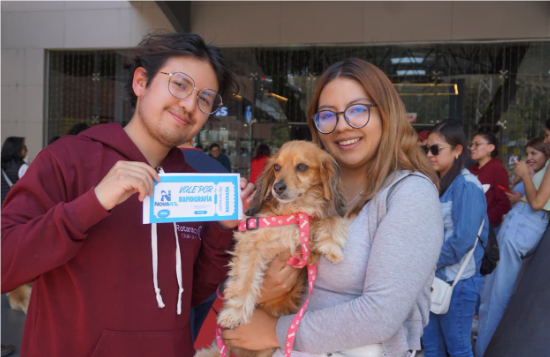
The Rotaract Club of La Paz, in collaboration with local Interactors, hosted Paws Against Polio, a lively community fair and dog show dedicated to raising funds and awareness for polio eradication.
Bolivia
The Rotaract Club of La Paz, in collaboration with local Interactors, hosted Paws Against Polio, a lively community fair and dog show dedicated to raising funds and awareness for polio eradication. Visitors enjoyed educational carnival-style games about polio eradication, a bake sale, a dog adoption booth in partnership with a local animal shelter, and raffle drawings that awarded Rotaract merchandise and souvenirs. “The highlight was the dog parade,” says Cristhofer Mamani Quispe, the club’s president, “where registered furry participants competed for prizes — including veterinary consultations and dog-friendly cakes — for the cutest outfits and best tricks.” Throughout the day, volunteers shared information about Rotary’s global efforts to eradicate polio and encouraged attendees to support the campaign.
In an attention-grabbing effort to introduce new members to Rotary’s polio push, the Rotary Club of Southampton, Ontario, scheduled a dinner packed with purple.
Canada
In an attention-grabbing effort to introduce new members to Rotary’s polio push, the Rotary Club of Southampton, Ontario, scheduled a dinner packed with purple. A club member concocted a menu that included meatballs in grape jelly sauce, red cabbage, roasted beet and carrot salad, purple sweet potato, and blueberry crumble, with grape punch to wash it down. “We have many new members and we wanted a fun way to introduce them to the campaign,” says Susan Macdonald, a past club president. The club showed a video on the history of PolioPlus, and a member spoke about her polio vaccination service trip. Many of the roughly 60 attendees dressed in purple. “I was blown away by the dedication and commitment to this project,” says Jim Stark, a new member.
This story originally appeared in the October 2026 issue of Rotary magazine.
Rotary Club of Santa Rosa Sunrise - Founded June 30, 1986








 Sonoma Coutny Fair Grounds




 The Rotaract Club of La Paz, in collaboration with local Interactors, hosted Paws Against Polio, a lively community fair and dog show dedicated to raising funds and awareness for polio eradication. Visitors enjoyed educational carnival-style games about polio eradication, a bake sale, a dog adoption booth in partnership with a local animal shelter, and raffle drawings that awarded Rotaract merchandise and souvenirs. “The highlight was the dog parade,” says Cristhofer Mamani Quispe, the club’s president, “where registered furry participants competed for prizes — including veterinary consultations and dog-friendly cakes — for the cutest outfits and best tricks.” Throughout the day, volunteers shared information about Rotary’s global efforts to eradicate polio and encouraged attendees to support the campaign.
 In an attention-grabbing effort to introduce new members to Rotary’s polio push, the Rotary Club of Southampton, Ontario, scheduled a dinner packed with purple. A club member concocted a menu that included meatballs in grape jelly sauce, red cabbage, roasted beet and carrot salad, purple sweet potato, and blueberry crumble, with grape punch to wash it down. “We have many new members and we wanted a fun way to introduce them to the campaign,” says Susan Macdonald, a past club president. The club showed a video on the history of PolioPlus, and a member spoke about her polio vaccination service trip. Many of the roughly 60 attendees dressed in purple. “I was blown away by the dedication and commitment to this project,” says Jim Stark, a new member.