Changing Lives in Bolivia: Magaly Quispe of AVP/PAV Bolivia
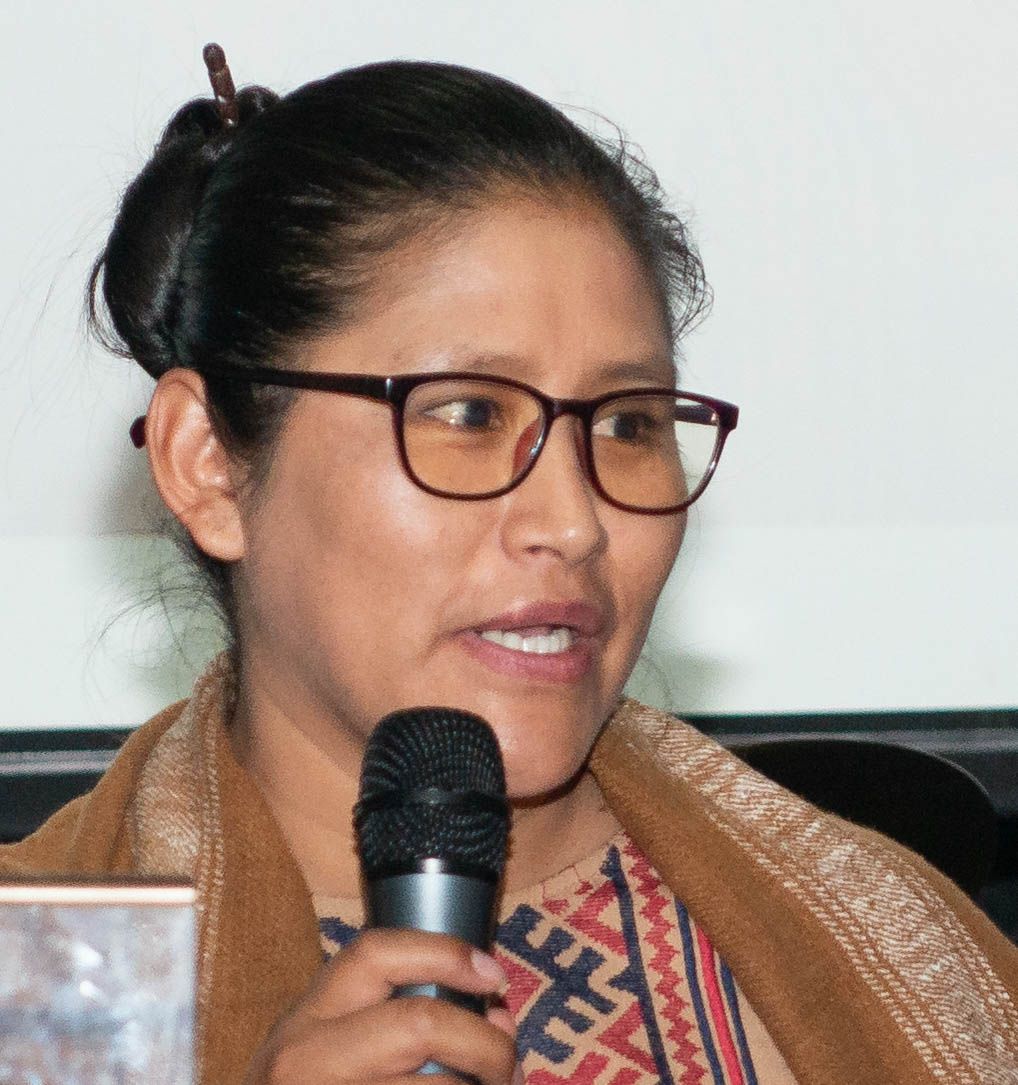
Our guest speaker for August 13, 2026 was Magaly Quispe, a Bolivian sociologist and founder of AVP/PAV Bolivia (PAV is an acronym for “Proyecto Alternativas a la Violencia”). Magaly was introduced by her friend and mentor, Barbara Flynn, who also translated Magaly’s talk. Magaly is a member of Bolivian’s indigenous Aymara group, one of the largest indigenous groups in Bolivia. She received a scholarship from the Bolivian Quaker Education Fund, which enabled her to complete her undergraduate degree in sociology. She became familiar with AVP (the Alternatives to Violence Project) while at the university. She became an AVP facilitator and worked to teach alternatives to violence in Bolivian prisons. She is primarily responsible for the AVP Student Residence in Sorata, Bolivia.
AVP is an international organization founded to teach principles of nonviolence in prisons, schools and the wider community. AVP/PAV Bolivia fosters deep transformation by integrating restorative justice and Quaker principles into schools and prisons. AVP was introduced in Bolivia in the mid-2000s. Bolivia is located in the central and southern parts of South America and is the size of California and Texas combined. It is extremely poor. It has the 3rd largest Quaker population in the world. There are 2 systems of justice in Bolivia; indigenous and governmental. The governmental system is corrupt and routinely imprisons people who cannot defend themselves: roughly 50-60% of prisoners nationwide are held with no opportunity for a hearing. In prisons, money speaks. If you are poor you don’t have much of an opportunity. Prisons in Bolivia are different. Generally, the guards are stationed only at the doors to the prison and the prisoners self-organize, like a city within a city.
AVP/PAV has 5 projects in Bolivia: the Students’ Home in Sonata; AVP in schools, domestic violence; AVP in prisons across the country; AVP greenhouses in prisons; and AVP in the community. In the Sonata school, AVP/PAV provides housing, full meals, educational support, resources for special needs, and preparation for university study. AVP/PAV has worked in 47 schools with 311 basic workshops with students, parents, and teachers. To students it teaches the stages of falling in love and/or bullying. It teaches nonviolence to parents, and to teachers it helps teach labor/work. Schools like Sonata have experienced a dramatic reduction in violence. In prisons, AVP/PAV uses the same methodology. Magaly started her work teaching nonviolence in Bolivian prisons. Since 2025, they’ve conducted 83 workshops with more than 2,000 participants in 40 prisons. AVP/PAV has also started building solar greenhouses because prisoners do not have access to fresh fruit or vegetables.
Thank you so much Magaly and Barbara for the wonderful presentation. We’d love to hear more about your projects in the future.