Jack Blasco: Chernobyl Revisited
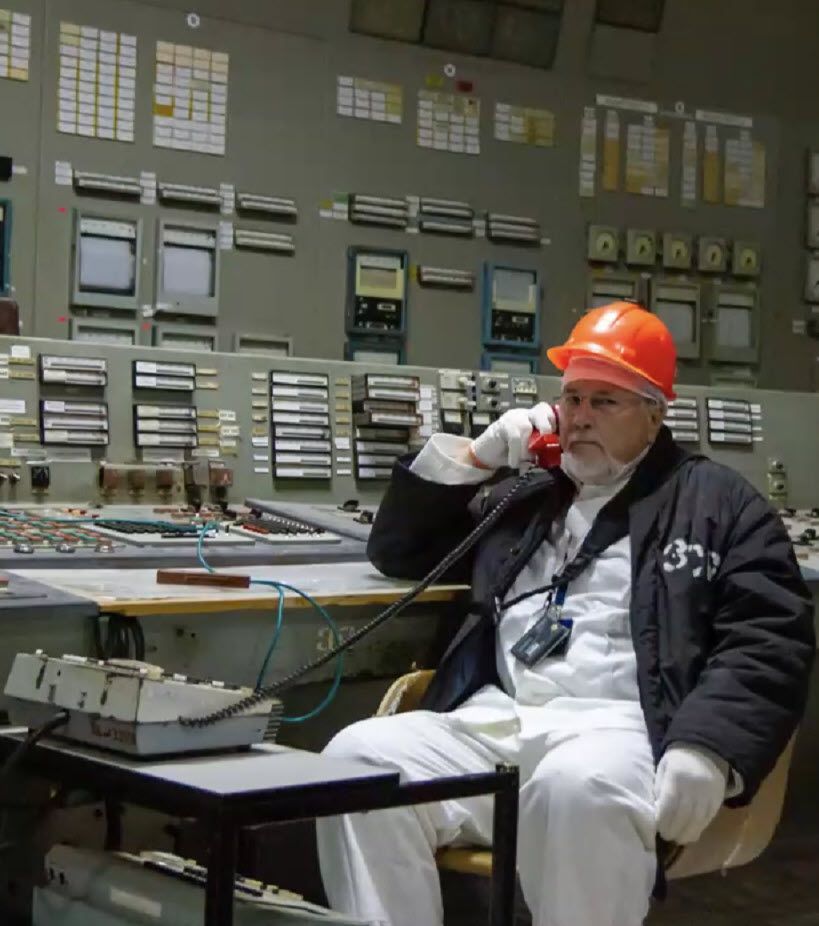
Our speaker for August 13, 2020 was Jack Blasco, a member of the Rotary Club of Sebastopol and long-time environmental scientist in America’s industrial seedy underbelly. Jack’s topic was “Chernobyl Revisited; 34 Years Later,” and was partially based on Jack’s recent tour of Chernobyl (as well as Jack’s long-term interest in the subject).
Chernobyl is located 60 miles north of Kiev in the Ukraine, which was at the time part of the Soviet Union. On April 26, 1986, a series of explosions and reactions took place in one of the nuclear reactors at the site during a routine safety test. The reactor was destroyed and pieces of the core were blown far and wide. The failure was due to defective design (including lack of secondary containment) and poorly trained personnel. Soviet authorities were aware of the design defects before the explosions. Initial efforts to control the explosions resulted in massive doses of radiation to site operators and, later, to everyone involved in the effort. Estimates of deaths caused by the cataclysm range between 4,000 and 40,000. Generations of children have been born with birth defects.
Soviet authorities established a 1,000 mile “exclusion zone,” and evacuated the entire population. Jack says that less than 200 people have returned to live in the exclusion zone. The clean-up effort ultimately included over 600,000 people and cost 4 billion Euros. The reactor was entombed in a “sarcophagus.” Over 2,000,000 people still live on contaminated soil! All efforts to further remediate the existing radiation have ceased.
Jack took us on a photo tour of the area, including the remains of the town of Pripyet, the city created to house the nuclear power plant's workers. The town included 20 schools and 11,000 students! The area includes a nearby closed military base known as Duga-1, which had been designed to identify a nuclear missile attack by the United States. The photos are a frightening display of the massive damage caused by the explosions and, also of grave concern, the fact that the remediation of the area completely stopped. Widespread radiation was left in place!
Jack also briefly addressed concerns about nuclear power, identifying known problems at San Onofre (near San Clemente, CA) and Mt. Diablo. Jack left us with an interesting question: what is worse, the threat of further radiation releases from nuclear power plants or continuing to use fossil fuel power (which is estimated to kill 13,000 people per year from lung disease)?
Many thanks to Jack for giving us the inside story of his tour of the exclusion zone and his summary of this tragedy.