Elder Abuse--It is more common than you might think
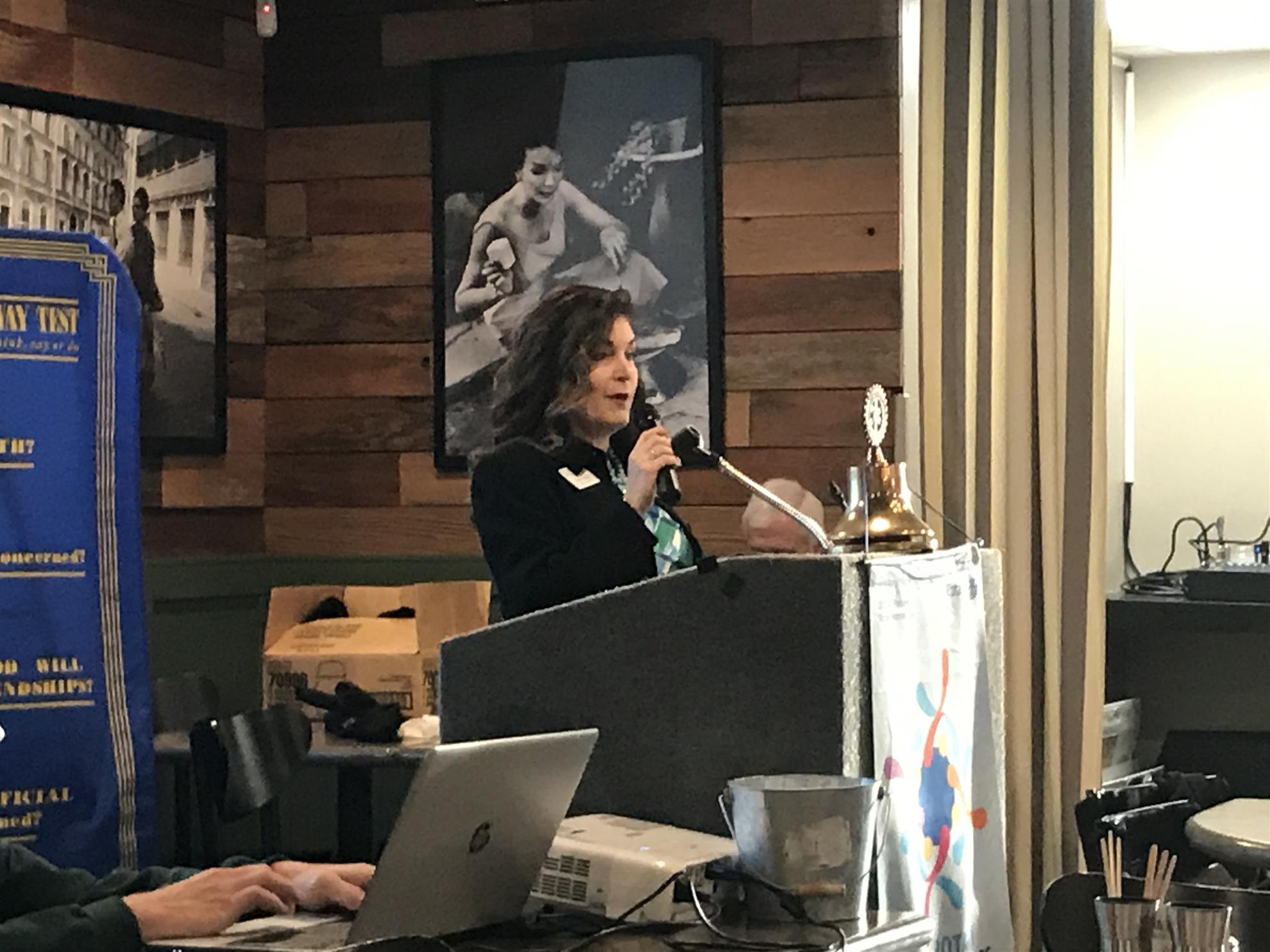
"Domestic violence was the subject no one talked about 30 years ago." Today, that prevalent, yet unmentionable subject is Elder Abuse, says Christa Barnett Nelson, Executive Director of Senior Advocacy Services. Nelson urged Sunrisers to be alert for signs and symptoms of elder abuse in family, friends, neighbors and especially those older adults who live alone. Reports made to organizations like Adult Protective Services (APS) and Ombudsman (a Swedish term that means "one who advocates and investigates") are kept confidential. Even to the point where you will not be advised as to the outcome of an inquiry.
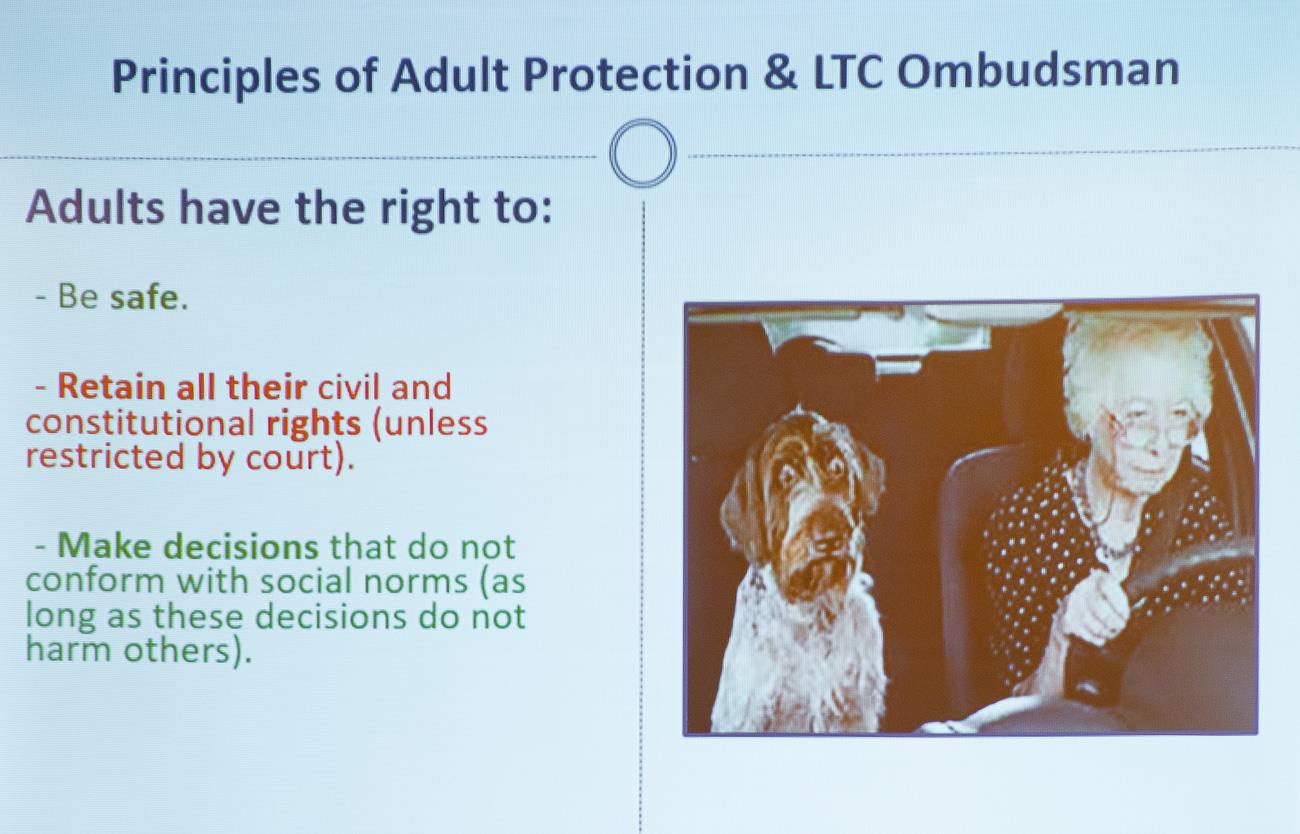
As adults age, their children often begin deciding what their parents can and cannot do. However, every adult has the right to make their own decisions. Even to the point of accepting or refusing services that seem well intentioned. The bottom line is that every adult has the right to be safe from the influences of others. Even those who are family members or trusted caretakers.
Red flags that need to be reported begin with "something that does not feel right." It can be as basic as signs of "self neglect" -- disheveled appearance, inappropriate clothing or footwear or lack of personal hygiene. Fifty percent of elder abuse falls into this category.
Other categories are Financial Abuse -- getting elders to empty their bank accounts -- and physical/sexual abuse -- unexplained bruises or injuries. Psychological abuse can be more difficult to detect. However, anything that seems unusual or uncharacteristic is worth reporting to APS, if the adult is living on their own, or to the Ombudsman, if the person resides in a care home.
Executive function is the last ability to develop in adulthood, but it is also the first to decline. For this reason, trusts and legalized decisions for future management and long term care need to be made, through an attorney, well in advance of any sign of mental or physical decline.
Early detection of concerning symptoms; including dehydration, not caring for home surroundings, isolation, indiscriminate use of assets, or unusual activity on credit cards could be an early warning of accidents, household disasters or responses to fraud that could be severely detrimental or even fatal. No one, not even a licensed care professional can coerce an adult to do anything without their expressed consent.
You are not interfering with the rights of an older adult by expressing a concern or making a report. So, do not hesitate to say something and call Adult Protective Services or the Ombudsman if you see something unusual. Your report could be life enhancing or even life saving.