Rwanda Reconcilliation
Posted by Rich Randolph
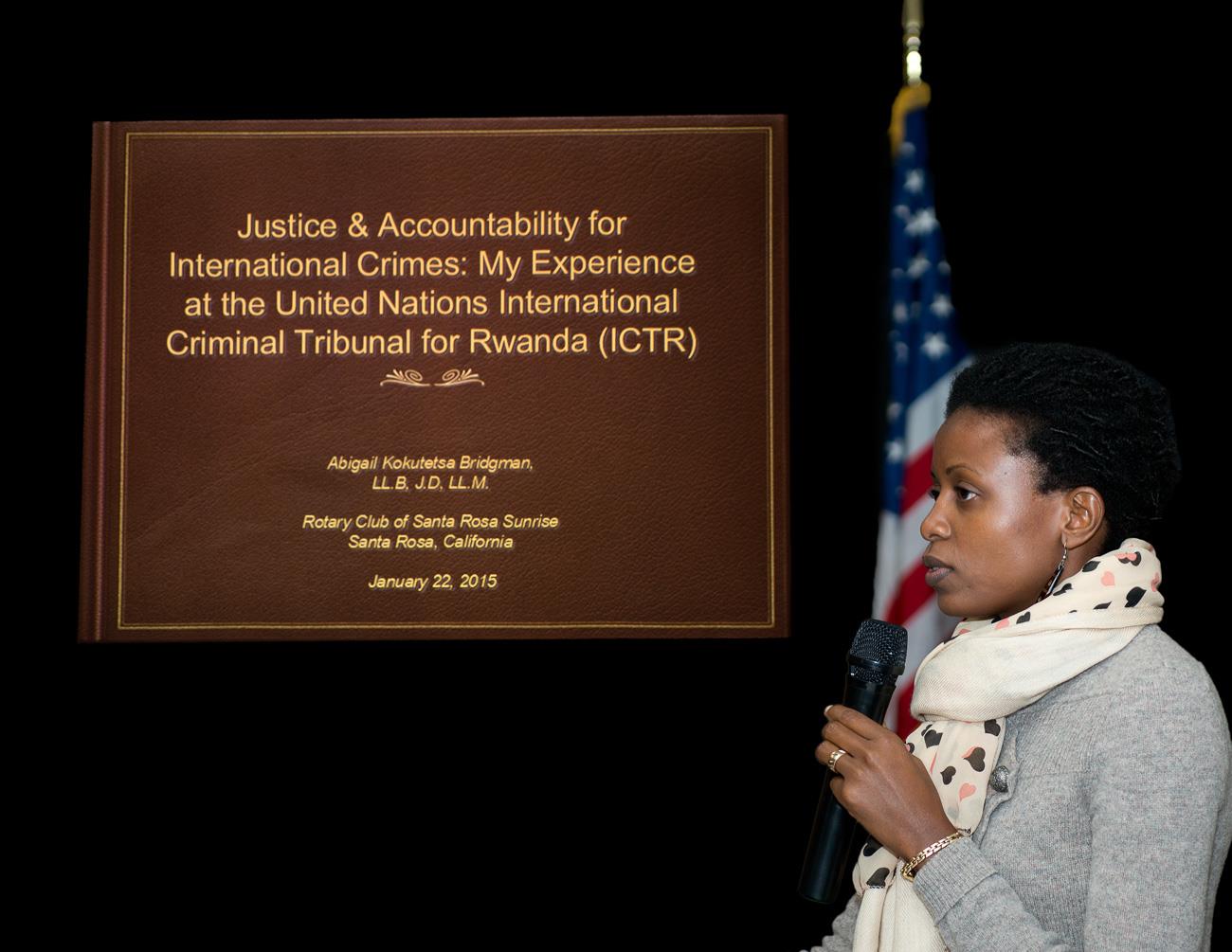
Reign of Terror Turns Toward Reconciliation
Abigail Bridgman, a native Ugandan, witnessed one of history’s most brutal genocide’s: The 100 Days of Terror, between April and September 1994 during which even conservative estimates claim 800,000 people were murdered, maimed and raped, and 2 million displaced.
Abigail’s efforts in the legal arena contributed to establishing the claims of genocide, as defined by the 1948 Geneva Convention, Resolution 260. The issue of “armed conflict” was problematic as so much slaughter was inflicted personally, and in the absence of any declared war. Ms. Bridgman focused on the undeniable systematic abuse of human rights within a framework of crimes against humanity.
Ms. Bridgman interacted with both sides of the civil unrest the majority Hutu (84% of the Rwandan population) and Tutsi 14%). United Nations intervention in organizing its UNICTR – United Nations International Criminal Tribunal Rwanda chose Rwanda as the venue of proceedings. The country’s absence of a capital offense death penalty was controversial.
Arising out of the legal process were the following statistics: 75 arrests and appeals against perpetrators in the military, political, media and business sectors. 55 judgments were reached, 11 acquittals, 2 changes of venue and 2 appeals.
In the two decades following the horrific ethnic genocide, Rwanda has undergone a remarkable period of reconciliation. “Kwibuck”: Revitalize, Remember, Renew has become the national mantra. Identification cards once used to target minority Tutsi’s, now no such designation exists. Abigail reported a hopeful outlook for Rwanda’s future, one based on reconciliation, not hate.

Interested in being a sponsor?
Download the website sponsorship guide
Download the website sponsorship guide