"To bring peace to all the earth, strive to make your own life peaceful"
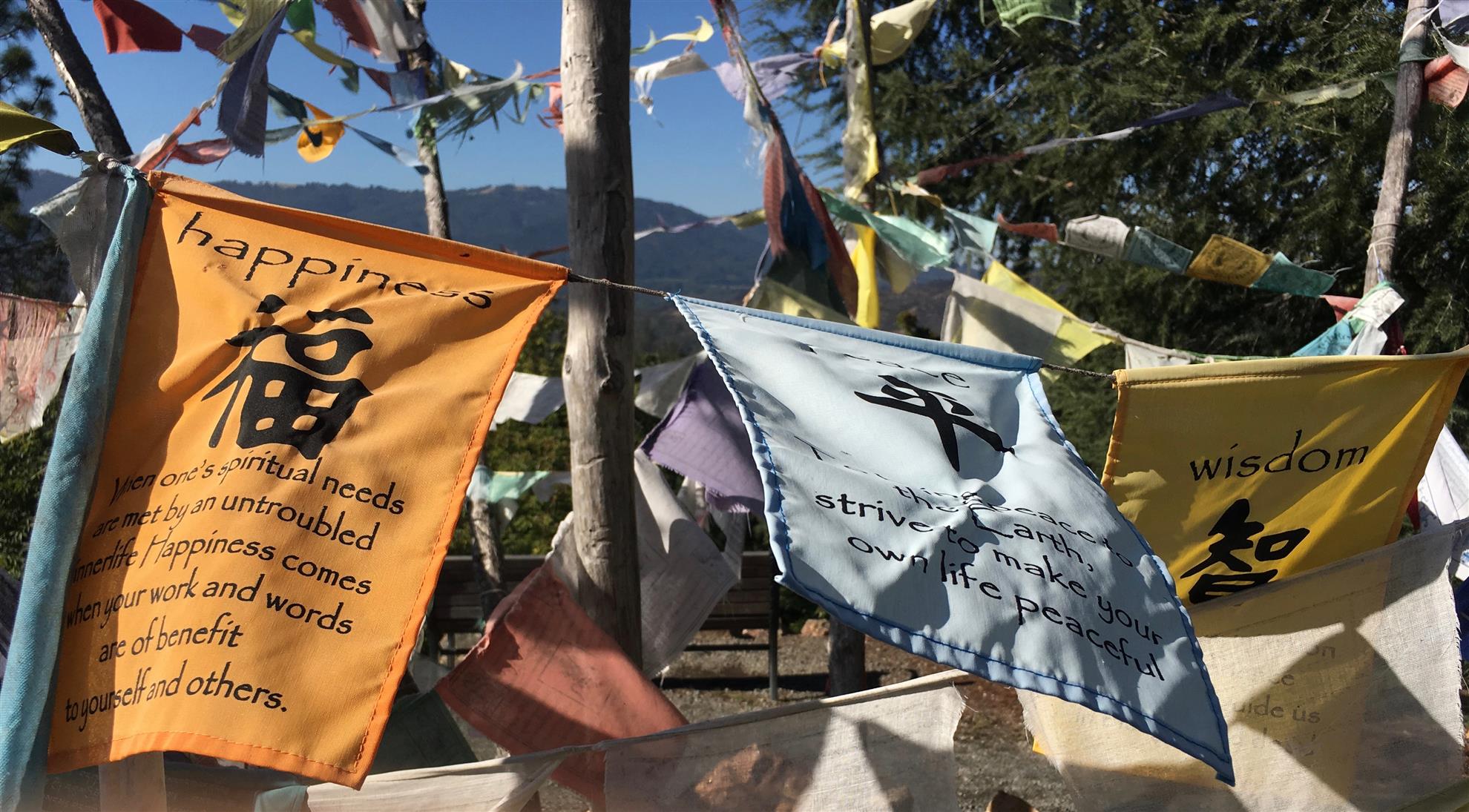
As Steve Zwick read these words, written on one of the prayer flags at the top of the Garden ridge, I thought of the new Rotarian magazine on the Great War and how much Rotary has done for peace. And I bought a set of prayer flags which will hang on my balcony, reminding me of my important role in this global path.
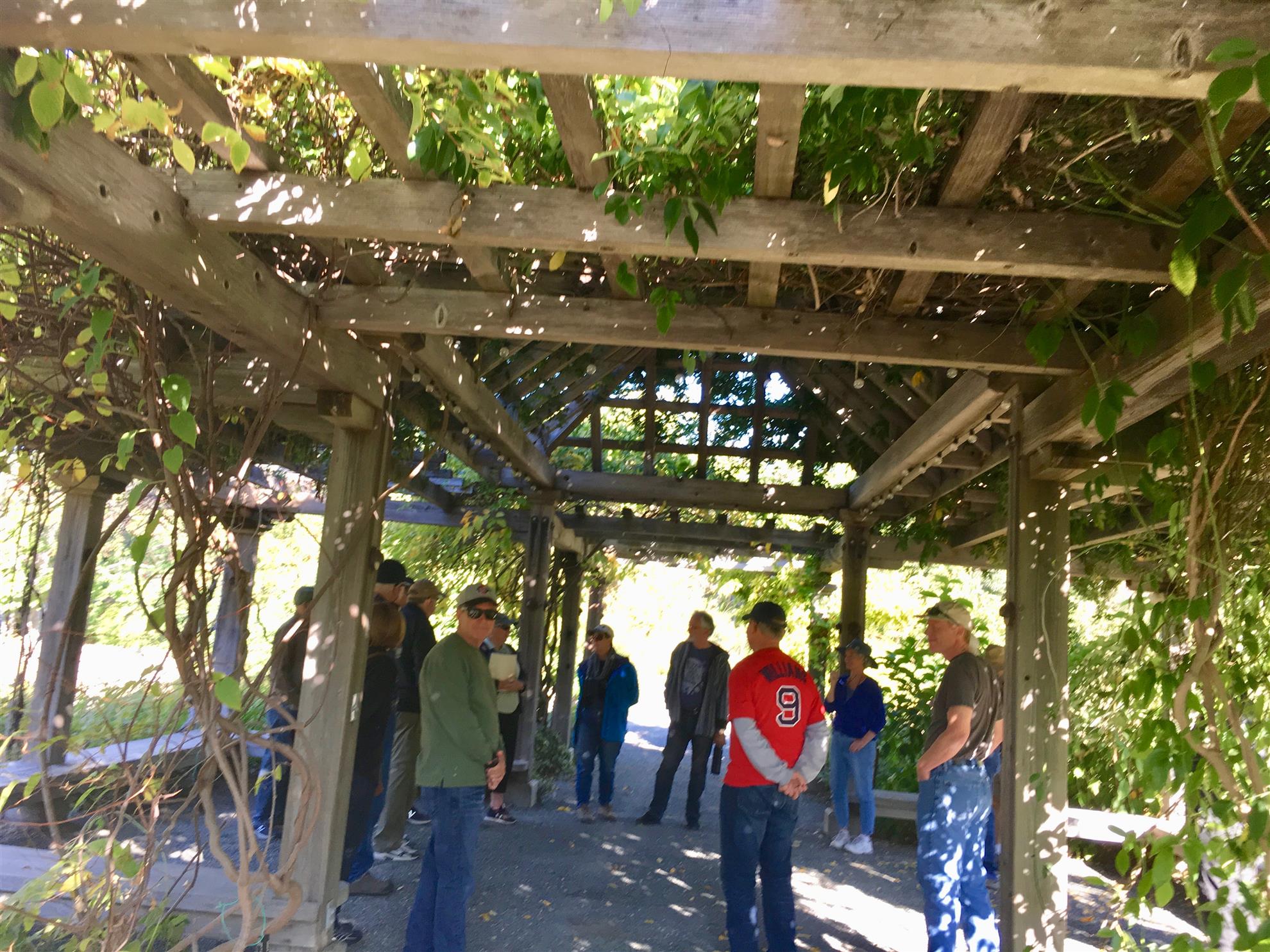
Sunrise Rotarians circled in one of the many beautifully manicured gathering places throughout the Gardens to hear an introduction to this tranquil retreat, dedicated to propagate Asian plants that can survive in our climate zone.
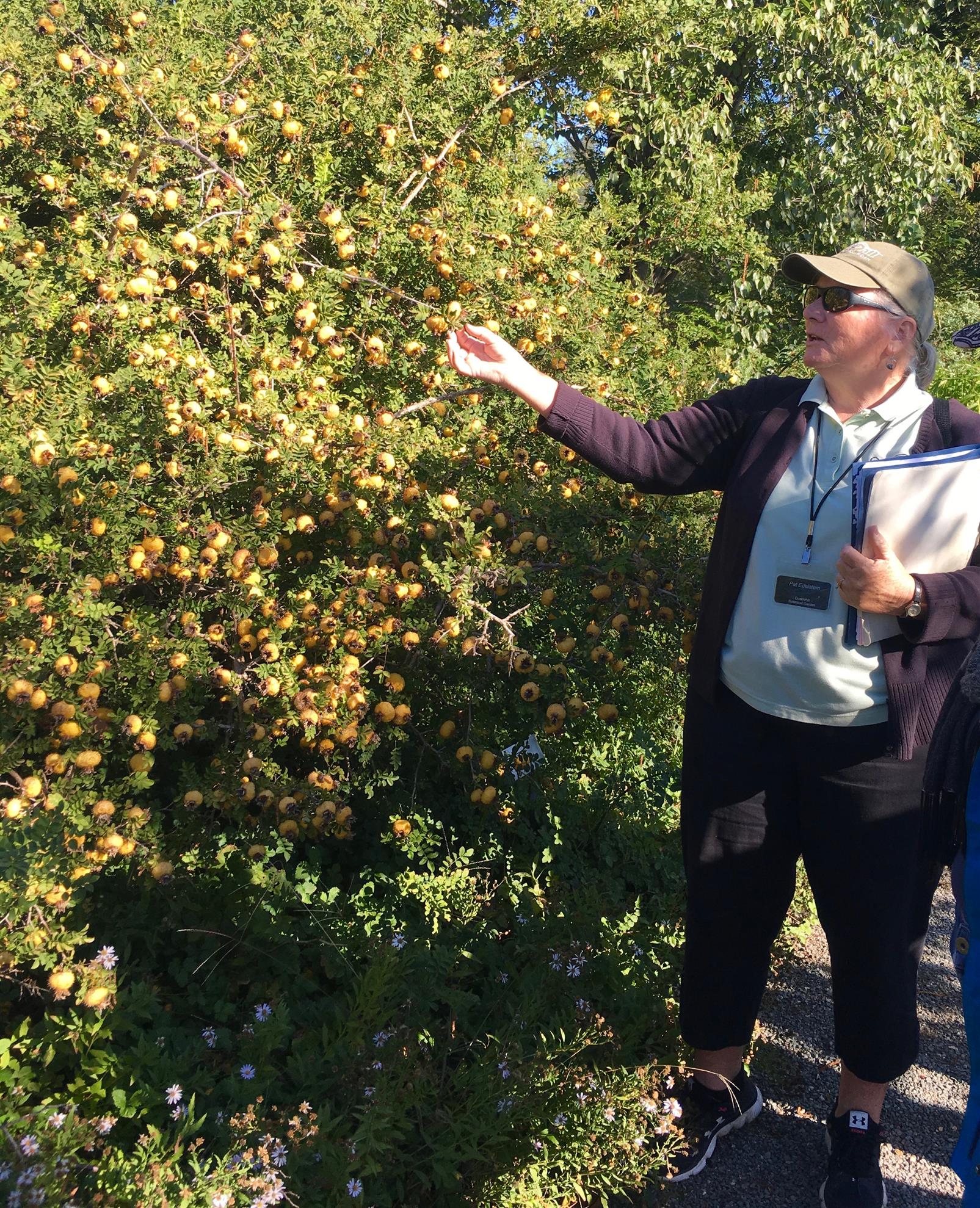
One of these plants is Rose Hips, pictured above. Known for its medicinal uses, the fruit presents as a prickly orange ball. There are more than one of these plants in the Garden, thriving beautifully.
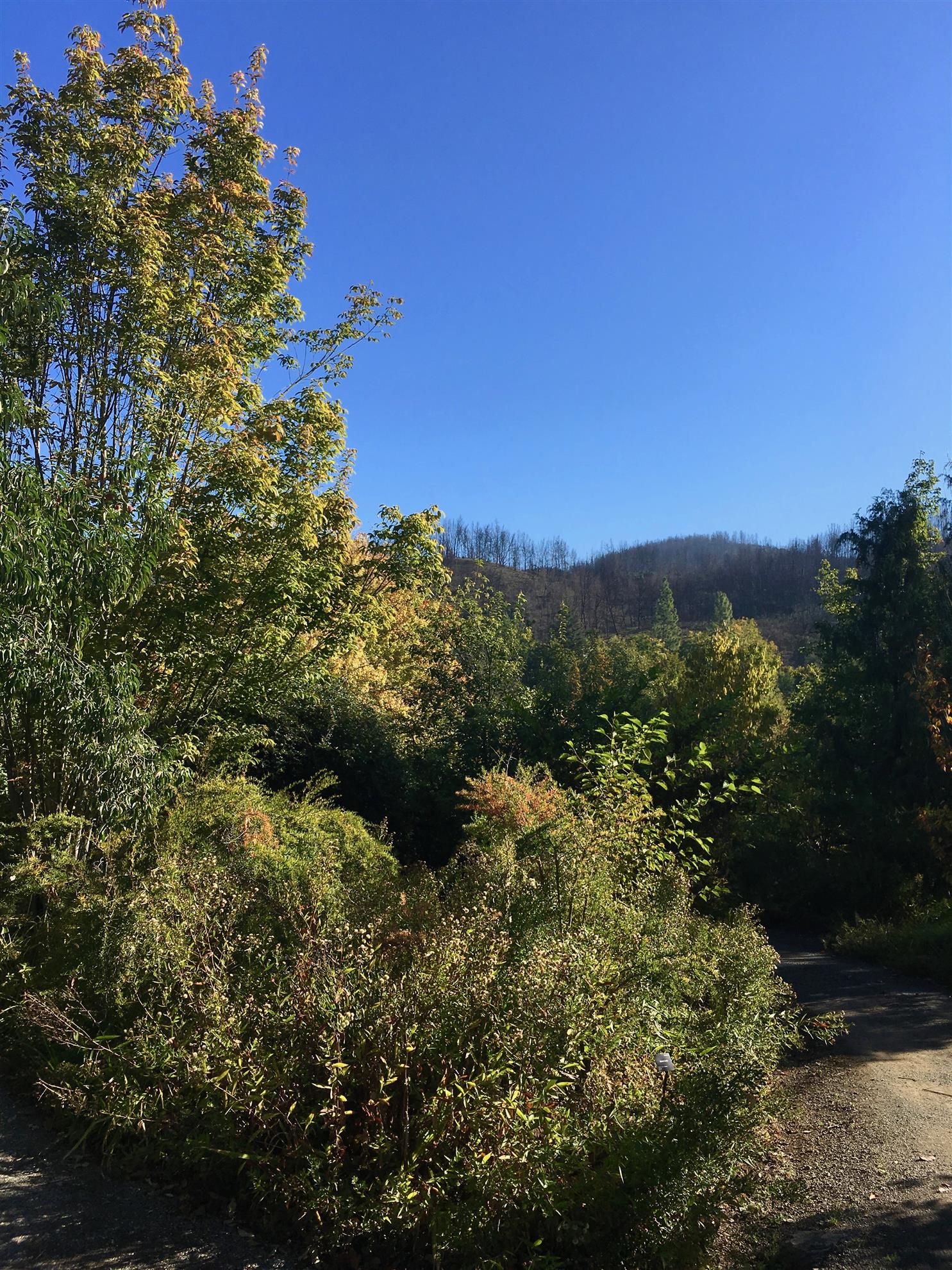
The burn line of the Tubbs fire came dangerously close to the Garden's highest boundaries, but seemed to magically stop at its fence. One of the reasons could have been that the Gardens are thoroughly watered and green. Whereas the trees at the top of the ridge were dried out from the summer sun.
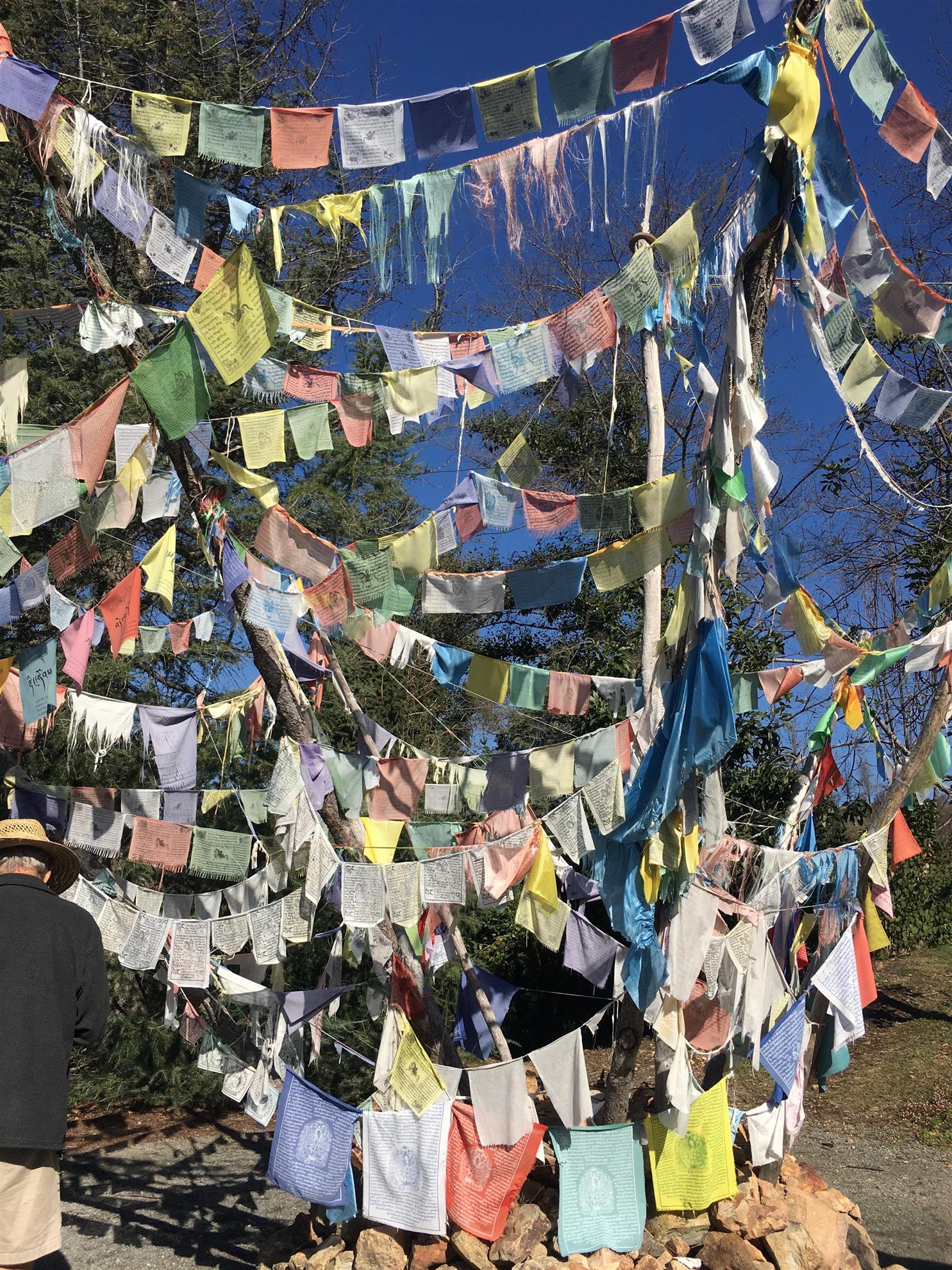
Others believe it was the prayer flags grading the highest point in the Garden that cautioned the fires not to desecrate this sacred place. Each flag's color denotes a particular theme for the prayer.
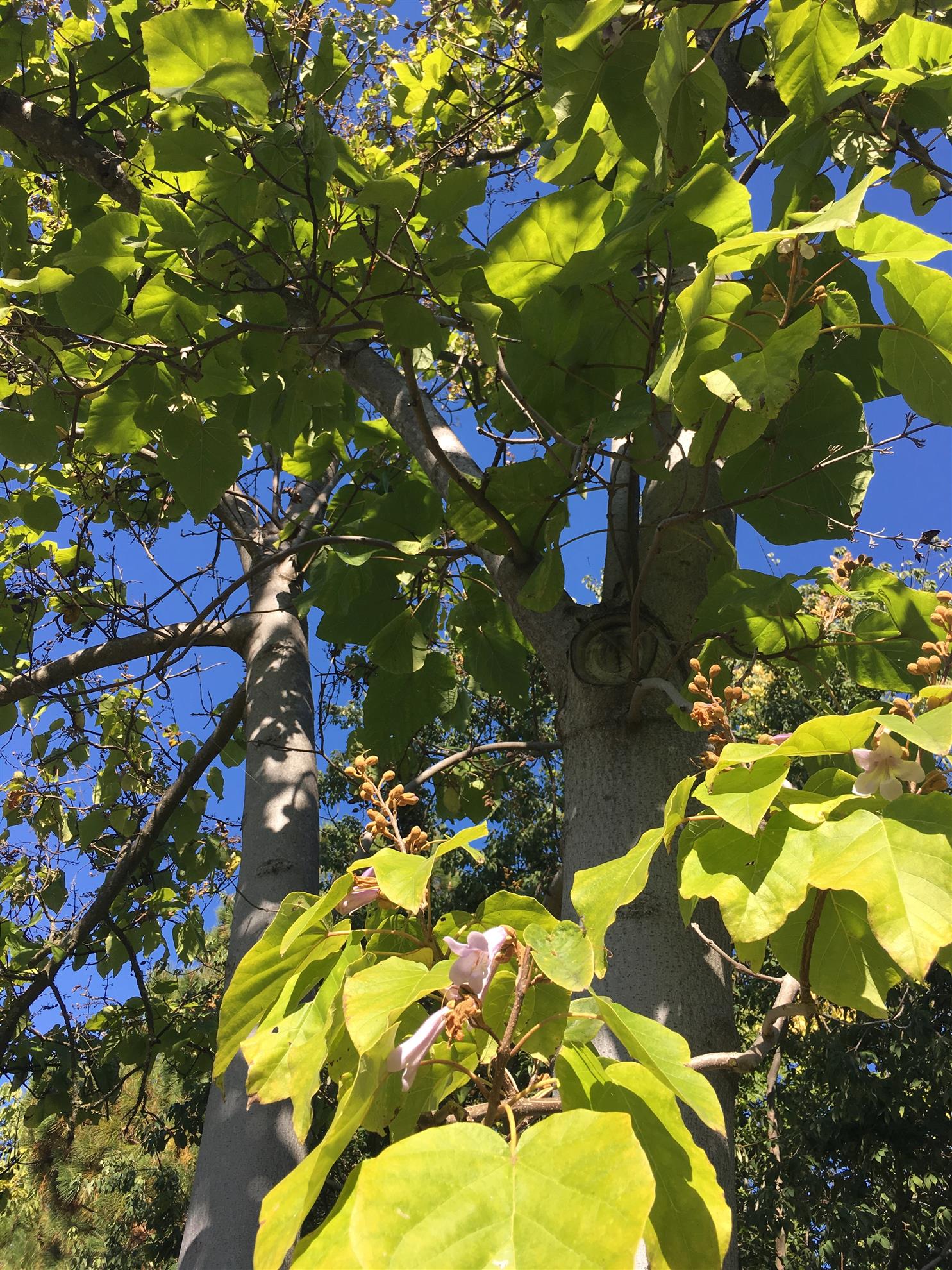
The Empress Tree is so valuable that it is often included in a brides dowry. When you knock on the trunk, it sounds hollow, because the outer bark is hard and strong, good for a hope chest or furniture. On the inside, the wood is soft and pliable, ideal for carving a flute. The leaves, flowers and fruit are also useful.
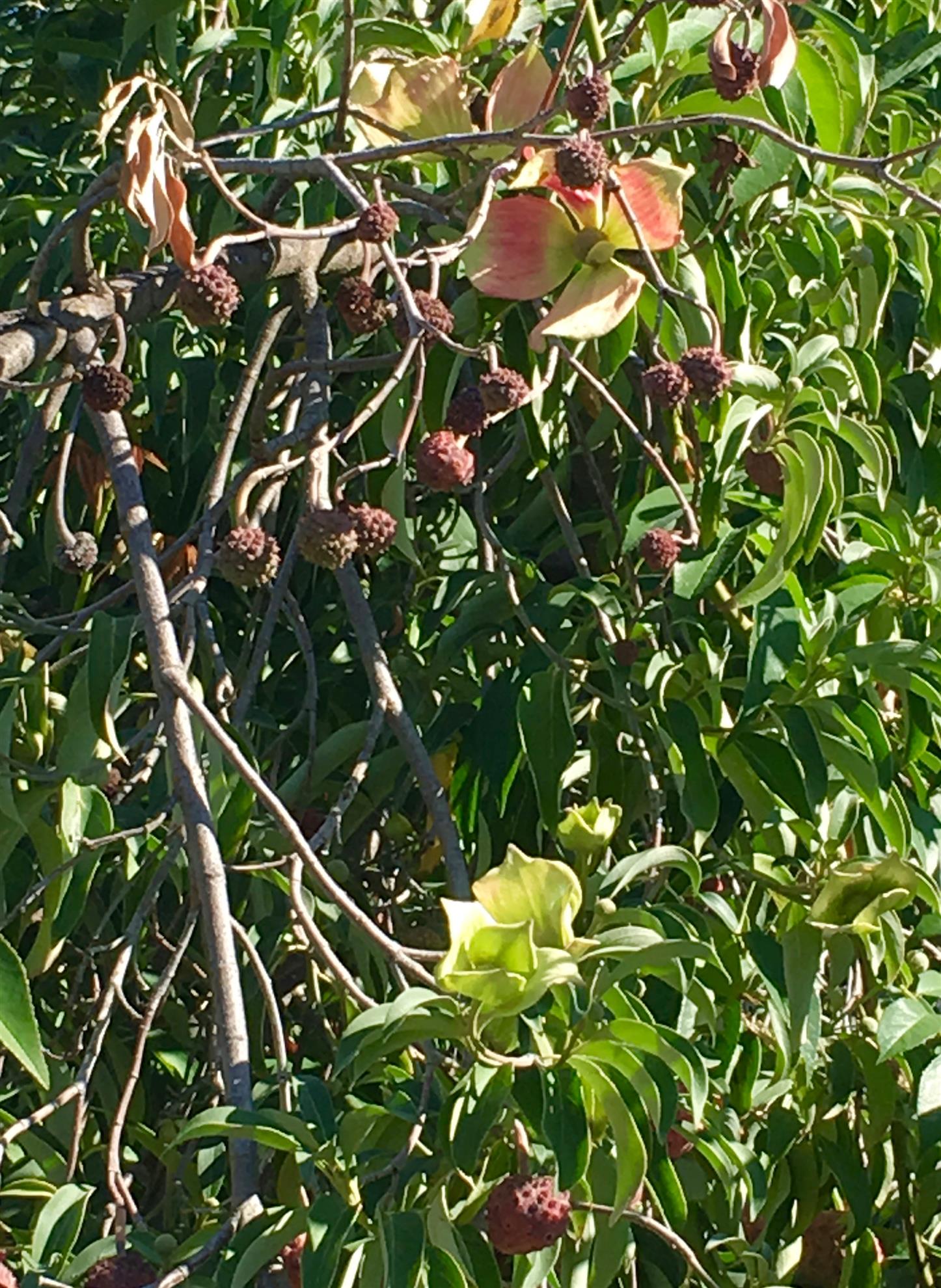
An alarming and surprising condition, not good for the plant, has been recently observed in the Garden -- a plant with fall fruit and spring flowers occurring at the same time. Some say it is due to climate change or global warming. Sunrise expert, Peter Banks thinks a variety of climatic influences could be the cause. Asian plants, transplanted into a new climate zone and cared for in ways that differer from their traditional habitat also affect plant growth. And climate change could be a factor.

Among the spouses and guests who joined Sunrisers on the hike, were Carmen Fuentes-Guiterrez and her new husband, Daniel, who stopped to peruse the many treasures in the Garden Gift Shop.
.png)
Quarryhill Botanical Gardens is located at 12841 Sonoma Highway. Memberships allow one to visit free of charge and are reciprocal to other botanical gardens. Monies raised support education programs for upper elementary students that correlate with science programs in their curriculum and give each one a Garden Gift Packet.