BREXIT: Background and Beyond
David O’Rear once again informed us of the multiple depth of issues surrounding Great Britain’s planned exit from the European Common Union on March 29th of 2019: an early April Fool's Day gift as David suggested. With just 37.5% of eligible voters casting ballots, the outcome surprised many in and outside Britain. The resultant loss forced Prime Minister David Cameron to resign and Patricia May to succeed his position, and her future is in question by rival Labor Party leader Jeremy Corbin with more leftist leanings.
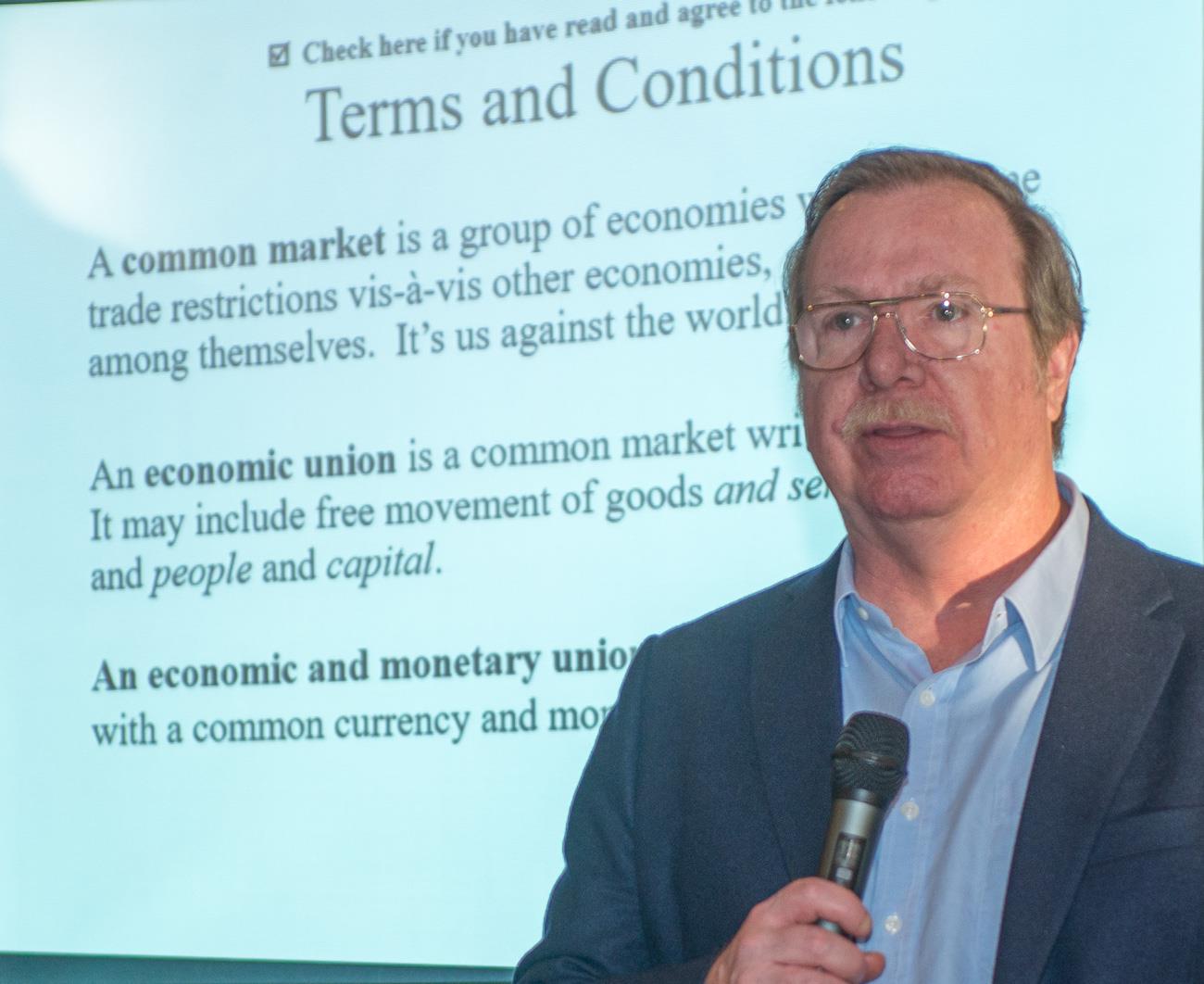
Britain's engagement toward the EU began in the 1950's as NATO alliances were ramping up a counter to the Soviet Communist Community. Sort of an "us versus the world" mentality. As cooperation within the EU grew, so too did standards and enforcements which reduced each member’s autonomy in favor of freer trade opportunities. In 1973, 10 years following Charles DeGaulle's resistance to Britain's entry, the British, Danes and Irish came into the EU. In 1993, The Maastricht Treaty amended the Union giving birth to the single currency Euro, (except in Britain). The 1995 Shengen Agreement provided for freedom of employment and movement within 22 of the 28 member countries. Today 28 countries are members albeit not equally stable politically or economically.
What does all this mean today? Britain has obligations agreed to during its tenure in the EU. Whether those will result in a net inflow or outflow of funds is unclear. Questions of reciprocal employment and healthcare are now being negotiated. A second referendum is possible but unlikely. A court ruling is another. Estimates of a GDP drop from between 2.5 to 8% have been floated. Even Irish reunification and Scottish secession are rumored. Significant changes in manufacturing standards, pharmaceuticals and food products are predicted.
The only certainty is change!