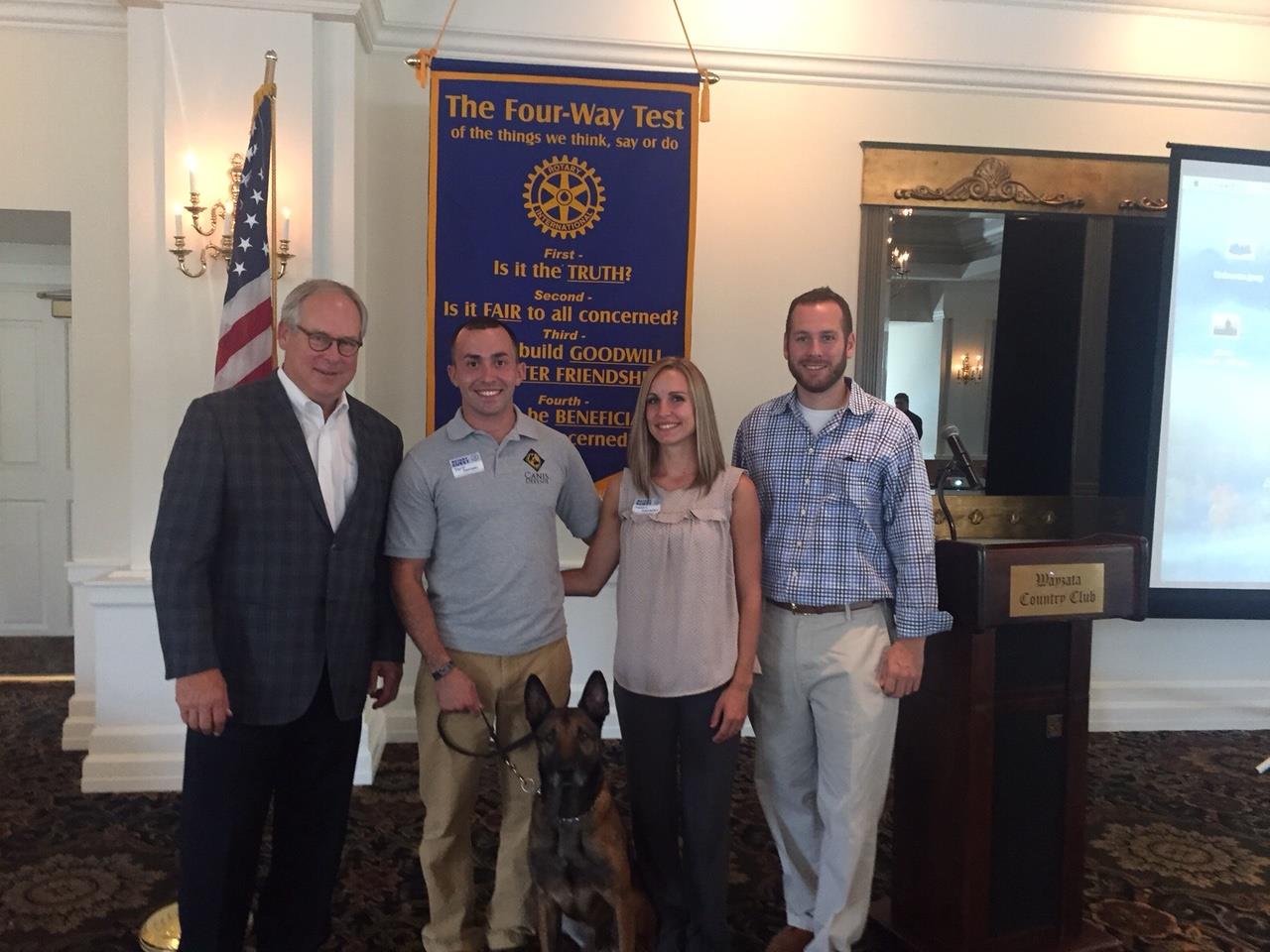
Host Doug Arndt treated us to a very special program this week. Doug's son Edward is a retired Army Ranger with two tours of duty in Afghanistan; his friend Dave Sanders had five tours under his belt before retirement as a military dog handler. Together with Dave's military dog, Baggie, they shared insights into their lives as special ops forces and into the role of working dogs in our military. We learned that the Rangers role is to lead the way into battle, and that Special Ops forces are expected to keep up a tempo and intensity of work above and beyond that of the regular service: they are
always actively working or training. Military dogs are tasked with similar intensity; Baggie, for example, was trained to attack, sniff out explosives, and chase down the bad guys; when not actively working on one of these roles he worked in the tactical operations center to calm and develop relationships with the troops. Edward and Dave shared stories of their time in Afghanistan, including the terrible losses their unit experienced and the role of Baggie in helping personnel cope with overwhelming battle zone stresses. Unfortunately, given the intensity of the work, our special operations forces have a suicide rate 3-4 times that of regular troops, and 7-8 times that of regular civilians. Edward and Dave identified the time between a service person's separation from the military and the commencement of services as a high risk period where making a healthy transition to civilian life is key, and they have begun to focus others on this important period of time. Dave, now an Atlanta policeman, has begun a non-profit to further this important cause and to highlight the important roles working dogs can continue to provide for veterans after their separation from active duty. Thank you Edward, Dave and Baggie, as well as to Dave's wife Sara for her important role during Dave's military service to our country.