Notable Club Members
Dr. George W. Bancroft
Edward L. Bunts
Leslie Cook
Dr. William D. Copeland
Brig. Gen. Kenneth I. Curtis
Roy A. Davis
Vilas “Chuck” Lacy
Admiral Douglas C. Jardine
Douglas M. Jardine
Roger H. Motten
Clayton Staples
Craig, Harold, and Matt Whitney
Rhea Woltman

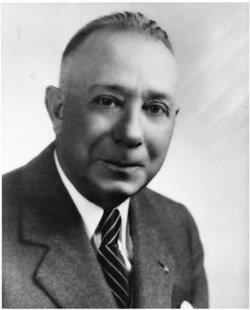 Dr. George W. Bancroft joined the Rotary Club of Colorado Springs in 1929, and served as club president 1946-47 and as a director 1943-45 and 1946-48.
George was born October 13, 1889, in Colorado Springs, graduated from Colorado College and University of Colorado Medical School, and thereafter served in the Rainbow Division in France and Germany for 22 months in World War I as a major attached to the division's surgeon's staff. After the war, he did post-graduate work at the University of Pennsylvania Medical School of Surgery and the Royal College of Medicine, London, England.
Dr. Bancroft was often honored for his humanitarian work, especially his interest in working with crippled children. He often provided free care for medically indigent children, and it was once estimated he performed over 1,500 surgeries on children whose parents could not pay for them. The Rotary Club of Colorado Springs helped pick up the costs of some of these surgeries. For many years he gave free physicals to Goodwill Industries employees.
Dr. Bancroft was the attending surgeon in all Colorado Springs hospitals and the Chief of Staff at St. Francis and Memorial hospitals. Dr. Bancroft was one of 13 chosen founding members of the American Board of Plastic Surgery and served on many medical boards. After 52 years of the active practice of medicine and surgery, he retired in 1966 and took up painting (following the steps of his father, W.H. Bancroft a nationally known Western artist).
In 1974 Dr. Bancroft was honored as Man of the Year by the CU Medical School Alumni of the College of Medicine.
Dr. Bancroft passed away on March 28, 1979. He was survived by his wife Ruth, two sons, and two grandsons.
Sources: Rotary club directory 1963, Gazette obituary April 1, 1979, Gazette articles April 9, 1972 and September 11, 1976
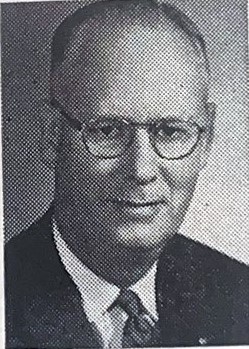 Edward L. Bunts distinguished himself and left an impact not only in his Rotary involvement but also in his professional career as an architect and in his community activities.
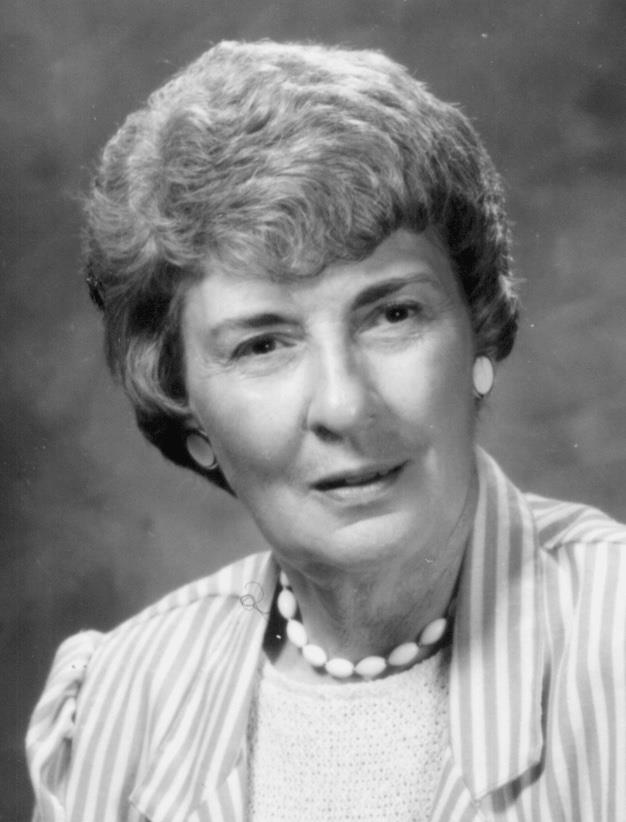 Leslie Cook was a member of the Colorado Springs Rotary from 1988 through 2016, in total, 28 years. She was the 2nd woman to join our club. The personal interest that brought Leslie to Rotary was the group’s efforts for global eradication of polio. When Leslie was a child, her piano teacher had polio. In 1948, the hardest hit state in the US for polio was Iowa, where Leslie was living. Her son was sick at one point and some of the symptoms pointed toward polio. Leslie said she’ll never forget the panic and terror she felt. Her son was vaccinated as soon as the Salk vaccine was available.
Leslie was born and raised in Colorado Springs, although she moved around a lot during her childhood and into adulthood but returned to Colorado Springs in 1949, after graduating from Cornell College in Mount Vernon, Iowa, with a major in drama and minor in journalism.
Leslie met Jay Cook in 1958 – a radio and television personality with KRDO and in her own words, “an incredibly good-looking man!” Leslie was working at KRDO, where she did traffic, editing news, and voiceovers for radio. They were married in 1960. With several children at home and the Vietnam War starting, Jay “resigned” her from KRDO to stay at home. Leslie was the proud mother of 3 of her own children, 3 adopted girls and 1 step-son. She stayed close with them and kept up on their families. She also had 12 grandchildren and 12 great grandchildren.
In 1964, Leslie joined Red Cross as a Director of Public Relations/Public Information/Youth Programs. She stayed very busy with the various programs, to include managing volunteers in local nursing homes, before Silver Key was created. Leslie was also instrumental in bringing Silver Key to Colorado Springs, which later on helped get her to Rotary every week in the last years of her life. In 1983, she became CEO of Red Cross – Pikes Peak Chapter.
Leslie opened the first homeless shelter in the Colorado Springs area in 1986. She had been previously told that she could not do this but when approached by United Way, she just couldn’t say no. Ironically, she was later asked by Red Cross to advise on opening shelters in the San Francisco/Oakland area.
Leslie retired from Red Cross in 1994. Some of the highlights of her career with Red Cross include opening the homeless shelters, meeting Elizabeth Dole, Red Cross “Flood In” Fundraiser in 1969 to help fund recovery efforts for the floods in the Midwest, traveling to various disaster areas and being able to make a difference. Leslie exemplified a true spirit of Service Above Self - apparent through her career, her rotary involvement and her selfless attitude for others, especially children.
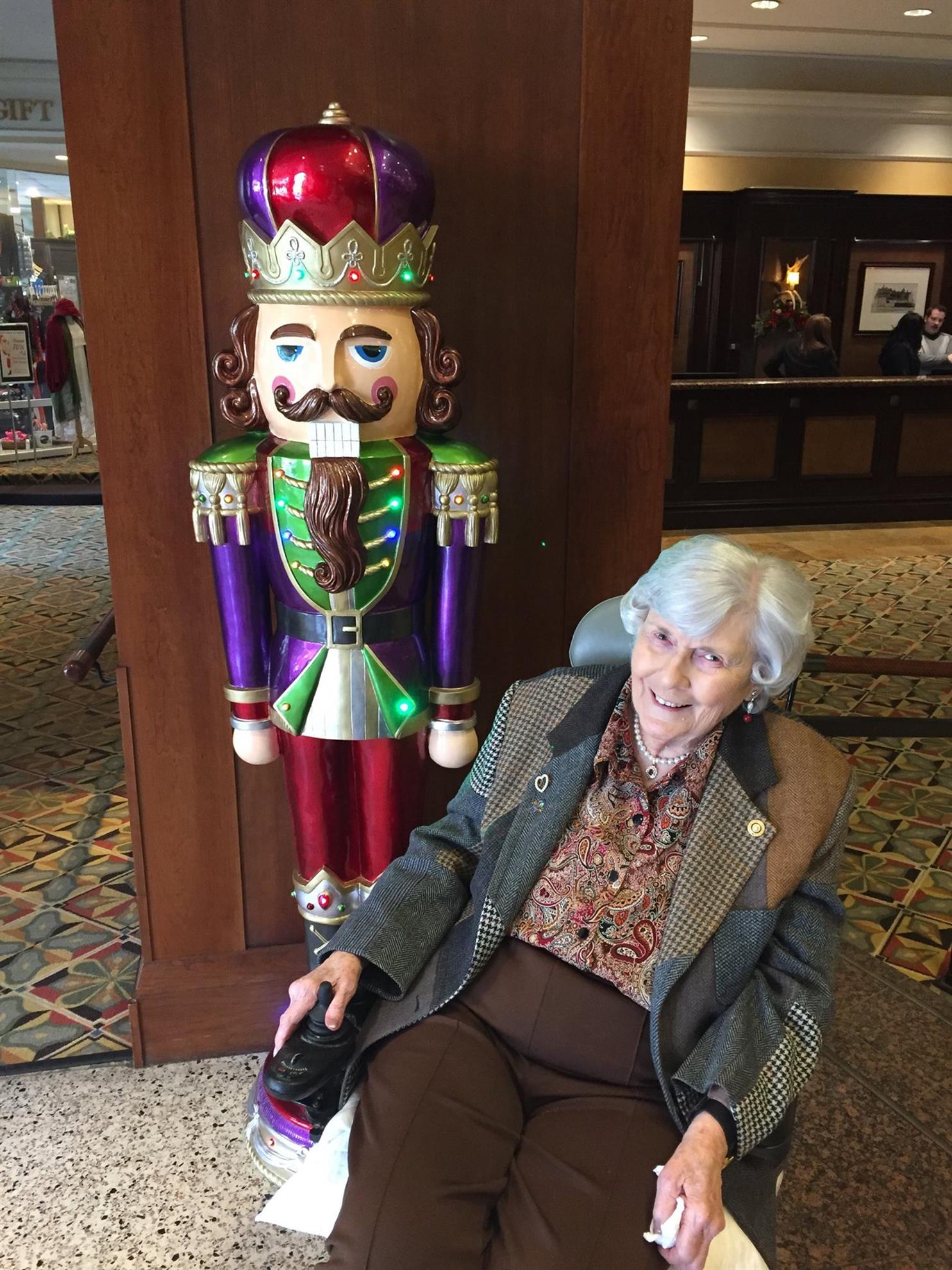
Leslie had a distinguished professional career that included:
-
Director of Children's Theatre for the Fine Arts Center
-
KRDO radio and TV
-
Executive Director of the Pikes Peak Chapter of the American Red Cross for 30 years.
-
She opened the first Red Cross Shelter nationwide
-
Established the Child Enrichment Center for children
-
Directed a $1,000,000 Combined Federal Campaign
-
Developed the Youth Volunteer Center
-
Awards:
-
Sertoma Service to Mankind (twice)
-
American Bar Association Liberty Bell
-
Partners in Philanthropy Outstanding Fund Raising Volunteer
-
the first United Way Spirit of Commitment Award
-
Red Cross "Coming Home" Honorary Chair
-
The Urban Peak Colorado Springs "Path Maker Award."
-
-
Her community service included chairmanships for:
-
Keep Colorado Springs Beautiful
-
Pikes Peak Community Action Agency
-
Centered Life: Education, Counseling and Spiritual Care
-
Charter member of the Chamber of Commerce Foundation
-
Treasurer for Keep Colorado Springs Beautiful
-
Secretary for Full Circle Alt. Inc.
-
She co-chaired the Friends of Lowell School Group
-
Affordable Housing Committee for the city
-
-
She served on the following:
-
Pikes Peak Center Board
-
The Care Castle
-
The Combined Federal Campaign Board
-
a charter member of the Homeward Pikes Peak Board
-
Served as Board Secretary for the Urban Peak Colorado Springs, formerly The Place.
-
Leslie was a Charter member of the Faith Based Education Board
-
Official spokesperson for United Way Campaign 2000.
-
Leslie was the second woman in the Pikes Peak region to become a Rotarian.
-
Even during the last months of Leslie Cook's life she insisted on getting dressed up, attending events like the Rotary Club of Colorado Springs Butterfly gala and sharing her wisdom and grace with the nonprofit community. Fellow Rotarian Bob Holmes (whom she sponsored into the club in 2004) said “She had such an innate sense of dignity, fairness and compassion." Holmes said he spent about 10 years driving Cook to regular meetings of the Rotary Club of Colorado Springs. He called the weekly opportunities to spend time with Cook "Fridays with Leslie."
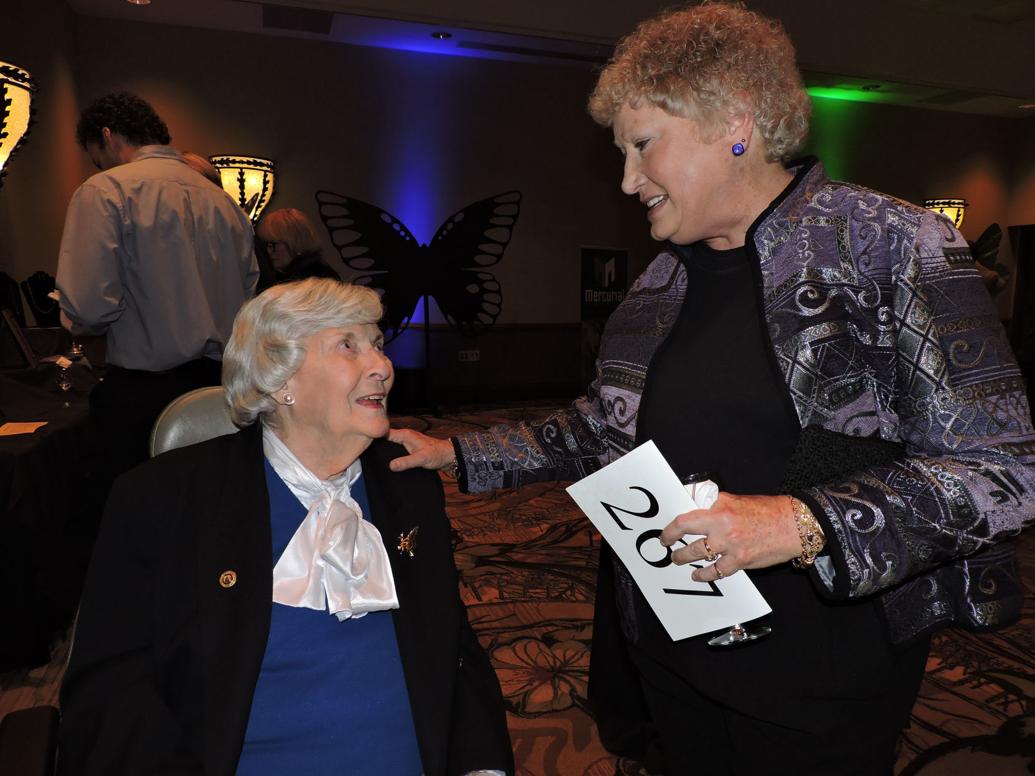
In 2012, I was so lucky to join Leslie for Thanksgiving in her home. We spent the day talking about her long and storied life and although many of the stories were not appropriate for today’s audience, she was kind and thoughtful, knowing that year that I would have been sitting at home alone if not for her invitation. I bought Gone with the Wind to watch because she mentioned that it was her favorite movie ever. She talked about the many forward steps that women had journeyed during her lifetime. She did everything that she could to help women rise to their callings and put antiquated thinking behind them. She loved her own 6 children and every other child whose path crossed hers.
She sponsored many individuals into our club, including Bob Holmes (my sponsor), Rhea Woltman, Bart Givens and Jane Young. I was told that when Leslie “invited” you to do something, such as join a group, you didn’t ask questions. You just got your checkbook out because anything Leslie stood for was worth doing.
Until her death, Leslie engaged in the efforts of our club through Rotary Making A Difference and serving on the Scholarship Committee. Besides polio eradication, one of Leslie’s favorite rotary projects was the Veteran Memorial in Monument Valley Park.
The guiding principle that led Leslie through her adulthood were the words from her husband, Jay. “Pay Attention.” “In all things, pay attention,” she said. Her favorite quote is an old Yiddish proverb, reformulated by Woody Allen that goes - “Man plans God laughs.” Leslie’s favorite movie was Gone With The Wind and her favorite book was Les Miserables.
Five words that describe this incredible lady: no-nonsense, assertive, courageous, forward-thinking, and intense. Leslie herself added one more: loud. Thank goodness! She was not one to sit around – even in her wheelchair, Leslie stood taller than most humans. Our community and our club are better in ways we’ll never completely know.
Leslie sponsored the person who became MY sponsor into the club. So I called her my GRANDSponsor. That meant that Rhea Woltman, Bart Givens and Jane Young are my aunts and uncle. My sponsor, Bob, brought me and also Carol Bach into the club so Carol became my sister. So when people talk about their Rotary family, it’s not a joke. It’s a wonderful biproduct of being a Rotarian in a club of great people.
My sponsor, Bob Holmes, is also quoted as saying that Leslie passed away one full hour before the Super Bowl kickoff on February 7, 2016 because she was too polite to die during the game, especially with the Broncos playing.
I sat with Leslie every single week at Rotary. One Friday another Rotarian said, “You need to sit at other tables and get to know more club members.” I told him that I didn’t think I would ever regret sitting with her every week she was here. And I don’t. You see, Leslie wasn’t just my Grandsponsor.
Leslie Cook was totally, thoroughly, utterly and absolutely GRAND.
Written by Kathleen Saltmarsh-Voss and presented at the April 16, 2022 club meeting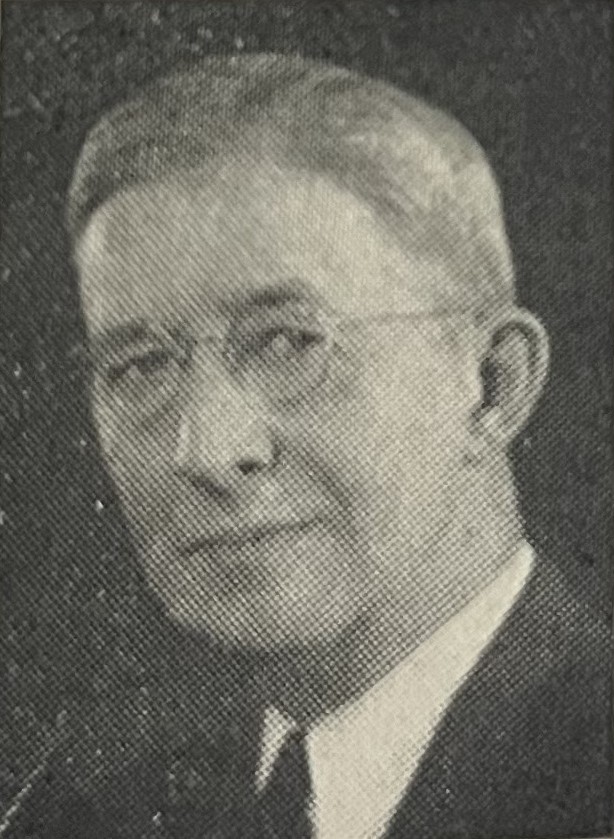
Roy A. Davis was a Charter Member of the Rotary Club of the Pikes Peak Region when it was formed in 1916. (The club’s name changed to the Rotary Club of Colorado Springs in 1917.) Roy went on to serve as Club President from 1923–24, Director from 1923–25, and District Governor of the Colorado-Wyoming Rotary District in 1926–27. A true Rotary pioneer, he was a delegate to the Rotary International Convention in Brussels, Belgium, in 1927 and played a major role in organizing and starting new Rotary clubs across Colorado.
Roy’s contributions extended well beyond Rotary.
He moved to Colorado Springs in 1905 at the age of 18 and, in 1911, founded the Roy Davis Typewriter and Office Supply Company, which he operated until his retirement in 1948. His civic and political involvement was wide-ranging and impactful on the local, state, and national levels.
In 1919, Roy was elected to the Colorado House of Representatives and, at just 33 years old, became Speaker of the House—at the time the youngest individual in the United States to hold such a position. He was later elected to the Colorado Senate in 1927 and was named President Pro Tem during his second term in 1931, making him (at least up to that point) the only person in Colorado history to serve in both top legislative leadership roles.
Roy also made lasting contributions to public health and welfare.
He served on the committee that identified over 10,000 cases of tuberculosis in Colorado—approximately 1% of the population—and sponsored a 1931 State Hospital Bill focused on tuberculosis treatment. He chaired the board of Sunnyrest Sanitarium, Colorado Springs’ first charitable institution for the treatment of indigent tuberculosis patients.
In addition, Roy was a member of the Salvation Army Advisory Board for more than 45 years and served as one of three directors of the American Public Welfare Association from 1954–56. Over more than three decades, he served on the Colorado Welfare Board, including 17 years as its chair, appointed by nine different Colorado governors, where he helped shape statewide welfare policies.
During World War II, Roy chaired the El Paso County Finance Committee and was recognized by the U.S. Treasury Department for helping sell more than $60 million in war bonds.
In his hometown, Roy served on the Colorado Springs City Council from 1938–63 and held leadership roles in both the city and state Chambers of Commerce. A member of many service organizations, he was active in the Eagles Lodge for more than 50 years and helped lead efforts resulting in Colorado’s first old age pension legislation. In 1964, Roy received the International Civic Award from the National Convention of the Fraternal Order of Eagles for his lifetime contributions to humanitarian causes.
Roy’s numerous recognitions include:
-
The Liberty Bell Award from the El Paso Bar Association (1964) for outstanding citizenship.
-
The Centennial Sertoma Service to Mankind Award (1968) for his decades of public service, humanitarian efforts, and philanthropy.
He was also a past president of the Winter Night Club, one of Colorado Springs’ oldest organizations.
A note on his family legacy: Roy’s second wife, Lula Hall Davis, achieved national recognition after World War II for her work coaching over 800 war brides from more than 40 countries in preparation for their American citizenship exams. She was deeply involved in charitable work and Rotary activities as a Rotary Ann until her passing in 1968. Roy passed away in 1977 at the age of 89, survived by two granddaughters.
This Heritage Moment was presented by Joe Reagan on December 20, 2024.
Additional Context: Sunnyrest Sanitarium
Sunnyrest was founded in 1910 by five Sisters of the Kaiserwerth Deaconesses, supported by an endowment from Marjorie Palmer Watt, daughter of Colorado Springs founder General William Palmer. Located at 926 E. Boulder Street, Sunnyrest provided care in a home-like setting for men, women, and children suffering from tuberculosis, with most funding coming from community donations. After World War II, as tuberculosis became less common, Sunnyrest transitioned into The Living Center at Sunny Vista, a nonprofit skilled nursing and rehabilitation facility that still serves Colorado Springs today.
Learn more:
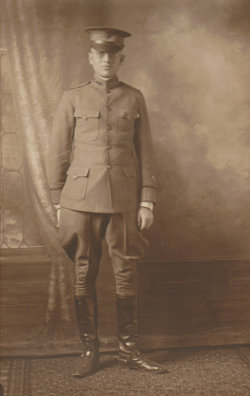
Dr. William D. Copeland left an extraordinary legacy of service through Rotary and higher education. He served as President of the Rotary Club of Colorado Springs during the 1927–28 Rotary year and later as Rotary District 7 Governor from 1933–34. At that time, District 7 spanned an immense region, from Sheridan, Wyoming to Clayton, New Mexico, and from Scottsbluff, Nebraska to Grand Junction, Colorado.
By 1984—and possibly still today—Dr. Copeland remained the only individual to have served as Rotary District Governor in three different districts. In addition to his service in Colorado, he was Governor of Rotary District 148 in Illinois (1942–43) and Rotary District 539 in Montana (1960–61). He also served as President of the Rotary Club of Polson, Montana.
A native of Denver, Dr. Copeland earned his B.A. and M.A. degrees from Colorado College. Throughout the 1920s and 1930s, he served the college in multiple roles including English instructor, Secretary, Director of Admissions, Debate Coach, and Public Information Officer. He pursued graduate studies at Harvard University and later received his doctorate in literature from James Milton University in Decatur, Illinois.
Dr. Copeland’s career in higher education leadership was equally distinguished. He served as President of Lincoln College in Lincoln, Illinois (1935–1944), Vice President of Lake Forest College in Illinois (1944–1946), and President of Rocky Mountain College in Billings, Montana (1951–1955), including leadership of its predecessor institution, Billings Polytechnic Intermountain College.
In 1950, Dr. Copeland was ordained as a minister in the Presbyterian Church and transitioned from higher education to ministry, serving as Pastor of the Polson Presbyterian Church until his retirement in 1965.
Throughout his lifetime, he was awarded honorary doctorate degrees from Millikin University (1942), Lincoln Memorial University (1944), and Rocky Mountain College (1983). A World War I Army veteran, Dr. Copeland was also active in many fraternal and civic organizations, demonstrating a lifelong commitment to service.
Dr. Copeland passed away in February 1984 at the age of 87 in Polson, Montana. He was survived by his wife, Evelyn—whom he married in 1924—a daughter, and two sons. His son, Robert M. Copeland, continued the family’s Rotary tradition as a member of the Rotary Club of Colorado Springs.
This Heritage Moment was presented by Maile Foster on November 22, 2024.

Ken Curtis joined our club in 1962 and remained a member until he passed away in 2005. During his years of Rotary “service above self” Ken served as:
Club President
A Club Director 1965-1968
Rotary District 5470 Governor 1973-74
Group Leader, RI Assembly, 1975
RI Rotary Information Institute Counselor, 1976
RI Community Service Committee, 1974-75.
He was always there at club meetings adding a touch of humor wherever he sat. Shortly after his death in November of 2005, The Gazette had a feature article on his life which follows.
Brig. Gen. Kenneth I. Curtis served on the staff of Gen. Douglas MacArthur and was the deputy chief of staff at the Army Air Defense Command, predecessor of NORAD. But that's not why he'll be remembered in Colorado Springs. Curtis, who retired from the Army in 1965, became one of Colorado Springs' best-known and hardest-working community activists.
In 1928 at age 18, Ken worked his way around the world on a tramp steamer. This voyage brought him to exotic ports such as Shanghai and Bombay and left Ken a changed young man. By 1931 he had received an appointment to the U.S. Military
Academy at West Point and by 1935 he had graduated with a commission in the Artillery.
During World War II, Ken served in the Southwest Pacific Arena for three years. During his last year and a half in the area, he was with the G-3 Plans and Operations Division General Headquarters, Southwest Pacific, Philippines Theater where he earned the Legion of Merit Award. It was during this time that Ken served on the staff of General Douglas MacArthur, who, puffing on his corn cob pipe, frequently strode into the office of then Lt. Col. Ken Curtis with orders for a new and often challenging, island-hopping assignment.
Ken received the Philippines Liberation Ribbon with the Campaign Service Star and the Philippines Independence Ribbon along with the American Campaign Medal, the Asiatic Pacific Campaign Medal, the World War II Victory Medal. Upon his return to the United States he attended the Army and Navy Staff College (now the Armed Forces Staff College) followed by four years at the Pentagon in the Organizational and Training Division of the Department of the Army General Staff. Next, he went to Canada for three years with the Interchange Group, to work with representatives from the United States, Canada, and the United Kingdom in an effort to standardize military equipment, tactics and strategies. Returning to this country in October, 1952, he spent three years as the Executive Officer of the 53rd Anti-Aircraft Brigade in Swarthmore, Pennsylvania, responsible for defending major U.S. cities from Cold War attacks. In 1954 he attended the Army War College in Carlisle Barracks, Pennsylvania followed by the Strategic Intelligence School in Washington D.C. After this training he spent two years as the Army Attache to India and Nepal where he had the pleasure of working with the President of India and King Mahendra of Nepal. Upon his return to the U.S. in August, 1958, he began his first assignment at the U.S. Army Air Defense Command headquarters in Colorado Springs where he was, successively, its Information Officer, Assistant Chief-of-Staff, G-3 (Operations and Training), and Deputy Chief of Staff for Administration and Logistics. In 1961 Ken moved to Korea with the Korean Military Advisory Group, serving as the senior advisor to the Commanding General of the 2nd Republic of Korea Army.
He returned to Colorado Springs for good in June, 1962, serving as Deputy Chief-of-Staff of the Army Air Defense Command, the predecessor of NORAD. Ken retired from the Army on August 1, 1965 as a Brigadier General and received the Distinguished Service Medal.
Then Ken really got busy, switching from a career of service to his country to one of service to his community and to his fellow man, and for the next 40 years Ken generously shared his leadership and business acumen through long term commitments with organizations such as the Downtown Colorado Springs Rotary Club, The American Red Cross, The Salvation Army, Easter Seals Southern Colorado, the American Heart Association and the Pioneers Museum.
Ken’s most noticeable work was with the Pioneers Museum, where he was chairman from 1974 to 1982. Ken oversaw the laborious project of moving the museum, which had been in the old Carnegie Library wing at Penrose Library, to the courthouse that now houses it at 217 S. Tejon St. The effort prevented the old courthouse from being demolished. He also founded the Friends of the Pioneers Museum.
"He was one of those rare individuals that saw a need in the community and took a leadership role," Mayberry said. "You look at that building, our lovely restored courthouse, and that's a monument to him."
Curtis also played a major role in the Easter Seals organization, serving on the local board for decades and serving three terms as president of the state organization. He remained active in numerous organizations, attending functions a week before he died. He still drove himself.
"He stood for everything that I consider decent and kind," a friend said.
While Ken was passionate about assisting with community needs, his gift of giving did not end with serving on Boards. Ken's respect for the dignity of every human being led him to volunteer directly with individuals in need within multiple organizations. For over 15 years he led a two hour group session with Alzheimer's residents at Namaste, where, in the last month, at age 95, he surpassed the "1000 volunteer hours" mark. In addition, he volunteered with clients at Pikes Peak Mental Health for over 20 years. His philanthropic support has left an eternal mark on organizations such as Pikes Peak Hospice, Penrose Hospital, The Humane Society, the Rotary Foundation and Easter Seals Southern Colorado. For a man who was retired for over 40 years, he really never retired. He always served!
Source Gazette article: Gazette, The (Colorado Springs), Nov 24, 2005 by R. SCOTT RAPPOLD THE GAZETTE


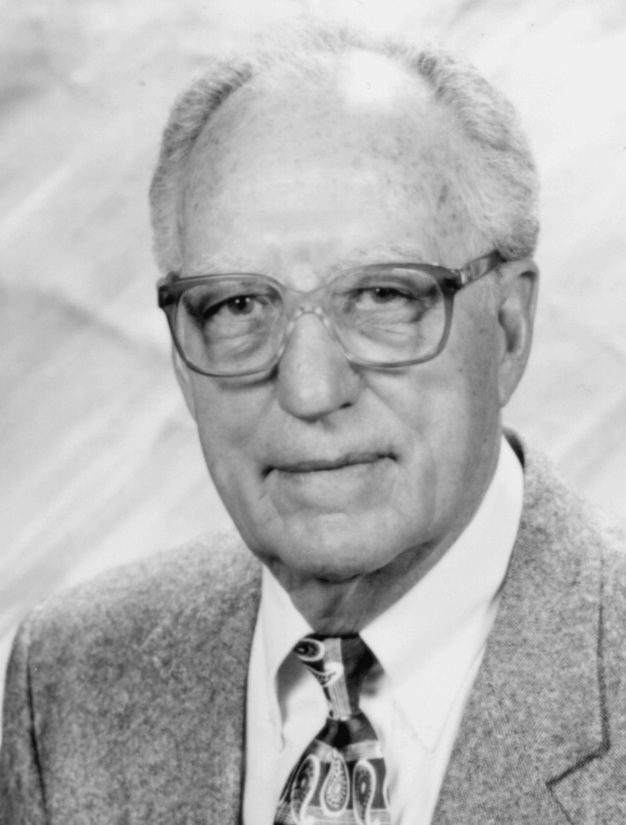
Chuck was born on June 29, 1917 in Tomahawk, Wisconsin. His family were loggers and his teen years were spent surviving The Depression and working as a Northern Wisconsin logger until he left home to attend Ripon College in Ripon, Illinois on a football scholarship. After
graduating from Ripon College he enrolled in the Wayne State University Masters Degree program and began his life-long interest in sports and young people. While at Wayne State, he developed community center support programs for young people that were effective in shutting down gang warfare.
Utah Beach, August 3, 1944. There he was a graves registration officer. He received medals for participating in the Northern France, Ardennes, Rhineland and Central Europe campaigns. While there, he led lower rank enlisted men in recreation, athletics and moral support. In 1946, he attained the rank of Major in the Infantry Division. He was awarded "Guardian of Berlin's Freedom" for his service behind the Iron Curtain. He was also awarded "Guardian of the Outpost of Democracy" as a Major.
Springs he also developed sports programs at various U.S. missile bases.
After retiring from the Army as a Lieutenant Colonel Chuck continued his interest in helping young people and continued to promote a variety of sports programs, believing that physical
education teaches kids “how to get along, achieve a better attitude towards others, and develop sports skills.” He served as athletic director at Lamar (Colorado) Junior College, head basketball
coach at Silverton, Colorado, and later served as the athletic director of Palmer High School. In 1966, he was recruited to Air Academy High School as head football coach and counselor. While
there, he developed the PEAK Program for District #20 for kids having problems in school and were high dropout risks. Camping, mountaineering, backpacking, games and feats of physical
endurance taught the students valuable lessons. He tells others that “The idea of this whole program is to improve the self-esteem and self-concept of the kids in it. Kids who were in danger of dropping-out, instead, tuned-in and graduated” and that “It really feeds a need for boys and girls for discipline, for structure. You really learn how to make decisions. You’re put under stress. It’s a really a character-builder.”
While working in District #20, he received his Doctorate in Education from Nova University. Additionally, in 1978 he was selected as the liaison between the United States Olympic Committee (USOC) and the United States Air Force Academy for the first National Sports
Festival in 1978. He served as Director of Administrative services of the USOC from 1981-87 and was responsible for organizing the Colorado State Games. After leaving the USOC Chuck worked for the Colorado Springs Sports Corp., first as its liaison to incoming national governing
bodies, then as an official of the Colorado State Games. His efforts also included supporting disabled athletes at the Olympic Training Center, and in 1988 he planned and organized the first Disabled Sports Banquet at the Olympic Training Center. As a Rotarian he also helped establish criteria in selecting scholar-athletes for the annual Rotary Champions Scholarship Awards Ceremony.
Salvation Army, and President of the Colorado Chapter of Phi Delta Kappa, an organization of secondary & college educators.
He was a recipient of the Others Award by the Salvation Army, and in 1998 was awarded the third annual Col. F. Don Miller Award by the Colorado Springs Sports Corp. (“The Colonel F. Don Miller Award is presented annually by the Colorado Springs Sports Corporation to the
person who best reflects the commitment exemplified by Colonel Miller in providing a lasting contribution to the Colorado Springs sports community. The presentation of this award to those locally dedicated to the importance of sports in the building of young lives, is a fitting tribute to Colonel Miller and the thousands of young men and women who benefitted from his unparalleled service on behalf of our nation’s youth.” From Sports Hall of Fame, Colorado Springs award nomination webpage.)
Chuck was a member of the American Contract Bridge League, played at the Colorado Springs Bridge Center and held a lifetime Master ranking. Chuck and his wife Marie were both on the
planning board of the Youth Citizenship Awards for middle school students.
Telegraph article April 12, 1998; Sports Hall of Fame, Colorado Springs award nomination
Directory
Heritage Moment presentation given by Kelly Steele July 26, 2024.
Roger H. Motten: A Legacy of Service, Leadership and Innovation in Rotary International and Beyond
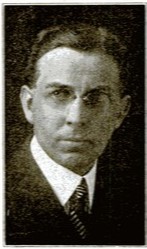
Professor Roger H. Motten joined Colorado College in 1909. According to Who’s Who in America, he graduated from Allegheny College in Pennsylvania in 1897, earning both a Bachelor of Arts and a Master of Arts degree. He later pursued postgraduate studies at the University of Denver and the University of Colorado. Before moving to Colorado Springs, he served at Westminster College, where he became head of the English department.
Motten was a member of the Phi Beta Kappa honor society, Phi Delta Theta fraternity, and Alpha Kappa Psi business fraternity. Active in all aspects of Colorado College life, he was elected college secretary in 1915. In addition, he represented the college in the Rocky Mountain Intercollegiate Athletic Conference. Following the transition to the National Collegiate Athletic Association (NCAA) in 1910, the country was divided into eight districts, in 1917, Motten was selected as the representative for the 8th district.
In speaking of the new position, that he would occupy at Rotary International (RI), Roger spoke of the Rotary Creed of Service and how much service meant to him, “I can take my place with confidence only when I remember that a Rotarian is always loyal to his organization, and will always carry his share of the load, no matter what his other duties may be or how busy he may be with his firm.” He also served as the RI Secretary of the Department of Executive Service and was put in charge of Rotary’s Boys Work program.
Beginning as early as 1920 and continuing for years, Rotary placed a major focus on addressing “the boy problem” — guiding boys away from delinquency and toward becoming responsible citizens. Motten embraced this mission as his passion and call to service. At the Rotary International Convention in Edinburgh in 1921, nine recommendations for Rotary’s involvement in this area were adopted.
It was reported in The Rotarian that “seventy-five percent of our prison inmates are under thirty years of age, and 85 percent of this number are boys. Eighty percent of all those apprehended are under twenty-five years old, and 82 percent of all crimes are committed after school hours or during the boy’s spare time” (Challenge of the Boy, address on juvenile delinquency, Rotary Convention, Toronto, September 1924, p. 25).
In December 1924, Roger served as Secretary of Rotary’s first International Boys Work Conference, which brought significant attention to issues affecting boys. The conference, attended by 420 representatives from 50 different organizations, highlighted the “vital need for constant support and development of existing agencies for boys’ work.
The Rotary Club of Colorado Spring’s loss of Roger Motten was to the gain of all Rotarians.
_
In addition to local Rotary Club projects, Rotary International sponsored physician and lecturer Charles E. Barker to deliver talks to Rotary clubs across the United States. By the time Barker resigned in 1933, he had given over 6,000 lectures, addressing more than 1,140,000 fathers. Responding to popular demand, he also developed pamphlets and lectures, including A Father’s Responsibility to His Son and A Mother’s Responsibility to Her Daughter. Barker became an even more sought-after speaker for adolescents, reaching over two million young people.
The success of Rotary’s programs and initiatives addressing the “boys problem” during those years is evident in their widespread impact and enduring relevance.
This Heritage Moment was presented by Wayne Bland
- Girl Scouts
- the local Multiple Sclerosis Society, which Larson joined as a board member after one of her employees developed the disease.
- the Better Business Bureau of the Pikes Peak Region
- Community Health Systems
- Boys & Girls Club of the Pikes Peak Region
- United Way
- US Bank
- Downtown District Board
- She chaired the Council of Downtown Organizations to help improve communications between downtown businesses.
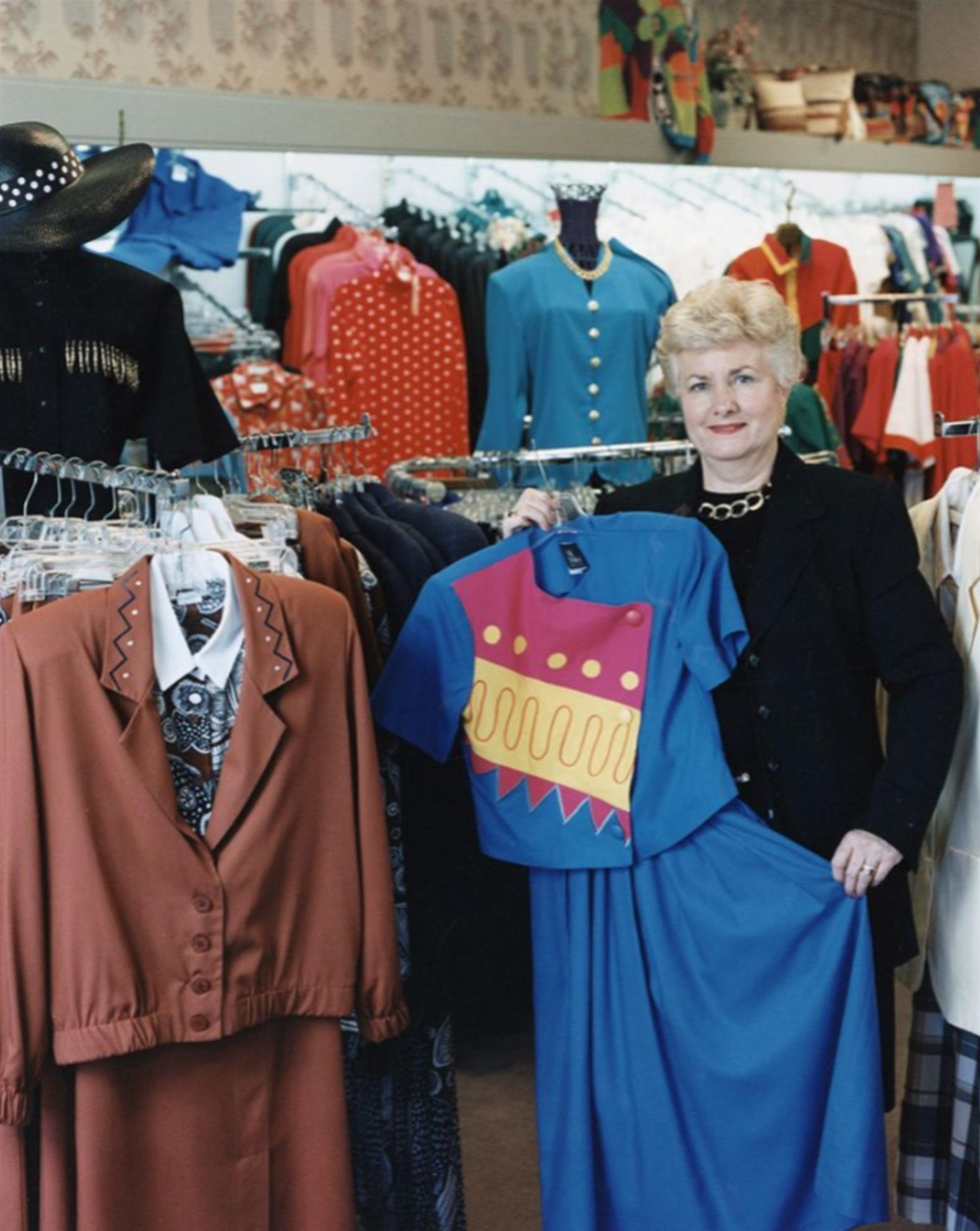
- She was fun to work with.
- She really knew how to get things done
- She was a positive influence in Downtown Colorado Springs

In 2024, the Rotary Club of Colorado Springs will help organize the fifth annual Craig and Kyle Memorial Golf Tournament with support from many community sponsors and with proceeds being split between the Salvation Army and Rotary’s Community Service Fund. Part of the funds raised by the golf tournament are specifically used to support the club's Rotary Reading program at Audubon Elementary which currently has ten Rotarians and Friends of Rotarians reading one-on-one, weekly, with second and third graders.
Penny Whitney, Craig’s wife, has said that early in their marriage she recalls Craig saying, "I want to be remembered as a good community citizen!" She also noted that Craig would be especially proud that through the tournament, we are highlighting the importance of community to young people....not only with the participation of his own children and grandchildren but also with the inclusion of First Tee youth and the younger players we are eager to include. And, following the 2023 tournament, his daughter Paige said, "Dad definitely lived the Rotary philosophy of 'service above self.”
Following are brief summaries of legacies of community service for the last three patriarchs of the Whitney family.
Craig Edward Whitney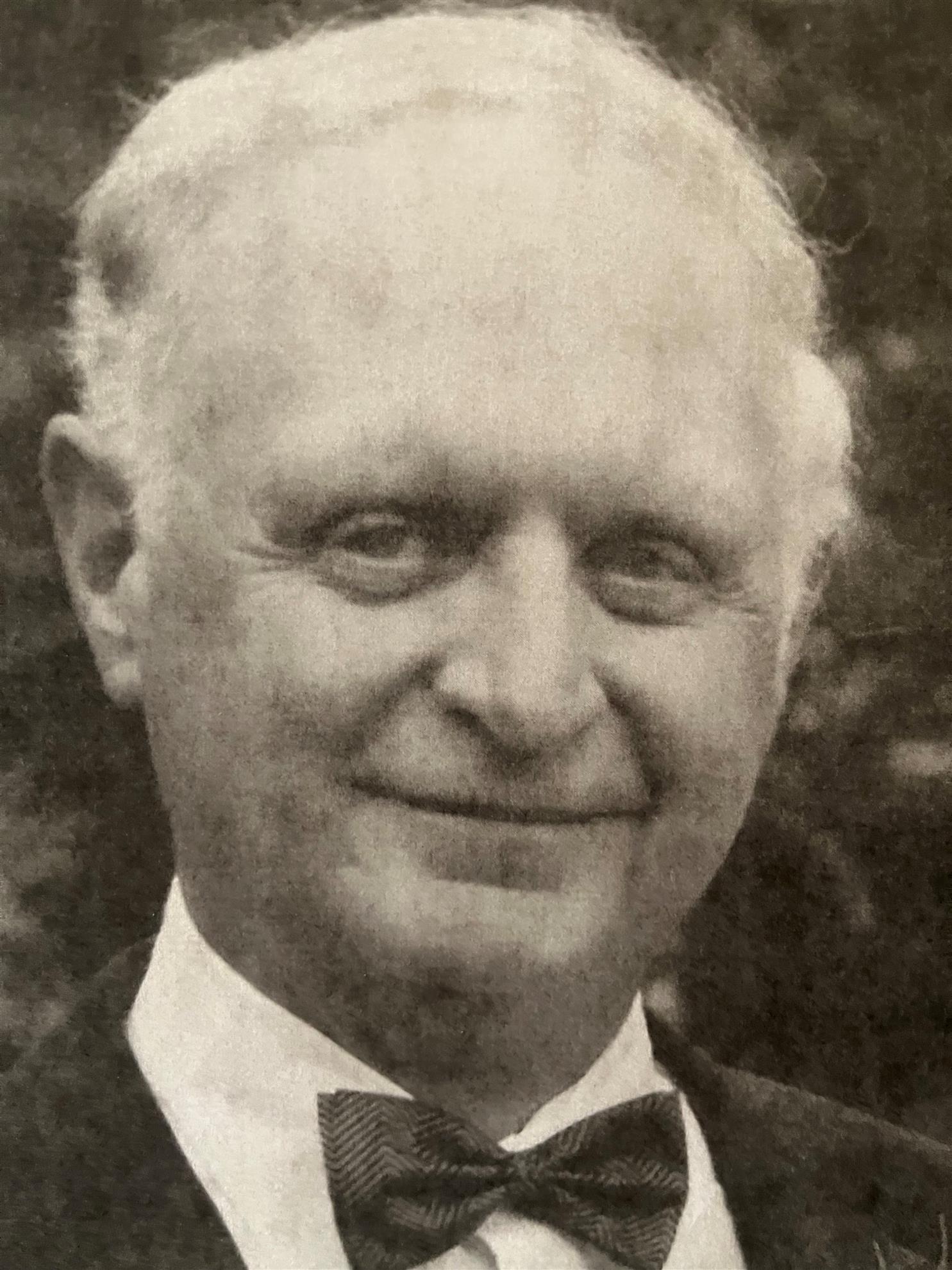
Craig was a long-time member of the downtown Rotary Club and served as its President in 1993. Following his graduation from Cornell College, Craig returned to Colorado Springs where he would become a recognized business and community leader. During his professional life, Craig engaged in innumerable community activities, always true to his commitment to be a “good community citizen.” Countless people and many Colorado Springs organizations benefited from Craig's commitment to others. With Craig's more than forty years of active business and civic engagement, the list is long. Craig's loyal commitment to community and others is best exemplified by the honor of life achievement award given him by the Salvation Army for his untiring leadership of the Colorado Springs Salvation Army Advisory Board. In addition to the Salvation Army, other organizations Craig served as president or in leadership roles include: the National Electrical Contractors Association, Colorado Springs Economic Development Corporation, Colorado Springs Fine Arts Center, Pikes Peak council, Boy Scouts of America, the Humane Society of the Pikes Peak Region, the El Paso Club, the Winter Night Club, Grace Episcopal Church, St. George’s Anglican Church, North-end Homeowners Association, and the El Paso County Republican Party. Craig was a “doer “who never stepped away from life! Craig is remembered for his sense of humor, his indefatigable work ethic, and his legacy of service.
Harold Whitney 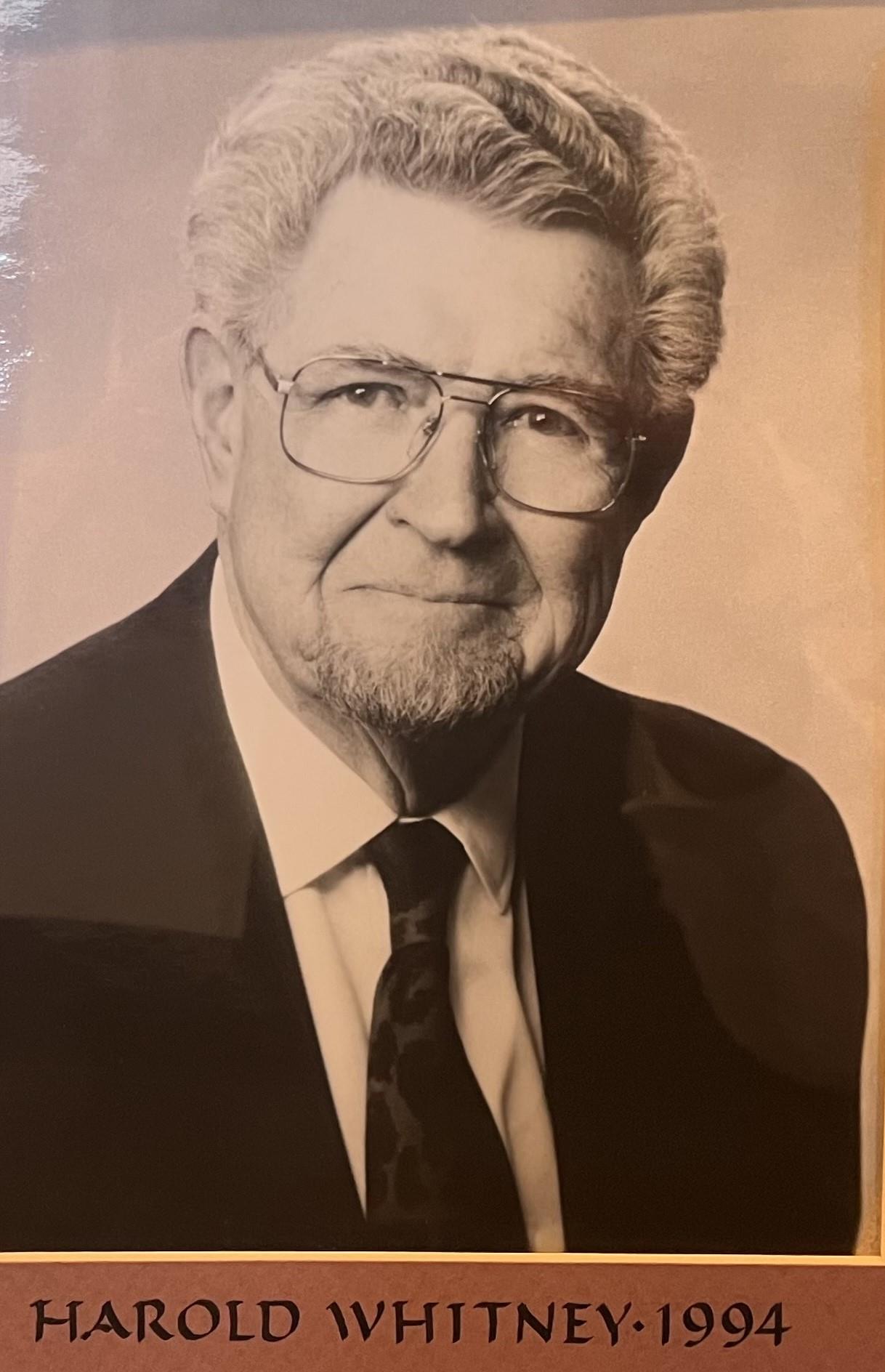
Craig’s father, Harold, was also a member of the downtown Rotary Club, joining in 1950. A native of Colorado Springs, Harold attended Palmer High School, Colorado College, and the Boeing School of Aeronautics. After working ten years as a meteorologist for United Airlines in Portland, San Francisco, and Denver, Harold returned to Colorado Springs in 1946. Together with his brother, G. Winston Whitney, he joined his father and mother in the family business, Whitney Electric.
Like Craig, during his long business career Harold was a very active civic leader. Community organizations and clubs that benefited from his involvement included: Boy Scouts of America (Eagle Scout), the Pikes Peak Range Riders, Silver Key, the National Electrical Contractors Association Board of Directors, Chairman of the Board for the Central Bank of Academy Blvd., Grace and Saint Stephens Episcopal Church, President of the El Paso Club, Board of Directors of the Cheyenne Mountain Country Club, and a founding member and president of the Colorado Springs Country Club.
Matt Whitney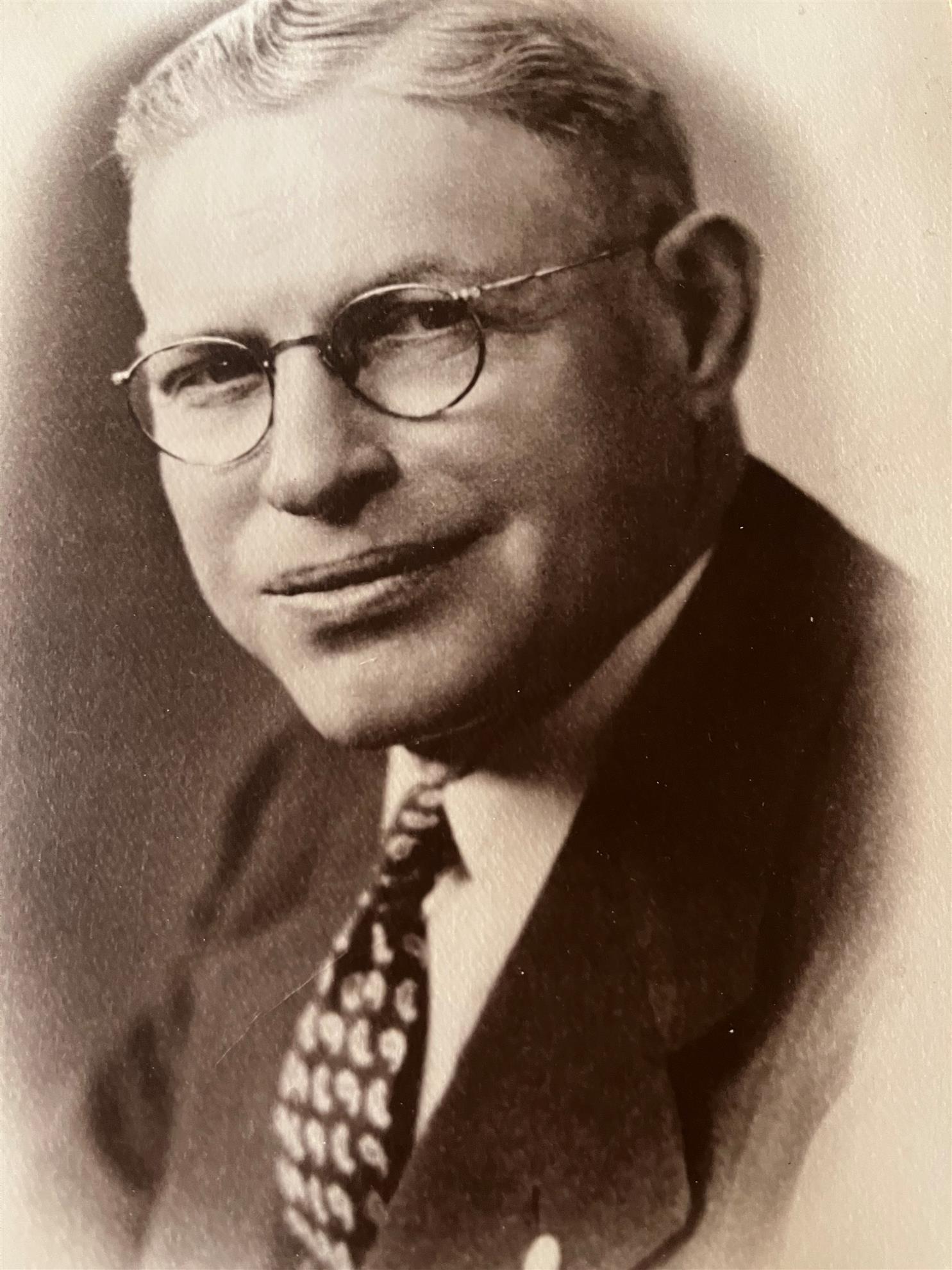
In 1916 Craig’s grandfather was one of the founders (a charter member) of the downtown Rotary Club. He was also the founder of Whitney Electric in 1913 (when electrical services were still a new thing) and served as a great example for his son and grandson as a community leader. Penny recalls that Matt was especially active in Boy Scouts and was the recipient of the Boy Scouts of America Silver Beaver Award for outstanding volunteer service.

Rhea grew up on a farm in Minnesota in the 1930’s and 40’s. She went from being educated in a one-room schoolhouse to being a teacher herself. But what she always wanted to do was become an airplane pilot. And that she did. She moved to Houston, Texas where she earned her pilot’s license. There she met her first husband, and together they owned an airplane brokerage business. Rhea flew all over North and Central America delivering planes to customers, as well as hauling passengers and cargo.
Her talent and reputation caught the eye of the federal government. In 1960, NASA asked Rhea to participate in the secret Mercury 13 Program to train women to be astronauts. She agreed and went through the exact same, long and grueling training as the male candidates. At the end of that training, she was one of only five women who passed all the punishing physical and mental tests.
Unfortunately, the government abruptly shut down the Mercury 13 program before any of the five qualifiers were allowed to fly a space mission. NASA never gave them a good reason.
Rhea always believed—and she was not alone—that NASA simply thought women were not capable of being astronauts. For the rest of her life, Rhea was an outspoken advocate for women’s rights. It was not until twenty-three years later (in 1983) that NASA finally allowed Sally Ride to be the first American female astronaut, and only the third woman in space after two Russian cosmonauts showed NASA that it could be done.
In 2007, Rhea and the other four qualifiers from the Mercury 13 Program received honorary doctorate degrees from the University of Wisconsin. A year later, Rhea was inducted into the Colorado Women’s Hall of Fame.
When her first husband died in 1966, Rhea sold the airplane brokerage business and moved to Colorado Springs to accept a job at the Air Force Academy teaching cadets how to fly. In 1972, she married Leonard Woltman, a local, commercial real estate developer. Leonard was quite a bit older than Rhea, and died in 1990.
Rhea owned a successful insurance and investment advisory business in Colorado Springs. She was also a highly respected parliamentarian. For many years, major corporations and organizations throughout the United States hired Rhea to attend their meetings and make sure those meetings were conducted properly. She could literally quote chapter and verse from Robert’s Rules of Order.
Rhea loved Rotary, and she loved our Club. She may still hold the record for the most multiple Paul Harris Fellowships of anyone in the Club. Rhea was a member of our Club for eighteen years until her health began to fail and she moved back to Minnesota to be close to her family. She died there on February 15, 2021 at the age of 92.
Sources Include:
--Article, Colorado Springs Gazette Telegraph August 29,1973
--Obituary Published by St. Cloud Times from Feb. 24 to Feb. 25, 2021. https://www.legacy.com/us/obituaries/sctimes/name/rhea-woltman-obituary?id=7029047 --Article Colorado Springs Gazette July 8, 2006